
Why Founders Waste Time Hiring Alone
Introduction
Building a startup is one of the most demanding responsibilities an entrepreneur can undertake. Founders are expected to manage product development, sales, operations, customer relationships, fundraising, marketing, and team building—all while trying to scale the business efficiently.
Among these responsibilities, hiring is often one of the most critical and time-consuming tasks. Many founders initially believe they should personally manage every stage of recruitment. While this may seem logical in the early stages, it often becomes one of the most common startup hiring mistakes.
Hiring the right people is essential for startup success, but handling recruitment entirely alone can consume valuable time, slow business growth, and lead to costly hiring errors. As startups expand, founders who insist on managing recruitment without support often discover that hiring becomes a major bottleneck.
Understanding why founders waste time hiring alone can help entrepreneurs improve recruitment outcomes, save time, and implement more effective startup recruitment strategies.
This article explores common startup hiring mistakes, explains how founders can save time in hiring, and provides practical recruitment strategies for growing businesses.
Table of Contents
- Why Hiring Is Critical for Startups
- The Founder Hiring Trap
- Common Startup Hiring Mistakes
- Why Founders Try to Hire Alone
- The Hidden Cost of Founder-Led Recruitment
- Time vs Growth: The Opportunity Cost
- How Hiring Alone Slows Business Progress
- Screening Hundreds of Applications
- Interview Fatigue and Decision Quality
- Lack of Recruitment Expertise
- Delayed Hiring Decisions
- Poor Candidate Experience
- The Financial Cost of Bad Hires
- How Founders Can Save Time in Hiring
- Startup Recruitment Strategies That Work
- When to Build an Internal Hiring Team
- Benefits of Recruitment Partners
- Technology and Hiring Automation
- Creating a Scalable Hiring Process
- Conclusion
Why Hiring Is Critical for Startups
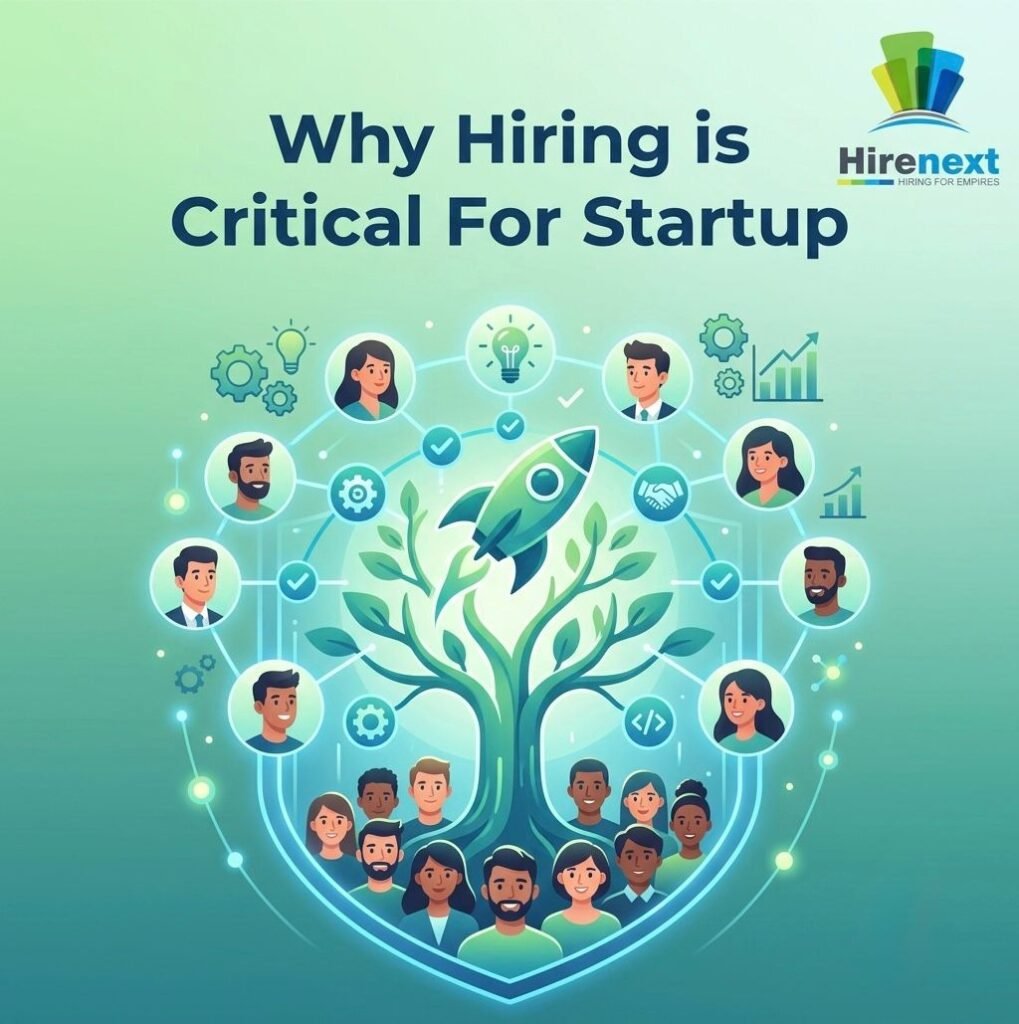
Every startup’s success depends heavily on its people.
The right employees can:
- Accelerate growth
- Improve productivity
- Strengthen company culture
- Drive innovation
- Support customer satisfaction
The wrong employees can create delays, increase costs, and damage team morale.
Because hiring has such a significant impact, founders often become deeply involved in recruitment.
However, excessive founder involvement can become one of the most damaging startup hiring mistakes.
The Founder Hiring Trap
Many founders believe:
- Nobody understands the business better than they do.
- Nobody can assess candidates as effectively.
- Recruitment is too important to delegate.
While these assumptions may be partially true, they often create a bottleneck.
Instead of focusing on strategic growth, founders spend countless hours reviewing resumes, scheduling interviews, and managing recruitment tasks.
This is where many startup hiring mistakes begin.
Common Startup Hiring Mistakes
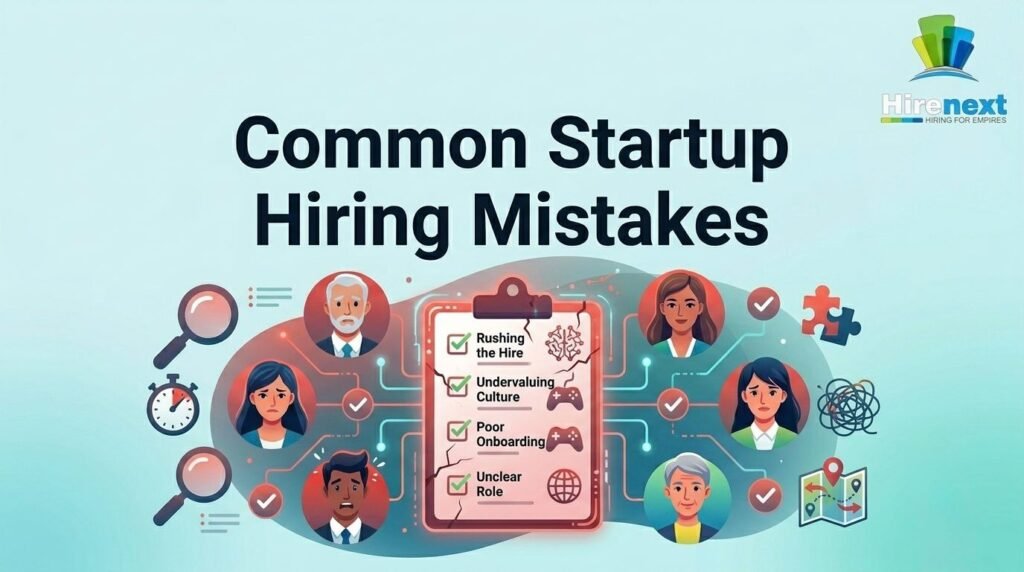
Several recruitment challenges frequently affect startups.
Common startup hiring mistakes include:
- Hiring too slowly
- Hiring based on instinct alone
- Lack of structured interviews
- Poor candidate evaluation processes
- Founder micromanagement
- Inconsistent recruitment standards
Many of these problems arise when founders attempt to manage hiring independently.
Why Founders Try to Hire Alone
Many startup founders believe that hiring is too important to delegate. Since employees play a major role in shaping company culture and driving business growth, founders often feel they should personally oversee every recruitment decision. While this approach may seem beneficial initially, it frequently becomes one of the most common startup hiring mistakes.
Limited Budget
In the early stages of a startup, resources are usually limited. Many founders prioritize spending on product development, marketing, operations, or customer acquisition rather than building an HR department.
Because hiring a dedicated recruiter or recruitment agency appears to be an additional expense, founders often choose to handle recruitment themselves. While this may save money upfront, it can lead to hidden costs such as slower hiring processes, missed opportunities, and poor hiring decisions.
Desire for Control
Founders are deeply invested in their businesses and often want complete control over who joins the team. They understand the company’s vision, values, and long-term goals better than anyone else.
As a result, many founders feel they are the only people capable of identifying candidates who truly fit the company culture. They want to personally review resumes, conduct interviews, and make final hiring decisions.
While founder involvement is important, excessive control can create bottlenecks that slow recruitment and distract leaders from more strategic responsibilities.
Fear of Hiring Mistakes
A bad hire can be extremely costly for a startup. It can result in wasted salaries, lost productivity, damaged team morale, and additional recruitment expenses.
Because of these risks, founders often believe that personally overseeing every hiring decision will reduce the chances of making mistakes. They may spend excessive amounts of time evaluating candidates, conducting multiple interview rounds, and delaying decisions in pursuit of the “perfect” hire.
Ironically, this fear often creates new hiring challenges and becomes one of the most damaging startup hiring mistakes.
Lack of Trust in Recruitment Partners
Some founders assume that external recruiters or hiring specialists will not understand their business as well as they do. Others believe recruitment agencies simply forward resumes without truly evaluating candidates.
This lack of trust prevents many startups from leveraging professional hiring expertise. In reality, experienced recruiters often have access to larger talent pools, proven assessment methods, and efficient sourcing strategies that can significantly improve hiring outcomes.
The Founder Mindset
Many entrepreneurs build their companies by taking ownership of every challenge. This mindset helps startups survive in their early stages but can become problematic as the business grows.
Founders who continue trying to manage every aspect of recruitment often find themselves overwhelmed. Instead of focusing on growth, innovation, and customer acquisition, they become trapped in administrative hiring tasks.
Unfortunately, these assumptions and habits contribute to major startup hiring mistakes, making recruitment slower, less effective, and more stressful than necessary.
The Hidden Cost of Founder-Led Recruitment
Many founders underestimate how much time recruitment actually requires. Hiring is not limited to conducting interviews; it involves a series of time-consuming tasks that must be completed consistently and efficiently.
A typical hiring process may include:
- Creating detailed job descriptions
- Posting vacancies on multiple platforms
- Reviewing resumes
- Screening candidates
- Scheduling interviews
- Conducting interviews
- Evaluating applicants
- Following up with candidates
- Checking references
- Negotiating offers
- Managing onboarding preparations
Each of these activities requires significant attention and effort startup hiring mistakes.
Recruitment Consumes Valuable Leadership Time
For founders, time is one of the most valuable business resources. Every hour spent reviewing resumes is an hour not spent:
- Building products
- Meeting customers
- Closing sales
- Developing partnerships
- Raising investment
- Improving operations
This opportunity cost is often overlooked when founders choose to manage hiring alone
Screening Applications Takes Longer Than Expected
Many job postings attract dozens—or even hundreds—of applications. Sorting through resumes to identify qualified candidates can consume several hours each week.
In many cases, founders spend significant time reviewing candidates who ultimately do not meet the role’s requirements.
Interview Fatigue Reduces Decision Quality
As recruitment demands increase, founders often experience interview fatigue. Conducting multiple interviews while managing daily business responsibilities can lead to:
- Reduced focus
- Inconsistent evaluations
- Delayed feedback
- Poor hiring decisions
This can negatively impact both candidate experience and recruitment outcomes.
Slow Hiring Can Hurt Growth
When founders become overwhelmed with recruitment tasks, hiring decisions often take longer than necessary. High-quality candidates may accept offers from competitors before the startup completes its evaluation process.
Delayed hiring can also increase workloads for existing employees and slow business growth.
The Real Cost Is Lost Momentum
The biggest hidden cost of founder-led recruitment is not the time spent interviewing candidates—it’s the momentum lost in other critical areas of the business.
Every week spent buried in hiring tasks is a week that could have been invested in scaling operations, acquiring customers, or improving products. For growing startups, this lost momentum can become far more expensive than the cost of professional recruitment support.
This is why learning how founders can save time in hiring has become such an important part of modern startup recruitment strategies.
Time vs Growth: The Opportunity Cost
One of the biggest startup hiring mistakes is ignoring opportunity cost.
Every hour spent reviewing resumes is an hour not spent on:
- Product development
- Sales
- Partnerships
- Customer acquisition
- Strategic planning
This lost time can significantly impact business growth startup hiring mistakes.
How Hiring Alone Slows Business Progress
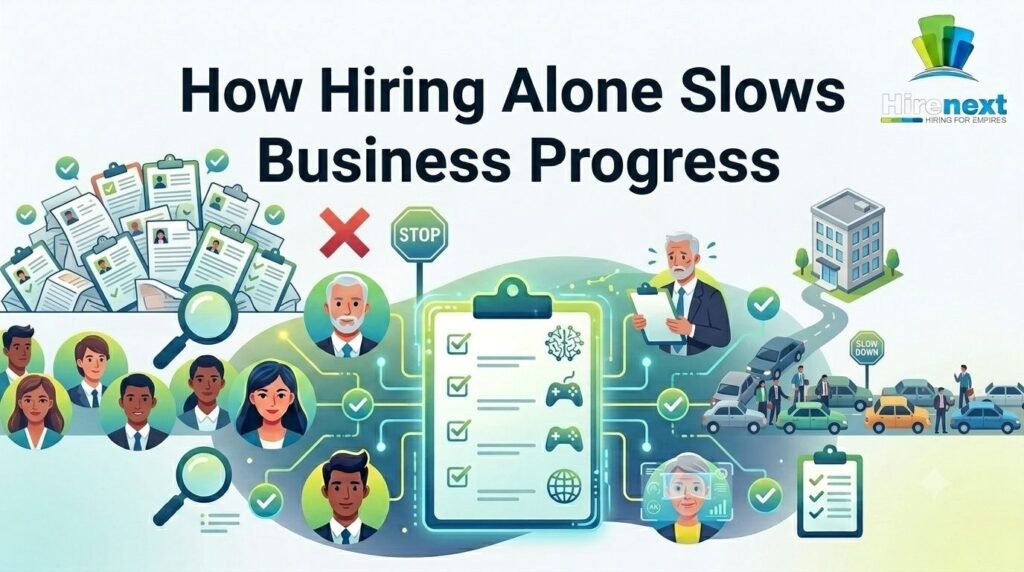
When founders manage recruitment alone, hiring processes often move slowly.
Common consequences include:
- Delayed onboarding
- Increased workload on existing employees
- Missed growth opportunities
- Candidate drop-offs
These issues create unnecessary business challenges.
Screening Hundreds of Applications
Recruitment generates large volumes of applications.
Founders often underestimate the effort required to:
- Review resumes
- Evaluate qualifications
- Identify suitable candidates
Manual screening can quickly become overwhelming.
Interview Fatigue and Decision Quality
Conducting multiple interviews each week can reduce decision quality.
Interview fatigue often leads to:
- Poor candidate evaluations
- Inconsistent decisions
- Delayed feedback
These outcomes contribute to additional startup hiring mistakes.
Lack of Recruitment Expertise
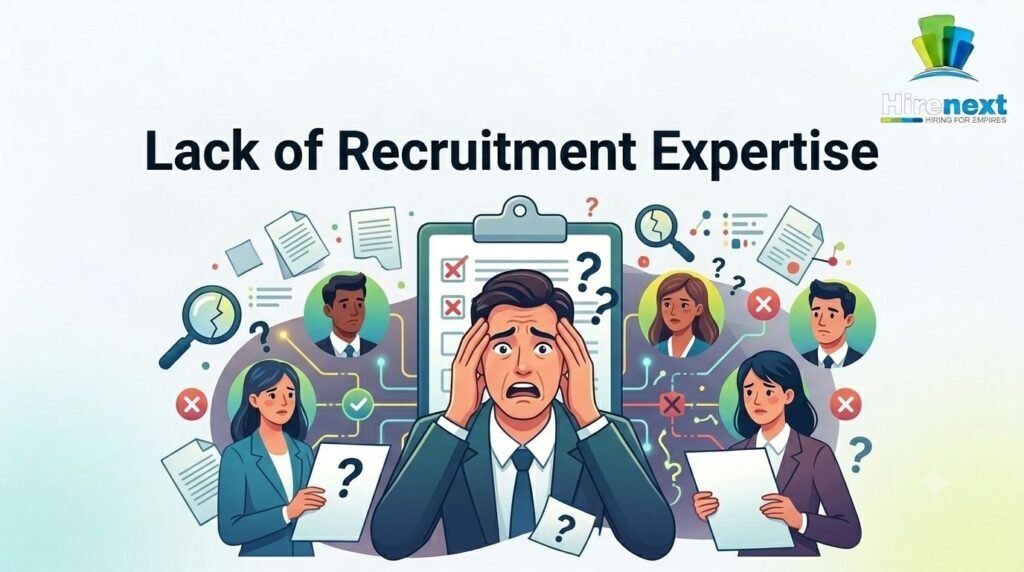
Founders are experts in building businesses—not necessarily recruitment.
Professional recruiters possess specialized knowledge in:
- Candidate assessment
- Interview techniques
- Talent sourcing
- Employer branding
Without these skills, founders may overlook qualified candidates.
Delayed Hiring Decisions
Slow decision-making is a common startup problem.
Candidates often receive multiple job offers.
Lengthy recruitment processes can cause startups to lose top talent.
This is one reason how founders can save time in hiring has become such an important topic.
Poor Candidate Experience
Candidate experience directly affects employer reputation.
Problems may include:
- Delayed communication
- Unclear hiring processes
- Long response times
Poor experiences discourage high-quality candidates.
The Financial Cost of Bad Hires
Hiring mistakes are expensive.
Bad hires often result in:
- Training costs
- Productivity losses
- Team disruption
- Replacement expenses
Avoiding these costs requires structured hiring processes.
How Founders Can Save Time in Hiring
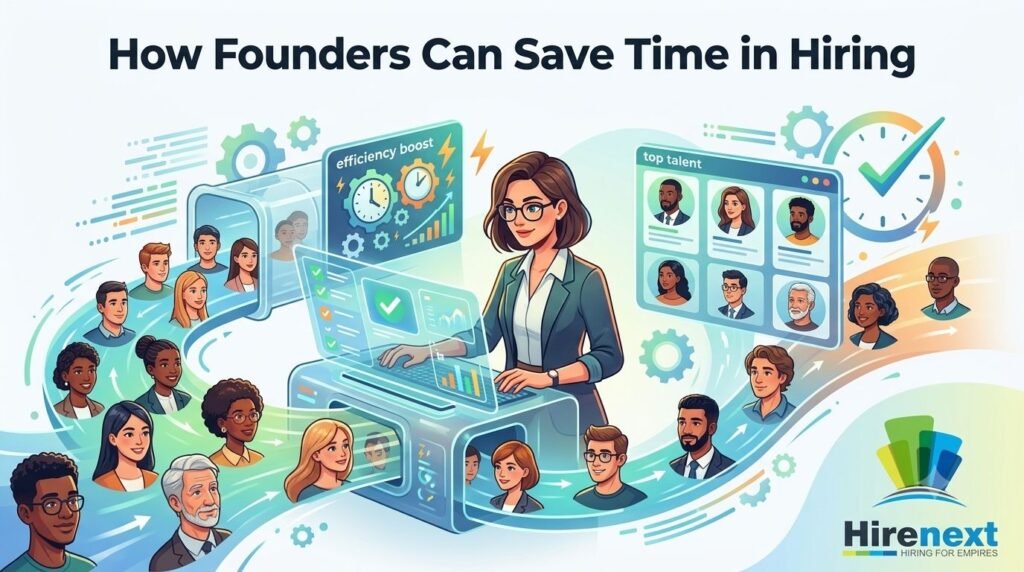
Understanding how founders can save time in hiring allows startups to grow more efficiently.
Effective approaches include:
Delegating Recruitment Tasks
Sharing responsibilities improves efficiency.
Using Applicant Tracking Systems
Technology automates administrative tasks.
Standardizing Interview Processes
Structured hiring reduces decision delays.
Working with Recruitment Specialists
Professional support improves candidate quality.
Startup Recruitment Strategies That Work
Successful startups often implement effective startup recruitment strategies.
Examples include:
Building Talent Pipelines
Maintaining relationships with potential candidates.
Employee Referral Programs
Leveraging existing networks.
Employer Branding
Attracting talent through company reputation.
Skills-Based Hiring
Evaluating practical abilities rather than credentials alone.
These strategies improve recruitment outcomes.
When to Build an Internal Hiring Team
As startups grow, dedicated recruitment support becomes increasingly valuable.
Signs it’s time to hire recruiters include:
- Frequent hiring needs
- Rapid team expansion
- Founder time constraints
- Increasing recruitment complexity
Benefits of Recruitment Partners
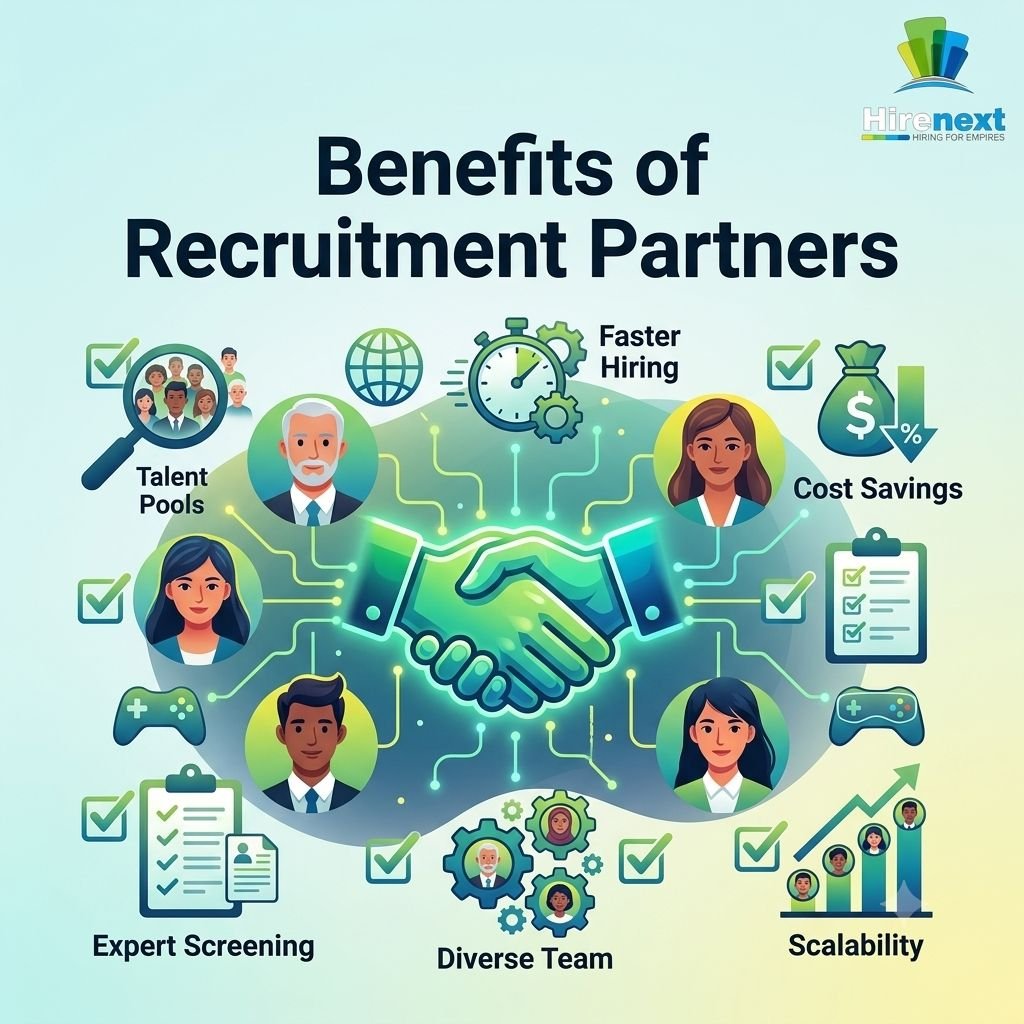
External recruitment partners can help startups:
- Source candidates faster
- Improve hiring quality
- Reduce founder workload
- Enhance candidate experience
This allows founders to focus on growth priorities.
Technology and Hiring Automation
Modern recruitment tools streamline hiring processes.
Examples include:
- Applicant tracking systems
- Resume screening software
- Interview scheduling platforms
- Assessment tools
These technologies help founders save valuable time.
Creating a Scalable Hiring Process
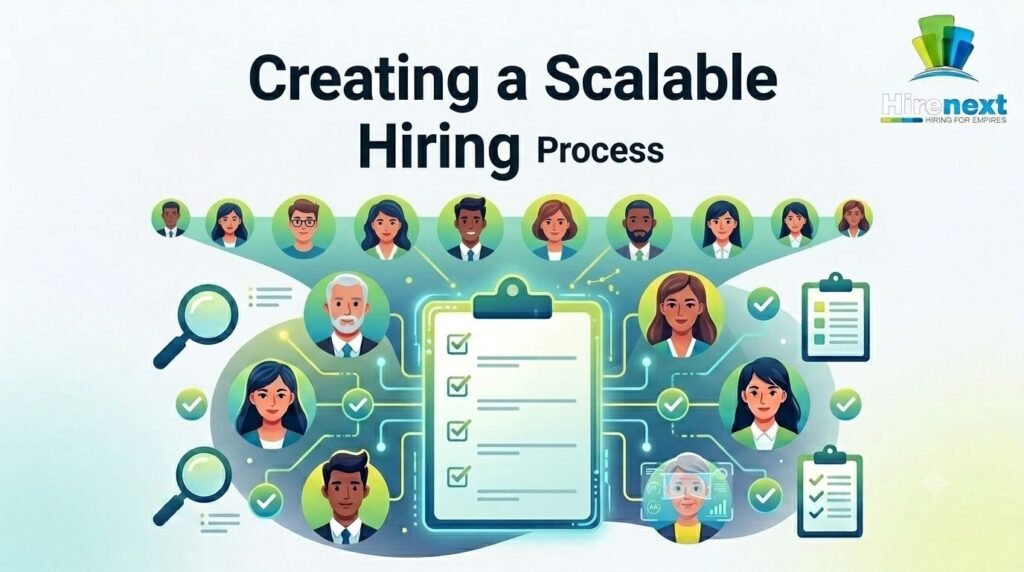
Scalable recruitment systems support long-term growth.
Key components include:
- Standardized interviews
- Defined hiring criteria
- Consistent evaluation methods
- Recruitment metrics
These systems reduce reliance on founder involvement.
Conclusion
One of the most common startup hiring mistakes is believing that founders must manage every aspect of recruitment alone. While hiring remains one of the most important business activities, excessive founder involvement often creates bottlenecks, delays growth, and reduces overall efficiency.
Understanding how founders can save time in hiring allows entrepreneurs to focus on strategic priorities while still building strong teams. By implementing effective startup recruitment strategies, leveraging technology, and utilizing recruitment expertise, startups can improve hiring outcomes while accelerating business growth.
The most successful founders recognize that hiring is critical—but they also understand that building scalable recruitment systems is essential for long-term success.