
The Real Cost of Employee Turnover for Small Businesses
Introduction
For many small businesses, every employee plays an important role in daily operations. Unlike large organizations that often have dedicated departments and larger workforces, small businesses rely on a limited number of employees to manage sales, customer service, operations, marketing, and administration.
When one employee leaves, the impact is often much greater than simply filling an empty position. Business owners must invest time, money, and resources into finding, hiring, and training a replacement. During this period, productivity declines, workloads increase for existing employees, customer satisfaction may suffer, and growth plans are often delayed.
This is why understanding the employee turnover cost is essential for every business owner. Many companies only consider the direct expenses of recruitment, but the actual employee turnover cost includes lost productivity, training costs, reduced morale, missed opportunities, and decreased profitability.
The financial impact of employee turnover is especially significant for small businesses operating with limited budgets and lean teams. A single resignation can affect operations for weeks or even months.
Fortunately, businesses that invest in effective hiring and retention strategies can reduce turnover, improve employee satisfaction, and create a more stable workforce.
In this guide, we’ll explore the true employee turnover cost, explain its hidden consequences, and discuss practical ways small businesses can improve hiring and retention to support long-term growth.
Table of Contents
- What Is Employee Turnover?
- Why Employee Turnover Matters for Small Businesses
- Understanding Employee Turnover Cost
- Direct Costs of Employee Turnover
- Hidden Costs Businesses Often Ignore
- The Financial Impact of Employee Turnover
- Lost Employee Productivity
- Customer Service and Client Relationship Risks
- Increased Workload on Existing Employees
- Effects on Workplace Culture
- Recruitment and Training Expenses
- Leadership Time and Opportunity Cost
- High Turnover and Business Growth
- Common Reasons Employees Leave
- Improving Hiring and Retention
- Building a Positive Workplace Culture
- Measuring Employee Turnover
- Long-Term Benefits of Lower Turnover
- Best Practices for Small Businesses
- Conclusion
What Is Employee Turnover?
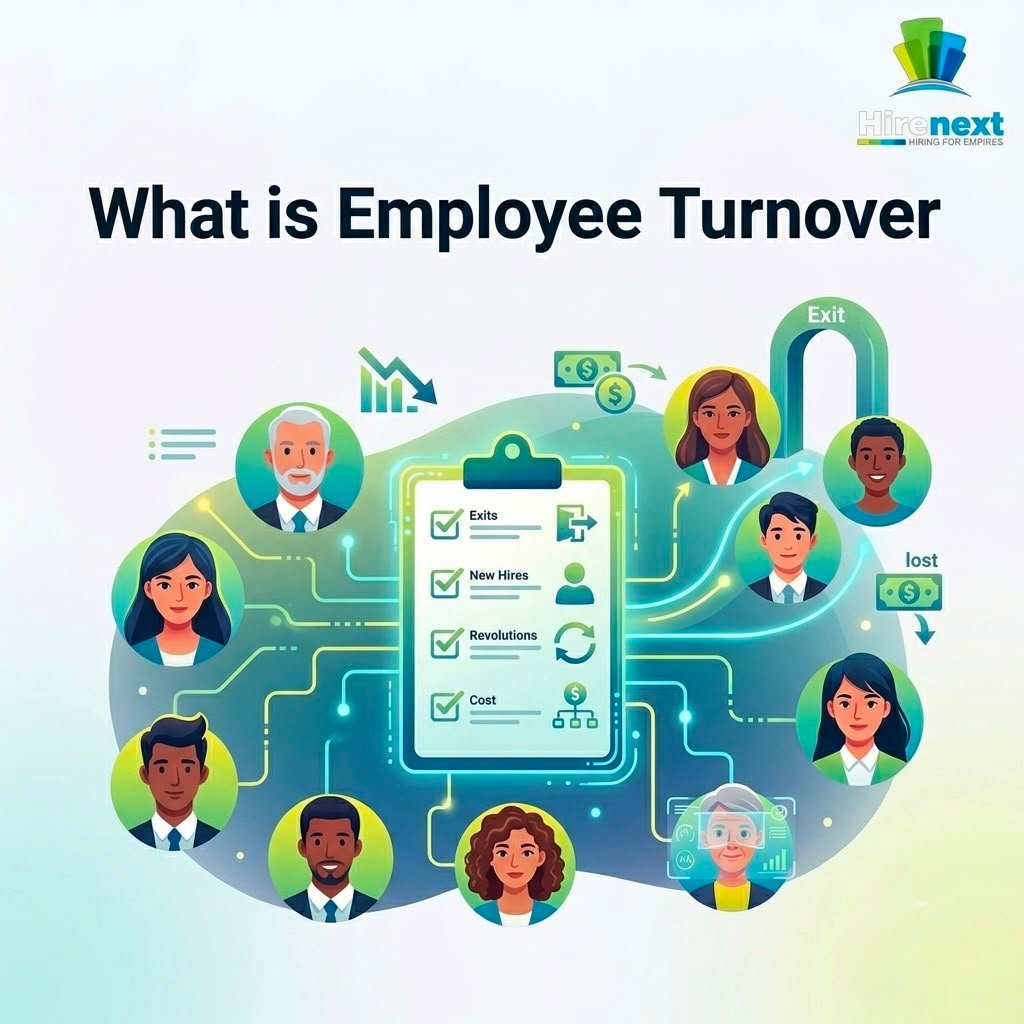
Employee turnover refers to the number of employees who leave an organization during a specific period and must be replaced.
Turnover may occur because employees:
- Resign voluntarily
- Accept better opportunities
- Relocate
- Retire
- Are terminated
Some turnover is natural and unavoidable. However, consistently high turnover often indicates deeper workplace issues.
For small businesses, even one resignation can significantly increase the overall employee turnover cost.
Why Employee Turnover Matters for Small Businesses
Large corporations often have larger recruitment budgets, dedicated HR teams, and backup staffing options.
Small businesses usually do not.
Every employee performs multiple responsibilities, making each individual essential to daily operations.
When someone leaves, the business may experience:
- Delayed projects
- Reduced customer service quality
- Increased workloads
- Lower team morale
- Slower business growth
This explains why managing the employee turnover cost should be a strategic priority rather than simply an HR responsibility.
Understanding Employee Turnover Cost
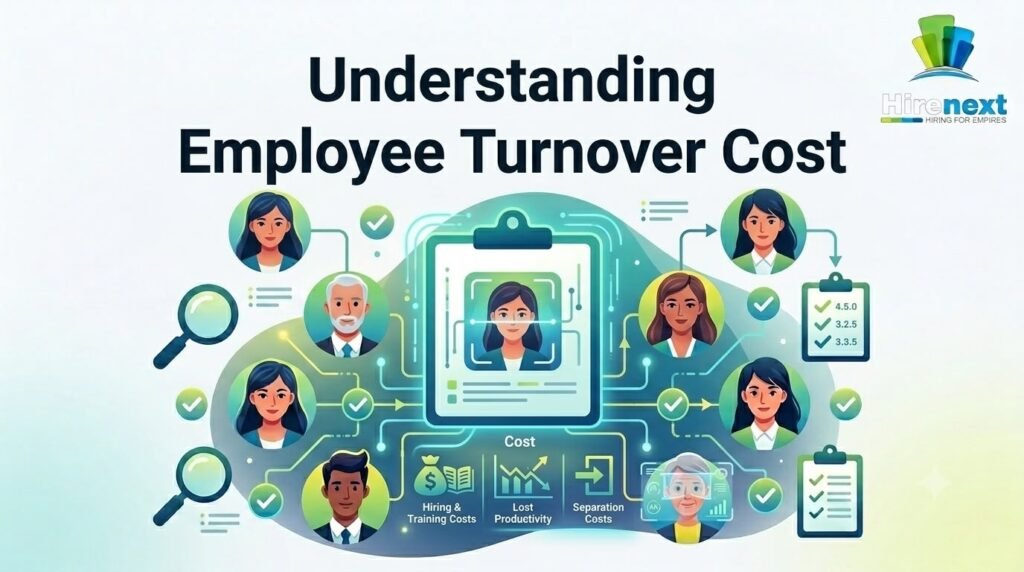
Many business owners assume the employee turnover cost only includes advertising a job vacancy and paying recruitment fees.
In reality, the cost is much broader.
The total employee turnover cost includes:
- Recruitment expenses
- Interview time
- Onboarding costs
- Employee training
- Lost productivity
- Overtime payments
- Customer dissatisfaction
- Management time
- Lost business opportunities
These combined costs often exceed what businesses initially expect.
Direct Costs of Employee Turnover
Some expenses are immediately visible after an employee leaves.
Recruitment Costs
Replacing an employee often requires:
- Posting job advertisements
- Using recruitment platforms
- Working with hiring agencies
- Background verification
- Candidate assessments
Each of these activities contributes to the overall employee turnover cost.
Interview Expenses
Hiring managers spend valuable hours:
- Reviewing resumes
- Screening applicants
- Conducting interviews
- Coordinating schedules
This time could otherwise be spent growing the business.
Training Costs
New employees require:
- Orientation
- Technical training
- Process education
- Mentoring
Training consumes both money and employee time before a new hire reaches full productivity.
Hidden Costs Businesses Often Ignore
The largest employee turnover cost often comes from expenses that are difficult to measure.
Knowledge Loss
Experienced employees understand:
- Internal systems
- Customer preferences
- Business processes
- Team workflows
When they leave, valuable organizational knowledge disappears with them.
Reduced Efficiency
Even skilled new employees require time to become familiar with their responsibilities.
During this adjustment period:
- Work slows down.
- Mistakes increase.
- Productivity declines.
Business Disruption
High turnover interrupts normal business operations.
Managers must divide their attention between recruitment and day-to-day responsibilities.
The Financial Impact of Employee Turnover
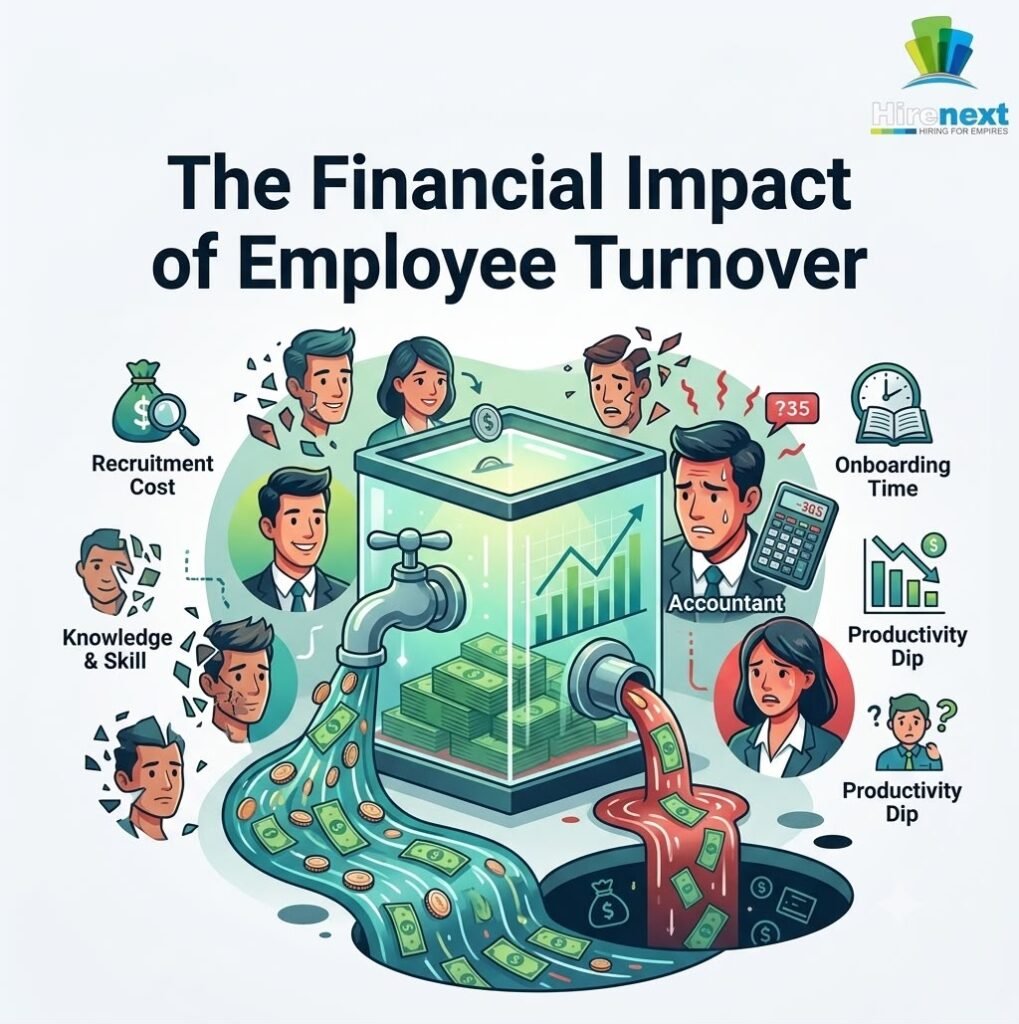
The financial impact of employee turnover extends far beyond recruitment costs.
Businesses frequently experience:
- Lower revenue
- Increased operating expenses
- Reduced productivity
- Higher overtime payments
- Increased customer complaints
For small businesses operating on tight budgets, these losses can significantly affect profitability.
The financial impact of employee turnover becomes even greater when multiple employees leave within a short period.
Lost Employee Productivity
One of the biggest consequences of turnover is reduced employee productivity.
Productivity declines because:
- Vacant positions remain unfilled.
- Remaining employees become overloaded.
- New hires require training.
- Managers spend less time on strategic work.
Reduced employee productivity often delays important business projects and limits growth opportunities.
Customer Service and Client Relationship Risks
Employees frequently build strong relationships with customers over time.
When experienced employees leave:
- Customer trust may decline.
- Service quality may become inconsistent.
- Response times may increase.
- Clients may choose competitors.
Small businesses often depend heavily on repeat customers, making these risks particularly important.
Increased Workload on Existing Employees
When vacancies remain open, existing employees must often take on additional responsibilities.
This can result in:
- Stress
- Burnout
- Reduced motivation
- Lower job satisfaction
Ironically, excessive workloads may encourage more employees to leave, creating a cycle of increasing employee turnover cost.
Effects on Workplace Culture
Frequent employee departures affect the entire workplace.
Remaining employees may begin asking:
- Why are people leaving?
- Is the company stable?
- Should I start looking elsewhere?
High turnover can reduce trust, collaboration, and employee engagement.
A healthy workplace culture is one of the strongest tools for improving hiring and retention.
Recruitment and Training Expenses
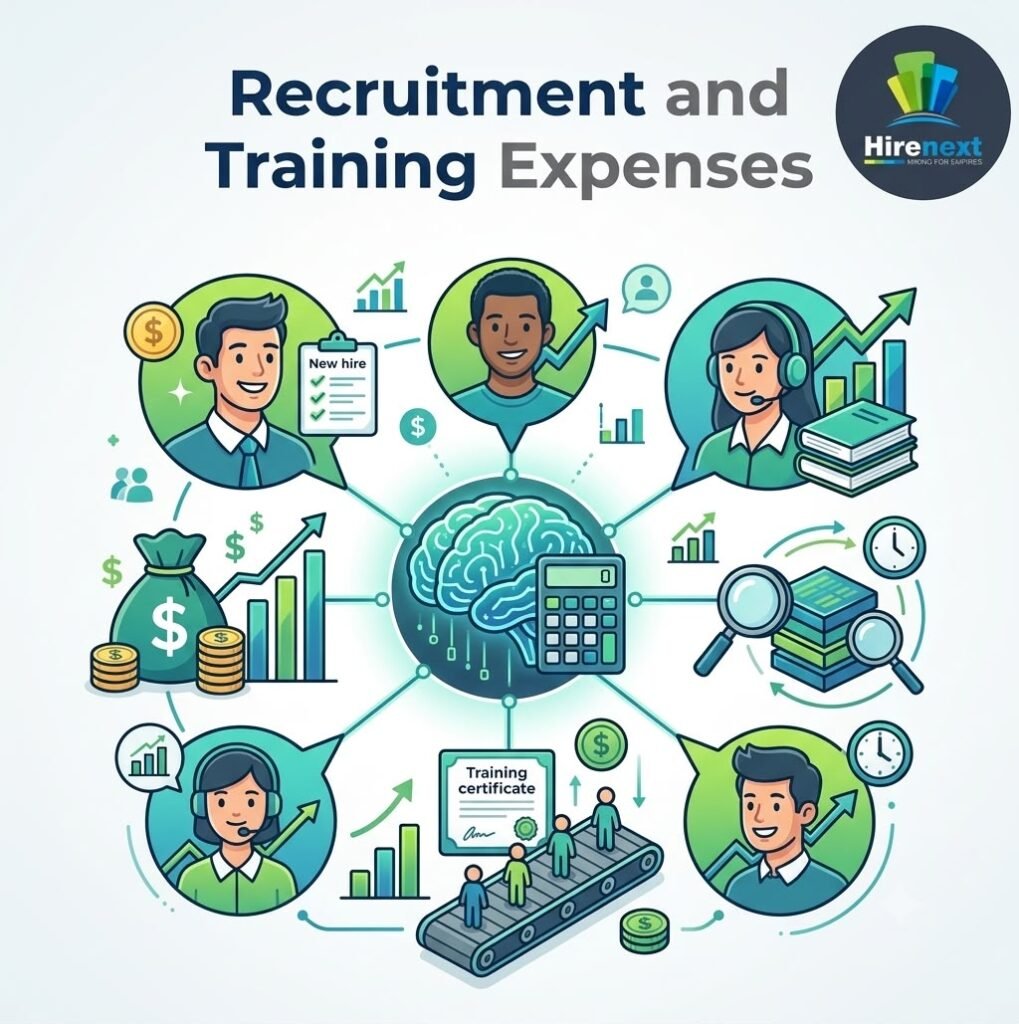
Hiring replacements requires continuous investment.
Recruitment expenses include:
- Job board subscriptions
- Recruitment software
- Agency fees
- HR administration
Training expenses include:
- Orientation programs
- Technical coaching
- Supervision
- Performance monitoring
These recurring expenses significantly increase the overall employee turnover cost.
Leadership Time and Opportunity Cost
One of the most overlooked aspects of employee turnover cost is the amount of leadership time required to replace an employee.
When someone leaves, managers and business owners don’t simply approve a replacement. They become involved in nearly every stage of recruitment and onboarding.
Their responsibilities often include:
- Writing job descriptions
- Reviewing resumes
- Conducting interviews
- Evaluating candidates
- Negotiating salaries
- Coordinating onboarding
- Monitoring the new employee’s progress
These activities consume hours that could otherwise be spent on:
- Business development
- Customer acquisition
- Product improvement
- Strategic planning
- Revenue generation
For small businesses, leadership time is one of the most valuable resources. Every hour spent replacing an employee represents an opportunity cost that contributes to the overall employee turnover cost.
How High Turnover Slows Business Growth
Growing businesses require stability.
When employees leave frequently, expansion plans often suffer because management must repeatedly focus on recruitment instead of growth initiatives.
High turnover can lead to:
- Delayed projects
- Missed deadlines
- Lower innovation
- Reduced customer satisfaction
- Slower revenue growth
Instead of investing energy into expanding operations, businesses spend valuable resources replacing employees.
This is one reason why reducing the financial impact of employee turnover should become a strategic business priority rather than simply an HR objective.
Common Reasons Employees Leave
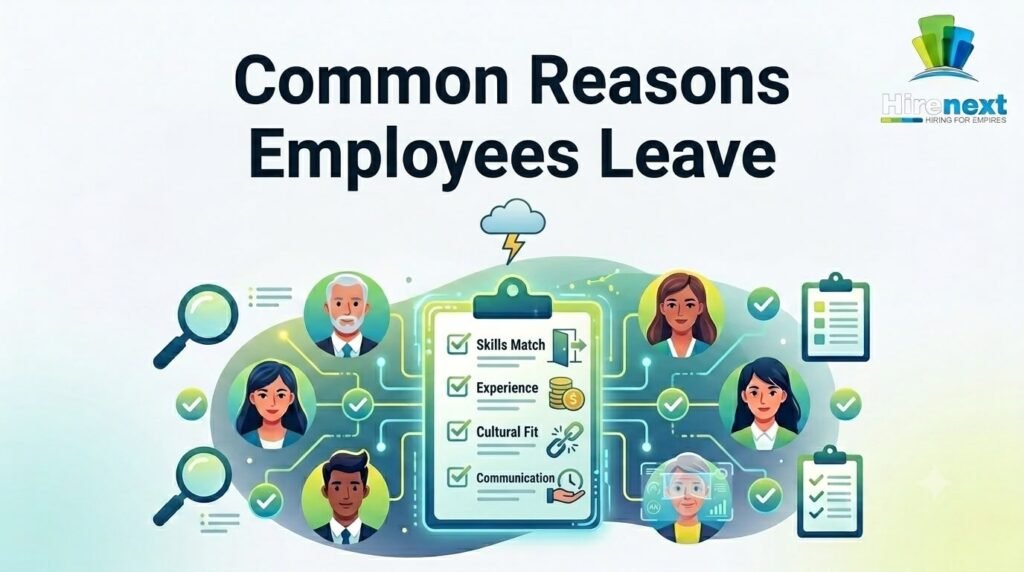
Understanding why employees leave is the first step toward reducing the employee turnover cost.
Some of the most common reasons include:
Limited Career Growth
Employees want opportunities to develop new skills and advance professionally.
When growth opportunities are lacking, they often seek employment elsewhere.
Poor Management
Employees frequently leave managers—not companies.
Poor communication, lack of feedback, micromanagement, and unclear expectations can all contribute to higher turnover.
Inadequate Compensation
Competitive salaries remain important.
Employees who consistently receive better offers elsewhere may eventually resign.
Lack of Recognition
People want their efforts to be appreciated.
Simple recognition, rewards, and positive feedback often improve employee satisfaction significantly.
Poor Work-Life Balance
Long hours, excessive workloads, and burnout are increasingly common reasons employees resign.
Businesses that promote flexibility often experience better retention.
Weak Company Culture
Employees prefer working in environments where they feel respected, supported, and included.
A negative workplace culture increases the likelihood of resignations.
Improving Hiring and Retention
Strong hiring and retention practices help businesses reduce turnover while improving workforce stability.
Some effective strategies include:
Hire for Long-Term Fit
Instead of focusing only on technical skills, evaluate candidates for:
- Communication
- Adaptability
- Teamwork
- Problem-solving
- Cultural fit
Employees who align with company values are more likely to stay longer.
Improve Onboarding
Effective onboarding helps employees become productive faster.
A strong onboarding process should include:
- Clear expectations
- Training resources
- Team introductions
- Regular check-ins
- Performance guidance
Employees who feel supported early are often more engaged.
Offer Career Development
Providing opportunities for learning and growth encourages employees to remain with the organization.
Examples include:
- Training programs
- Mentorship
- Skill development
- Leadership opportunities
- Internal promotions
Career development strengthens hiring and retention efforts.
Encourage Open Communication
Employees should feel comfortable sharing ideas, concerns, and feedback.
Regular one-on-one meetings and employee surveys help identify workplace issues before they result in resignations.
Recognize Employee Contributions
Recognition doesn’t always require financial rewards.
Simple actions such as:
- Public appreciation
- Performance awards
- Thank-you messages
- Celebrating achievements
can significantly improve engagement.
Building a Positive Workplace Culture
Culture plays an essential role in reducing the employee turnover cost.
Strong workplace cultures typically encourage:
- Collaboration
- Respect
- Transparency
- Trust
- Continuous learning
Employees are far more likely to remain with organizations where they feel valued.
A positive culture also improves employer branding, making future recruitment easier.
Measuring Employee Turnover
Businesses should regularly monitor turnover to identify trends.
Useful recruitment metrics include:
- Employee turnover rate
- Average employee tenure
- Time-to-fill vacancies
- Cost-per-hire
- Employee satisfaction scores
Monitoring these metrics helps organizations evaluate the financial impact of employee turnover and improve decision-making.
Technology Supports Hiring and Retention
Modern HR technology makes recruitment and retention more efficient.
Helpful tools include:
- Applicant Tracking Systems (ATS)
- HR Management Software
- Performance Management Platforms
- Employee Engagement Tools
- Learning Management Systems
Technology helps businesses:
- Improve recruitment
- Monitor employee performance
- Increase engagement
- Reduce administrative workload
These improvements strengthen hiring and retention strategies while lowering long-term turnover.
Long-Term Benefits of Lower Employee Turnover
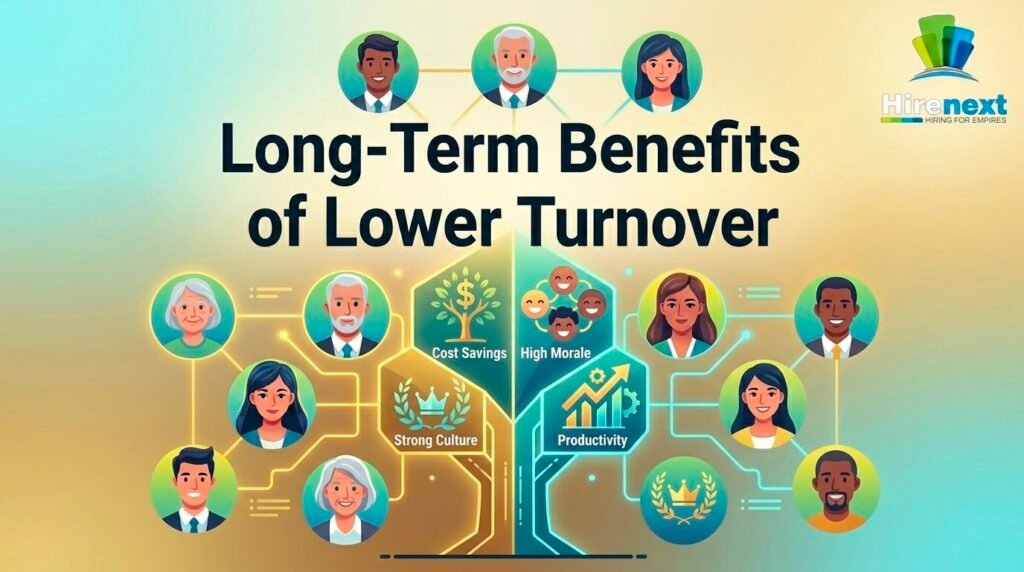
Reducing the employee turnover cost creates advantages across every area of the business.
Organizations with strong retention often experience:
Higher Employee Productivity
Experienced employees perform tasks more efficiently and require less supervision.
Improved employee productivity leads to better business performance.
Better Customer Relationships
Long-term employees develop stronger customer connections, improving satisfaction and loyalty.
Lower Recruitment Costs
Businesses spend less on advertising, interviews, onboarding, and training.
Improved Workplace Culture
Stable teams build stronger relationships and collaborate more effectively.
Greater Profitability
Lower turnover reduces unnecessary expenses while increasing productivity and operational efficiency.
Sustainable Business Growth
Companies that retain talented employees can focus more on innovation, expansion, and customer satisfaction instead of constant recruitment.
Best Practices for Small Businesses
To reduce the employee turnover cost, small businesses should:
- Hire carefully rather than quickly.
- Create structured onboarding programs.
- Invest in employee training.
- Provide regular feedback.
- Offer career growth opportunities.
- Recognize employee achievements.
- Encourage work-life balance.
- Build a positive company culture.
- Conduct exit interviews to identify improvement areas.
- Continuously improve hiring and retention processes.
These practices help businesses build loyal, high-performing teams.
Conclusion
The true employee turnover cost extends far beyond recruitment expenses. Every resignation affects productivity, customer relationships, workplace culture, leadership time, and profitability.
For small businesses, the financial impact of employee turnover can be especially significant because each employee plays an important role in daily operations.
Fortunately, turnover is not inevitable.
Organizations that invest in effective hiring and retention strategies, create supportive workplace cultures, provide career development opportunities, and recognize employee contributions are more likely to retain talented professionals and reduce unnecessary recruitment costs.
Ultimately, reducing the employee turnover cost is not just about saving money—it’s about building a stable workforce that supports long-term growth, stronger customer relationships, higher employee productivity, and sustainable business success.