
The Rise of Skill-Based Hiring in India
Introduction
India’s job market is undergoing a significant transformation. For decades, hiring decisions were heavily influenced by educational qualifications, college reputation, degrees, and years of experience. While these factors still matter, employers are increasingly focusing on one critical factor: skills.
This shift has given rise to skill based hiring, a recruitment approach that prioritizes a candidate’s abilities, competencies, and practical knowledge over traditional credentials. As industries evolve rapidly due to technology, automation, and digital transformation, organizations are discovering that skills often predict job performance better than degrees alone.
The growing popularity of skill based hiring is changing how companies recruit talent, how candidates prepare for careers, and how educational institutions approach workforce development. Understanding why skill based hiring is growing in India is essential for employers, job seekers, and HR professionals who want to stay competitive in the modern workforce.
This article explores the rise of skill based hiring, its benefits, challenges, impact on recruitment, and its role in shaping the future of recruitment in India.
Table of Contents
- What is Skill Based Hiring?
- The Evolution of Recruitment in India
- Why Skill Based Hiring is Growing in India
- Traditional Hiring vs Skill Based Hiring
- The Impact of Technology on Hiring
- Industries Leading the Skill-Based Hiring Movement
- Benefits of Skill Based Hiring for Employers
- Benefits of Skill Based Hiring for Candidates
- The Role of Online Learning and Certifications
- Skill Assessments in Recruitment
- Challenges of Skill Based Hiring
- How Companies Implement Skill-Based Recruitment
- The Role of AI and Data in Hiring
- How Skill Based Hiring Supports Diversity
- Future of Recruitment in India
- What Job Seekers Need to Do
- How Educational Institutions Are Adapting
- Best Practices for Employers
- The Future Outlook for Skill Based Hiring
- Conclusion
What is Skill Based Hiring?
Skill based hiring is a recruitment approach where employers focus on a candidate’s actual abilities rather than relying primarily on educational qualifications or job titles.
Instead of asking:
- Which college did you attend?
- What degree do you have?
Employers ask:
- What skills can you demonstrate?
- Can you perform the required tasks?
- Do you possess the competencies needed for success?
This approach helps organizations identify candidates who can deliver results regardless of their educational background.
The Evolution of Recruitment in India
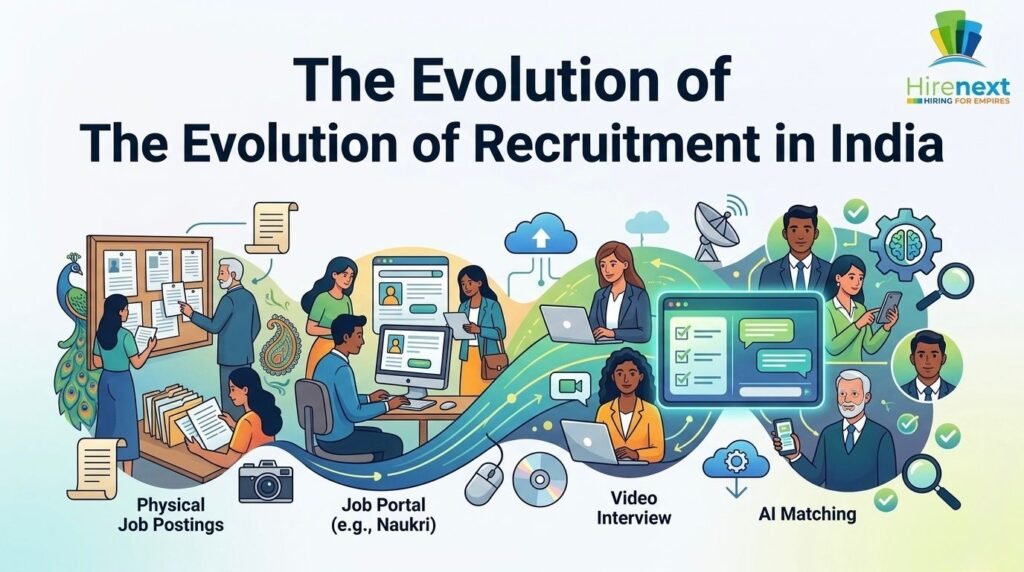
Historically, recruitment in India heavily emphasized:
- Academic qualifications
- College reputation
- Professional degrees
- Years of experience
Many organizations used degrees as a primary screening criterion.
However, rapid industry changes have revealed limitations in this approach. Employers increasingly recognize that academic qualifications do not always reflect practical workplace capabilities.
As a result, skill based hiring is becoming a preferred recruitment strategy across various industries.
Why Skill Based Hiring is Growing in India
Several factors explain why skill based hiring is growing in India.
Rapid Technological Change
Technology evolves faster than traditional educational curricula.
Employers need professionals with current skills rather than outdated theoretical knowledge.
Talent Shortages
Many industries face shortages of skilled professionals.
Skill based hiring expands the talent pool by considering candidates from diverse backgrounds.
Startup Ecosystem Growth
India’s startup ecosystem prioritizes agility and performance.
Startups often focus on demonstrated abilities rather than academic credentials.
Digital Learning Opportunities
Online courses and certifications allow individuals to develop valuable skills independently.
These trends continue accelerating skill based hiring adoption.
Traditional Hiring vs Skill Based Hiring
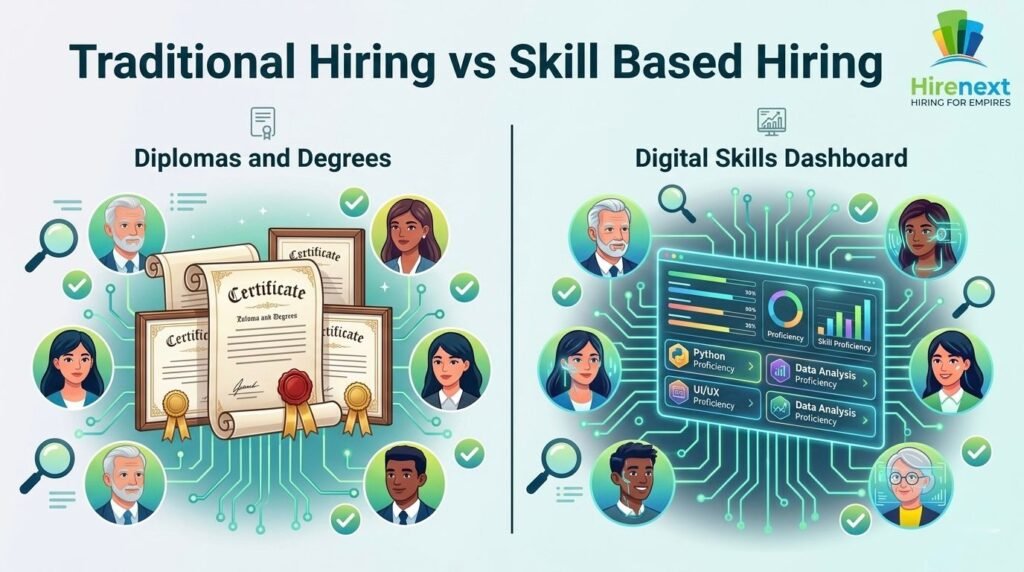
Traditional hiring often focuses on:
- Degrees
- Institutions
- Experience duration
In contrast, skill based hiring emphasizes:
- Practical abilities
- Competencies
- Performance potential
- Problem-solving skills
This approach often leads to better hiring outcomes and improved workforce productivity.
The Impact of Technology on Hiring
Technology has significantly contributed to the growth of skill based hiring.
Modern recruitment tools enable employers to:
- Conduct skill assessments
- Evaluate portfolios
- Analyze competencies
- Measure performance potential
These innovations support more objective hiring decisions.
Industries Leading the Skill-Based Hiring Movement
Several industries are embracing skill based hiring more rapidly than others.
These include:
- Information Technology
- Digital Marketing
- Sales
- Customer Support
- Graphic Design
- Data Analytics
- E-commerce
In these sectors, practical abilities often matter more than academic qualifications.
Benefits of Skill Based Hiring for Employers
Organizations gain several advantages through skill based hiring.
Better Job Performance
Employees selected for relevant skills often perform more effectively.
Wider Talent Pool
Companies can access candidates beyond traditional educational backgrounds.
Reduced Hiring Bias
Objective skill assessments support fairer hiring decisions.
Faster Productivity
Skilled employees often require less onboarding time.
These benefits explain why skill based hiring is growing in India.
Benefits of Skill Based Hiring for Candidates
Candidates also benefit from skill based hiring.
Advantages include:
- Greater opportunities
- Reduced dependence on degrees
- Recognition of practical abilities
- Increased career mobility
This creates more inclusive employment opportunities.
The Role of Online Learning and Certifications
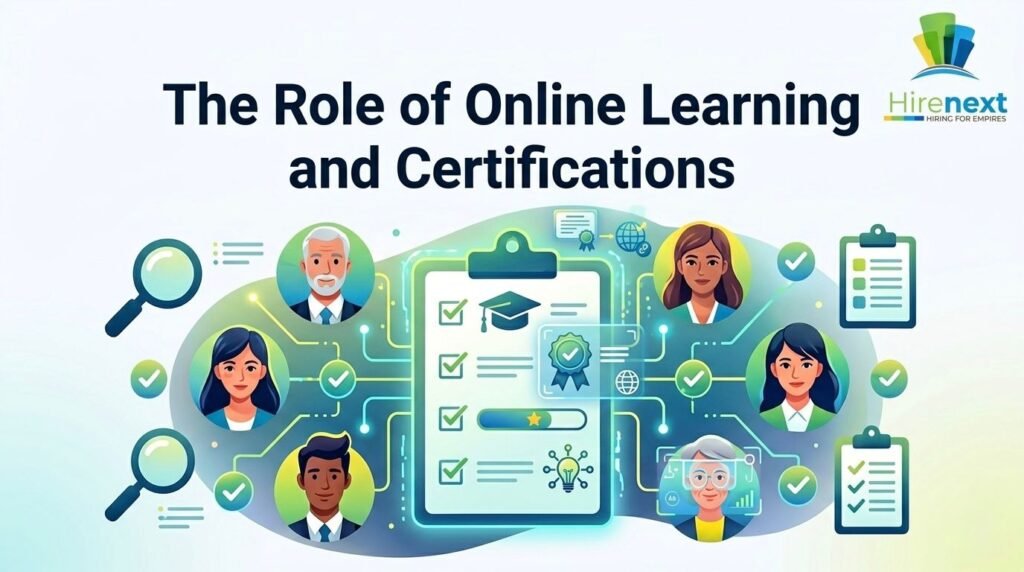
Online learning platforms have made skill development more accessible.
Professionals can gain expertise through:
- Industry certifications
- Online courses
- Bootcamps
- Professional workshops
These resources support the growth of skill based hiring across industries.
Skill Assessments in Recruitment
Skill assessments play a central role in modern hiring.
Common methods include:
- Technical tests
- Practical assignments
- Coding challenges
- Portfolio reviews
- Job simulations
These evaluations help employers measure real-world capabilities.
Challenges of Skill Based Hiring
Despite its benefits, skill based hiring presents challenges.
Assessment Quality
Poorly designed assessments may not accurately measure skills.
Time Investment
Creating effective evaluations requires resources.
Standardization Issues
Different employers may define skills differently.
Organizations must address these challenges carefully.
How Companies Implement Skill-Based Recruitment
Successful implementation often involves:
- Defining required competencies
- Creating skill assessments
- Evaluating practical performance
- Conducting structured interviews
- Measuring job-related abilities
These steps improve recruitment quality.
The Role of AI and Data in Hiring
Artificial intelligence is supporting skill based hiring by helping organizations:
- Screen candidates
- Match skills to jobs
- Analyze recruitment data
- Improve hiring efficiency
These technologies contribute to the future of recruitment.
How Skill Based Hiring Supports Diversity
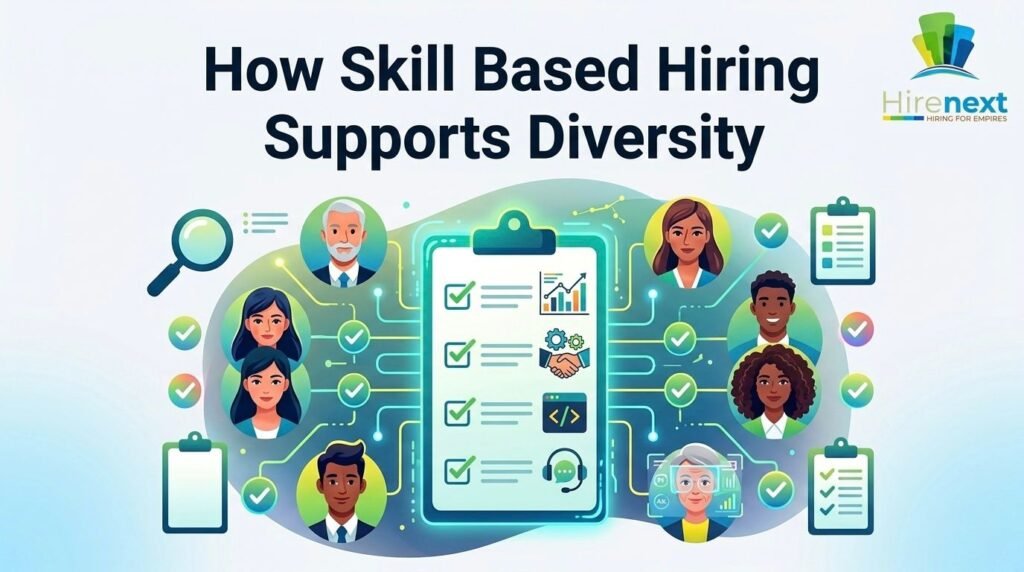
One major advantage of skill based hiring is its ability to promote diversity.
When employers focus on abilities rather than credentials, opportunities become accessible to:
- Self-taught professionals
- Career changers
- Non-traditional candidates
- Individuals from diverse backgrounds
This helps organizations build more inclusive workforces.
Future of Recruitment in India
The future of recruitment will likely involve greater emphasis on:
- Skills
- Competencies
- Continuous learning
- Data-driven hiring
- AI-assisted recruitment
Organizations that embrace these trends will gain competitive advantages.
What Job Seekers Need to Do
Candidates should focus on:
- Building practical skills
- Creating portfolios
- Earning certifications
- Gaining hands-on experience
- Demonstrating competencies
These strategies improve success in skill based hiring environments.
How Educational Institutions Are Adapting
Educational institutions are increasingly emphasizing:
- Industry-relevant skills
- Practical learning
- Internship opportunities
- Project-based education
These changes support workforce readiness.
Best Practices for Employers
Organizations can maximize the benefits of skill based hiring by:
- Using objective assessments
- Defining clear competencies
- Combining skills evaluations with interviews
- Continuously improving hiring processes
These practices improve recruitment outcomes.
The Future Outlook for Skill Based Hiring
The growth of skill based hiring is expected to continue as industries become more dynamic and technology-driven.
Employers increasingly recognize that skills, adaptability, and learning ability are stronger predictors of success than credentials alone.
This trend will play a major role in shaping the future of recruitment.
Conclusion
The rise of skill based hiring represents one of the most important changes in India’s recruitment landscape. As organizations seek better hiring outcomes, broader talent pools, and improved workforce performance, skills are becoming more valuable than traditional credentials alone.
Understanding why skill based hiring is growing in India helps employers, candidates, and educators prepare for changing workforce demands. By focusing on competencies, practical abilities, and continuous learning, organizations can build stronger teams while creating more opportunities for talented professionals.
As the future of recruitment continues evolving, skill based hiring will remain a key driver of innovation, inclusion, and workforce success in India.