
Are Traditional Interviews Becoming Outdated?
Introduction
Recruitment has changed significantly over the past decade. Technology, remote work, changing workforce expectations, and data-driven hiring strategies have transformed how companies identify and evaluate talent.
For many years, traditional face-to-face interviews were considered the gold standard of recruitment. Employers relied heavily on interview conversations to assess skills, personality, and job suitability. However, as organizations adopt modern hiring methods, many professionals are beginning to question whether traditional interviews are still the most effective way to evaluate candidates.
The rise of skills assessments, virtual interviews, automated screening tools, and AI in recruitment has created new opportunities for employers to make more informed hiring decisions.
This has sparked an important discussion about why traditional interviews are changing and whether they can continue meeting the demands of today’s workforce.
In this article, we’ll explore the evolution of recruitment, examine the strengths and weaknesses of traditional interviews, and discuss how modern hiring methods are shaping the future of talent acquisition.
Table of Contents
- Understanding Traditional Interviews
- Why Traditional Interviews Became Popular
- Limitations of Traditional Interviews
- Why Traditional Interviews Are Changing
- The Rise of Modern Hiring Methods
- The Role of AI in Recruitment
- Skills-Based Hiring and Assessments
- Virtual and Remote Interviews
- Behavioral and Situational Assessments
- Data-Driven Recruitment Decisions
- Candidate Experience in Modern Recruitment
- Benefits of Modern Hiring Methods
- Challenges of Modern Hiring Methods
- Can Traditional Interviews Still Be Useful?
- Combining Traditional and Modern Hiring Methods
- What Candidates Need to Know
- How Employers Are Adapting
- Future Trends in Recruitment
- Will Traditional Interviews Disappear?
- Conclusion
Understanding Traditional Interviews
Traditional interviews involve direct conversations between recruiters and candidates.
These interviews are commonly conducted:
- Face-to-face
- Over the phone
- Through structured question-and-answer sessions
Recruiters typically evaluate:
- Communication skills
- Confidence
- Professionalism
- Technical knowledge
- Cultural fit
For decades, traditional interviews have been one of the most important recruitment tools used by organizations worldwide.
Why Traditional Interviews Became Popular

Traditional interviews gained popularity because they provide employers with opportunities to evaluate candidates beyond their resumes.
Recruiters can:
- Ask follow-up questions
- Assess interpersonal skills
- Understand career motivations
- Evaluate personality traits
These advantages helped establish interviews as a core component of hiring processes.
However, changing workforce demands have accelerated the adoption of modern hiring methods.
Limitations of Traditional Interviews
Despite their popularity, traditional interviews have several limitations.
Subjective Decision-Making
Different interviewers may evaluate the same candidate differently.
Interview Bias
Unconscious bias can influence hiring decisions.
Performance vs Capability
Some candidates interview well but perform poorly on the job.
Others may have excellent skills but struggle during interviews.
Limited Assessment Scope
A short interview may not accurately measure practical abilities.
These limitations are among the main reasons why traditional interviews are changing.
Why Traditional Interviews Are Changing
Organizations increasingly recognize that interviews alone do not provide complete insight into candidate potential.
Today’s employers want:
- Better hiring accuracy
- Reduced bias
- Faster recruitment
- Improved candidate experiences
As a result, companies are investing in modern hiring methods that offer more comprehensive evaluation processes.
The Rise of Modern Hiring Methods
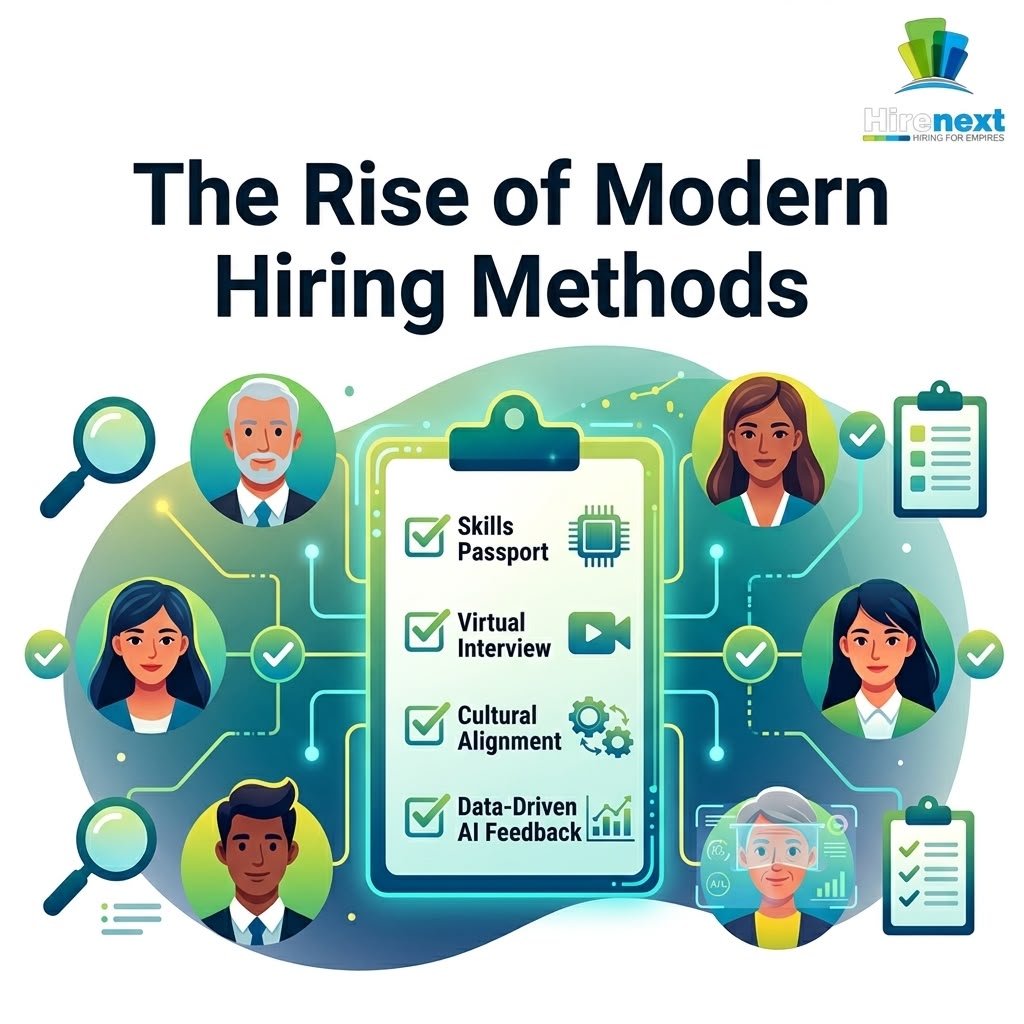
Recruitment strategies have evolved significantly.
Popular modern hiring methods include:
- Skills assessments
- Online tests
- Video interviews
- AI-powered screening
- Behavioral evaluations
- Job simulations
These approaches help employers evaluate candidates more objectively.
The Role of AI in Recruitment
One of the most significant developments in hiring is the growth of AI in recruitment.
Artificial intelligence helps organizations:
- Screen resumes
- Match candidates to roles
- Schedule interviews
- Analyze hiring data
- Improve recruitment efficiency
As AI in recruitment continues advancing, hiring processes become faster and more scalable.
Skills-Based Hiring and Assessments
Skills-based hiring focuses on what candidates can actually do rather than where they studied or worked.
Employers increasingly use:
- Technical assessments
- Practical assignments
- Coding tests
- Work samples
This shift represents one of the most important modern hiring methods today.
Virtual and Remote Interviews
Remote work has accelerated virtual recruitment.
Benefits include:
- Faster scheduling
- Lower costs
- Access to wider talent pools
- Increased flexibility
Video interviews have become a standard part of many recruitment processes.
Behavioral and Situational Assessments
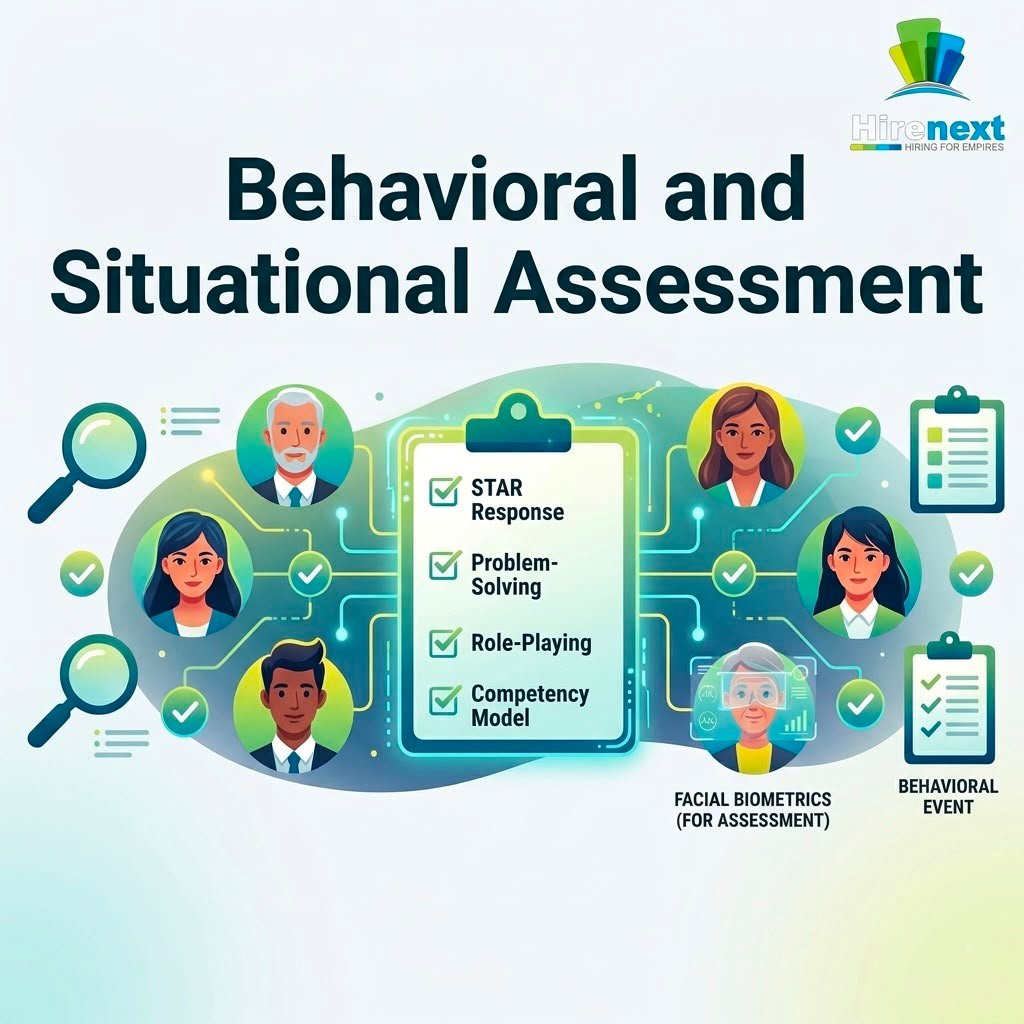
Modern employers increasingly evaluate behavior rather than relying solely on resumes.
Questions often focus on:
- Problem-solving
- Leadership
- Teamwork
- Conflict resolution
These assessments provide deeper insights into workplace performance.
Data-Driven Recruitment Decisions
Organizations are using analytics to improve hiring outcomes.
Data helps recruiters:
- Identify successful hiring patterns
- Improve candidate matching
- Reduce turnover
- Measure recruitment effectiveness
This data-driven approach supports many modern hiring methods.
Candidate Experience in Modern Recruitment
Today’s candidates expect efficient and transparent hiring processes.
Modern recruitment emphasizes:
- Faster communication
- Simplified applications
- Clear expectations
- Timely feedback
Improving candidate experience has become a major recruitment priority.
Benefits of Modern Hiring Methods
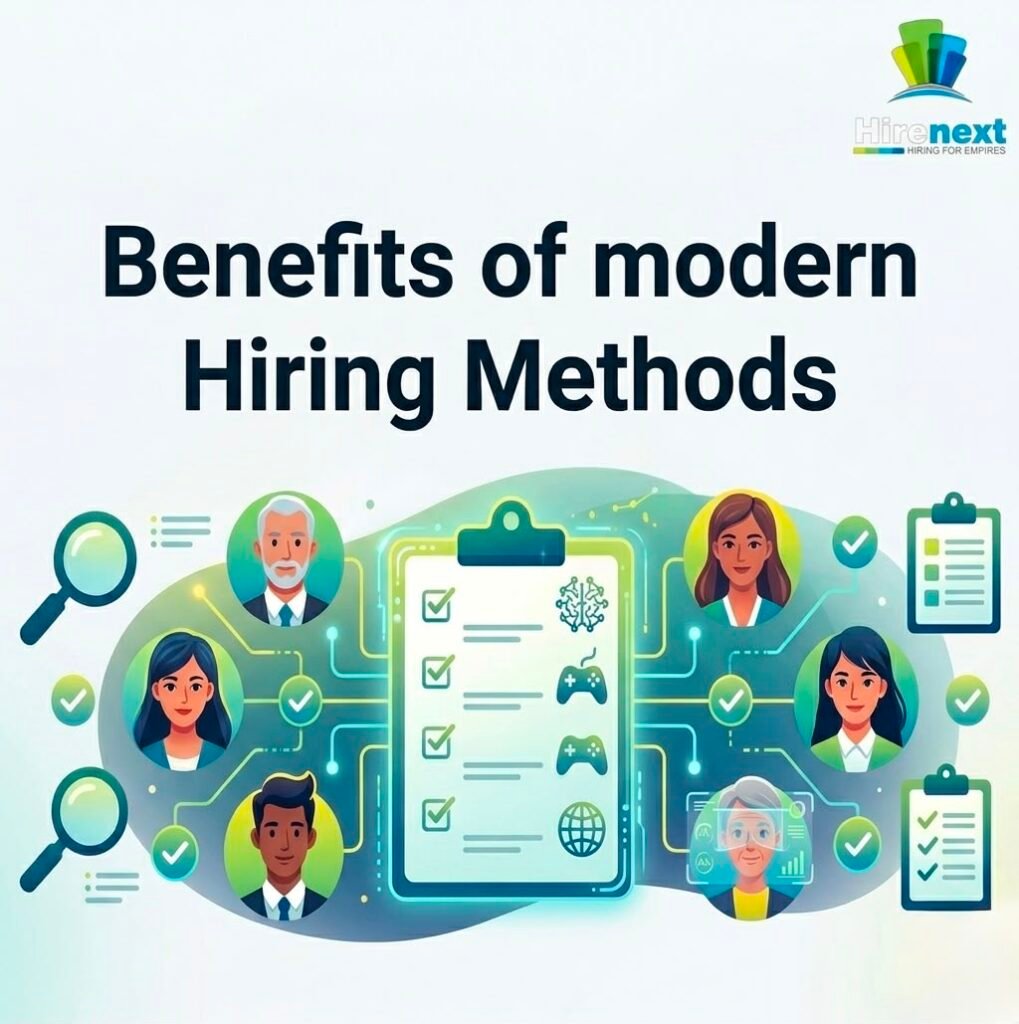
The growing adoption of modern hiring methods offers several advantages.
Better Hiring Accuracy
Multiple assessment methods improve decision quality.
Reduced Bias
Structured evaluations can support fairer hiring.
Faster Recruitment
Technology accelerates many hiring tasks.
Improved Candidate Matching
Employers gain better insights into candidate suitability.
Challenges of Modern Hiring Methods
Despite their benefits, modern approaches also present challenges.
Potential concerns include:
- Technology costs
- Privacy considerations
- Algorithmic bias
- Overreliance on automation
Organizations must carefully balance technology with human judgment.
Can Traditional Interviews Still Be Useful?
Although recruitment is evolving, traditional interviews still offer value.
They help employers assess:
- Communication skills
- Professional presence
- Motivation
- Cultural fit
Many organizations continue using interviews alongside newer assessment methods.
Combining Traditional and Modern Hiring Methods

The most effective recruitment strategies often combine multiple approaches.
Examples include:
- Resume screening
- AI-powered candidate matching
- Skills assessment
- Video interview
- Final face-to-face discussion
This blended approach improves hiring quality.
What Candidates Need to Know
Job seekers should prepare for changing recruitment processes.
Key recommendations include:
- Develop practical skills
- Prepare for online assessments
- Build digital portfolios
- Practice virtual interviews
- Stay comfortable with technology
Understanding modern hiring methods can improve job search success.
How Employers Are Adapting
Organizations are investing in:
- Recruitment technology
- Automation tools
- Skills-based evaluations
- Candidate experience improvements
These investments reflect growing recognition of why traditional interviews are changing.
Future Trends in Recruitment
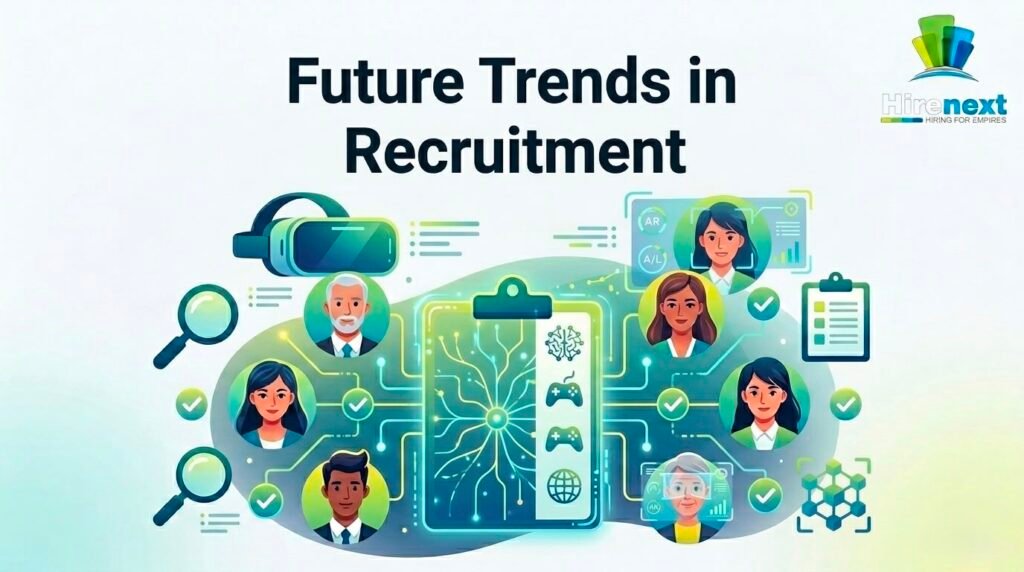
Several trends are likely to shape future hiring:
- Increased AI adoption
- Predictive hiring analytics
- Skills-first recruitment
- Automated candidate matching
- Personalized recruitment experiences
The influence of AI in recruitment will continue expanding.
Will Traditional Interviews Disappear?
Despite rapid innovation, traditional interviews are unlikely to disappear completely.
Human interaction remains important for:
- Relationship building
- Communication assessment
- Organizational fit evaluation
However, interviews will likely become one component of broader hiring systems rather than the primary decision-making tool.
Conclusion
The recruitment landscape is evolving rapidly, and modern hiring methods are transforming how organizations evaluate talent. While traditional interviews remain valuable, many employers now recognize their limitations and are supplementing them with skills assessments, data-driven evaluations, and AI in recruitment technologies.
Understanding why traditional interviews are changing helps both employers and candidates adapt to modern recruitment practices. The future of hiring is unlikely to rely solely on interviews or technology. Instead, the most successful organizations will combine human judgment with innovative recruitment tools to make smarter, fairer, and more effective hiring decisions.
As workforce expectations continue evolving, modern hiring methods will play an increasingly important role in shaping the future of recruitment.