
What Recruiters Actually Think While Reading Your Resume
Introduction
Most job seekers spend hours creating and updating their resumes, hoping to impress recruiters and secure interview opportunities. However, many candidates don’t fully understand what recruiters look for in a resume when they review applications.
The reality is that recruiters often spend only a few seconds scanning a resume before deciding whether to continue reading or move on to the next candidate. This means your resume must quickly communicate your value, relevant skills, and suitability for the role.
Understanding what recruiters look for in a resume can help candidates create stronger applications, improve interview opportunities, and increase their chances of getting hired.
In this guide, we’ll explore what recruiters look for in a resume in 2026, discuss the importance of an ATS friendly resume, and reveal what actually goes through a recruiter’s mind while reviewing applications.
Table of Contents
- Why Resumes Matter in Recruitment
- How Recruiters Read Resumes
- The First 10 Seconds of Resume Screening
- What Recruiters Look for in a Resume
- Contact Information and Professional Presentation
- Resume Summary and Career Overview
- Relevant Work Experience
- Skills That Match the Job Description
- Education and Certifications
- Achievements vs Responsibilities
- The Importance of Keywords
- ATS Friendly Resume Requirements
- What Recruiters Look for in a Resume in 2026
- Common Resume Red Flags
- Mistakes That Lead to Resume Rejection
- How Recruiters Evaluate Freshers’ Resumes
- Resume Tips for Experienced Professionals
- How to Improve Your Resume
- Future Resume Trends
- Conclusion
Why Resumes Matter in Recruitment
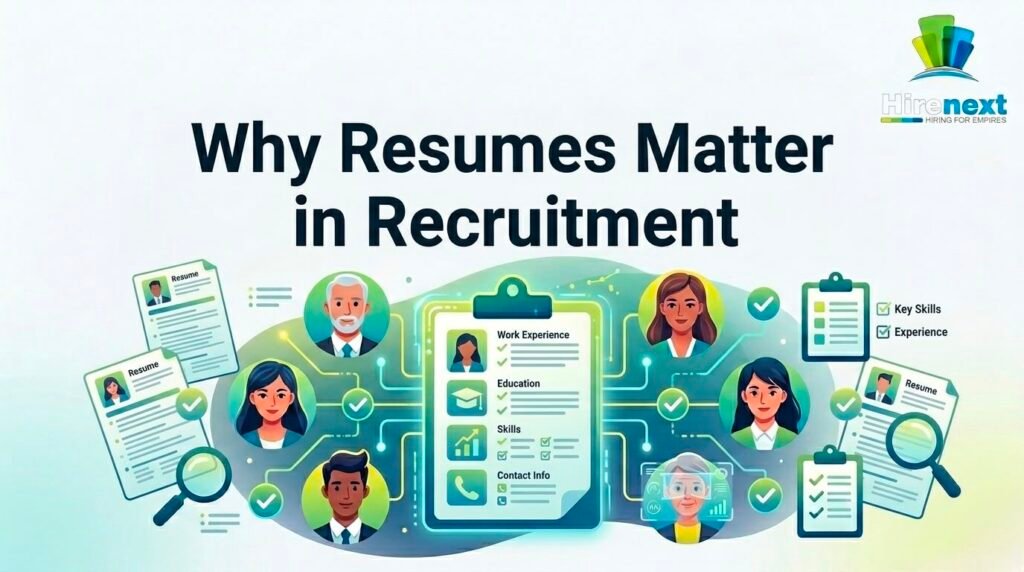
A resume is often the first interaction between a candidate and an employer.
Before interviews, assessments, or discussions occur, recruiters use resumes to evaluate:
- Qualifications
- Experience
- Skills
- Career progression
- Professional achievements
This is why understanding what recruiters look for in a resume is essential for job seekers.
How Recruiters Read Resumes
Many candidates assume recruiters read every word carefully.
In reality, recruiters often scan resumes quickly.
They typically focus on:
- Job titles
- Relevant experience
- Skills
- Achievements
- Education
- Overall presentation
Recruiters are searching for evidence that a candidate matches the role requirements.
The First 10 Seconds of Resume Screening
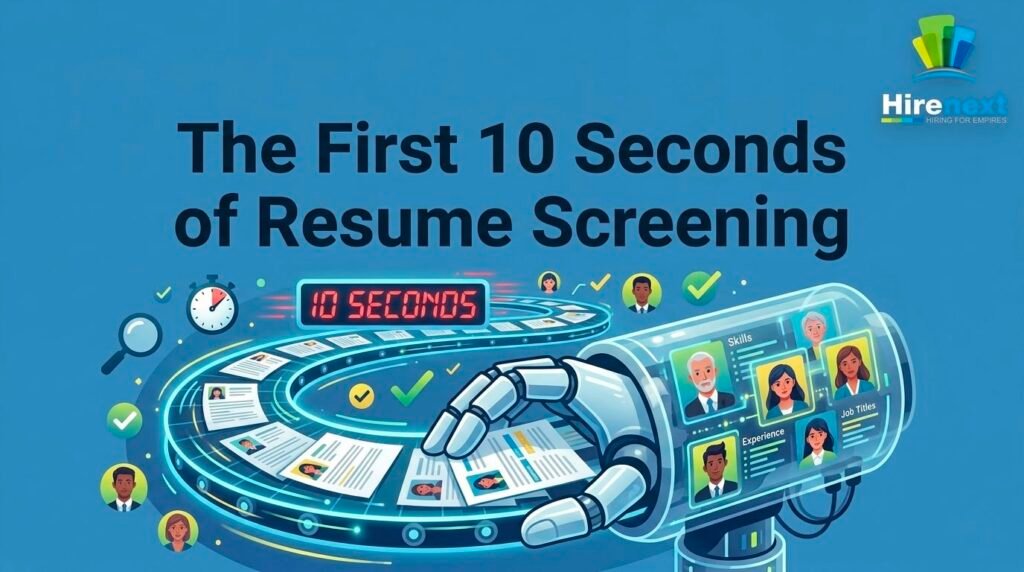
Research consistently shows that recruiters spend only a few seconds deciding whether a resume deserves further attention.
During these initial moments, recruiters evaluate:
- Resume structure
- Readability
- Relevant keywords
- Professional appearance
- Role alignment
This explains why what recruiters look for in a resume extends beyond qualifications alone.
What Recruiters Look for in a Resume
When reviewing applications, recruiters focus on several key areas.
These include:
Relevant Experience
Can the candidate perform the role?
Skills Alignment
Do the skills match the job description?
Career Progression
Has the candidate shown professional growth?
Achievements
What measurable results have been delivered?
Professional Presentation
Is the resume organized and easy to read?
These factors strongly influence recruitment decisions.
Contact Information and Professional Presentation
Recruiters first check whether candidates provide clear contact details.
Essential information includes:
- Full name
- Phone number
- Email address
- LinkedIn profile (if applicable)
Professional formatting also matters.
A clean layout improves readability and creates positive impressions.
Resume Summary and Career Overview
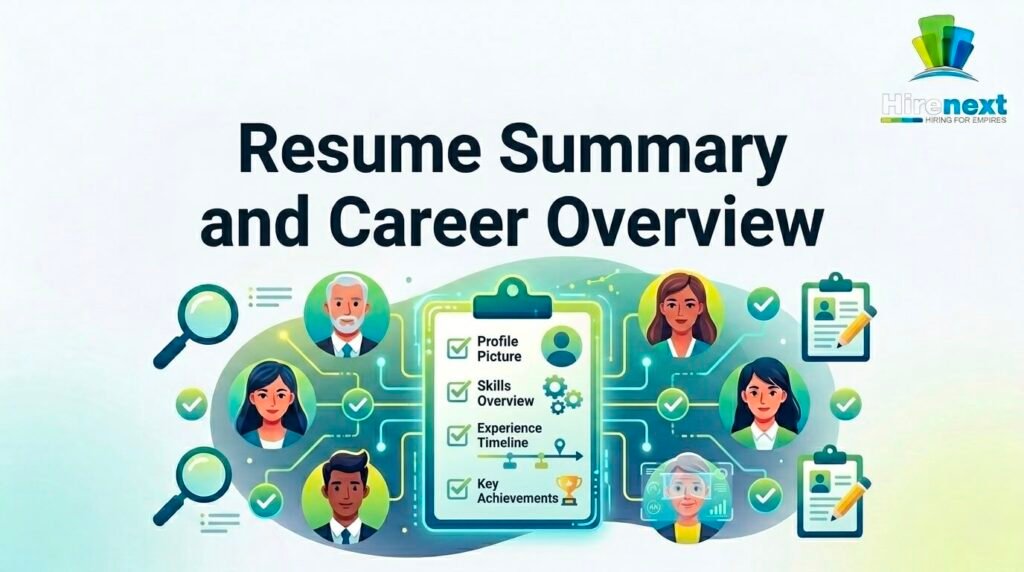
A strong summary helps recruiters quickly understand candidate value.
An effective summary highlights:
- Years of experience
- Core skills
- Industry expertise
- Career achievements
The summary section often determines whether recruiters continue reading.
Relevant Work Experience
Experience remains one of the most important factors in recruitment.
Recruiters examine:
- Previous job titles
- Industry relevance
- Responsibilities
- Career progression
Relevant experience is a major part of what recruiters look for in a resume.
Skills That Match the Job Description
Recruiters compare candidate skills against job requirements.
Skills may include:
Technical Skills
Software, tools, and industry knowledge.
Soft Skills
Communication, leadership, teamwork, and problem-solving.
Candidates should ensure their skills align closely with the position.
Education and Certifications
Educational qualifications continue to influence hiring decisions.
Recruiters often review:
- Degrees
- Diplomas
- Certifications
- Professional training
For certain industries, certifications can significantly strengthen applications.
Achievements vs Responsibilities
One of the biggest resume mistakes is listing responsibilities without achievements.
Recruiters prefer measurable accomplishments.
Instead of:
“Managed a sales team”
Write:
“Led a sales team that increased revenue by 25%.”
Achievements demonstrate impact and value.
The Importance of Keywords
Keywords have become increasingly important in recruitment.
Many organizations use Applicant Tracking Systems (ATS) to filter resumes.
Recruiters often search for keywords related to:
- Skills
- Technologies
- Certifications
- Industry terms
Using relevant keywords improves visibility.
ATS Friendly Resume Requirements
An ATS friendly resume is designed to be easily processed by Applicant Tracking Systems.
Best practices include:
Simple Formatting
Avoid complex graphics and tables.
Standard Headings
Use sections such as:
- Experience
- Education
- Skills
Relevant Keywords
Match keywords from the job description.
Clear Structure
Maintain consistent formatting throughout.
Creating an ATS friendly resume improves the chances of reaching recruiters.
What Recruiters Look for in a Resume in 2026
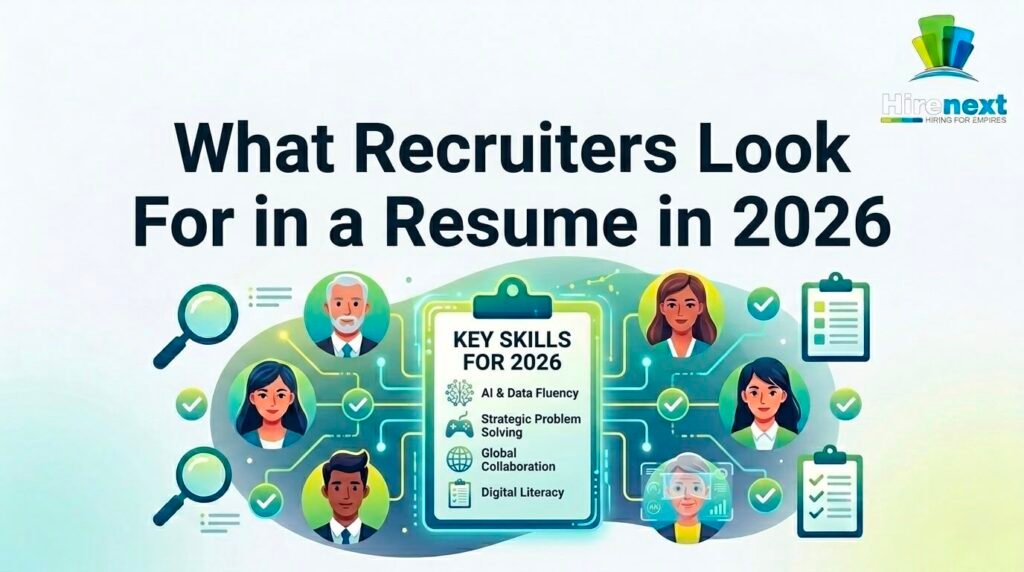
The recruitment landscape continues evolving.
Understanding what recruiters look for in a resume in 2026 requires awareness of modern hiring trends.
Key priorities include:
Skills-Based Hiring
Employers increasingly focus on demonstrated abilities.
Digital Competencies
Technology skills remain highly valued.
Adaptability
Organizations seek candidates who can learn quickly.
Results-Oriented Achievements
Employers prefer measurable outcomes.
ATS Optimization
An ATS friendly resume is becoming essential.
Common Resume Red Flags
Certain issues immediately raise concerns.
Common red flags include:
- Frequent job hopping
- Unexplained employment gaps
- Spelling errors
- Inconsistent information
- Irrelevant content
These problems may reduce interview opportunities.
Mistakes That Lead to Resume Rejection
Many resumes are rejected because of avoidable mistakes.
Examples include:
Generic Resumes
Sending identical resumes to every employer.
Poor Formatting
Making information difficult to find.
Missing Keywords
Failing ATS screening.
Lack of Achievements
Focusing only on responsibilities.
Understanding what recruiters look for in a resume helps avoid these errors.
How Recruiters Evaluate Freshers’ Resumes
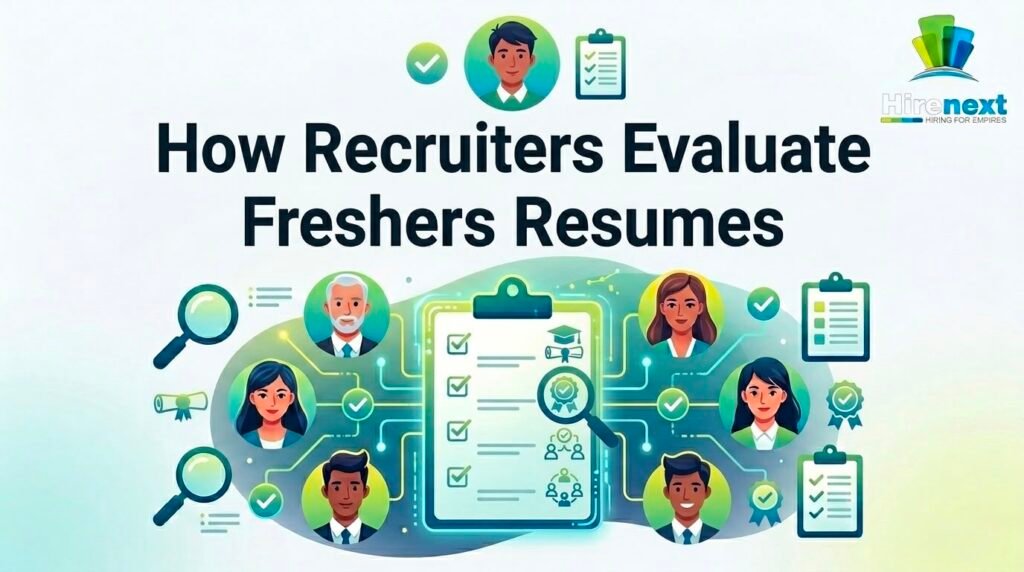
Recruiters assess freshers differently because work experience may be limited.
They focus on:
- Education
- Internships
- Projects
- Certifications
- Extracurricular activities
- Communication skills
Freshers should emphasize potential and learning ability.
Resume Tips for Experienced Professionals
Experienced candidates should highlight:
- Leadership achievements
- Revenue contributions
- Team management
- Industry expertise
- Strategic accomplishments
Experienced professionals should focus on impact rather than listing every responsibility.
How to Improve Your Resume
Candidates can strengthen their resumes by:
Customizing Applications
Tailor resumes for each role.
Quantifying Achievements
Use measurable results.
Optimizing Keywords
Improve ATS performance.
Improving Readability
Use clean formatting.
Highlighting Relevant Skills
Focus on role-specific qualifications.
These improvements align closely with what recruiters look for in a resume.
Future Resume Trends
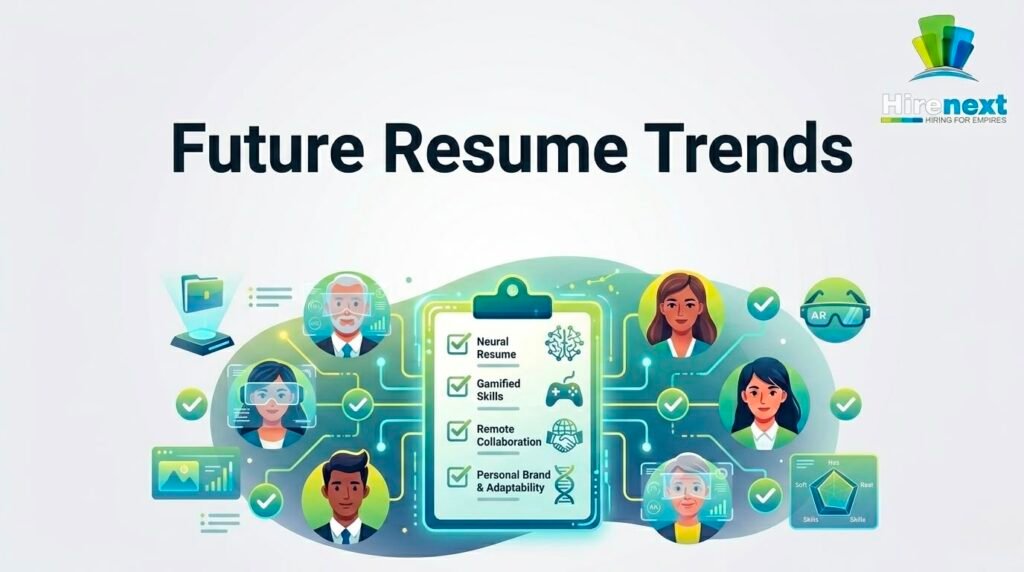
Recruitment technology continues advancing.
Future trends include:
- AI-assisted resume screening
- Skills-based recruitment
- Digital portfolios
- Data-driven hiring
- Enhanced ATS systems
Candidates who adapt to these trends will remain competitive.
Conclusion
Understanding what recruiters look for in a resume is one of the most valuable skills for modern job seekers. Recruiters evaluate much more than qualifications—they assess relevance, achievements, communication, skills, and overall presentation.
As hiring evolves, understanding what recruiters look for in a resume in 2026 becomes increasingly important. Creating an ATS friendly resume, highlighting measurable achievements, using relevant keywords, and tailoring applications to specific roles can dramatically improve job search success.
Ultimately, a resume should do more than list experience—it should clearly demonstrate why you are the right candidate for the opportunity.