
Why Young Employees Prefer Growth Over Job Security
Introduction
The workplace has undergone a dramatic transformation over the last decade. While previous generations often prioritized long-term job stability and organizational loyalty, today’s workforce is increasingly focused on learning, growth, and career advancement. This shift is especially noticeable among Generation Z and younger millennials.
One of the most significant Gen Z career preferences emerging in modern workplaces is the desire for continuous development rather than simply securing a stable position. Young professionals are increasingly choosing opportunities that offer skill development, mentorship, challenging projects, and advancement opportunities over jobs that provide security but limited growth.
This change is reshaping recruitment, employee engagement, and retention strategies across industries. Organizations that understand these evolving Gen Z career preferences are better positioned to attract, motivate, and retain top talent.
The growing debate around career development vs job security highlights how employee priorities have changed in a rapidly evolving job market. Understanding these preferences is essential for employers, HR professionals, and business leaders who want to build future-ready organizations.
Table of Contents
- Understanding Gen Z Career Preferences
- The Traditional Importance of Job Security
- Why Workplace Expectations Are Changing
- Career Development vs Job Security
- The Desire for Continuous Learning
- The Impact of Technology on Career Choices
- Why Growth Opportunities Matter More
- The Role of Purpose and Meaningful Work
- Work-Life Balance and Career Decisions
- The Influence of Economic Changes
- The Importance of Feedback and Recognition
- Leadership Expectations of Young Employees
- Workplace Flexibility and Career Growth
- How Organizations Can Adapt
- Talent Retention Strategies for Modern Workforces
- Common Mistakes Employers Make
- Benefits of Supporting Employee Growth
- Future Workforce Trends
- What Employers Can Learn from Gen Z Career Preferences
- Conclusion
Understanding Gen Z Career Preferences
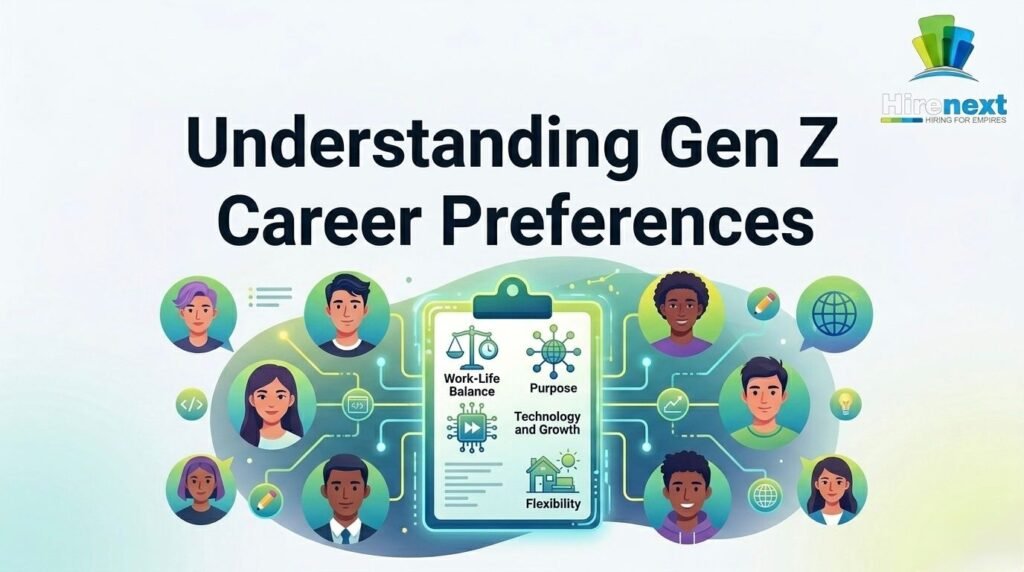
Generation Z is entering the workforce with unique expectations shaped by technology, global connectivity, and access to information.
Key Gen Z career preferences include:
- Continuous learning
- Professional growth
- Flexible work arrangements
- Purpose-driven careers
- Transparent leadership
- Mental well-being support
Unlike previous generations that often viewed employment as a long-term commitment, Gen Z tends to see careers as evolving journeys focused on personal and professional development.
These changing Gen Z career preferences are influencing how companies recruit, manage, and retain employees.
The Traditional Importance of Job Security
Historically, job security was one of the most important factors influencing employment decisions.
Employees often sought:
- Stable salaries
- Long-term employment
- Retirement benefits
- Organizational loyalty
For many previous generations, remaining with a single employer for years—or even decades—was considered a sign of career success.
However, changing economic conditions and evolving workforce values have shifted these priorities.
Why Workplace Expectations Are Changing
Several factors have contributed to changing employee expectations.
These include:
- Rapid technological advancements
- Increased career mobility
- Remote work opportunities
- Online learning platforms
- Access to global job markets
As a result, many young professionals no longer view job security as their primary career objective.
Instead, modern Gen Z career preferences emphasize growth, adaptability, and lifelong learning.
Career Development vs Job Security
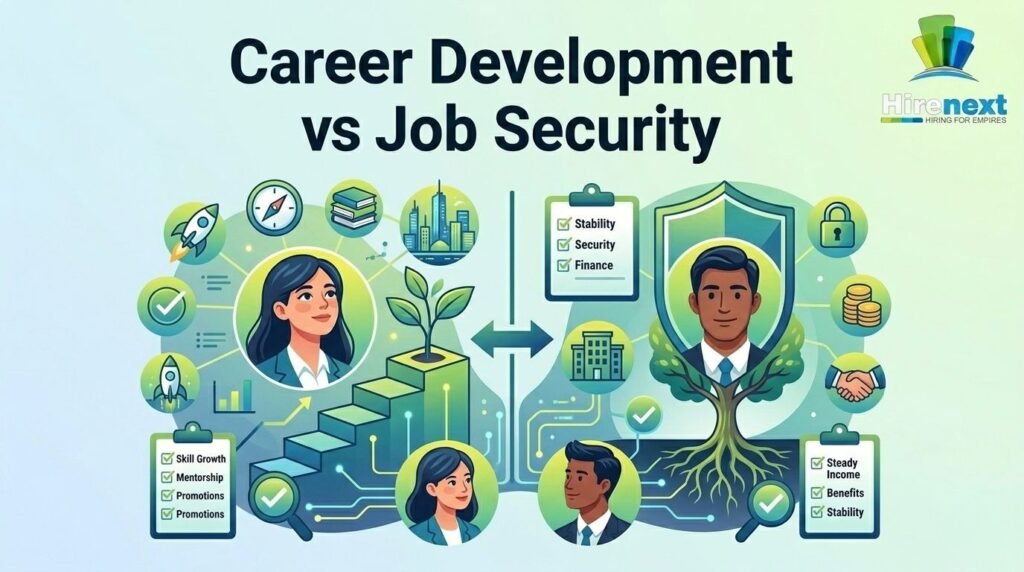
The discussion around career development vs job security has become increasingly relevant.
Young employees often ask:
- Will this role help me grow?
- Can I develop new skills?
- Are there promotion opportunities?
- Will I remain competitive in the future job market?
If the answer is no, many employees are willing to explore alternative opportunities—even if their current position offers stability.
This illustrates one of the most influential Gen Z career preferences today.
The Desire for Continuous Learning
Learning opportunities have become a major factor in career decisions.
Employees increasingly seek:
- Professional certifications
- Mentorship programs
- Skill-building workshops
- Leadership training
- Cross-functional projects
Continuous learning helps employees remain relevant in a rapidly changing economy.
Organizations that invest in employee development often attract talent aligned with modern Gen Z career preferences.
The Impact of Technology on Career Choices
Technology has transformed both work and career planning.
Young professionals can now:
- Access online courses
- Build digital portfolios
- Learn new skills independently
- Explore global opportunities
This accessibility encourages employees to prioritize growth over long-term stability.
The ability to adapt quickly has become more valuable than relying solely on job security.
Why Growth Opportunities Matter More
Many young employees believe future success depends on their ability to grow rather than remain in one position.
Growth opportunities provide:
- New skills
- Increased earning potential
- Career mobility
- Leadership experience
This explains why many modern Gen Z career preferences focus heavily on development opportunities.
The Role of Purpose and Meaningful Work
Purpose plays a significant role in employee engagement.
Many younger workers want careers that:
- Create impact
- Align with personal values
- Contribute to meaningful goals
Organizations offering meaningful work often experience higher employee satisfaction and retention.
Work-Life Balance and Career Decisions
Work-life balance is another important factor shaping Gen Z career preferences.
Employees increasingly prioritize:
- Flexible schedules
- Personal well-being
- Family commitments
- Mental health
Growth opportunities that support work-life balance are often more attractive than highly secure but demanding roles.
The Influence of Economic Changes
Economic uncertainty has changed how employees view security.
Many young professionals recognize that:
- Industries evolve quickly
- Technology disrupts jobs
- Companies restructure frequently
As a result, they often view skill development as the best form of job security.
This perspective strongly influences the debate around career development vs job security.
The Importance of Feedback and Recognition
Modern employees expect regular feedback.
They value:
- Coaching
- Mentorship
- Performance discussions
- Recognition programs
Frequent feedback supports growth and reinforces employee engagement.
Leadership Expectations of Young Employees
Leadership quality significantly influences retention.
Young employees often expect leaders to:
- Support development
- Provide transparency
- Encourage innovation
- Offer mentorship
Organizations that meet these expectations align more closely with evolving Gen Z career preferences.
Workplace Flexibility and Career Growth
Flexibility is no longer viewed as a workplace perk.
Many employees consider it essential.
Flexible work arrangements support:
- Productivity
- Employee satisfaction
- Professional development
- Work-life balance
This flexibility contributes to stronger engagement and retention.
How Organizations Can Adapt
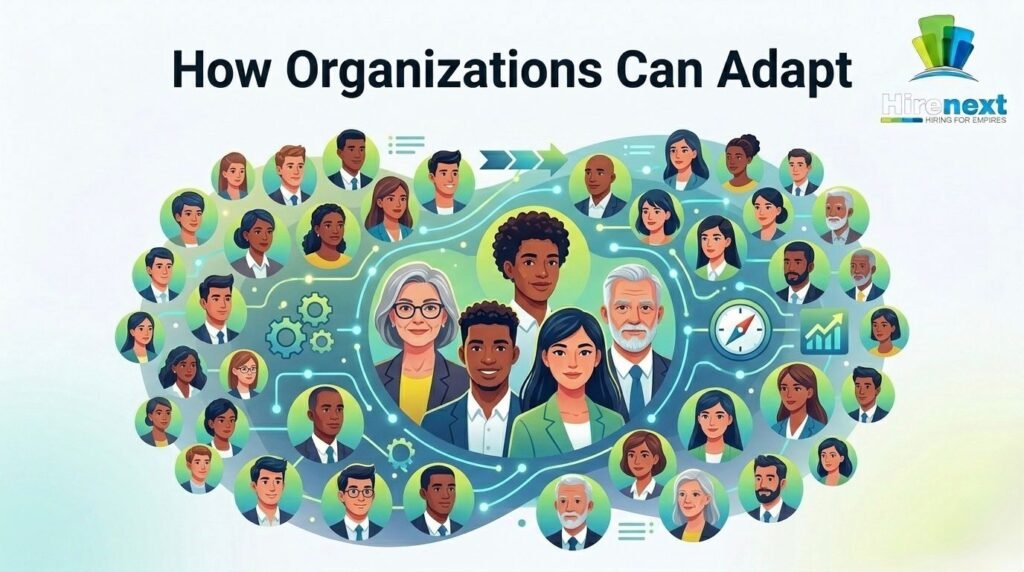
Companies must evolve to meet changing workforce expectations.
Strategies include:
- Creating development programs
- Supporting continuous learning
- Encouraging internal mobility
- Offering mentorship opportunities
- Promoting flexible work arrangements
These initiatives help align workplace cultures with modern Gen Z career preferences.
Talent Retention Strategies for Modern Workforces
Effective talent retention strategies are increasingly focused on employee growth.
Organizations can improve retention by:
Investing in Training
Provide learning opportunities and certifications.
Offering Clear Career Paths
Help employees understand advancement opportunities.
Supporting Leadership Development
Prepare employees for future responsibilities.
Encouraging Skill Expansion
Allow employees to gain diverse experiences.
These talent retention strategies help employees see long-term value within organizations.
Common Mistakes Employers Make
Many organizations struggle to retain young talent because they:
- Ignore development needs
- Focus only on compensation
- Limit promotion opportunities
- Fail to provide feedback
- Resist workplace flexibility
These mistakes often conflict with modern Gen Z career preferences.
Benefits of Supporting Employee Growth
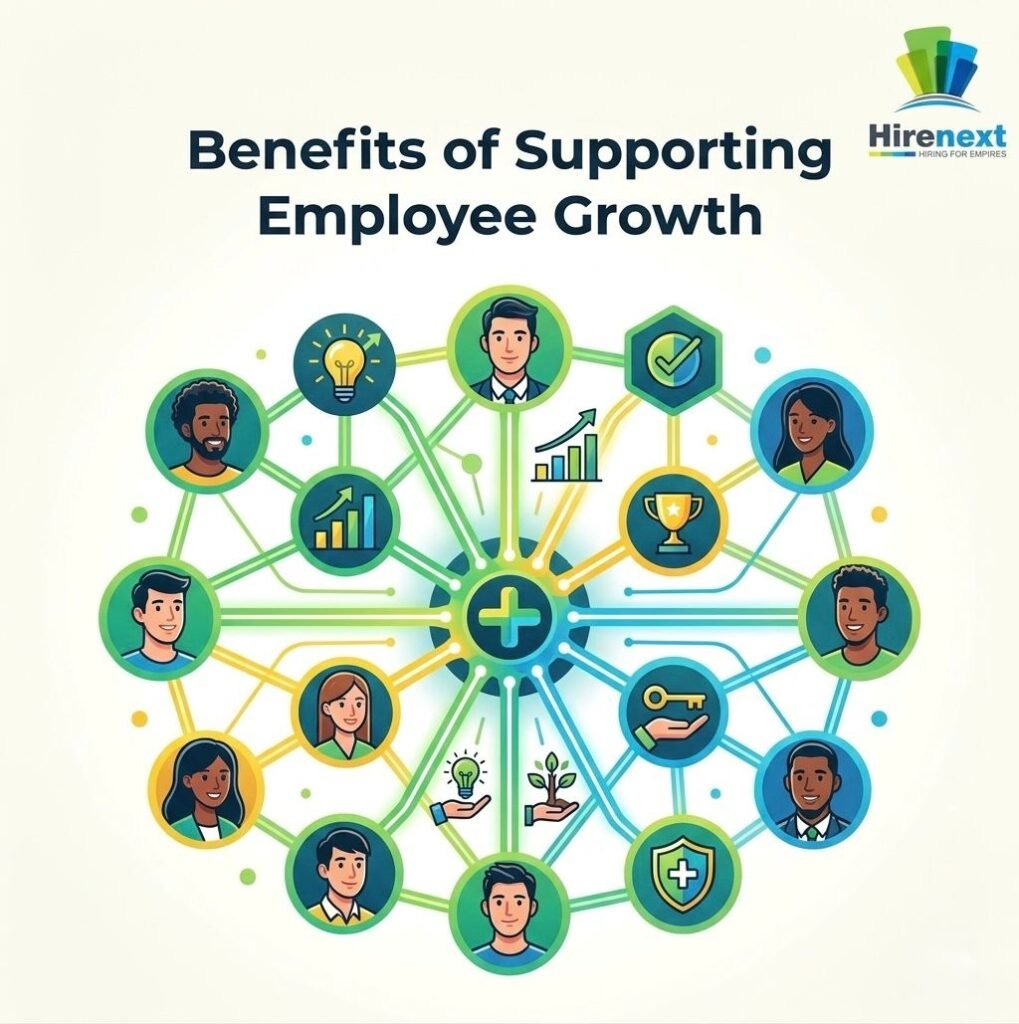
Organizations that prioritize growth experience several advantages.
Benefits include:
- Higher engagement
- Improved retention
- Stronger performance
- Increased innovation
- Better employer branding
Growth-focused cultures often outperform organizations that rely solely on job security as a retention tool.
Future Workforce Trends
Several trends are likely to influence future employment.
These include:
- Skills-based careers
- Lifelong learning
- Hybrid work environments
- Internal mobility programs
- Personalized career development
These trends align closely with evolving Gen Z career preferences.
What Employers Can Learn from Gen Z Career Preferences
Employers can gain valuable insights from changing workforce priorities.
Key lessons include:
- Employees value growth.
- Learning opportunities drive engagement.
- Development supports retention.
- Flexibility improves satisfaction.
- Career progression influences loyalty.
Understanding these Gen Z career preferences helps organizations remain competitive in attracting talent.
Conclusion
The growing importance of Gen Z career preferences reflects a broader shift in how employees view work and success. While job security remains important, many young professionals now prioritize growth, learning, flexibility, and meaningful career development opportunities.
The debate around career development vs job security highlights a changing workforce that sees adaptability and continuous learning as the true foundations of long-term success. Organizations that embrace these expectations and implement effective talent retention strategies will be better positioned to attract, engage, and retain the next generation of professionals.
As workplace expectations continue evolving, companies that invest in employee growth will not only build stronger teams but also create sustainable competitive advantages for the future.