
Small City Candidates, Big City Skills
Introduction
For years, recruitment in India revolved around metropolitan cities. Companies believed that the best professionals could only be found in places like Delhi, Mumbai, Bengaluru, Hyderabad, and Pune. Better colleges, larger corporate offices, and greater exposure made metro cities the preferred hiring destinations.
However, recruitment trends are changing rapidly.
Today, small city candidates are proving that talent is not defined by geography. Professionals from Tier-2 and Tier-3 cities are building successful careers in technology, finance, sales, digital marketing, customer support, HR, healthcare, and many other industries.
With online education, remote work opportunities, and digital skill development becoming widely available, the gap between metro cities and smaller towns has narrowed considerably. Businesses are increasingly recognizing the benefits of hiring talent from small cities, while Tier 3 city recruitment is becoming an important part of modern hiring strategies.
This guide explores why small city candidates are becoming valuable assets for businesses and why employers should look beyond traditional recruitment locations.
Table of Contents
Introduction
The Changing Face of Recruitment
Who Are Small City Candidates?
Breaking the Metro Talent Myth
Why Small City Candidates Are Gaining Attention
Strong Work Ethic
Adaptability and Learning Mindset
Better Employee Loyalty
Benefits of Hiring Talent from Small Cities
Tier 3 City Recruitment Is Reshaping Hiring
Industries Successfully Hiring Small City Candidates
Common Myths About Small City Candidates
Technology Has Made Recruitment Borderless
Why Remote Work Supports Small City Candidates
Best Hiring Practices for Recruiting Small City Candidates
Long-Term Business Benefits
The Future of Recruitment Beyond Metro Cities
Conclusion
The Changing Face of Recruitment
The recruitment landscape has transformed significantly over the past decade.
Businesses no longer depend only on metropolitan cities for skilled professionals.
Improved internet connectivity, virtual learning, online certifications, and remote work have created opportunities for professionals across India.
Today, small city candidates compete successfully with professionals from major cities by continuously improving their technical and professional skills.
Who Are Small City Candidates?
Small city candidates are professionals from Tier-2 and Tier-3 cities who possess the education, skills, and ambition required to succeed in today’s competitive job market.
These candidates often come from cities such as:
- Bareilly
- Dehradun
- Indore
- Ranchi
- Lucknow
- Kanpur
- Bhopal
- Jaipur
Many have completed professional certifications, internships, freelance projects, and remote work assignments while continuously upgrading their knowledge.
Breaking the Metro Talent Myth
A common misconception is that only metro-city professionals possess the skills needed for corporate success.
This belief no longer reflects today’s workforce.
The success of an employee depends on:
- Skills
- Attitude
- Learning ability
- Professional ethics
- Adaptability
—not their hometown.
Increasingly, small city candidates are proving that they can perform exceptionally well across industries.
Why Small City Candidates Are Gaining Attention
Businesses are expanding recruitment beyond metropolitan cities for several reasons.
Growing demand for skilled professionals has made recruitment more competitive.
At the same time, companies are discovering that small city candidates often demonstrate:
- Greater commitment
- Higher motivation
- Better retention
- Faster learning
- Strong workplace ethics
These qualities make them valuable long-term employees.
Strong Work Ethic
One of the greatest strengths of small city candidates is their dedication toward work.
Many professionals understand the value of career opportunities and actively work to prove themselves.
Employers frequently appreciate qualities such as:
- Discipline
- Responsibility
- Reliability
- Accountability
- Consistency
These characteristics contribute directly to business productivity.
Adaptability and Learning Mindset
Technology changes rapidly.
Successful employees continuously update their knowledge and develop new skills.
Many small city candidates actively improve themselves through:
- Online certifications
- Digital learning platforms
- Professional webinars
- Remote internships
- Practical projects
This willingness to learn allows them to adapt quickly to changing workplace requirements.
Better Employee Loyalty
Employee retention has become one of the biggest challenges facing businesses today.
Highly competitive metro job markets often encourage professionals to change jobs frequently.
Many small city candidates, however, prioritize:
- Career stability
- Long-term growth
- Learning opportunities
- Organizational loyalty
This reduces employee turnover while improving workforce stability.
Benefits of Hiring Talent from Small Cities
The benefits of hiring talent from small cities continue attracting businesses across industries.
These include:
- Access to larger talent pools
- Lower recruitment costs
- Better employee retention
- Strong work ethics
- Continuous learning mindset
- Long-term commitment
As recruitment strategies evolve, these advantages become increasingly important.
Tier 3 City Recruitment Is Reshaping Hiring
Recruitment strategies are evolving as businesses realize that talent is not limited to metropolitan areas. Tier 3 city recruitment is becoming a practical solution for organizations looking to expand their workforce while controlling hiring costs.
With improved internet access, better educational institutions, and digital learning platforms, professionals from smaller towns now possess skills comparable to those in larger cities.
Businesses investing in Tier 3 city recruitment gain access to motivated candidates who are ready to contribute from day one.
Industries Successfully Hiring Small City Candidates
Today, small city candidates are performing exceptionally well across multiple industries.
Information Technology
Software development, technical support, cloud computing, and cybersecurity increasingly recruit professionals from smaller cities.
Digital Marketing
SEO specialists, content writers, social media managers, PPC experts, and performance marketers are emerging from non-metro locations.
Sales and Business Development
Strong communication skills and relationship-building abilities help small city candidates excel in sales roles.
Human Resources
Recruitment, payroll, employee engagement, and talent acquisition professionals are increasingly available through Tier 3 city recruitment.
Finance and Accounting
Businesses successfully hire accountants, financial analysts, auditors, and compliance professionals from smaller cities.
Customer Support
Patience, dedication, and communication make many small city candidates highly effective in customer-facing roles.
Common Myths About Small City Candidates
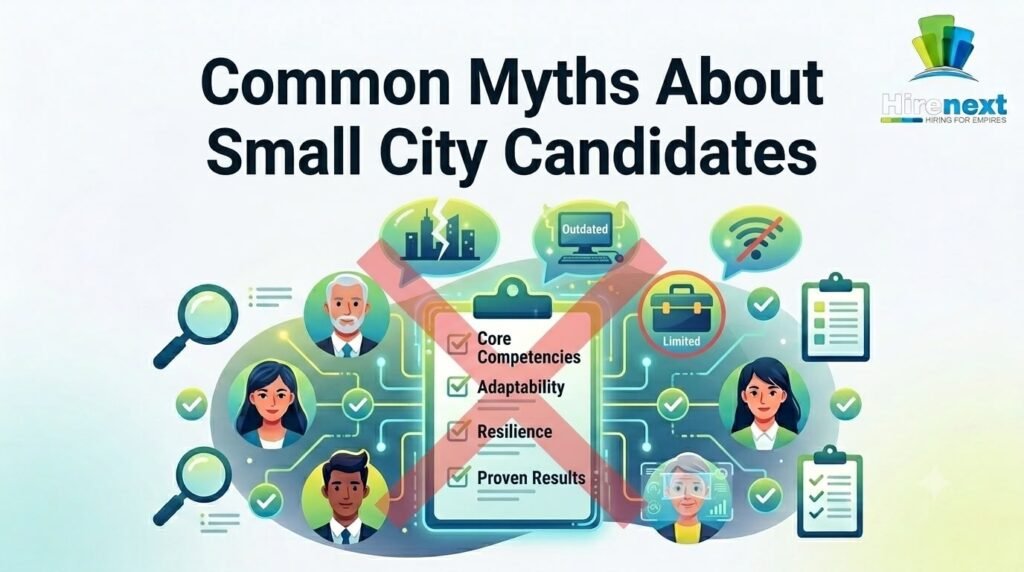
Despite changing recruitment trends, several misconceptions continue to exist.
Myth 1: Communication Skills Are Weak
Reality:
Many professionals improve communication through online courses, remote work, and practical experience.
Myth 2: Corporate Exposure Is Limited
Reality:
Freelancing, internships, virtual collaboration, and remote jobs provide valuable corporate experience.
Myth 3: Technical Skills Are Outdated
Reality:
Continuous learning through certifications and online platforms keeps professionals updated with industry requirements.
Myth 4: Metro Candidates Always Perform Better
Reality:
Success depends on skills, adaptability, attitude, and commitment—not location.
Technology Has Made Recruitment Borderless
Modern recruitment technology enables businesses to hire talent from anywhere.
Popular recruitment tools include:
- Applicant Tracking Systems (ATS)
- Video interviews
- Online skill assessments
- AI-powered resume screening
- Virtual onboarding
These tools make Tier 3 city recruitment more efficient while helping organizations identify high-quality candidates.
Why Remote Work Supports Small City Candidates
Remote work has completely changed recruitment.
Businesses no longer need employees to relocate in order to contribute effectively.
This allows small city candidates to work for organizations across India while remaining in their hometowns.
Companies benefit through:
- Larger talent pools
- Lower operational costs
- Faster hiring
- Better employee satisfaction
Best Hiring Practices
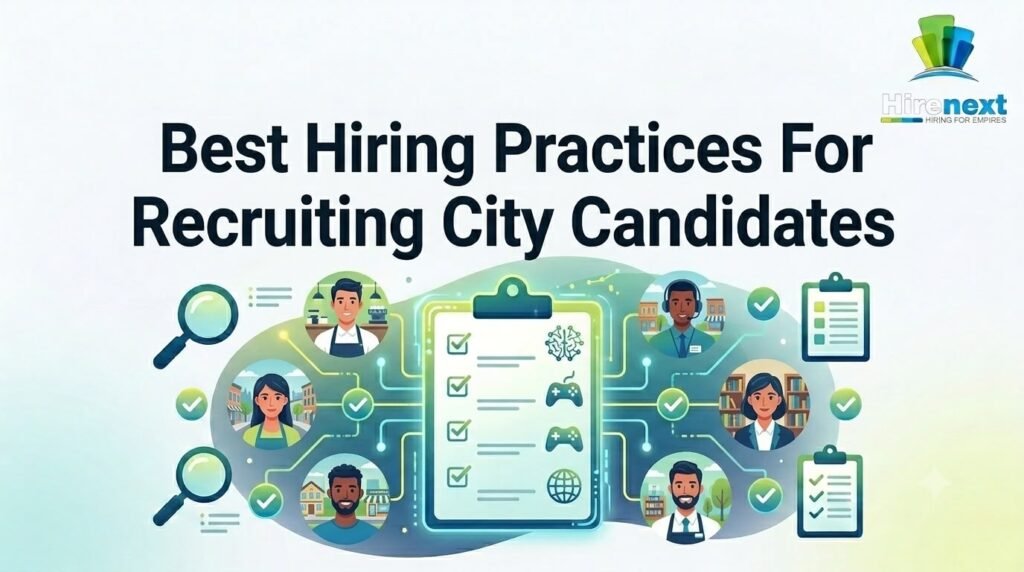
Organizations can maximize the benefits of hiring talent from small cities by adopting structured recruitment strategies.
Focus on Skills Instead of Location
Evaluate candidates based on:
- Technical knowledge
- Learning ability
- Problem-solving
- Professional attitude
rather than geography.
Standardize Interviews
Structured interviews improve hiring consistency and fairness.
Invest in Employee Development
Training, mentorship, and career development help employees perform better and remain engaged.
Expand Recruitment Channels
Use online job portals, virtual career fairs, and local recruitment partners to reach more small city candidates.
Build Inclusive Workplaces
Creating equal growth opportunities allows professionals from every background to thrive.
Long-Term Business Benefits
Businesses investing in small city candidates experience several long-term advantages.
Better Employee Retention
Employees often remain with organizations longer, reducing recruitment expenses.
Lower Hiring Costs
Recruitment becomes more cost-effective while maintaining quality.
Higher Productivity
Dedicated professionals consistently contribute to organizational performance.
Improved Innovation
Hiring professionals from diverse backgrounds encourages fresh thinking and problem-solving.
Sustainable Growth
The benefits of hiring talent from small cities extend beyond recruitment by strengthening long-term business performance.
The Future of Recruitment
The future belongs to organizations that prioritize skills over geography.
Businesses increasingly recognize that small city candidates possess the capability, ambition, and professionalism needed for modern workplaces.
As Tier 3 city recruitment continues expanding, organizations that embrace this trend will gain access to larger talent pools, stronger employee loyalty, and sustainable competitive advantages.
Conclusion
The belief that exceptional professionals only come from metropolitan cities is rapidly fading.
Today’s small city candidates consistently demonstrate strong work ethics, adaptability, technical competence, and a willingness to learn. These qualities make them valuable contributors across industries.
The numerous benefits of hiring talent from small cities, combined with growing opportunities through Tier 3 city recruitment, provide businesses with a smarter, more sustainable hiring strategy.
Organizations that expand recruitment beyond traditional locations will build stronger teams, improve employee retention, reduce hiring costs, and position themselves for long-term success. Great talent is no longer defined by the size of a city—it is defined by skill, commitment, and the ability to grow.