
The Hiring Advantage of Tier-2 Cities Like Bareilly
Introduction
The Indian recruitment landscape is changing rapidly. For decades, businesses concentrated their hiring efforts in metropolitan cities such as Delhi, Mumbai, Bengaluru, and Hyderabad. These cities were considered the primary sources of skilled professionals, better infrastructure, and corporate-ready talent.
Today, however, this trend is evolving. Organizations are increasingly recognizing the value of hiring in Tier 2 cities. Improved education, digital connectivity, remote work opportunities, and growing professional aspirations have transformed cities like Bareilly into promising talent hubs.
Companies are now discovering that the benefits of hiring in Tier 2 cities extend far beyond lower recruitment costs. Professionals from these cities often demonstrate strong work ethics, higher employee loyalty, and a willingness to learn—qualities that contribute significantly to long-term business success.
At the same time, effective workforce planning has become essential as businesses expand operations beyond metropolitan regions. By developing a balanced hiring strategy, organizations can access larger talent pools while improving retention and controlling recruitment expenses.
In this guide, we’ll explore why hiring in Tier 2 cities is becoming a competitive advantage and why cities like Bareilly are attracting increasing attention from employers.
Table of Contents
1- Introduction
2- The Rise of Tier-2 Cities in Recruitment
3- Why Businesses Are Expanding Beyond Metro Cities
4- Why Bareilly Is Emerging as a Talent Hub
5- Understanding Hiring in Tier 2 Cities
6- Lower Recruitment Costs
7- Better Employee Retention
8- Strong Work Ethic
9- Better Workforce Planning
10- Benefits of Hiring in Tier 2 Cities
11- Industries Successfully Hiring in Tier-2 Cities
12- Technology Has Changed Recruitment
13- Remote Work Supports Hiring in Tier 2 Cities
14- Common Myths About Hiring in Tier-2 Cities
15- How Workforce Planning Supports Better Recruitment
16- Best Recruitment Practices
17- Long-Term Business Benefits
18- Why Tier-2 Cities Represent the Future of Recruitment
19- Conclusion
The Rise of Tier-2 Cities in Recruitment
India’s workforce is becoming more geographically diverse.
Improved internet connectivity, online education, and digital skill development have enabled professionals from smaller cities to compete successfully with candidates from metro cities.
As a result, businesses are increasingly investing in hiring in Tier 2 cities to access skilled, motivated, and reliable professionals.
Cities such as Bareilly, Indore, Jaipur, Lucknow, Ranchi, and Dehradun are becoming important recruitment destinations.
Why Businesses Are Expanding Beyond Metro Cities
Recruitment in major metropolitan cities presents several challenges.
These include:
- High salary expectations
- Intense competition for skilled professionals
- Rising employee turnover
- Increased recruitment costs
By expanding recruitment strategies, businesses gain access to wider talent pools while reducing hiring expenses.
The benefits of hiring in Tier 2 cities have become increasingly attractive for organizations focused on sustainable growth.
Why Bareilly Is Emerging as a Talent Hub
Bareilly has experienced significant educational and professional development over recent years.
The city now produces graduates from fields including:
- Business Administration
- Engineering
- Commerce
- Information Technology
- Digital Marketing
- Human Resources
- Finance
Many professionals also complete online certifications and gain practical experience through internships and remote work opportunities.
This growing talent pool makes Bareilly an attractive location for hiring in Tier 2 cities.
Understanding Hiring in Tier 2 Cities
Hiring in Tier 2 cities refers to recruiting professionals from developing urban centers outside India’s largest metropolitan regions.
These cities offer businesses access to qualified candidates while supporting balanced regional employment.
Recruitment strategies are increasingly shifting toward skills, adaptability, and learning potential rather than geographical location.
Lower Recruitment Costs
One major advantage of hiring in Tier 2 cities is cost efficiency.
Businesses often experience lower expenses related to:
- Recruitment advertising
- Salary expectations
- Employee replacement
- Office operations
- Relocation
Lower recruitment costs allow organizations to invest more resources into employee development and innovation.
Better Employee Retention
Employee retention remains one of today’s largest recruitment challenges.
Many metro-city employees frequently change jobs because of competitive offers.
Professionals hired through hiring in Tier 2 cities often demonstrate greater long-term commitment.
Employees value:
- Stable employment
- Career growth
- Skill development
- Supportive work environments
Higher retention reduces recruitment frequency while improving organizational stability.
Strong Work Ethic
Employers consistently recognize the dedication shown by professionals recruited through hiring in Tier 2 cities.
Many candidates display:
- Responsibility
- Discipline
- Consistency
- Accountability
- Motivation
These qualities contribute significantly to business performance.
Better Workforce Planning
Successful recruitment depends on effective workforce planning.
Organizations should forecast future hiring requirements instead of reacting only after vacancies occur.
Good workforce planning allows businesses to:
- Reduce recruitment delays
- Improve productivity
- Support expansion
- Minimize staffing shortages
- Improve employee utilization
When combined with hiring in Tier 2 cities, strategic workforce planning creates stronger recruitment outcomes.
Benefits of Hiring in Tier 2 Cities
Businesses continue experiencing numerous advantages.
Some important benefits of hiring in Tier 2 cities include:
- Larger talent pools
- Lower recruitment costs
- Better employee loyalty
- Reduced turnover
- Faster hiring
- Strong workplace commitment
- Higher adaptability
These advantages help organizations improve long-term business performance.
Industries Successfully Hiring in Tier-2 Cities
The demand for professionals outside metro cities has increased across multiple industries.
Today, hiring in Tier 2 cities supports recruitment in sectors such as:
Information Technology
Software development, technical support, testing, cybersecurity, and cloud services increasingly recruit professionals from Tier-2 cities.
Digital Marketing
Businesses hire candidates for:
- SEO
- Content writing
- Social media management
- Performance marketing
- Google Ads
- Meta Ads
Remote work has expanded opportunities significantly.
Sales and Business Development
Professionals from smaller cities often excel in customer relationships and long-term client management.
Human Resources
Recruitment, payroll, employee engagement, and talent acquisition roles continue expanding in Tier-2 cities.
Finance and Accounting
Businesses recruit accountants, analysts, auditors, and finance executives from cities like Bareilly because of growing educational opportunities.
Customer Support
Communication skills and adaptability make many professionals highly successful in customer-facing roles.
Technology Has Changed Recruitment
Digital transformation has removed many traditional hiring barriers.
Today, organizations can successfully manage hiring in Tier 2 cities through technology.
Useful recruitment tools include:
- Applicant Tracking Systems (ATS)
- Video interviews
- Online assessments
- Digital onboarding
- AI-powered resume screening
These technologies simplify recruitment while improving hiring quality.
Remote Work Supports Hiring in Tier 2 Cities
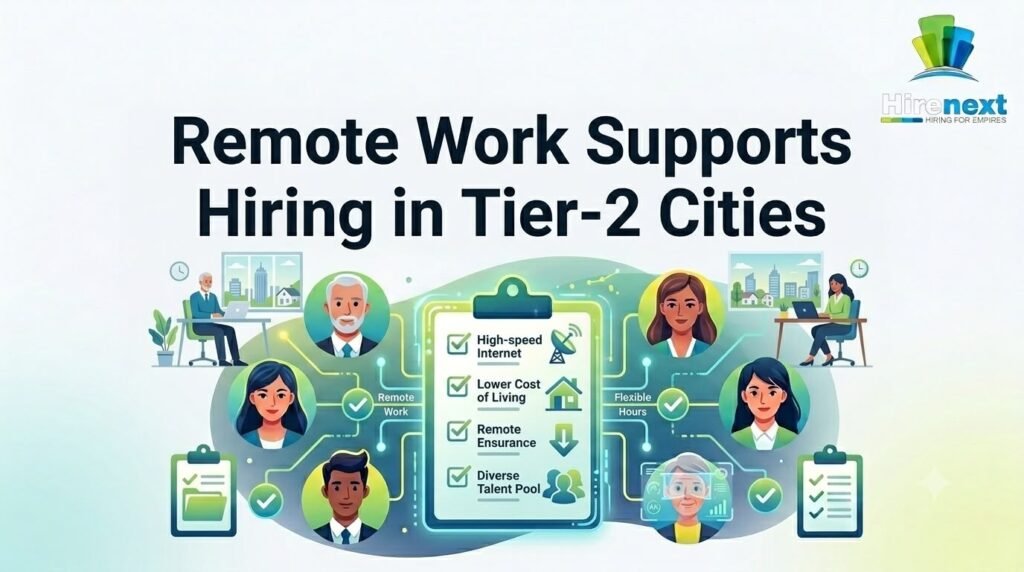
Remote work has dramatically increased opportunities for businesses to recruit beyond metro locations.
Companies now benefit from:
- Larger talent pools
- Lower infrastructure costs
- Flexible workforce management
- Improved employee satisfaction
Professionals no longer need to relocate to contribute effectively.
This has made hiring in Tier 2 cities more practical than ever before.
Common Myths About Hiring in Tier-2 Cities
Despite changing recruitment trends, several misconceptions still exist.
Myth 1: Candidates Lack Corporate Exposure
Reality:
Many professionals gain experience through internships, remote jobs, freelance work, and online collaboration.
Myth 2: Communication Skills Are Weak
Reality:
Professional communication improves rapidly with workplace exposure and continuous learning.
Myth 3: Metro Candidates Always Perform Better
Reality:
Performance depends on skills, attitude, adaptability, and commitment—not geography.
Myth 4: Tier-2 Hiring Is Difficult
Reality:
With proper workforce planning and structured recruitment, hiring outside metro cities is often faster and more cost-effective.
How Workforce Planning Supports Better Recruitment
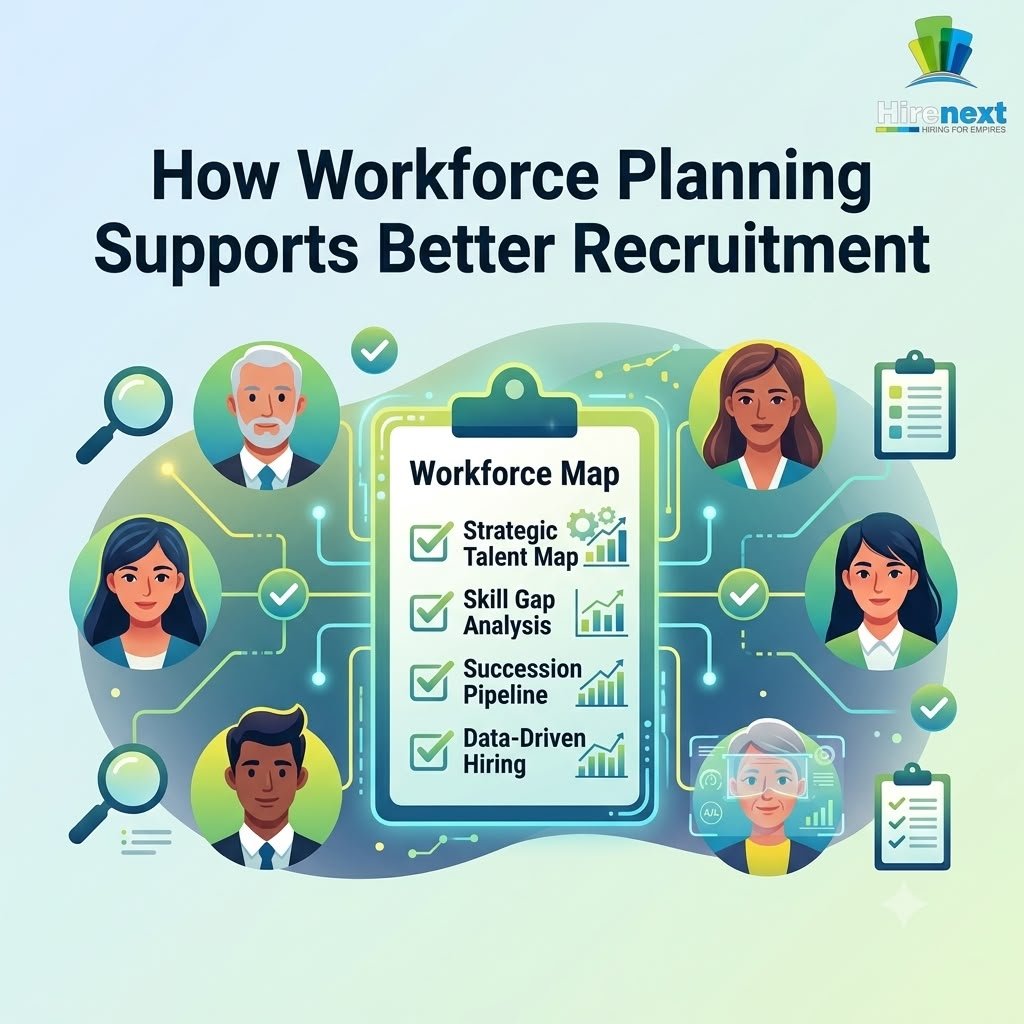
Successful organizations don’t recruit only when vacancies appear.
Instead, they develop long-term workforce planning strategies.
Effective workforce planning includes:
- Forecasting hiring needs
- Monitoring employee turnover
- Building talent pipelines
- Developing succession plans
- Tracking future skill requirements
When combined with hiring in Tier 2 cities, these practices create stronger recruitment outcomes.
Best Recruitment Practices
Businesses should maximize the benefits of hiring in Tier 2 cities by following structured recruitment methods.
Create Detailed Job Descriptions
Candidates should clearly understand:
- Responsibilities
- Required skills
- Growth opportunities
- Performance expectations
Focus on Skills and Potential
Evaluate candidates based on:
- Learning ability
- Problem-solving
- Adaptability
- Professional attitude
rather than location.
Standardize Interviews
Structured interviews improve fairness and hiring consistency.
Invest in Employee Development
Training programs help professionals become productive more quickly.
Strengthen Employer Branding
Organizations with strong reputations attract better candidates regardless of location.
Long-Term Business Benefits
Businesses investing in hiring in Tier 2 cities often experience significant long-term advantages.
Better Employee Retention
Employees remain with organizations longer, reducing recruitment costs.
Lower Hiring Expenses
Businesses reduce salary pressure while maintaining recruitment quality.
Higher Productivity
Motivated employees consistently contribute to organizational success.
Improved Workforce Stability
Stable teams improve collaboration and knowledge sharing.
Sustainable Business Growth
Better recruitment supports expansion into new markets while maintaining operational efficiency.
These outcomes demonstrate the lasting benefits of hiring in Tier 2 cities.
Why Tier-2 Cities Represent the Future of Recruitment
India’s workforce is becoming increasingly decentralized.
Digital education, improved connectivity, and changing employer expectations mean businesses no longer need to rely exclusively on metropolitan recruitment.
Cities like Bareilly continue producing skilled professionals ready to contribute across multiple industries.
Organizations embracing hiring in Tier 2 cities gain access to motivated employees while strengthening long-term recruitment strategies.
Conclusion
The future of recruitment belongs to businesses that recognize talent beyond traditional metropolitan locations.
Hiring in Tier 2 cities provides organizations with access to skilled professionals, lower recruitment costs, stronger employee loyalty, and improved workforce stability. The numerous benefits of hiring in Tier 2 cities make this approach an increasingly valuable competitive advantage.
When supported by effective workforce planning, structured recruitment processes, and continuous employee development, businesses can build stronger teams capable of driving innovation and sustainable growth.
Cities like Bareilly are no longer emerging talent markets—they are becoming essential contributors to India’s modern workforce. Companies that invest in these regions today will be better positioned to attract quality talent, improve retention, and achieve long-term business success.