
Why Many Companies Hire in Panic Mode
Introduction
Hiring is one of the most important business decisions an organization makes. The right employee can increase productivity, improve customer satisfaction, and contribute to long-term growth. Unfortunately, many companies don’t recruit strategically. Instead, they wait until a vacancy becomes urgent and then rush to fill the position. This is commonly known as panic hiring.
Whether it’s because an employee resigns unexpectedly, business demand suddenly increases, or projects start falling behind, organizations often feel pressured to recruit immediately. While this approach may solve a short-term staffing problem, it frequently creates much larger challenges in the future.
The impact of panic hiring on business includes poor hiring decisions, reduced productivity, increased employee turnover, higher recruitment costs, and damaged workplace culture. Rather than strengthening the organization, rushed hiring often slows growth and creates additional operational problems.
Businesses that invest in hiring process optimization can avoid these situations by planning recruitment in advance, improving hiring efficiency, and building stronger talent pipelines.
In this guide, we’ll explore why companies hire in panic mode, the risks involved, and practical strategies to prevent it.
Table of Contents
1- Introduction
2- What Is Panic Hiring?
3- Why Companies Hire in Panic Mode
4- Unexpected Employee Resignations
5- Rapid Business Growth
6- Poor Workforce Planning
7- Delayed Recruitment Decisions
8- High Employee Turnover
9- Warning Signs of Panic Hiring
10- Impact of Panic Hiring on Business
11- Poor Hiring Decisions
12- Financial Costs of Panic Hiring
13- Reduced Employee Productivity
14- Customer Experience Suffers
15- Panic Hiring Damages Workplace Culture
16- The Long-Term Impact of Panic Hiring on Business
17- Why Hiring Process Optimization Matters
18- Building a Proactive Recruitment Strategy
19- Technology Can Reduce Panic Hiring
20- Best Practices to Avoid Panic Hiring
21- Benefits of Strategic Hiring
22- Recruitment Is a Competitive Advantage
What Is Panic Hiring?
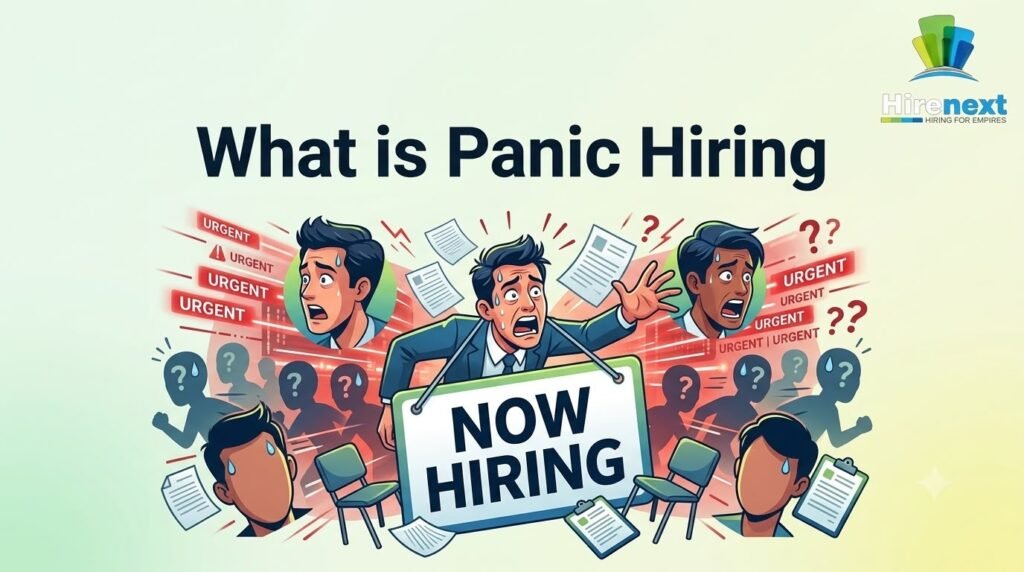
Panic hiring happens when businesses recruit employees urgently without following a structured hiring process.
Instead of carefully evaluating candidates, organizations focus on filling vacancies as quickly as possible.
This often results in:
- Poor hiring decisions
- Weak candidate evaluation
- Reduced cultural fit
- Higher employee turnover
Although the immediate vacancy disappears, new problems often emerge later.
Why Companies Hire in Panic Mode
Many businesses don’t intentionally practice panic hiring.
Instead, it develops because recruitment planning is neglected.
Some common reasons include:
- Unexpected employee resignations
- Rapid business growth
- Poor workforce planning
- Seasonal demand
- Delayed hiring decisions
- High employee turnover
Without proactive recruitment strategies, businesses eventually face urgent staffing shortages.
Unexpected Employee Resignations
One of the biggest causes of panic hiring is an employee leaving unexpectedly.
When key employees resign:
- Projects slow down.
- Customer service suffers.
- Team workloads increase.
- Revenue opportunities are lost.
Businesses often respond by recruiting immediately instead of taking time to evaluate candidates properly.
Rapid Business Growth
Growth is exciting, but it also creates hiring pressure.
When organizations acquire:
- More customers
- Larger projects
- New locations
- Expanded services
they suddenly require additional employees.
Without advance planning, companies often begin panic hiring to support growing workloads.
Poor Workforce Planning
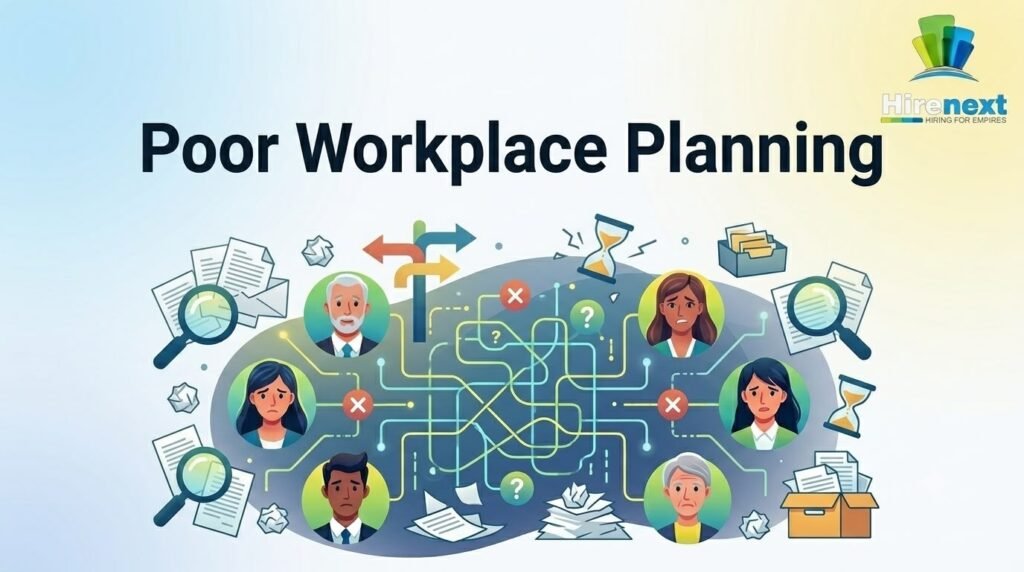
Many businesses only recruit after vacancies appear.
This reactive approach frequently creates urgent hiring situations.
Better workforce planning includes:
- Forecasting future hiring needs
- Building talent pipelines
- Monitoring employee turnover
- Preparing succession plans
These practices reduce the likelihood of panic hiring.
Delayed Recruitment Decisions
Ironically, delayed hiring often leads directly to panic hiring.
Businesses postpone recruitment because of:
- Budget concerns
- Approval delays
- Difficulty choosing candidates
Eventually workloads become unmanageable, forcing rushed hiring decisions.
High Employee Turnover
Organizations experiencing frequent resignations often recruit continuously.
Instead of addressing retention issues, businesses repeatedly replace employees.
This cycle creates ongoing panic hiring and increasing recruitment costs.
Warning Signs of Panic Hiring
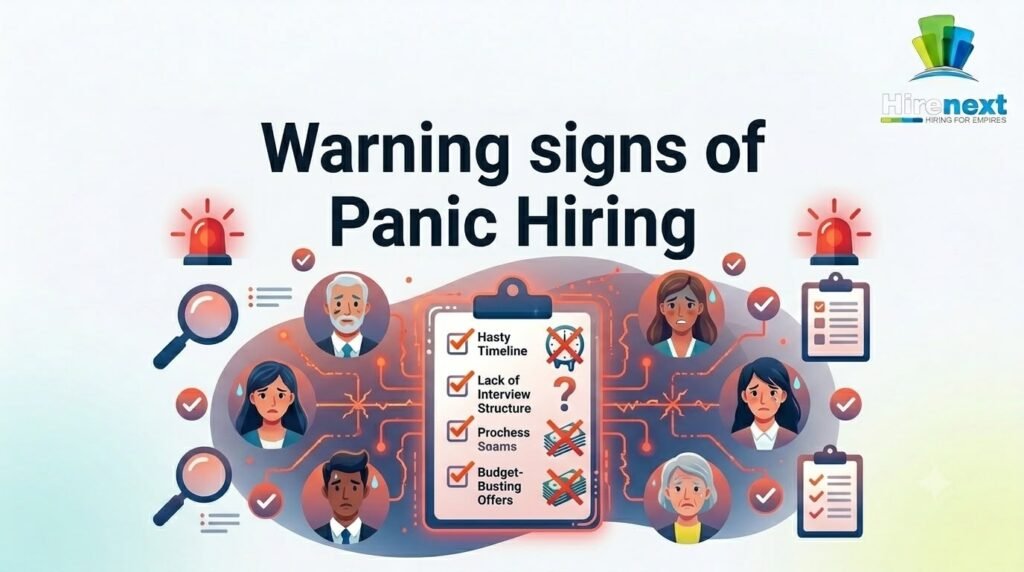
Businesses should recognize early indicators before recruitment becomes urgent.
Common warning signs include:
Employees Working Excessive Overtime
Existing staff regularly work longer hours because positions remain vacant.
Customer Complaints Increase
Staff shortages slow customer response times.
Managers Constantly Recruiting
Managers spend more time interviewing than leading their teams.
Projects Frequently Miss Deadlines
Insufficient staffing delays project completion.
Hiring Standards Decline
Businesses become willing to hire “good enough” candidates instead of the right candidates.
These warning signs indicate growing panic hiring risks.
Impact of Panic Hiring on Business
The impact of panic hiring on business extends far beyond recruitment.
Poor hiring decisions influence:
- Productivity
- Revenue
- Workplace culture
- Customer satisfaction
- Employee morale
Many businesses underestimate these long-term consequences.
Poor Hiring Decisions
Under pressure, recruiters often reduce candidate evaluation.
Important steps may be skipped, including:
- Skill assessments
- Reference checks
- Multiple interviews
- Cultural fit evaluations
This increases the likelihood of hiring unsuitable candidates.
Financial Costs

Recruitment is expensive.
Poor hiring decisions increase:
- Advertising expenses
- Interview costs
- Training costs
- Onboarding costs
- Replacement hiring
The impact of panic hiring on business frequently becomes visible through rising recruitment expenses.
Reduced Employee Productivity
New employees who aren’t properly evaluated often require additional supervision.
Managers spend more time correcting mistakes instead of focusing on business growth.
Productivity declines across the organization.
Customer Experience Suffers
Employees hired too quickly may:
- Lack product knowledge
- Provide inconsistent service
- Make more mistakes
- Respond slowly
Customer satisfaction decreases as service quality falls.
Panic Hiring Damages Workplace Culture
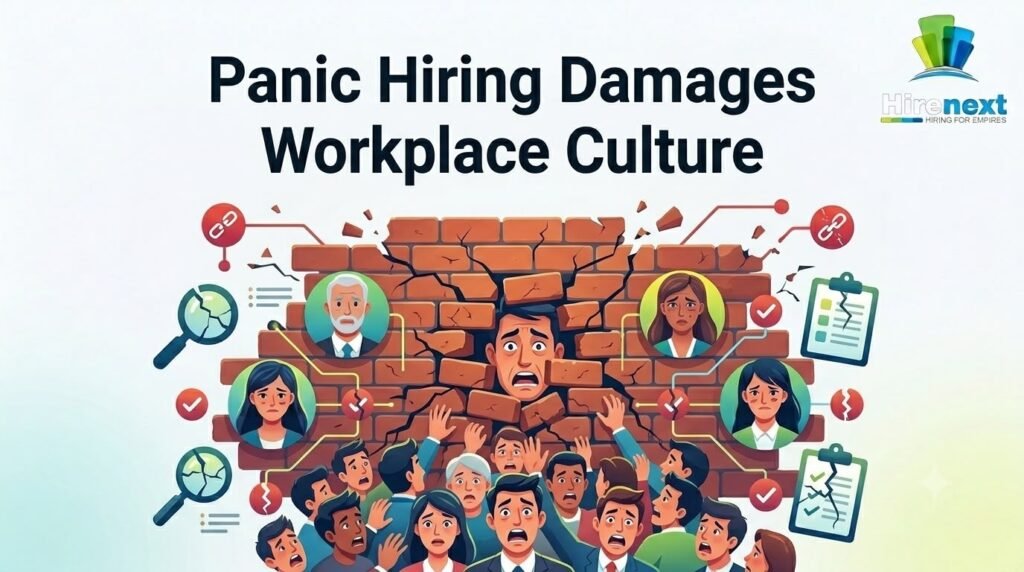
One of the most overlooked consequences of panic hiring is its effect on workplace culture.
When businesses hire people simply to fill vacancies, they often overlook whether candidates align with company values and team dynamics.
This can lead to:
- Poor communication
- Team conflicts
- Low employee engagement
- Reduced collaboration
- Higher turnover
A strong workplace culture is built through thoughtful recruitment—not rushed hiring decisions.
The Long-Term Impact of Panic Hiring on Business
Many businesses only notice the immediate benefits of filling an open position. However, the impact of panic hiring on business becomes much more visible over time.
Long-term consequences include:
Increased Employee Turnover
Employees hired in haste are more likely to leave if the role isn’t a good fit.
Frequent turnover forces businesses to recruit repeatedly, creating an endless hiring cycle.
Lower Productivity
Employees who lack the required skills or motivation often need additional supervision and training.
This reduces overall team productivity and delays project completion.
Poor Leadership Decisions
Managers spend more time correcting hiring mistakes than focusing on strategy, innovation, and business growth.
Slower Business Growth
Every poor hiring decision delays progress.
Instead of supporting expansion, businesses spend valuable resources replacing employees and rebuilding teams.
This is one of the biggest examples of the impact of panic hiring on business.
Why Hiring Process Optimization Matters
One of the best ways to prevent panic hiring is through hiring process optimization.
Rather than reacting to vacancies, businesses should develop structured recruitment systems that make hiring faster and more effective.
Effective hiring process optimization includes:
- Standardized recruitment workflows
- Clear job descriptions
- Candidate scorecards
- Faster interview scheduling
- Automated communication
- Consistent evaluation criteria
These improvements reduce hiring time without sacrificing quality.
Building a Proactive Recruitment Strategy
Businesses that rarely experience panic hiring usually recruit proactively.
Instead of waiting for vacancies, they prepare in advance.
Some effective strategies include:
Build a Talent Pipeline
Maintain relationships with qualified candidates before vacancies occur.
This allows businesses to hire faster when positions open.
Forecast Future Hiring Needs
Analyze business growth plans and expected turnover to predict recruitment requirements.
This supports better workforce planning.
Strengthen Employer Branding
Companies with strong employer brands receive more applications, making recruitment faster and easier.
Improve Employee Retention
Keeping existing employees is often more cost-effective than constantly recruiting new ones.
Reducing turnover naturally reduces panic hiring.
Technology Can Reduce Panic Hiring
Modern recruitment technology supports effective hiring process optimization.
Useful tools include:
Applicant Tracking Systems (ATS)
These platforms organize applications, automate communication, and reduce administrative work.
Resume Screening Software
AI-powered tools help identify qualified candidates more efficiently.
Interview Scheduling Platforms
Automation speeds up interview coordination and improves candidate experience.
Online Skill Assessments
Practical evaluations help businesses identify qualified candidates before interviews.
Technology allows businesses to hire quickly without relying on panic hiring.
Best Practices to Avoid Panic Hiring
Businesses can significantly reduce rushed recruitment by following a few proven practices.
Hire Continuously
Even if there are no current vacancies, continue networking with potential candidates.
Develop Clear Hiring Criteria
Know exactly what skills, experience, and qualities each role requires.
Never Skip Candidate Evaluation
Even during urgent recruitment, continue conducting:
- Structured interviews
- Reference checks
- Skill assessments
Invest in Hiring Process Optimization
Regularly review recruitment performance and identify opportunities for improvement.
Small changes often produce significant results.
Focus on Cultural Fit
Employees who align with company values typically remain longer and perform better.
Benefits of Strategic Hiring
Businesses that replace panic hiring with strategic recruitment experience long-term advantages.
Better Employee Performance
Employees selected through structured recruitment contribute more effectively.
Higher Retention
Better hiring decisions reduce turnover and improve team stability.
Lower Recruitment Costs
Replacing fewer employees lowers hiring expenses over time.
Stronger Customer Relationships
Stable, experienced teams provide more consistent customer service.
Faster Business Growth
Strategic recruitment allows companies to focus on innovation and expansion instead of repeatedly replacing employees.
Recruitment Is a Competitive Advantage
Many organizations still view recruitment as an administrative task.
Successful businesses understand that hiring is a competitive advantage.
The right employees improve:
- Productivity
- Innovation
- Customer satisfaction
- Revenue
- Business growth
Businesses that invest in hiring process optimization build stronger teams and make better hiring decisions.
Conclusion
Panic hiring may solve an immediate staffing problem, but it often creates larger challenges in the future.
The impact of panic hiring on business includes poor hiring decisions, reduced productivity, higher turnover, increased recruitment costs, and weaker workplace culture. Instead of supporting growth, rushed recruitment often slows it down.
The solution is not to hire faster at any cost—it is to hire smarter. By investing in hiring process optimization, building proactive talent pipelines, improving workforce planning, and strengthening employer branding, businesses can avoid panic hiring while attracting better talent.
Ultimately, successful recruitment isn’t about filling vacancies quickly. It’s about finding the right people, at the right time, through the right process. Companies that replace panic hiring with strategic hiring create stronger teams, improve performance, and position themselves for sustainable long-term growth.