
Why Companies Should Stop Ignoring Non-Metro Talent
Introduction
For many years, recruitment strategies in India revolved around metropolitan cities. Employers believed that candidates from large cities offered better education, stronger communication skills, and greater professional exposure. While metro cities continue to produce exceptional professionals, limiting recruitment to these locations means businesses often overlook a vast pool of capable individuals.
Today, non metro talent is transforming India’s workforce. Professionals from Tier-2 and Tier-3 cities are proving themselves across industries such as IT, finance, sales, digital marketing, human resources, customer support, healthcare, and manufacturing. Their commitment, adaptability, and willingness to learn have made them valuable contributors to business success.
As organizations compete for skilled employees while managing recruitment costs, understanding why businesses should hire from non-metro cities has become more important than ever. Expanding recruitment beyond metropolitan regions also supports workforce diversity, bringing fresh perspectives, wider experiences, and stronger organizational culture.
This guide explores why businesses should stop ignoring non metro talent, the benefits it offers, and how companies can build stronger teams by broadening their recruitment strategy.
Table of Contents
- Introduction
- The Changing Recruitment Landscape
- What Is Non Metro Talent?
- Why Companies Still Focus on Metro Cities
- The Hidden Potential of Non Metro Talent
- Strong Work Ethic
- Better Employee Loyalty
- Lower Recruitment Costs
- Growing Demand for Non Metro Talent
- Why Businesses Should Hire From Non-Metro Cities
- Workforce Diversity Strengthens Organizations
- Industries Benefiting From Non Metro Talent
- Common Myths About Non Metro Talent
- Technology Has Changed Recruitment
- Best Hiring Strategies for Non-Metro Talent
- Long-Term Business Benefits
- Why Recruitment Is Becoming Location Independent
- Conclusion
The Changing Recruitment Landscape
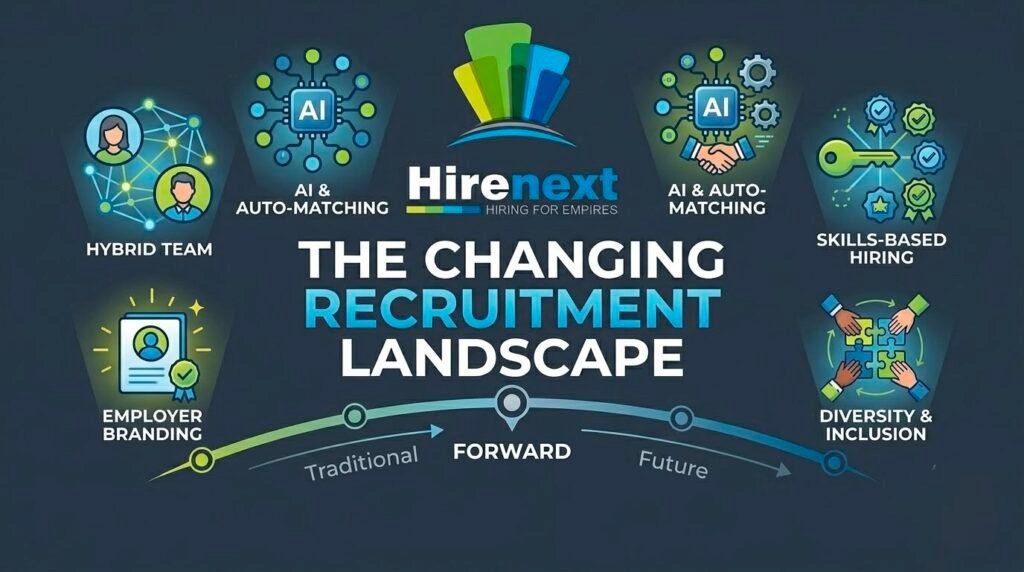
Recruitment has changed dramatically over the last decade.
Technology, remote work, online education, and digital communication have reduced the importance of geographical location. Today, businesses can connect with skilled professionals across India, regardless of where they live.
As a result, non metro talent is becoming increasingly visible in the national job market.
Companies that once recruited exclusively from metropolitan cities now recognize the advantages of expanding their hiring strategies.
What Is Non Metro Talent?
Non metro talent refers to skilled professionals living in Tier-2 and Tier-3 cities rather than major metropolitan regions.
These candidates often possess:
- Professional qualifications
- Technical expertise
- Practical experience
- Strong learning ability
- Career ambition
Many have completed certifications, internships, and remote work projects while gaining experience comparable to professionals in larger cities.
Why Companies Still Focus on Metro Cities
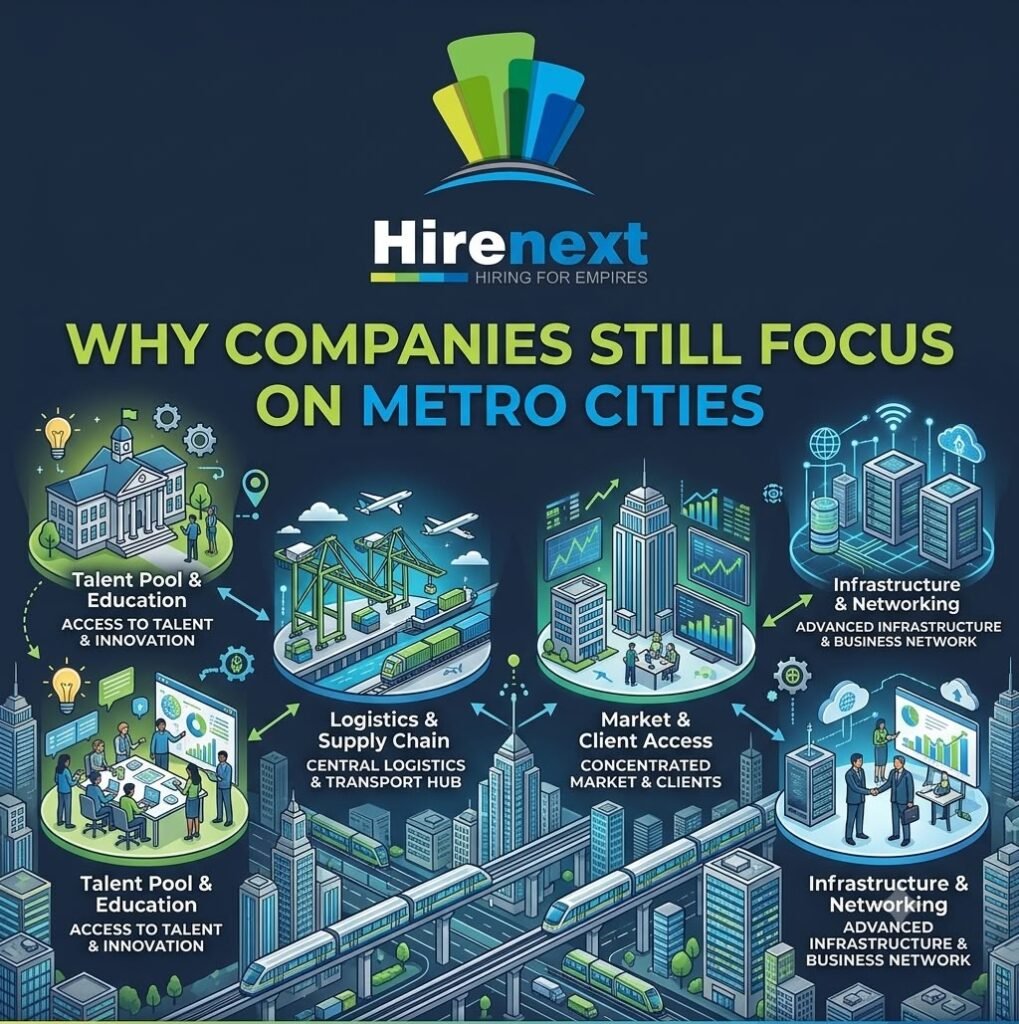
Despite changing recruitment trends, many organizations continue prioritizing metro-city candidates.
Common reasons include:
- Assumptions about better education
- Greater corporate exposure
- Larger professional networks
- Easier access to talent
While these assumptions may have been more accurate in the past, they no longer reflect today’s workforce realities.
Ignoring non metro talent means businesses often overlook highly capable professionals.
The Hidden Potential of Non Metro Talent
One reason non metro talent performs exceptionally well is motivation.
Many professionals from smaller cities actively seek opportunities to demonstrate their abilities and build long-term careers.
Employers frequently report qualities such as:
- Dedication
- Reliability
- Adaptability
- Accountability
- Positive attitude
These characteristics often contribute to stronger workplace performance.
Strong Work Ethic
Businesses consistently value employees who approach work with discipline and commitment.
Many organizations find that non metro talent demonstrates:
- Consistent performance
- Ownership of responsibilities
- Willingness to work hard
- Professional integrity
These qualities improve productivity while strengthening organizational culture.
Better Employee Loyalty
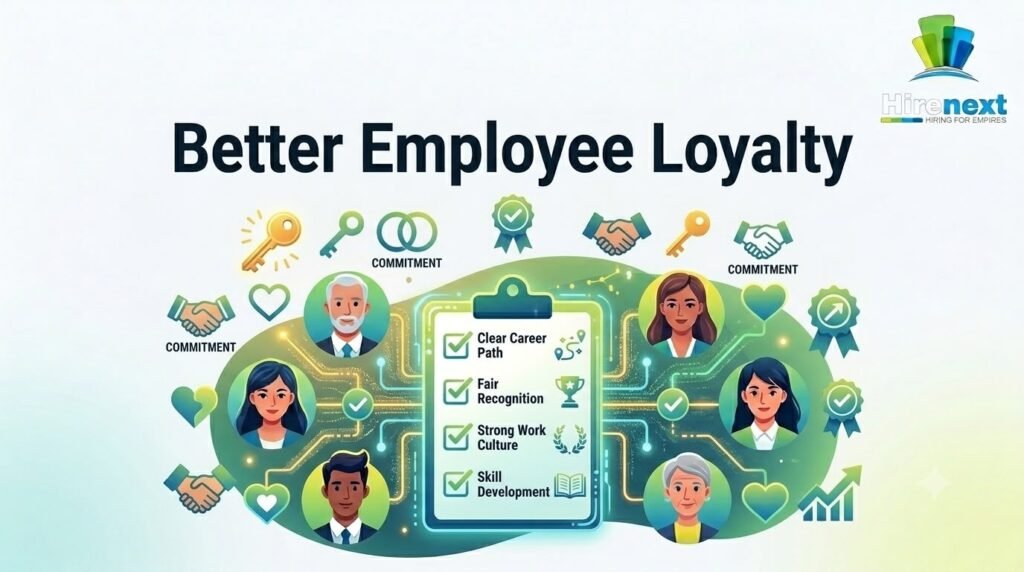
Employee retention has become a major challenge across industries.
Highly competitive metro job markets often encourage frequent job changes.
By contrast, non metro talent frequently seeks:
- Career growth
- Stability
- Learning opportunities
- Long-term employment
Higher retention reduces recruitment costs while improving workforce stability.
Lower Recruitment Costs
Recruitment expenses continue increasing across major cities.
Expanding recruitment beyond metropolitan regions allows businesses to reduce costs related to:
- Salary expectations
- Employee replacement
- Recruitment advertising
- Office infrastructure
- Relocation
This represents one of the strongest reasons businesses invest in non metro talent.
Growing Demand for Non Metro Talent
Organizations across industries increasingly recognize the value of non metro talent.
Recruitment demand continues growing in:
- Information Technology
- Digital Marketing
- Finance
- Human Resources
- Customer Support
- Sales
- Manufacturing
- Healthcare
Remote work opportunities have accelerated this trend even further.
Why Businesses Should Hire From Non-Metro Cities
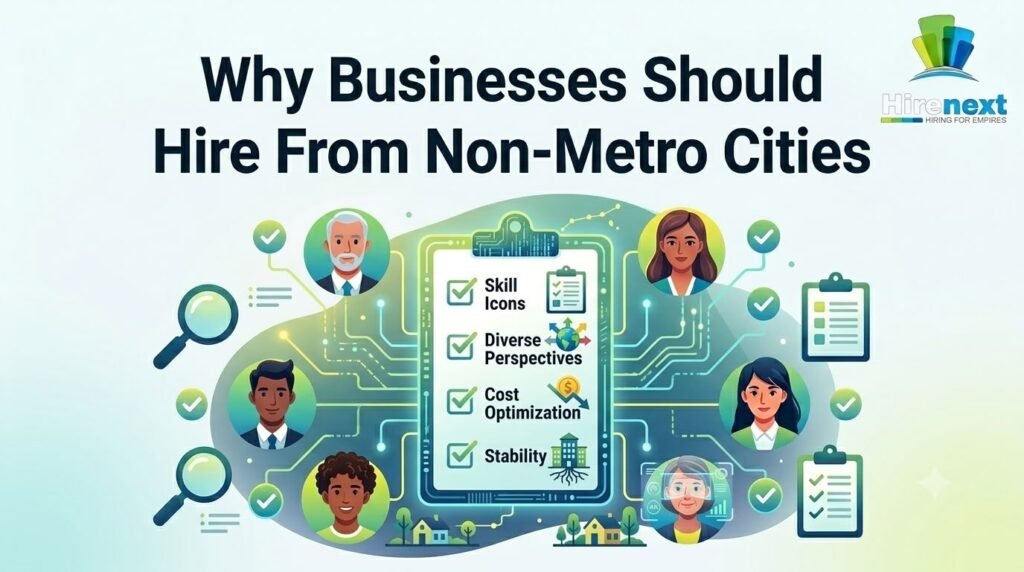
As recruitment becomes more competitive, many organizations are realizing why businesses should hire from non-metro cities. Expanding hiring beyond metropolitan areas is no longer just a cost-saving strategy—it is a smart business decision.
Some of the biggest advantages include:
Access to a Larger Talent Pool
Recruiting only in metro cities limits the number of qualified candidates available. By considering non metro talent, businesses gain access to thousands of skilled professionals from Tier-2 and Tier-3 cities.
Better Employee Commitment
Many professionals from non-metro cities are focused on long-term career growth rather than frequent job changes. This often results in stronger employee loyalty and reduced turnover.
Faster Learning and Adaptability
One of the strengths of non metro talent is the willingness to learn. Many professionals actively complete online certifications, participate in virtual training, and quickly adapt to new technologies and workplace environments.
Workforce Diversity Strengthens Organizations
Hiring people from different regions contributes to workforce diversity, which benefits businesses in several ways.
A diverse workforce brings:
- Different perspectives
- Creative problem-solving
- Better collaboration
- Improved innovation
- Broader market understanding
Instead of hiring employees with similar backgrounds, companies build stronger teams by recruiting professionals from varied locations and experiences.
This is one of the most valuable reasons why businesses should hire from non-metro cities.
Industries Benefiting From Non Metro Talent
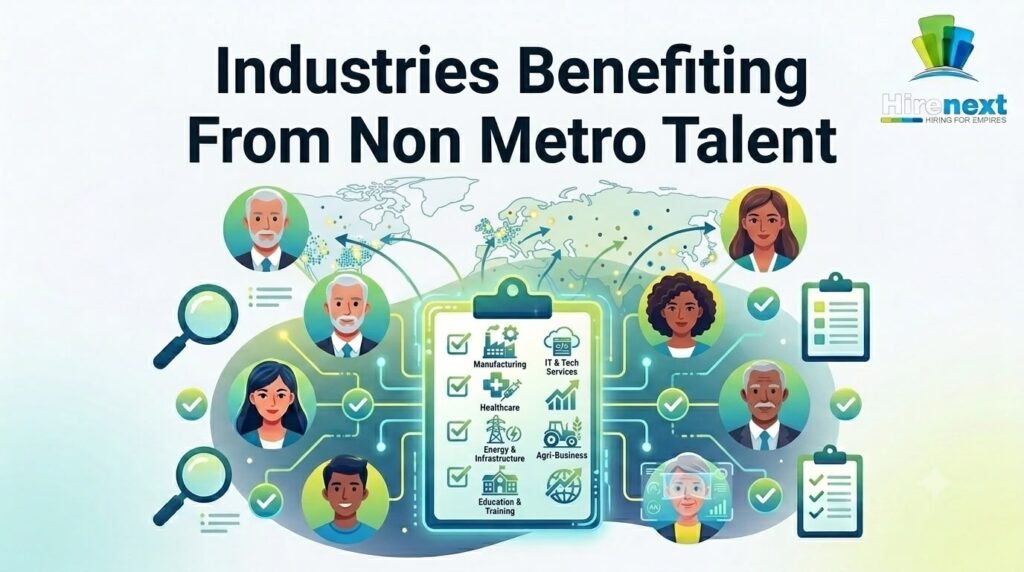
Today, non metro talent is contributing successfully across multiple industries.
Information Technology
Software developers, testers, cloud engineers, and technical support professionals increasingly work remotely from smaller cities.
Digital Marketing
Professionals in SEO, content marketing, social media, Google Ads, Meta Ads, and performance marketing are emerging from non-metro regions.
Finance and Accounting
Accountants, financial analysts, auditors, and taxation professionals continue to support businesses across India.
Sales and Customer Support
Strong interpersonal skills and commitment make many professionals highly successful in customer-facing roles.
Human Resources
Recruitment, payroll, employee engagement, and talent acquisition professionals are increasingly available outside metropolitan cities.
Common Myths About Non Metro Talent
Despite changing recruitment trends, some misconceptions still exist.
Myth 1: Communication Skills Are Weak
Reality:
Many professionals improve their communication through online learning, remote work, and corporate training.
Myth 2: Corporate Exposure Is Limited
Reality:
Internships, freelance work, virtual collaboration, and digital platforms provide valuable professional experience.
Myth 3: Technology Skills Are Outdated
Reality:
Professionals regularly upgrade their skills using online certifications and practical learning platforms.
Myth 4: Metro Candidates Always Perform Better
Reality:
Performance depends on attitude, capability, learning ability, and work ethic—not location.
Technology Has Changed Recruitment
Digital recruitment has made it easier than ever to connect with non metro talent.
Businesses now use:
- Applicant Tracking Systems (ATS)
- Online interviews
- AI-powered resume screening
- Skill assessment platforms
- Virtual onboarding
Technology removes geographical barriers while allowing businesses to recruit the best candidates regardless of location.
Best Hiring Strategies for Non-Metro Talent
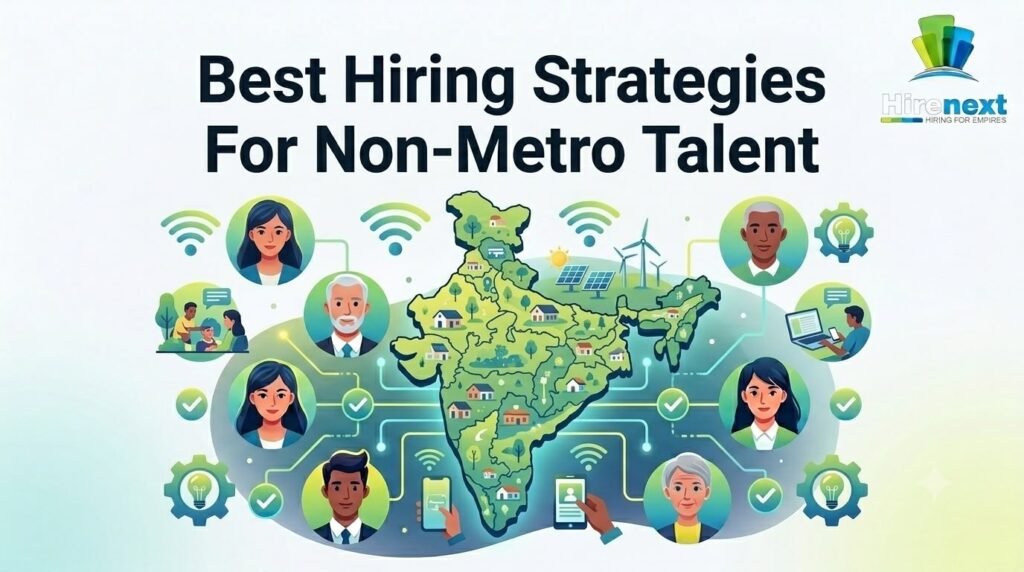
Businesses can maximize recruitment success by following structured hiring practices.
Hire Based on Skills
Evaluate candidates based on:
- Technical ability
- Problem-solving
- Adaptability
- Professional attitude
instead of location.
Standardize Recruitment
Create consistent interview processes and candidate evaluation methods.
Provide Learning Opportunities
Employees perform better when businesses invest in training, mentorship, and career development.
Build an Inclusive Culture
Encouraging workforce diversity creates stronger collaboration and employee engagement.
Plan Recruitment Proactively
Rather than waiting for urgent vacancies, businesses should forecast hiring needs and build talent pipelines in advance.
Long-Term Business Benefits
Organizations investing in non metro talent experience several lasting advantages.
Lower Recruitment Costs
Reduced salary pressure and lower employee turnover improve long-term recruitment efficiency.
Higher Employee Retention
Employees who receive growth opportunities often remain with organizations longer.
Improved Productivity
Dedicated employees contribute consistently to business performance.
Stronger Workplace Culture
A diverse workforce encourages collaboration, innovation, and knowledge sharing.
Sustainable Business Growth
Businesses with skilled, motivated employees are better prepared to expand into new markets and manage increasing workloads.
Why Recruitment Is Becoming Location Independent
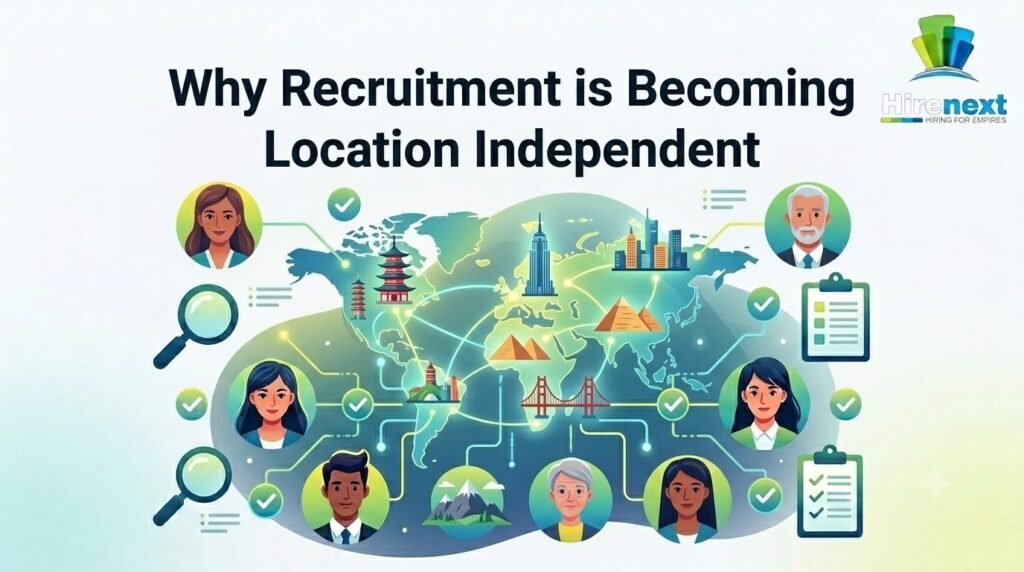
The future of hiring is increasingly focused on capability rather than geography.
Remote work, online education, and digital collaboration have made location far less important than:
- Skills
- Experience
- Learning ability
- Professional attitude
Businesses that embrace non metro talent gain a competitive advantage by accessing larger and more diverse talent pools.
Conclusion
The idea that exceptional professionals only come from metropolitan cities is rapidly disappearing.
Today’s non metro talent demonstrates strong work ethic, adaptability, continuous learning, and long-term commitment—qualities every employer values.
Understanding why businesses should hire from non-metro cities allows organizations to expand their talent pool, improve workforce diversity, reduce recruitment costs, and strengthen employee retention.
Businesses that move beyond traditional hiring locations will build stronger, more innovative teams while positioning themselves for sustainable long-term growth. In today’s competitive job market, great talent is defined by skills and potential—not by postal code.