
What Happens Behind the Scenes in a Recruitment Agency
Introduction
When companies announce a new job opening, most people only see the final result—a vacancy posted online and candidates attending interviews. Very few people understand the amount of work that takes place before the right candidate is finally hired.
Behind every successful placement is a structured recruitment process involving sourcing, screening, interviewing, coordination, negotiation, and continuous communication. This entire workflow is managed by recruitment professionals whose goal is to connect the right talent with the right organization.
Understanding how recruitment agencies work helps both employers and job seekers appreciate the expertise involved in professional hiring. Recruitment agencies do much more than simply forward resumes—they provide strategic staffing solutions, reduce hiring time, and improve recruitment quality.
This guide explains how recruitment agencies work, explores the step by step recruitment agency process, and reveals what really happens behind the scenes during every successful hire.
Table of Contents
Introduction
What Is a Recruitment Agency?
Why Businesses Use Recruitment Agencies
How Recruitment Agencies Work
Understanding the Step by Step Recruitment Agency Process
Step 1: Receiving Hiring Requirements
Step 2: Candidate Sourcing
Step 3: Resume Screening
Step 4: Initial Candidate Evaluation
Communication Throughout the Recruitment Process
Why Professional Screening Matters
Step 5: Interview Coordination
Step 6: Client Interviews
Step 7: Reference Verification
Step 8: Offer Management
Step 9: Candidate Onboarding
Staffing Solutions Offered by Recruitment Agencies
Common Challenges Recruitment Agencies Face
Benefits for Employers
Benefits for Job Seekers
Why Recruitment Agencies Matter
The Future of Recruitment Agencies
Conclusion
What Is a Recruitment Agency?
A recruitment agency acts as a bridge between employers and job seekers.
Its primary responsibility is identifying qualified candidates who match a company’s hiring requirements.
Recruitment agencies work with businesses across industries including:
- Information Technology
- Finance
- Sales
- Human Resources
- Healthcare
- Manufacturing
- Digital Marketing
- Customer Support
Professional recruiters simplify hiring while helping businesses save valuable time.
Why Businesses Use Recruitment Agencies
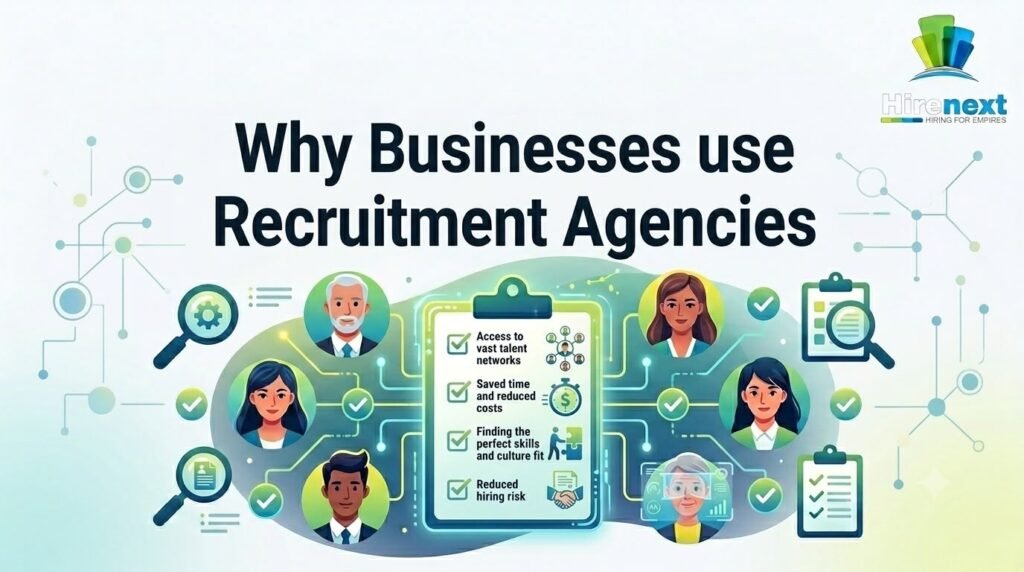
Hiring can be extremely time-consuming.
Companies often receive hundreds of applications for a single vacancy.
Sorting through these applications requires significant effort.
Understanding how recruitment agencies work explains why businesses increasingly rely on recruitment specialists.
Benefits include:
- Faster hiring
- Better candidate quality
- Reduced hiring costs
- Access to passive candidates
- Professional hiring support
These advantages make agencies valuable recruitment partners.
How Recruitment Agencies Work
Many people assume recruitment agencies simply collect resumes.
In reality, how recruitment agencies work involves multiple carefully managed stages.
Recruiters must:
- Understand company requirements
- Source candidates
- Screen resumes
- Conduct interviews
- Coordinate hiring managers
- Manage offers
- Support onboarding
Every successful placement involves continuous communication between employers and candidates.
Understanding the Step by Step Recruitment Agency Process
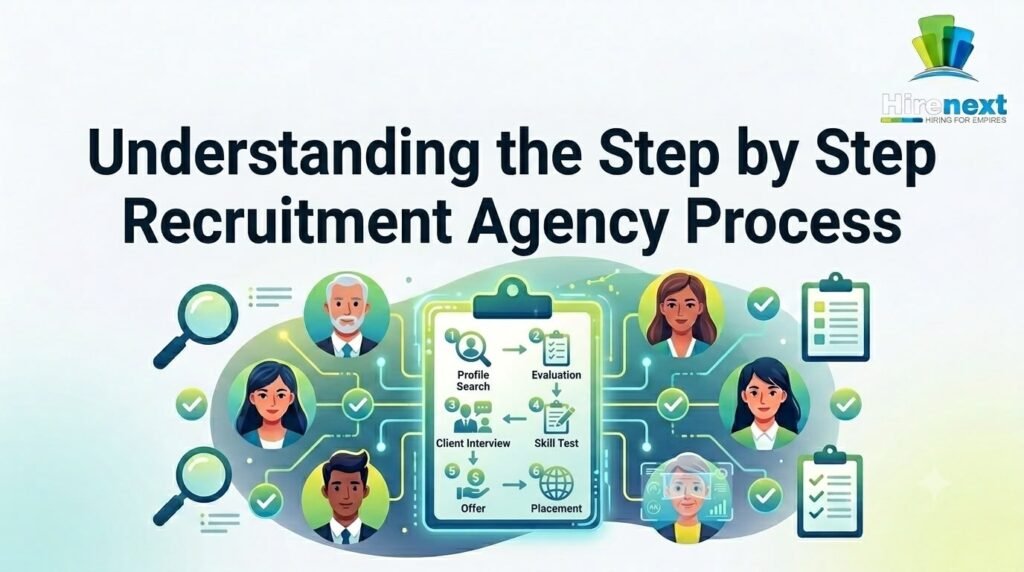
The step by step recruitment agency process follows a structured workflow designed to improve hiring accuracy.
Each stage ensures candidates meet both technical and cultural requirements before reaching the employer.
Professional recruitment minimizes hiring risks while improving efficiency.
Step 1: Receiving Hiring Requirements
Every recruitment assignment begins with understanding the employer’s needs.
Recruiters discuss:
- Job title
- Responsibilities
- Required skills
- Experience
- Salary range
- Location
- Company culture
This information forms the foundation of the step by step recruitment agency process.
Without clearly understanding client expectations, finding suitable candidates becomes difficult.
Step 2: Candidate Sourcing
Once requirements are finalized, recruiters begin searching for candidates.
Common sourcing methods include:
- Job portals
- Internal databases
- Employee referrals
- Social media
- Professional networking
This stage demonstrates how recruitment agencies work beyond simply posting advertisements.
Experienced recruiters actively search for talent rather than waiting for applications.
Step 3: Resume Screening
Candidate sourcing often generates large numbers of applications.
Recruiters carefully review resumes based on:
- Education
- Skills
- Experience
- Certifications
- Industry background
Resume screening ensures only qualified candidates move forward in the step by step recruitment agency process.
Step 4: Initial Candidate Evaluation
Resume screening alone cannot determine candidate suitability.
Recruiters usually conduct preliminary interviews to evaluate:
- Communication skills
- Career goals
- Technical understanding
- Salary expectations
- Notice period
- Motivation
This helps determine whether candidates genuinely match employer requirements.
Understanding how recruitment agencies work means recognizing the importance of these early evaluations.
Communication Throughout the Process
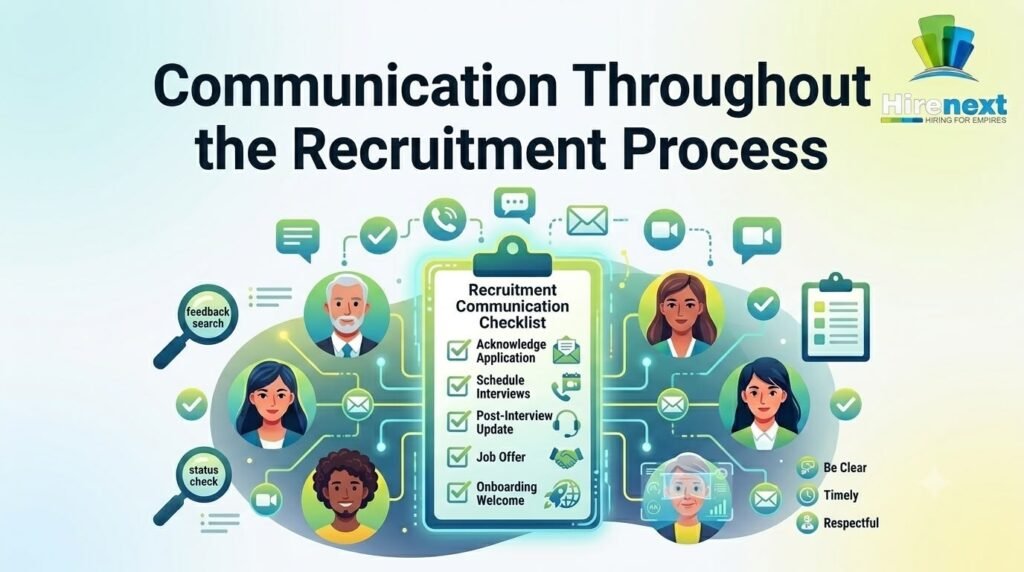
Recruiters continuously communicate with both employers and candidates.
Responsibilities include:
- Scheduling interviews
- Providing updates
- Answering candidate questions
- Managing employer expectations
Strong communication reduces misunderstandings while improving candidate experience.
Why Professional Screening Matters
Professional screening saves companies significant time.
Instead of interviewing dozens of applicants, employers receive a shortlist of highly qualified candidates.
This improves hiring efficiency while reducing recruitment costs.
Professional screening represents one of the biggest advantages of staffing solutions offered by recruitment agencies.
Step 5: Interview Coordination
After the initial screening is complete, recruiters begin coordinating interviews between shortlisted candidates and the hiring company.
This stage includes:
- Scheduling interview slots
- Confirming candidate availability
- Sharing interview details
- Preparing candidates
- Coordinating with hiring managers
One of the most overlooked aspects of how recruitment agencies work is the amount of communication required to keep the hiring process running smoothly.
Step 6: Client Interviews
Once interviews begin, recruiters continue managing the recruitment process.
Their responsibilities include:
- Collecting employer feedback
- Following up with candidates
- Clarifying expectations
- Addressing scheduling issues
- Coordinating additional interview rounds
The step by step recruitment agency process often involves multiple interview stages before a hiring decision is made.
Step 7: Reference Verification
Many organizations perform reference checks before making an offer.
Recruitment agencies help verify:
- Previous employment
- Professional conduct
- Job responsibilities
- Performance history
- Employment dates
This reduces hiring risks while increasing employer confidence.
Reference verification is another important example of how recruitment agencies work behind the scenes.
Step 8: Offer Management
Selecting a candidate does not complete the recruitment process.
Recruiters also assist with:
- Salary discussions
- Offer presentation
- Candidate negotiations
- Joining date confirmation
- Notice period management
Offer management requires balancing employer budgets with candidate expectations.
Professional recruiters help both parties reach mutually beneficial agreements.
Step 9: Candidate Onboarding
Many recruitment agencies continue supporting candidates even after offer acceptance.
Typical onboarding assistance includes:
- Document collection
- Joining formalities
- Candidate follow-up
- Employer communication
- Pre-joining engagement
Successful onboarding improves joining rates while reducing last-minute dropouts.
Staffing Solutions Offered by Recruitment Agencies
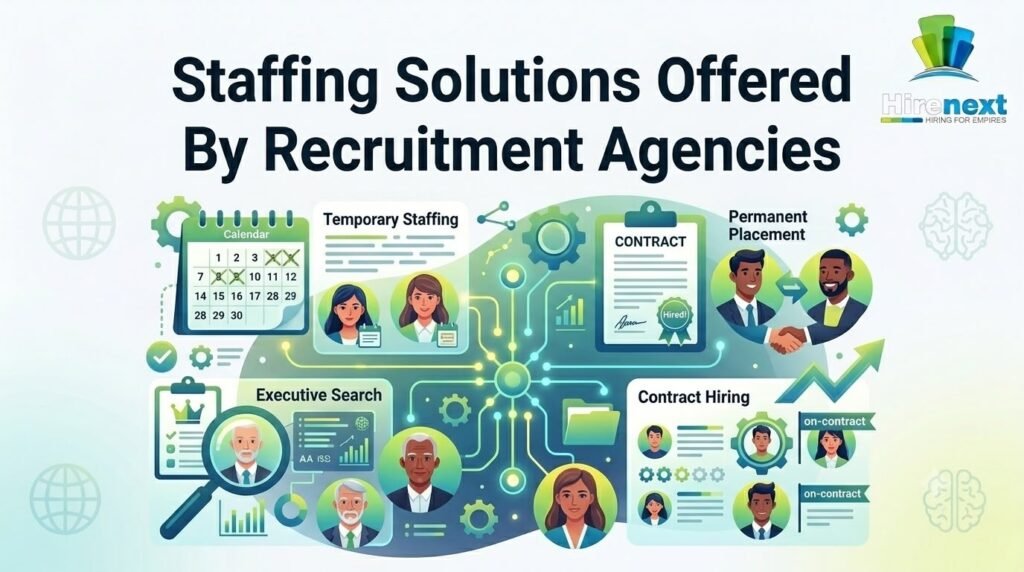
Modern agencies provide much more than permanent hiring.
Comprehensive staffing solutions include:
Permanent Recruitment
Hiring full-time employees for long-term positions.
Temporary Staffing
Providing professionals for short-term assignments.
Contract Staffing
Hiring candidates for project-based roles.
Executive Search
Recruiting senior leadership positions.
Bulk Hiring
Supporting organizations with large-scale recruitment requirements.
These staffing solutions allow businesses to manage changing workforce demands efficiently.
Common Challenges Recruitment Agencies Face
Although recruitment appears straightforward, agencies face several challenges.
High Competition
Multiple agencies may recruit for the same vacancy.
Candidate Dropouts
Candidates sometimes accept competing offers before joining.
Changing Client Requirements
Hiring requirements may evolve during recruitment.
Talent Shortages
Certain specialized skills remain difficult to source.
Salary Expectations
Negotiating acceptable compensation often requires careful communication.
Understanding these challenges provides a more realistic picture of how recruitment agencies work.
Benefits for Employers
Professional recruitment agencies provide significant value to businesses.
Benefits include:
- Faster hiring
- Better candidate quality
- Reduced recruitment costs
- Access to passive candidates
- Improved hiring efficiency
- Professional staffing solutions
These advantages allow organizations to focus on core business activities.
Benefits for Job Seekers
Recruitment agencies also help candidates.
Advantages include:
- Access to hidden job opportunities
- Career guidance
- Resume support
- Interview preparation
- Faster placement
- Professional feedback
Candidates benefit from recruiter expertise throughout the step by step recruitment agency process.
Why Recruitment Agencies Matter
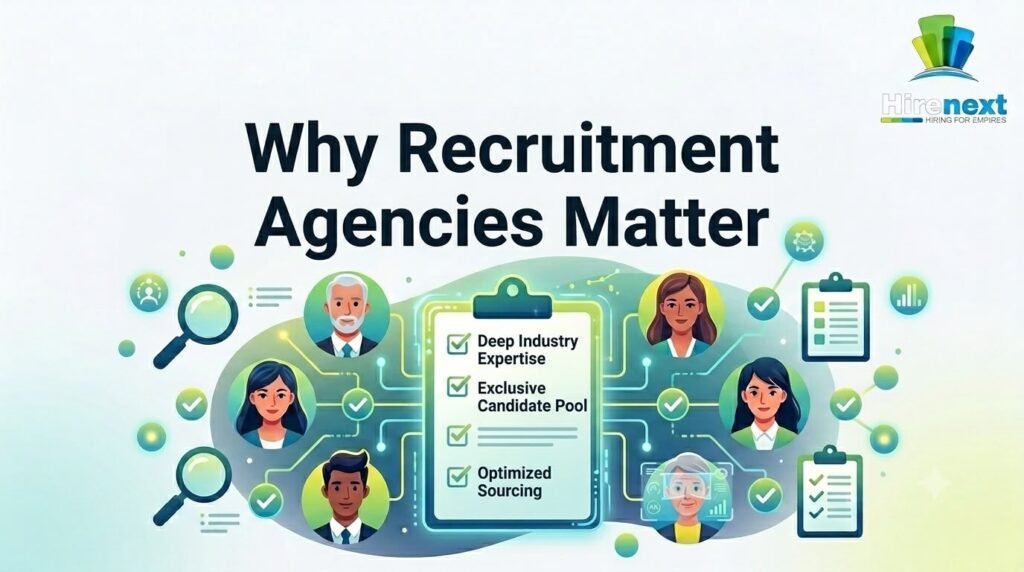
Businesses increasingly compete for skilled professionals.
Recruitment agencies simplify hiring while improving recruitment quality.
Instead of spending weeks reviewing applications, employers receive carefully shortlisted candidates who match organizational requirements.
This is why understanding how recruitment agencies work is valuable for both companies and job seekers.
The Future of Recruitment Agencies
Technology continues transforming recruitment.
Future trends include:
- Artificial Intelligence
- Automated resume screening
- Video interviewing
- Predictive hiring analytics
- Skills-based recruitment
- Digital onboarding
Despite technological advances, human expertise remains essential.
Relationship building, communication, candidate assessment, and negotiation continue to require experienced recruiters.
Conclusion
Behind every successful hire lies a carefully managed recruitment process that most people never see.
Understanding how recruitment agencies work reveals that recruitment involves much more than simply matching resumes with job descriptions. Every placement requires sourcing, screening, interviewing, coordinating, negotiating, and supporting both employers and candidates.
The structured step by step recruitment agency process ensures businesses hire qualified professionals while candidates receive better career opportunities. At the same time, professional staffing solutions help organizations reduce hiring time, improve recruitment quality, and build stronger teams.
Whether you are an employer searching for exceptional talent or a professional seeking your next opportunity, recruitment agencies play a vital role in creating successful career connections and driving long-term business growth.