
How Digital Hiring Is Changing Careers in Smaller Cities
Introduction
The hiring process has changed dramatically over the past decade. Traditional recruitment methods, which relied heavily on walk-in interviews, newspaper advertisements, and location-based hiring, are being replaced by digital recruitment solutions. Today, companies can identify, assess, interview, and hire candidates from anywhere in the country.
This transformation has created enormous opportunities through digital hiring in smaller cities. Professionals living outside metropolitan areas no longer need to relocate immediately to access quality employment opportunities. Instead, they can connect with employers through online job portals, virtual interviews, professional networking platforms, and remote recruitment systems.
For businesses, this means access to wider talent pools. For candidates, it means better career opportunities without geographical limitations. One of the biggest benefits of digital hiring for job seekers is equal access to opportunities regardless of where they live.
At the same time, the rapid growth of remote hiring has made recruitment faster, more flexible, and increasingly skill-focused.
This guide explains how digital hiring in smaller cities is transforming careers and shaping the future of recruitment.
Table of Contents
Introduction
The Evolution of Recruitment
What Is Digital Hiring?
Why Smaller Cities Are Benefiting
Growth of Digital Hiring in Smaller Cities
How Technology Is Breaking Location Barriers
Benefits of Digital Hiring for Job Seekers
The Rise of Remote Hiring
Industries Leading Digital Hiring
More Benefits of Digital Hiring for Job Seekers
Challenges of Digital Hiring
How Candidates Can Succeed in Digital Hiring
Employer Benefits of Digital Hiring
Why Remote Hiring Is Here to Stay
The Future of Digital Hiring in Smaller Cities
Conclusion
The Evolution of Recruitment
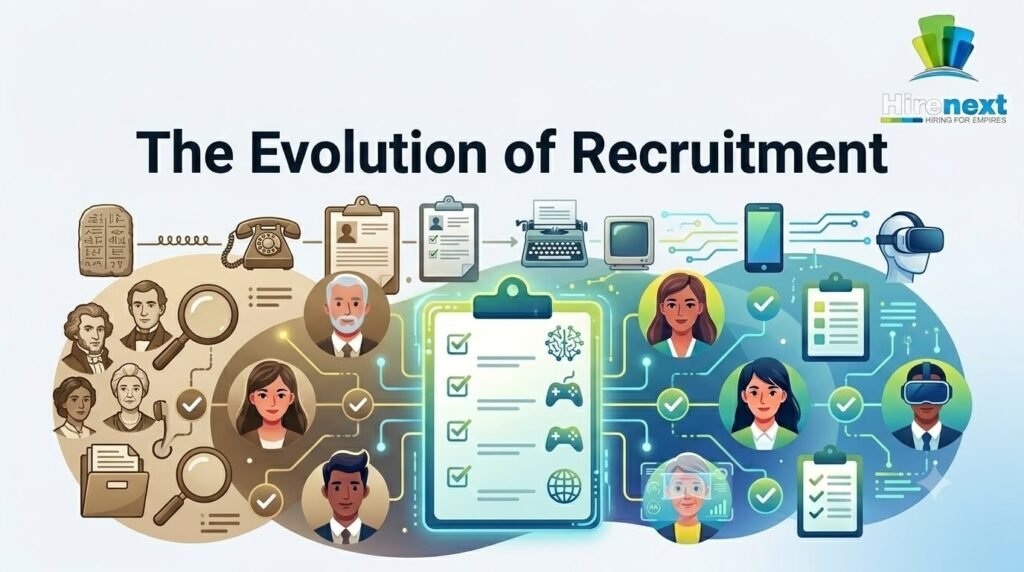
Recruitment has evolved from paper applications and physical interviews to completely digital hiring processes.
Today, businesses use:
- Online job portals
- LinkedIn recruitment
- Video interviews
- AI-powered resume screening
- Virtual assessments
- Digital onboarding
This evolution has significantly expanded opportunities through digital hiring in smaller cities.
What Is Digital Hiring?
Digital hiring refers to the use of technology throughout the recruitment process.
Instead of relying solely on face-to-face interactions, companies now recruit using digital platforms that allow candidates to apply, interview, and even join organizations remotely.
The process may include:
- Online applications
- Resume screening software
- Video interviews
- Virtual assessments
- Electronic document verification
- Digital onboarding
These innovations have made digital hiring in smaller cities faster, more accessible, and more efficient.
Why Smaller Cities Are Benefiting
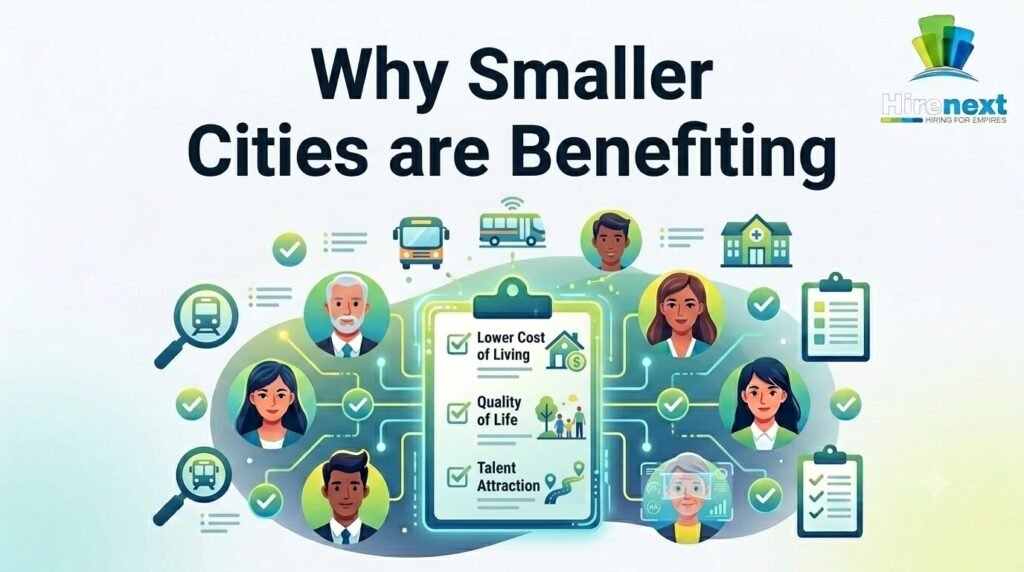
Professionals living in smaller cities previously faced several limitations.
These included:
- Fewer local job opportunities
- Limited access to large employers
- High relocation costs
- Less corporate exposure
Digital recruitment has removed many of these barriers.
Today, digital hiring in smaller cities enables candidates to compete equally with applicants from metropolitan regions.
Growth of Digital Hiring in Smaller Cities
The expansion of internet access and affordable smartphones has accelerated digital hiring in smaller cities.
Candidates can now:
- Search jobs online
- Attend virtual interviews
- Complete skill assessments
- Build LinkedIn profiles
- Learn through online certifications
This has significantly improved employment opportunities across Tier-2 and Tier-3 cities.
How Technology Is Breaking Location Barriers
Technology has transformed recruitment into a location-independent process.
Businesses now evaluate candidates based on:
- Skills
- Experience
- Learning ability
- Communication
- Cultural fit
rather than geography.
This allows digital hiring in smaller cities to become an effective solution for both employers and job seekers.
Benefits of Digital Hiring for Job Seekers
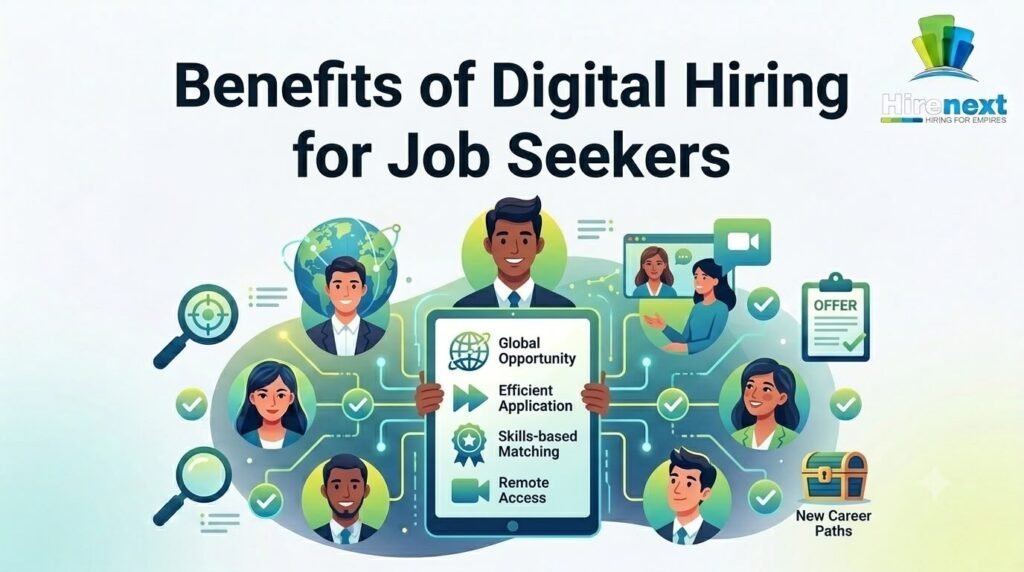
There are numerous benefits of digital hiring for job seekers.
Access to More Opportunities
Candidates can apply for positions across multiple cities without relocating.
Reduced Job Search Costs
Digital recruitment eliminates many travel and accommodation expenses associated with interviews.
Faster Hiring Process
Online interviews and digital assessments significantly reduce recruitment timelines.
Better Career Exposure
Professionals gain access to companies that were previously difficult to reach.
Continuous Learning
Candidates can simultaneously improve their skills through online learning platforms while applying for jobs.
These represent some of the most important benefits of digital hiring for job seekers.
The Rise of Remote Hiring
The rapid growth of remote hiring has transformed employment opportunities.
Many organizations now recruit professionals who work from their hometowns instead of relocating.
Remote hiring allows businesses to:
- Access wider talent pools
- Reduce operational costs
- Improve hiring speed
It also allows professionals living in smaller cities to build careers with organizations located anywhere in India.
The combination of remote hiring and digital hiring in smaller cities has fundamentally changed India’s employment landscape.
Industries Leading Digital Hiring
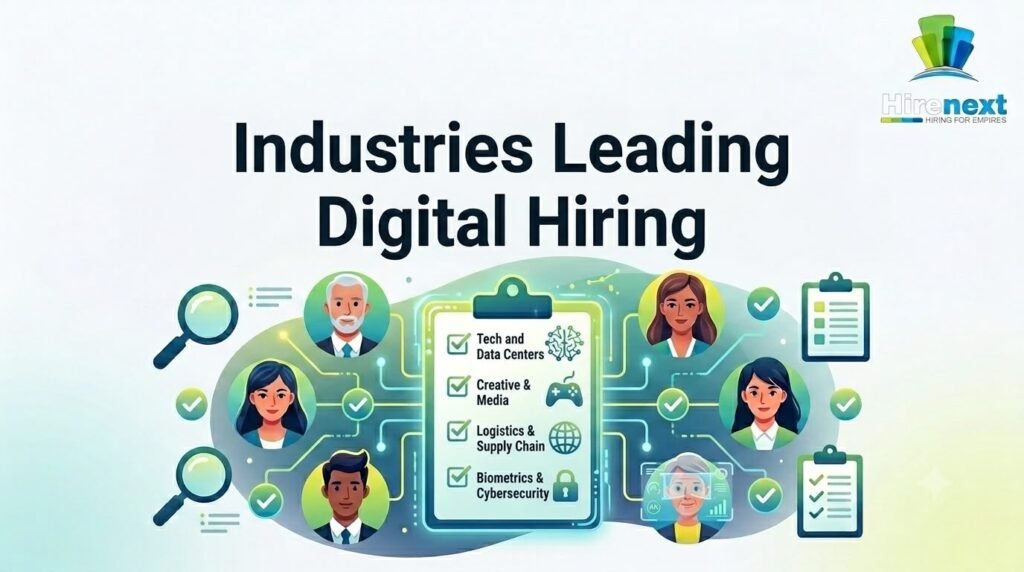
The adoption of digital hiring in smaller cities has expanded across nearly every industry. Companies are no longer restricted to hiring candidates who live near their offices. Instead, they focus on skills, experience, and potential.
Some of the industries actively recruiting through digital platforms include:
Information Technology
Software development, technical support, cybersecurity, cloud computing, and testing roles are increasingly filled through digital hiring in smaller cities.
Digital Marketing
Businesses now hire professionals for:
- SEO
- Content writing
- Social media management
- Performance marketing
- Google Ads
- Meta Ads
Many of these positions are remote or hybrid.
Customer Support
Customer service executives, chat support agents, and technical support professionals can now work from smaller cities through remote hiring.
Human Resources
Recruitment specialists, payroll executives, employee engagement professionals, and HR coordinators are increasingly hired through digital recruitment platforms.
Finance and Accounting
Accountants, financial analysts, auditors, and compliance executives now have access to opportunities beyond their local job markets.
More Benefits of Digital Hiring for Job Seekers
The benefits of digital hiring for job seekers extend beyond convenience.
Equal Opportunities
Candidates are evaluated more on their qualifications and skills than on their location.
Career Flexibility
Professionals can apply for jobs in different cities without relocating immediately.
Better Work-Life Balance
Through remote hiring, employees often save commuting time and improve their quality of life.
Access to Better Employers
Candidates from smaller cities can work with startups, multinational corporations, and fast-growing companies across India.
Skill Development
Digital hiring encourages candidates to improve their resumes, communication skills, certifications, and online presence.
These additional benefits of digital hiring for job seekers help professionals build stronger careers.
Challenges of Digital Hiring
Although digital hiring in smaller cities has created numerous opportunities, certain challenges still exist.
Internet Connectivity
Reliable internet access remains essential for virtual interviews and remote work.
Digital Skills
Candidates should understand:
- Online interview etiquette
- Professional email communication
- Resume formatting
- Video conferencing tools
Competition
Because candidates can apply nationally, competition has increased.
Continuous learning helps professionals remain competitive.
How Candidates Can Succeed
Professionals can improve their success in digital hiring in smaller cities by following a few best practices.
Maintain an Updated Resume
Highlight:
- Skills
- Certifications
- Experience
- Achievements
Optimize LinkedIn Profile
Recruiters actively search for candidates through LinkedIn.
A professional profile increases visibility.
Prepare for Virtual Interviews
Candidates should:
- Test internet connections
- Choose quiet environments
- Dress professionally
- Maintain eye contact
Continue Learning
Online certifications improve employability and demonstrate commitment to professional growth.
Employer Benefits
Organizations also benefit significantly from digital hiring in smaller cities.
Wider Talent Pools
Businesses access professionals from across India.
Lower Recruitment Costs
Virtual interviews reduce travel and operational expenses.
Faster Hiring
Digital recruitment tools shorten hiring timelines.
Better Workforce Diversity
Recruiting professionals from different regions creates stronger and more innovative teams.
Higher Employee Retention
Professionals hired through remote hiring often value flexibility, improving long-term retention.
Why Remote Hiring Is Here to Stay
The success of remote hiring has changed employer expectations.
Companies increasingly recognize that productivity depends more on performance than physical office presence.
As technology continues improving, remote hiring will remain an important part of modern recruitment.
For professionals in smaller cities, this creates unprecedented career opportunities.
The Future of Digital Hiring in Smaller Cities
The future of digital hiring in smaller cities looks extremely promising.
Several trends will continue shaping recruitment:
- Artificial Intelligence in hiring
- Skills-based recruitment
- Remote-first organizations
- Virtual onboarding
- Online assessments
- National talent pools
Businesses that embrace these changes will recruit more efficiently while accessing exceptional professionals regardless of location.
Conclusion
Technology has transformed recruitment into a borderless process.
Today, digital hiring in smaller cities provides professionals with opportunities that were once available only in metropolitan regions. Through virtual interviews, online job portals, and remote hiring, candidates can now build successful careers without leaving their hometowns.
The many benefits of digital hiring for job seekers—including wider career opportunities, reduced job search costs, greater flexibility, and equal access to employers—have fundamentally changed India’s employment landscape.
For businesses, digital recruitment means larger talent pools, lower hiring costs, and access to skilled professionals across the country. As organizations continue adopting technology-driven recruitment, digital hiring in smaller cities will play an even greater role in shaping the future of work.