
The Hiring Trends Nobody Saw Coming in 2026
Introduction
The recruitment landscape has changed dramatically over the past few years. Advances in technology, shifting workforce expectations, economic uncertainty, and changing business priorities have transformed how organizations attract, evaluate, and retain talent.
Many hiring strategies that worked only a few years ago are no longer enough. Employers are now competing for skilled professionals in a market where candidates have more choices, greater expectations, and increased access to opportunities across the world.
This is why understanding hiring trends 2026 has become essential for recruiters, HR professionals, startup founders, and business leaders.
Organizations that adapt to these new recruitment practices are more likely to attract top talent, reduce hiring costs, and improve long-term employee retention.
This article explores the most important latest recruitment trends in 2026, explains how hiring is changing, and examines why remote hiring continues to reshape recruitment strategies around the world.
Table of Contents
Introduction
Why Recruitment Changed So Quickly
Understanding Hiring Trends 2026
AI Is Becoming a Hiring Partner
Skills-Based Hiring Is Replacing Degree-Based Hiring
Remote Hiring Is Becoming More Strategic
Hybrid Recruitment Models
Employer Branding Is No Longer Optional
Candidate Experience Drives Hiring Success
Faster Hiring Processes
Data-Driven Recruitment Decisions
Internal Mobility Is Increasing
Diversity and Inclusive Hiring
The Growing Role of Recruitment Agencies
What These Changes Mean for Employers
Recruiters Are Becoming Talent Advisors
Rise of Freelance and Contract Hiring
AI-Powered Interviews and Assessments
Salary Transparency Is Becoming More Important
Personalized Candidate Engagement
Recruitment Automation Is Growing
Employee Referral Programs Are Evolving
The Importance of Candidate Experience in 2026
The Challenges Companies Face With Modern Hiring
How Businesses Should Adapt to Hiring Trends 2026
The Role of Remote Hiring in Future Recruitment
Recruitment Will Become More Human-Centered
Future of Recruitment Beyond 2026
Why Recruitment Changed So Quickly
Recruitment has always evolved with changing business needs, but the pace of change has accelerated significantly.
Several factors have contributed:
- Artificial Intelligence
- Automation
- Remote work
- Digital transformation
- Candidate expectations
- Global talent access
- Skills shortages
Companies can no longer rely on traditional recruitment methods alone.
Modern recruitment requires flexibility, technology, and a stronger focus on candidate experience.
These developments define many of the most important hiring trends 2026.
Understanding Hiring Trends 2026
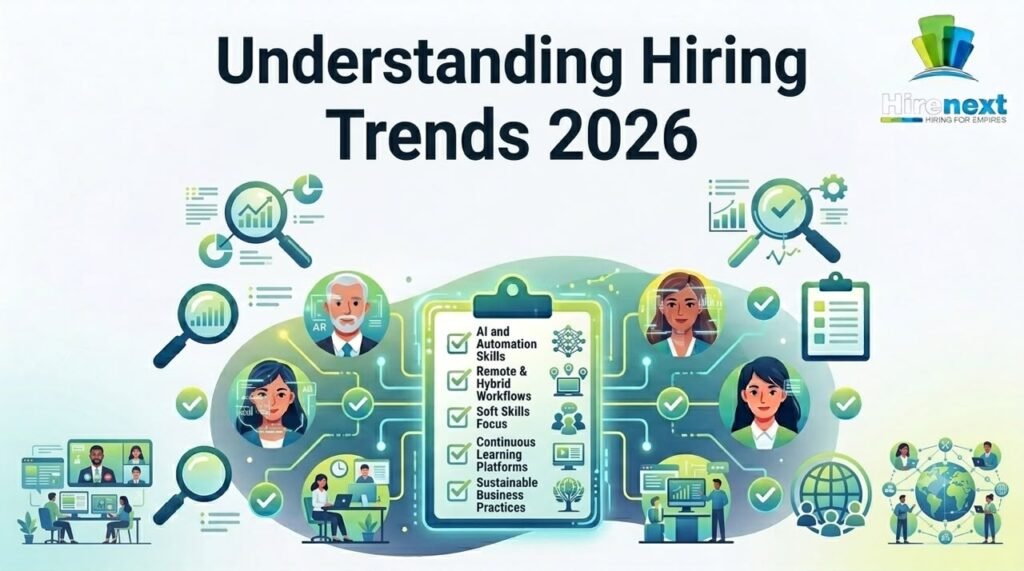
The recruitment process today looks very different from what it did only a few years ago.
Modern employers are shifting their focus from:
- Degrees to skills
- Experience to potential
- Local hiring to global hiring
- Manual recruitment to AI-assisted recruitment
- Lengthy hiring to faster decision-making
At the same time, candidates expect:
- Faster communication
- Flexible work
- Career development
- Transparent salaries
- Positive hiring experiences
Understanding these changing expectations helps organizations remain competitive hiring trends 2026.
AI Is Becoming a Hiring Partner
Artificial Intelligence has become one of the biggest hiring trends 2026.
Rather than replacing recruiters, AI increasingly supports recruitment teams.
Companies now use AI to:
- Screen resumes
- Match candidates
- Schedule interviews
- Analyze hiring data
- Improve sourcing
- Generate job descriptions
Recruiters can therefore spend more time building relationships with candidates instead of completing repetitive administrative work.
However, human judgment remains essential.
Recruiters still evaluate:
- Communication
- Cultural fit
- Motivation
- Leadership
- Emotional intelligence
AI improves efficiency, while humans make final hiring decisions.
Skills-Based Hiring Is Replacing Degree-Based Hiring
One of the biggest latest recruitment trends in 2026 is the growing emphasis on skills.
Many employers now prioritize:
- Practical knowledge
- Technical ability
- Certifications
- Portfolios
- Projects
- Work samples
Instead of asking:
“What degree does this candidate have?”
Companies increasingly ask:
“What problems can this candidate solve?”
Skills-based hiring creates opportunities for:
- Career changers
- Self-taught professionals
- Online learners
- Freelancers
This trend allows organizations to access a much broader talent pool hiring trends 2026.
Remote Hiring Is Becoming More Strategic
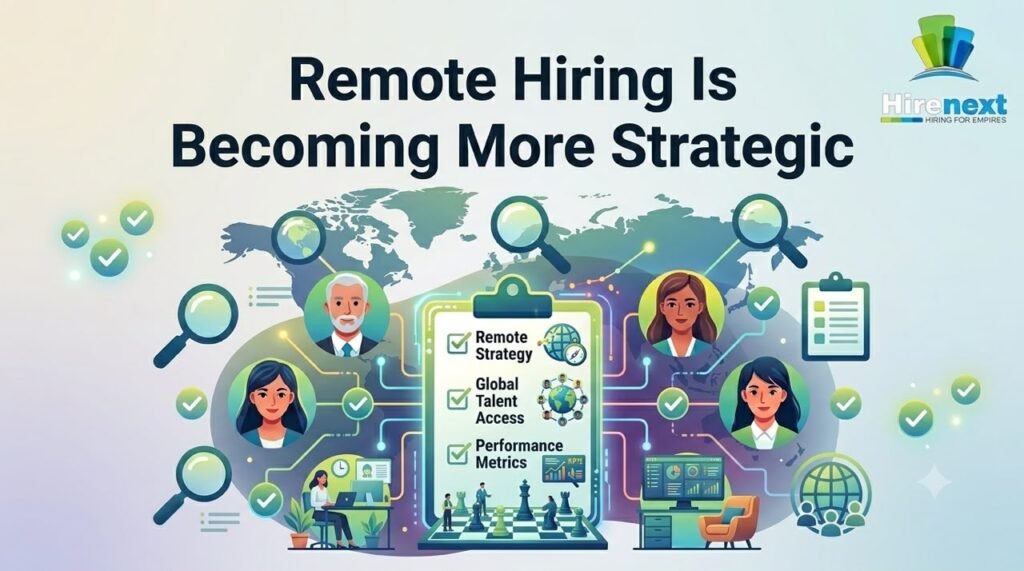
Initially, remote hiring was viewed as a temporary solution.
Today, it has become a long-term recruitment strategy.
Companies now recruit talent from:
- Different cities
- Different states
- Different countries
This allows employers to:
- Access specialized talent
- Reduce recruitment limitations
- Improve diversity
- Expand hiring reach
However, remote hiring also requires stronger processes.
Organizations need:
- Digital onboarding
- Virtual interviews
- Collaboration tools
- Remote performance management
Successful companies no longer treat remote recruitment as an exception.
It has become a standard hiring option.
Hybrid Recruitment Models
Many businesses now combine office-based and remote recruitment.
This hybrid approach offers flexibility.
Some positions remain fully office-based.
Others are:
- Hybrid
- Remote-first
- Flexible
Candidates increasingly expect employers to offer work flexibility.
Organizations that ignore these expectations may struggle to attract top talent.
This flexibility is another defining feature of hiring trends 2026.
Employer Branding Is No Longer Optional
Candidates now research employers before applying.
They examine:
- Company websites
- LinkedIn profiles
- Employee reviews
- Social media
- Company culture
Employer branding therefore plays a major role in recruitment.
Organizations with strong employer brands often receive:
- More applications
- Better-quality candidates
- Higher acceptance rates
Employer branding is no longer only a marketing activity.
It has become an essential recruitment strategy.
Candidate Experience Drives Hiring Success
One of the most significant latest recruitment trends in 2026 is the growing importance of candidate experience.
Candidates now expect:
- Quick communication
- Clear processes
- Transparent timelines
- Professional interviews
- Respectful interactions
Negative experiences spread quickly through:
- Online reviews
- Social media
- Professional networks
Poor candidate experience can damage employer reputation.
Organizations increasingly recognize that recruitment is also a customer experience.
Faster Hiring Processes
Lengthy recruitment processes often result in lost candidates.
Highly skilled professionals frequently receive multiple offers.
If companies delay decisions, candidates may accept another opportunity.
Modern recruitment therefore focuses on:
- Faster resume screening
- Shorter interview cycles
- Faster feedback
- Quicker offer decisions
Reducing unnecessary delays has become one of the most practical hiring trends 2026.
Data-Driven Recruitment Decisions
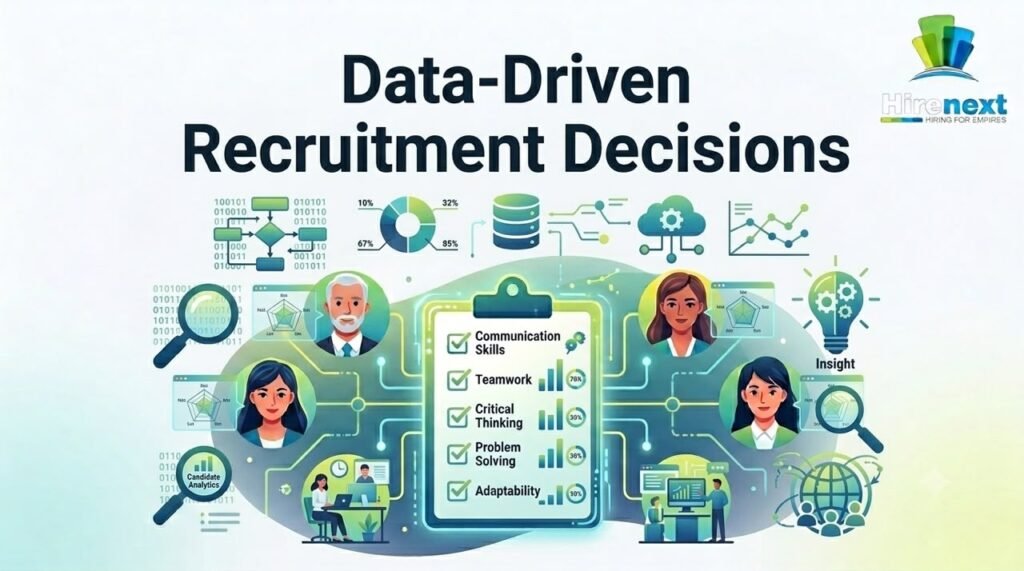
Recruitment increasingly relies on measurable data.
Companies now analyze:
- Time-to-hire
- Cost-per-hire
- Quality-of-hire
- Candidate sources
- Offer acceptance rates
- Employee retention
These insights help organizations improve recruitment efficiency.
Rather than relying only on intuition, businesses can make evidence-based hiring decisions.
Internal Mobility Is Increasing
Organizations are increasingly filling vacancies internally.
Instead of immediately recruiting externally, companies first evaluate existing employees.
Internal mobility offers several benefits:
- Lower recruitment costs
- Faster onboarding
- Higher retention
- Increased employee engagement
Employees also appreciate opportunities for career growth.
Promoting from within supports long-term workforce development.
Diversity and Inclusive Hiring
Diversity remains an important recruitment priority.
Organizations increasingly recognize that diverse teams contribute to:
- Innovation
- Better decision-making
- Improved collaboration
- Stronger business performance
Inclusive recruitment includes:
- Objective assessments
- Skills-based evaluation
- Accessible hiring processes
- Fair interview practices
Many companies now review recruitment processes to reduce unconscious bias.
The Growing Role of Recruitment Agencies
As hiring becomes more competitive, recruitment agencies continue expanding their role.
Professional recruiters help organizations by:
- Sourcing candidates
- Conducting initial screening
- Reducing hiring time
- Improving candidate quality
- Supporting difficult hiring projects
Rather than simply forwarding resumes, agencies increasingly act as recruitment consultants.
This partnership helps businesses adapt to changing hiring trends 2026.
What These Changes Mean for Employers
The recruitment landscape is becoming more candidate-focused.
Employers should prepare by:
- Investing in employer branding
- Improving candidate experience
- Using recruitment technology
- Supporting flexible work
- Building strong talent pipelines
- Developing internal talent
Organizations that adapt quickly are more likely to attract and retain top performers.
Recruiters Are Becoming Talent Advisors
One of the biggest changes in hiring trends 2026 is the evolving role of recruiters.
Recruiters are no longer limited to posting job openings and collecting applications. Modern recruiters are becoming strategic talent advisors who help companies make better hiring decisions.
Their responsibilities now include:
- Understanding business goals
- Identifying future talent needs
- Advising hiring managers
- Improving candidate experience
- Building long-term talent pipelines
Companies increasingly need recruitment professionals who understand both people and business challenges.
The future recruiter is not just a connector between companies and candidates—they are a strategic partner in workforce planning.
Rise of Freelance and Contract Hiring
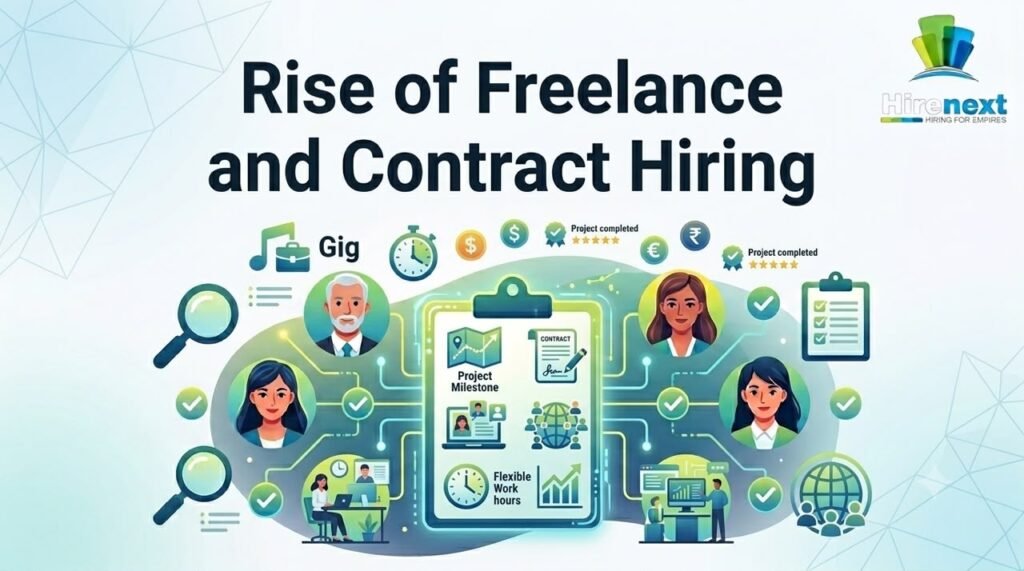
Traditional full-time employment is no longer the only option for companies.
One of the growing latest recruitment trends in 2026 is the increasing use of:
- Freelancers
- Contractors
- Consultants
- Project-based professionals
Businesses are using flexible hiring models to access specialized skills without long-term commitments.
This approach helps organizations:
- Reduce hiring costs
- Complete projects faster
- Access specialized expertise
- Scale teams according to business requirements
Industries such as technology, marketing, design, consulting, and content creation are seeing significant growth in flexible hiring.
AI-Powered Interviews and Assessments
Artificial intelligence is changing how companies evaluate candidates.
AI-based recruitment tools are being used for:
- Automated interview scheduling
- Candidate assessments
- Skill evaluations
- Resume analysis
- Communication assessments
These tools help companies manage large numbers of applicants efficiently.
However, companies must maintain balance.
While AI can improve speed and efficiency, human interaction remains necessary for evaluating:
- Personality
- Motivation
- Cultural alignment
- Career goals
The most successful organizations will combine technology with human decision-making.
Salary Transparency Is Becoming More Important
Another major shift in hiring trends 2026 is the increasing demand for salary transparency.
Candidates today want clearer information about:
- Salary ranges
- Benefits
- Growth opportunities
- Performance expectations
Companies that hide compensation details may lose potential applicants.
Transparent salary communication can:
- Build trust
- Improve candidate quality
- Reduce negotiation delays
- Improve employer reputation
As competition for skilled professionals increases, transparency becomes a competitive advantage.
Personalized Candidate Engagement
Modern candidates expect personalized communication.
Generic recruitment messages are becoming less effective.
Candidates want employers to understand:
- Their skills
- Career goals
- Professional interests
- Experience level
Personalized engagement may include:
- Customized job recommendations
- Relevant communication
- Career-focused conversations
- Faster responses
This approach improves candidate experience and increases the chances of successful hiring.
Recruitment Automation Is Growing
Automation has become an important part of modern recruitment.
Companies are using technology to automate repetitive tasks such as:
- Resume screening
- Interview scheduling
- Candidate tracking
- Email communication
- Application management
Automation allows recruiters to focus on higher-value activities like:
- Candidate relationships
- Employer branding
- Strategic hiring decisions
However, automation should support recruiters rather than replace human interaction.
Employee Referral Programs Are Evolving
Employee referrals have always been valuable, but they are becoming more strategic.
Companies are improving referral programs through:
- Digital platforms
- Better incentives
- Faster processing
- Employee engagement campaigns
Employees often recommend candidates who understand company culture, making referrals an effective hiring channel.
A strong referral program can reduce recruitment costs while improving hiring quality.
The Importance of Candidate Experience in 2026
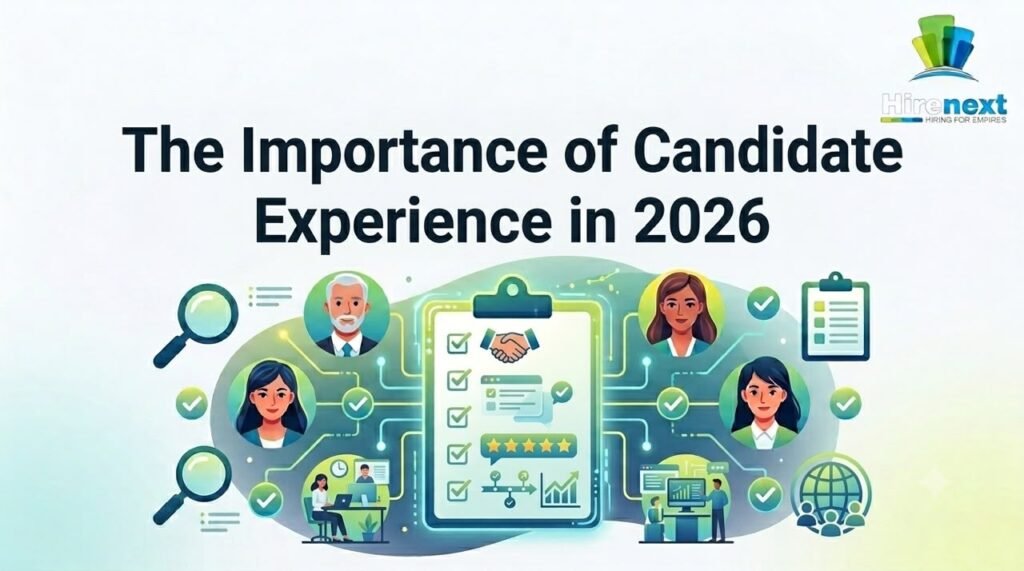
Candidate experience has become one of the most important factors in recruitment success.
A poor experience can cause candidates to:
- Reject job offers
- Share negative reviews
- Avoid future opportunities
Companies are improving candidate experience through:
- Faster communication
- Clear hiring timelines
- Respectful interviews
- Regular updates
- Simple application processes
Organizations that prioritize candidates often build stronger employer brands.
The Challenges Companies Face With Modern Hiring
Although new recruitment strategies provide many benefits, businesses also face challenges.
1. Finding Skilled Talent
Many industries continue to experience skill shortages.
Companies must compete for professionals with specialized abilities.
2. Managing Recruitment Technology
While AI and automation improve efficiency, companies need proper systems and trained teams to use them effectively.
3. Maintaining Human Connection
Too much automation can make recruitment feel impersonal.
Companies must balance technology with genuine candidate interaction.
4. Retaining Employees
Hiring talented professionals is only the first step.
Organizations must also focus on employee engagement and retention.
How Businesses Should Adapt to Hiring Trends 2026
To succeed in the changing recruitment environment, companies should update their hiring strategies.
Build a Strong Employer Brand
Candidates are attracted to organizations with:
- Positive culture
- Growth opportunities
- Strong values
- Employee-focused policies
Invest in Recruitment Technology
Technology can improve:
- Efficiency
- Candidate matching
- Communication
- Data analysis
Focus on Skills-Based Hiring
Evaluating practical abilities helps companies discover talented candidates from diverse backgrounds.
Improve Candidate Experience
Simple, transparent, and respectful hiring processes attract better talent.
Create Talent Pipelines
Instead of hiring only when positions become available, companies should continuously build relationships with potential candidates.
The Role of Remote Hiring in Future Recruitment
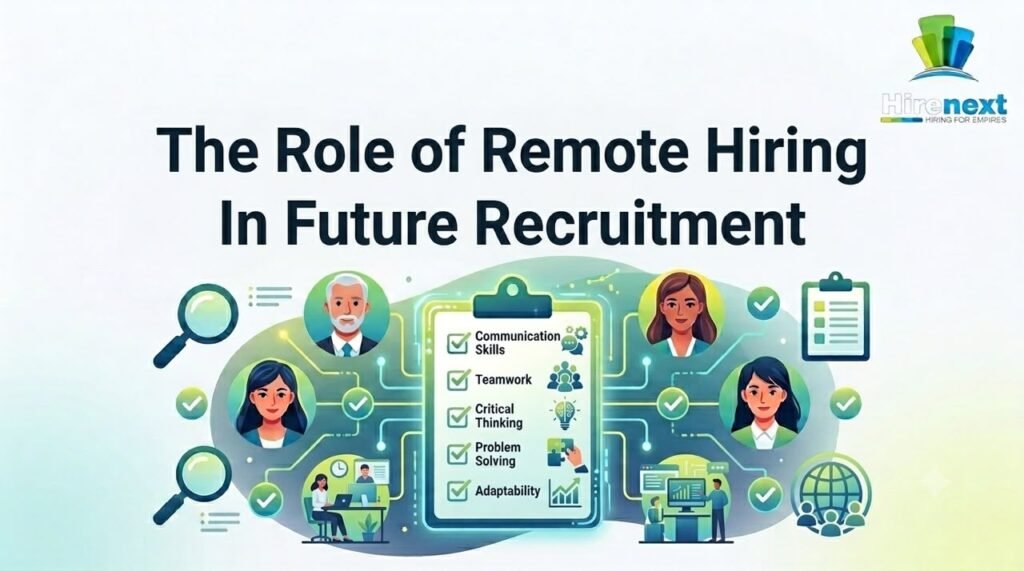
Remote hiring will continue playing a major role beyond 2026.
Companies that successfully manage remote recruitment will have access to a larger talent pool.
Future remote recruitment strategies may include:
- Virtual onboarding
- Remote assessments
- Digital collaboration platforms
- Global talent sourcing
However, organizations must also focus on maintaining company culture in remote environments.
Remote hiring is not simply about allowing employees to work from anywhere.
It requires strong communication, trust, and effective management systems.
Recruitment Will Become More Human-Centered
Although technology dominates many discussions around hiring trends 2026, the future of recruitment is not only about automation.
People remain the center of hiring.
Companies still need to understand:
- Candidate motivations
- Career aspirations
- Personal goals
- Workplace preferences
The best recruitment strategies will combine:
- Artificial intelligence
- Data insights
- Human relationships
Future of Recruitment Beyond 2026
Recruitment will continue evolving as workplaces change.
Future trends may include:
- More AI-assisted hiring
- Increased skills-based recruitment
- Global talent access
- Greater focus on employee experience
- Personalized career opportunities
- More flexible work models
Companies that continuously adapt will have a stronger advantage in attracting talent.
Conclusion
The recruitment world is changing faster than ever, and hiring trends 2026 reflect a major shift in how companies find, evaluate, and retain employees.
From AI-powered recruitment and skills-based hiring to remote hiring and personalized candidate engagement, businesses are moving toward smarter, faster, and more flexible hiring strategies.
The latest recruitment trends in 2026 show that successful hiring is no longer about simply filling vacancies. It is about finding the right people, creating positive candidate experiences, and building long-term workforce strategies.
Companies that embrace technology while maintaining human connection will be better positioned to compete for talent.
The future of recruitment belongs to organizations that understand candidates, adapt quickly, and create workplaces where talented professionals want to grow.
For employers, the message is clear: hiring is no longer just a process—it is a strategic advantage.
Businesses that understand and implement modern hiring trends 2026 will not only attract better candidates but also build stronger, more successful teams for the future.