
The Difference Between HR Hiring and Recruitment Agency Hiring
Introduction
Hiring the right employees is one of the most important decisions a business makes. The people an organization hires directly influence productivity, workplace culture, customer satisfaction, and long-term growth. However, companies have different ways of finding and hiring talent.
Some businesses manage recruitment internally through their Human Resources department, while others work with professional recruitment agencies. Both approaches have advantages, but they differ significantly in terms of sourcing, expertise, speed, cost, and access to talent.
Understanding HR hiring vs recruitment agency hiring can help businesses choose the right recruitment strategy based on their workforce requirements.
Internal HR teams usually manage hiring as part of their broader responsibilities, while recruitment agencies specialize specifically in finding and placing candidates. The right approach often depends on the size of the company, the urgency of the vacancy, the complexity of the role, and the availability of internal recruitment resources.
This guide explores HR hiring vs recruitment agency hiring in detail, including recruitment processes, candidate sourcing, screening, hiring speed, and recruitment costs.
Table of Contents
Introduction
What Is HR Hiring?
What Is Recruitment Agency Hiring?
HR Hiring vs Recruitment Agency: Key Differences
Recruitment Process and Responsibilities
Candidate Sourcing
Resume Screening and Candidate Evaluation
Time and Hiring Speed
Recruitment Costs
Industry Expertise and Talent Access
Employer Branding and Candidate Experience
Benefits of Hiring Through a Recruitment Agency
When Should Companies Use Internal HR?
When Should Companies Choose a Recruitment Agency?
Can HR Teams and Recruitment Agencies Work Together?-
Choosing the Right Hiring Approach
HR Hiring vs Recruitment Agency: Which Is Better?
Future of Recruitment
Conclusion
What Is HR Hiring?
HR hiring refers to the process of recruiting employees directly through a company’s internal Human Resources team.
Internal HR professionals typically manage:
- Job postings
- Candidate sourcing
- Resume screening
- Interviews
- Employee documentation
- Offer letters
- Onboarding
HR teams are already familiar with the organization’s culture, policies, and workforce requirements.
This knowledge can make internal recruitment effective, particularly for companies with established HR departments.
However, HR teams often manage several responsibilities beyond recruitment, including:
- Payroll
- Employee relations
- Performance management
- Compliance
- Training
- Workplace policies
As a result, recruitment may not always receive their full attention.
What Is Recruitment Agency Hiring?
Recruitment agency hiring involves partnering with an external company that specializes in finding and evaluating candidates.
Recruitment agencies typically handle:
- Candidate sourcing
- Resume screening
- Preliminary interviews
- Talent mapping
- Candidate shortlisting
- Interview coordination
Understanding HR hiring vs recruitment agency hiring requires recognizing that recruitment agencies focus primarily on talent acquisition.
They often maintain candidate databases and professional networks, allowing them to identify potential employees quickly.
HR Hiring vs Recruitment Agency: Key Differences
The difference between HR hiring vs recruitment agency hiring can be understood through several factors.
| Factor | Internal HR Hiring | Recruitment Agency Hiring |
|---|---|---|
| Candidate sourcing | Managed internally | Managed by recruitment specialists |
| Talent pool | Company networks and job portals | Extensive databases and professional networks |
| Hiring speed | Depends on HR workload | Often faster |
| Industry expertise | Varies by organization | Often specialized |
| Recruitment costs | Internal operational expenses | Agency fees or placement charges |
| Candidate screening | Internal HR team | Dedicated recruiters |
| Hiring volume | Suitable for regular recruitment | Useful for urgent and bulk hiring |
Neither option is universally better.
The right choice depends on business requirements.
Recruitment Process and Responsibilities
Internal HR teams and recruitment agencies often follow similar recruitment stages, but their responsibilities differ.
Internal HR
HR professionals may manage the entire hiring cycle while handling other organizational responsibilities.
Recruitment Agencies
Agencies focus specifically on sourcing and evaluating candidates before presenting suitable profiles to employers.
This specialized focus is one of the major advantages of working with external recruitment partners.
Candidate Sourcing
Candidate sourcing is one of the biggest differences between HR hiring vs recruitment agency hiring.
Internal HR teams often rely on:
- Job portals
- Company websites
- Employee referrals
Recruitment agencies may use these channels as well as:
- Candidate databases
- Passive talent networks
- Industry contacts
- Professional communities
- Recruitment technology
This wider reach can help agencies identify candidates who may not actively be searching for jobs.
Resume Screening and Candidate Evaluation
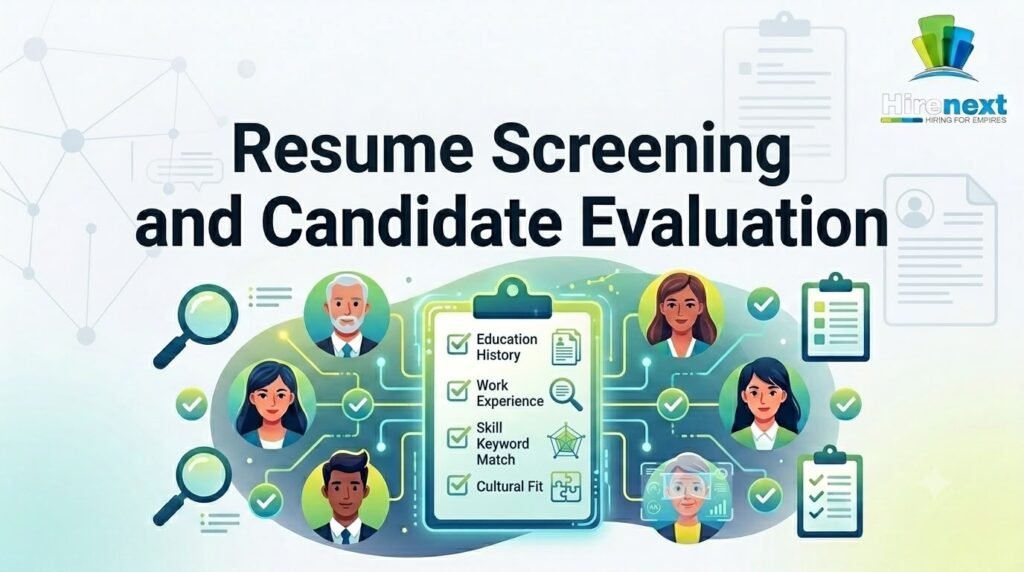
Resume screening is an essential part of recruitment.
Internal HR teams review applications based on company requirements.
Recruitment agencies also conduct screening but may have dedicated recruiters whose primary responsibility is candidate evaluation.
They often assess:
- Skills
- Experience
- Qualifications
- Communication
- Salary expectations
- Notice periods
Professional screening can reduce the number of unsuitable candidates reaching the final interview stage.
Time and Hiring Speed
Hiring speed is another major consideration when comparing HR hiring vs recruitment agency hiring.
Internal HR teams may take longer when:
- They have multiple vacancies
- Recruitment is not their only responsibility
- Applicant volumes are high
Recruitment agencies can often dedicate more resources to urgent positions.
They may simultaneously:
- Search databases
- Contact candidates
- Conduct screening
- Schedule interviews
This can significantly accelerate the hiring process.
Recruitment Costs
Recruitment costs are an important factor when deciding between internal and external hiring.
Internal recruitment involves expenses such as:
- HR salaries
- Recruitment software
- Job advertisements
- Interview time
- Administrative resources
Recruitment agencies may charge:
- Placement fees
- Recruitment commissions
- Retainer fees
While agencies may appear more expensive initially, businesses should consider the overall cost of prolonged vacancies, poor hiring decisions, and employee turnover.
The most cost-effective approach depends on the organization’s hiring requirements.
Industry Expertise and Talent Access
One of the most important differences in HR hiring vs recruitment agency hiring is the level of industry specialization.
Internal HR teams understand their organization deeply. They know the company culture, internal policies, business objectives, and employee expectations.
However, recruitment agencies often work across multiple companies and industries. This gives them exposure to wider talent markets and specialized skill sets.
For example, an agency specializing in technology recruitment may have access to professionals with:
- Software development experience
- Data analytics skills
- Cybersecurity expertise
- Cloud computing knowledge
This specialized talent access can be particularly valuable when companies struggle to find candidates independently.
Employer Branding and Candidate Experience
Internal HR teams are responsible for representing the company’s employer brand.
They communicate:
- Company culture
- Career growth opportunities
- Employee benefits
- Workplace values
Recruitment agencies also influence candidate experience.
Professional recruiters act as intermediaries between candidates and employers, ensuring candidates receive clear information about:
- Job responsibilities
- Salary expectations
- Interview processes
- Company requirements
A positive candidate experience can improve employer reputation and increase offer acceptance rates.
Benefits of Hiring Through a Recruitment Agency
There are several benefits of hiring through a recruitment agency, particularly for companies facing challenging recruitment situations.
Faster Hiring
Agencies focus specifically on recruitment, allowing them to dedicate more time and resources to filling vacancies.
Access to Wider Talent Pools
Recruitment agencies often maintain extensive candidate databases and professional networks.
Reduced HR Workload
External recruiters can manage sourcing and initial screening, allowing internal HR teams to focus on other priorities.
Specialized Expertise
Recruitment agencies may specialize in specific industries or job categories.
Support During Urgent Hiring
Companies facing unexpected vacancies can benefit from recruiters who already have access to potential candidates.
Support for Bulk Hiring
Organizations hiring large numbers of employees can use recruitment agencies to manage high-volume recruitment more efficiently.
These are some of the most significant benefits of hiring through a recruitment agency.
When Should Companies Use Internal HR?
Internal HR hiring is often suitable when companies:
- Hire regularly
- Have a dedicated recruitment team
- Maintain strong candidate pipelines
- Have established employer branding
- Need employees who require extensive cultural alignment
Internal recruitment can also be cost-effective for organizations with frequent hiring needs.
When Should Companies Choose a Recruitment Agency?
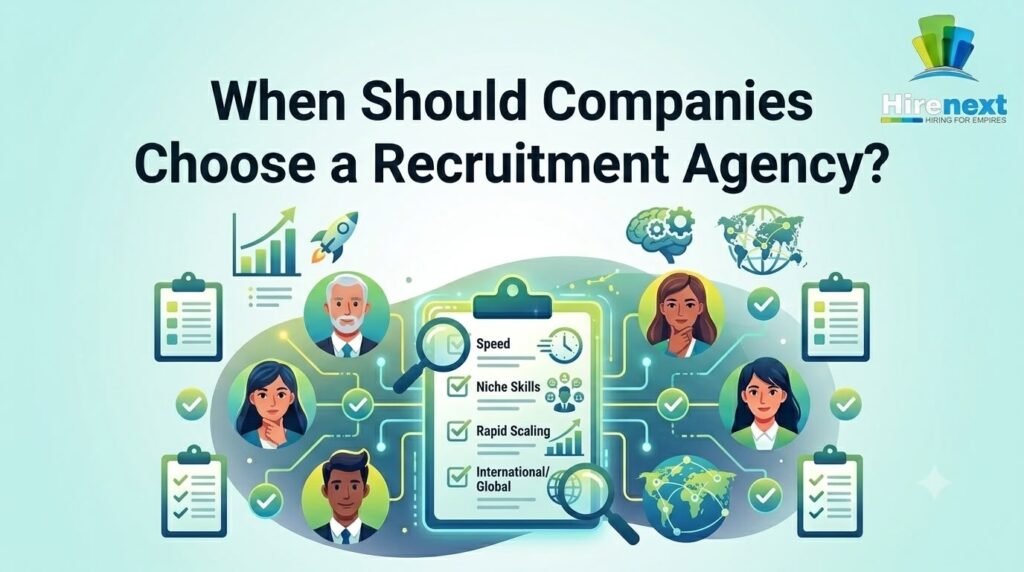
External recruitment may be more suitable when businesses:
- Need to hire quickly
- Struggle to find specialized talent
- Have limited HR resources
- Need to hire large numbers of employees
- Are entering new markets
- Have difficult-to-fill positions
Understanding HR hiring vs recruitment agency hiring helps companies determine when external support can provide the greatest value.
Can HR Teams and Recruitment Agencies Work Together?
The answer is yes.
In fact, many successful organizations combine internal HR expertise with external recruitment support.
The HR team can focus on:
- Employer branding
- Employee engagement
- Culture
- Onboarding
Recruitment agencies can manage:
- Candidate sourcing
- Resume screening
- Talent mapping
- Initial candidate evaluation
This partnership creates a more efficient recruitment system.
Choosing the Right Hiring Approach
Companies should consider several factors before choosing between internal recruitment and external agencies.
Hiring Volume
Frequent recruitment may justify building an internal team.
Hiring Urgency
Urgent vacancies may benefit from agency support.
Role Complexity
Specialized positions often require external expertise.
Budget
Organizations should evaluate total recruitment costs, not just agency fees.
Internal Resources
Companies with limited HR resources may benefit from outsourcing recruitment.
HR Hiring vs Recruitment Agency: Which Is Better?
There is no single answer.
The best approach depends on the organization’s unique requirements.
Internal HR hiring provides:
- Strong company knowledge
- Direct control
- Cultural alignment
Recruitment agencies provide:
- Faster sourcing
- Wider talent access
- Specialized expertise
- Recruitment support
Understanding HR hiring vs recruitment agency hiring allows businesses to choose strategically instead of relying on one recruitment method for every vacancy.
Future of Recruitment
The future of hiring will likely involve a combination of internal HR teams, recruitment agencies, and technology.
Emerging trends include:
- Artificial Intelligence
- Automated candidate screening
- Skills-based hiring
- Remote recruitment
- Digital interviews
- Recruitment analytics
Technology will continue reducing administrative workloads, but human expertise will remain essential for candidate relationships and hiring decisions.
Conclusion
The debate around HR hiring vs recruitment agency hiring is not about determining which approach is universally better. Instead, businesses should consider their hiring volume, recruitment requirements, budget, available HR resources, and urgency.
Internal HR teams are valuable because they understand company culture and organizational needs. Recruitment agencies, on the other hand, provide specialized talent acquisition expertise, wider candidate networks, and faster recruitment support.
The benefits of hiring through a recruitment agency become particularly clear when businesses need specialized talent, urgent hiring, or high-volume recruitment. While agency fees can increase direct recruitment costs, the time saved and improved access to qualified candidates may deliver significant long-term value.
Ultimately, the most effective hiring strategy may be a combination of both approaches. By allowing HR teams to focus on internal priorities while recruitment agencies support talent acquisition, businesses can build a more flexible, efficient, and scalable recruitment process.