
A Day in the Life of a Recruiter During Urgent Hiring
Introduction
Hiring the right employee is never a simple task, but when a company needs someone immediately, the pressure increases dramatically. Vacant positions can affect productivity, customer service, project timelines, and overall business performance. In these situations, recruitment agencies and internal recruiters must act quickly while maintaining hiring quality.
The urgent hiring process is one of the most demanding aspects of recruitment. Recruiters must balance speed with accuracy, ensuring that businesses receive qualified candidates without compromising recruitment standards. Every phone call, email, interview, and follow-up becomes part of a carefully managed workflow designed to fill positions as quickly as possible.
Understanding how recruitment agencies manage urgent hiring provides valuable insight into the work that happens behind the scenes. Recruiters often manage multiple vacancies simultaneously while handling candidate sourcing, screening, interview coordination, and client communication. In cases involving high volume hiring, the complexity increases even further.
This article takes you through a typical day in the life of a recruiter managing an urgent hiring process, highlighting the challenges, responsibilities, and strategies that help businesses hire quickly and efficiently.
Table of Contents
Introduction
What Is an Urgent Hiring Process?
Why Companies Need Urgent Hiring
A Recruiter’s Day Begins Early
Understanding Client Requirements
Candidate Sourcing Under Pressure
Resume Screening at Speed
Managing Multiple Open Positions
High Volume Hiring Challenges
Interview Coordination
Candidate Follow-Ups
How Recruitment Agencies Manage Urgent Hiring
Technology Makes Urgent Hiring Faster
Common Challenges Recruiters Face
Best Practices During an Urgent Hiring Process
How Businesses Can Support Recruiters
The Future of Urgent Hiring
Conclusion
What Is an Urgent Hiring Process?
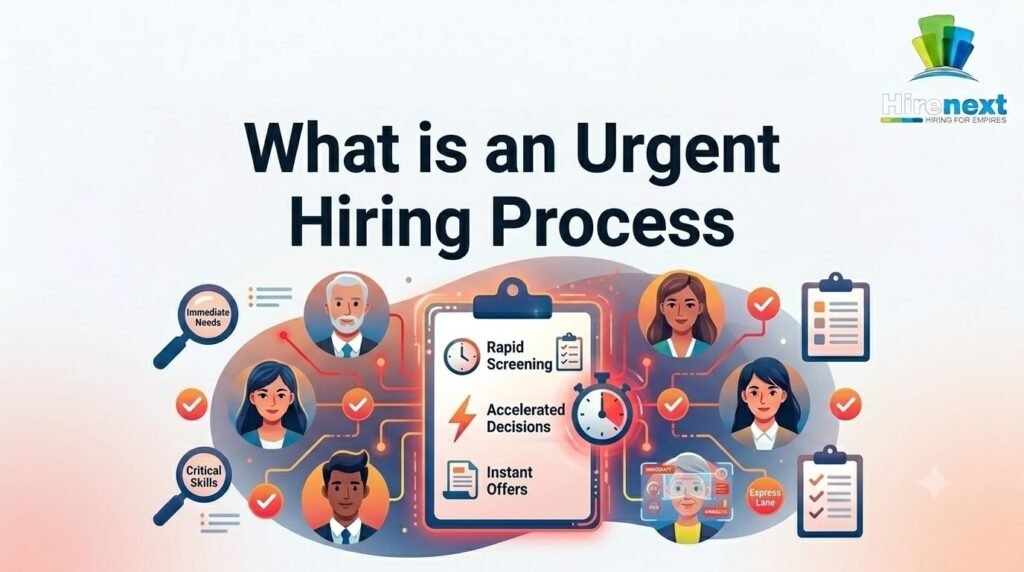
An urgent hiring process refers to recruitment that must be completed within a very short timeframe.
Unlike traditional hiring, where recruiters may have several weeks to identify suitable candidates, urgent hiring often requires positions to be filled within days.
Common examples include:
- Employee resignations
- Business expansion
- Seasonal demand
- Project deadlines
- Bulk recruitment drives
- Unexpected workforce shortages
The recruiter must work efficiently while maintaining hiring quality.
Why Companies Need Urgent Hiring
Businesses face urgent hiring situations for many reasons.
Some of the most common include:
Sudden Employee Resignation
Unexpected resignations can disrupt daily operations.
Rapid Business Growth
Companies expanding quickly often require immediate workforce additions.
New Projects
Large client projects may require immediate recruitment of specialized professionals.
Seasonal Hiring
Retail, hospitality, healthcare, and education sectors frequently experience temporary hiring spikes.
High Volume Hiring
Organizations opening new branches or expanding operations often require high volume hiring, where dozens or even hundreds of employees must be recruited within a short period.
A Recruiter’s Day Begins Early
Recruiters managing an urgent hiring process often begin their day before regular office hours.
The first tasks typically include:
- Reviewing new applications
- Checking overnight emails
- Prioritizing urgent vacancies
- Following up with candidates
- Preparing interview schedules
Since urgent hiring moves quickly, every hour matters.
Understanding Client Requirements

Before recruiters begin searching for candidates, they must fully understand employer expectations.
Discussions usually cover:
- Job responsibilities
- Required qualifications
- Technical skills
- Salary range
- Experience level
- Joining timeline
A clear understanding helps recruiters avoid wasting valuable time during the urgent hiring process.
Candidate Sourcing Under Pressure
Once hiring requirements are finalized, recruiters immediately begin sourcing candidates.
Common sourcing channels include:
- Job portals
- Internal databases
- Employee referrals
- Social media
- Previous applicants
Finding suitable candidates quickly is one of the most important aspects of how recruitment agencies manage urgent hiring.
Resume Screening at Speed
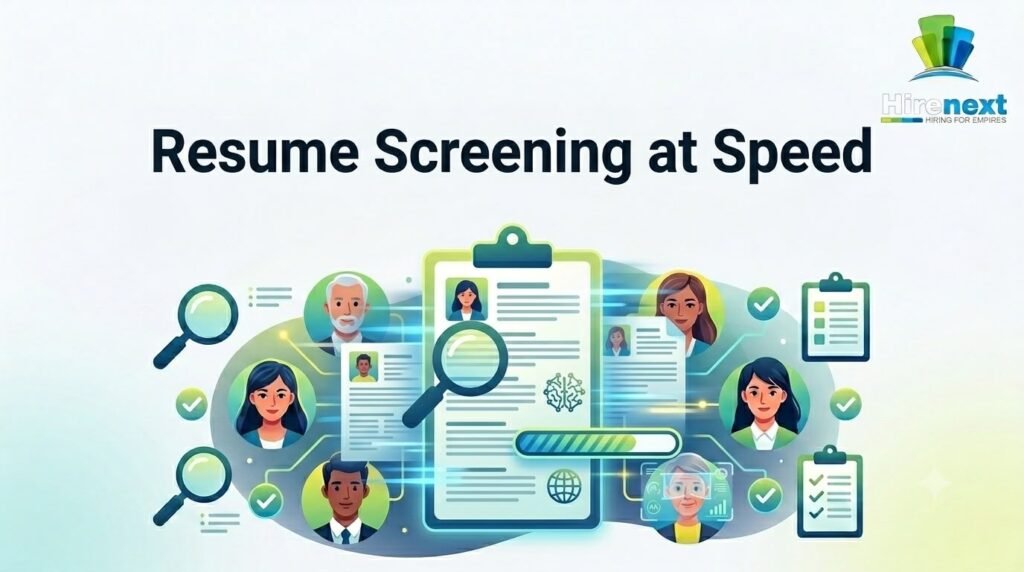
Urgent hiring often generates large numbers of applications.
Recruiters rapidly evaluate resumes based on:
- Relevant experience
- Skills
- Industry background
- Availability
- Notice period
Efficient resume screening ensures that only qualified candidates move to the next stage.
Managing Multiple Open Positions
Recruiters rarely handle only one vacancy.
Many professionals simultaneously manage:
- Multiple clients
- Different industries
- Various experience levels
- Different locations
Balancing priorities while maintaining recruitment quality requires strong organizational skills.
High Volume Hiring Challenges
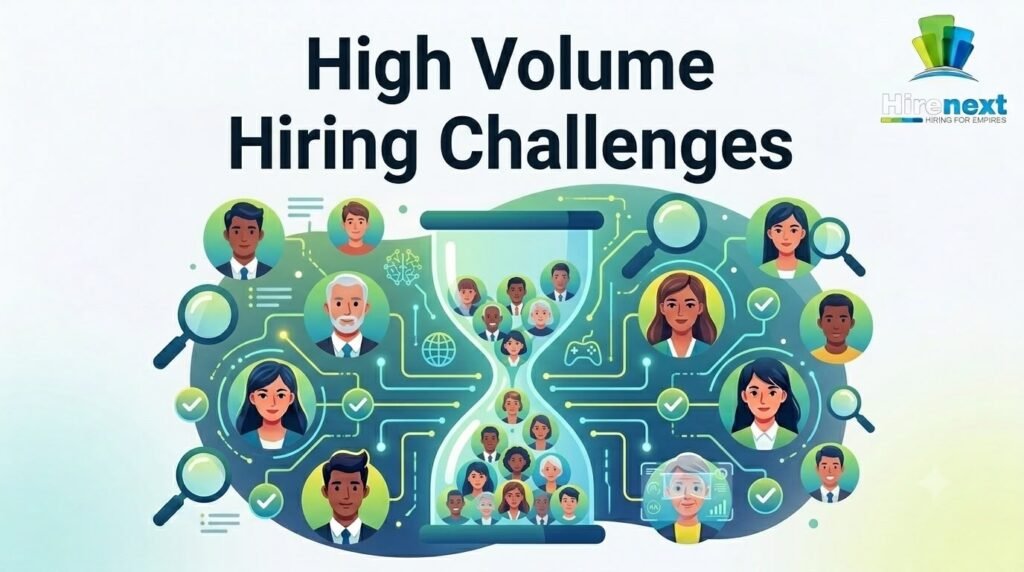
During high volume hiring, recruiters face additional complexity.
Instead of hiring one employee, they may need to recruit dozens within days.
Common challenges include:
- Screening hundreds of resumes
- Scheduling multiple interviews
- Coordinating hiring managers
- Managing candidate communication
- Maintaining hiring quality
Successful recruiters rely on planning, teamwork, and technology to manage these situations efficiently.
Interview Coordination
Once suitable candidates have been shortlisted, recruiters move quickly to arrange interviews. During an urgent hiring process, interview coordination is one of the busiest parts of the day.
Recruiters must:
- Contact candidates
- Confirm availability
- Coordinate with hiring managers
- Share interview details
- Handle last-minute schedule changes
Strong coordination helps avoid delays and keeps the recruitment timeline on track.
Candidate Follow-Ups
Candidate communication never stops during urgent hiring.
Recruiters regularly follow up to:
- Confirm interview attendance
- Collect feedback
- Answer candidate questions
- Discuss salary expectations
- Confirm notice periods
Consistent communication reduces candidate dropouts and improves the overall hiring experience.
How Recruitment Agencies Manage Urgent Hiring
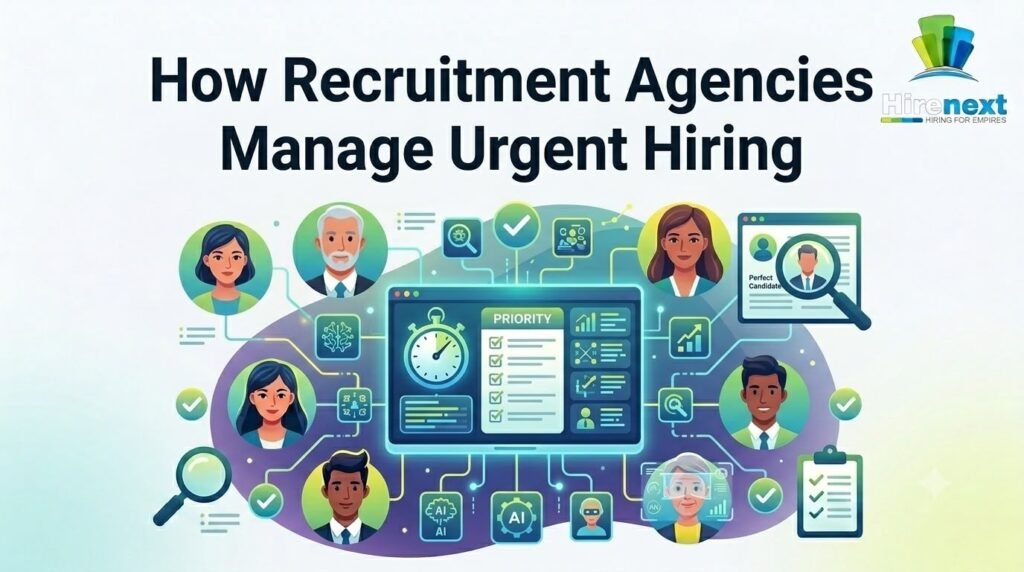
Many businesses wonder how recruitment agencies manage urgent hiring while maintaining quality.
The answer lies in structured recruitment systems.
Professional agencies typically:
Maintain Talent Databases
Recruiters continuously build candidate databases so they already have potential profiles when urgent vacancies arise.
Prioritize Critical Roles
Not every vacancy has the same level of urgency.
Recruiters identify which positions require immediate attention and allocate resources accordingly.
Use Multiple Sourcing Channels
Instead of relying on one platform, recruiters simultaneously search through:
- Job portals
- Internal databases
- Referrals
- Social media
This significantly improves sourcing speed.
Work as a Team
Large recruitment agencies divide responsibilities among recruiters, sourcers, coordinators, and account managers.
This collaborative approach is especially useful during high volume hiring.
Technology Makes Urgent Hiring Faster
Technology has transformed the urgent hiring process.
Recruiters now use:
Applicant Tracking Systems (ATS)
Organize resumes and manage recruitment pipelines.
Resume Screening Software
Quickly identifies suitable candidates.
Video Interview Platforms
Allow businesses to interview candidates immediately.
Interview Scheduling Tools
Reduce administrative delays.
CRM Systems
Help recruiters maintain candidate relationships.
Technology plays an important role in how recruitment agencies manage urgent hiring efficiently.
Common Challenges Recruiters Face
Urgent recruitment is rewarding but highly demanding.
Some common challenges include:
Candidate Dropouts
Candidates may receive competing job offers before joining.
Tight Deadlines
Recruiters often have only a few days to complete the entire hiring cycle.
High Competition
Multiple companies may target the same candidates simultaneously.
High Volume Hiring Pressure
Managing dozens of vacancies at once requires exceptional planning and organization.
Changing Client Requirements
Employers occasionally modify hiring expectations after recruitment has already begun.
Recruiters must adapt quickly without delaying the process.
Best Practices During an Urgent Hiring Process
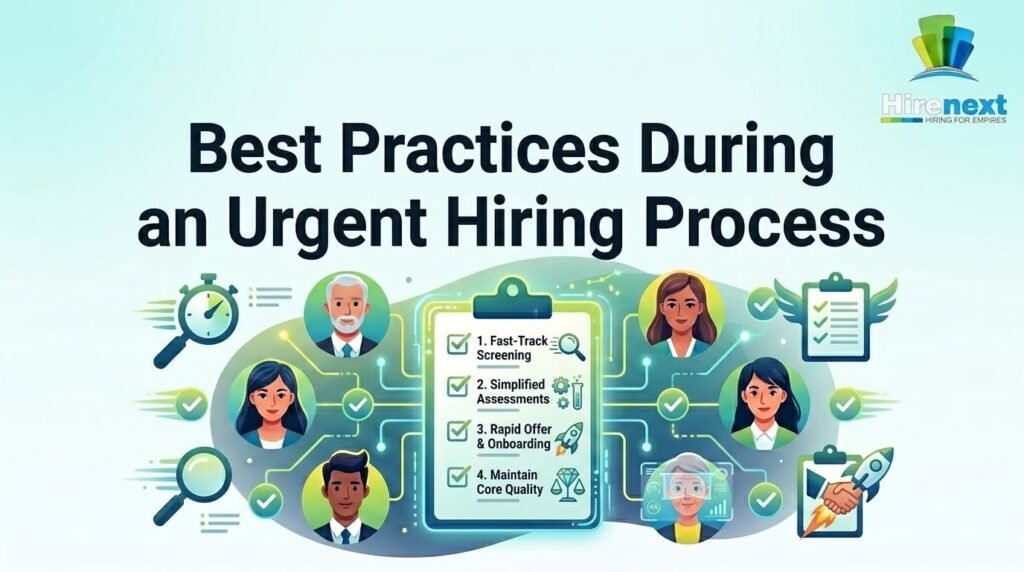
Successful recruiters follow several proven strategies.
Build Talent Pipelines
Maintain relationships with qualified candidates before vacancies arise.
Screen Candidates Efficiently
Use structured evaluation methods to reduce unnecessary interviews.
Communicate Quickly
Responding promptly improves candidate engagement.
Leverage Technology
Automation reduces administrative workload.
Stay Organized
Task prioritization is essential when handling multiple urgent positions.
These practices improve the urgent hiring process while maintaining candidate quality.
How Businesses Can Support Recruiters
Recruitment success depends on collaboration between employers and agencies.
Companies can improve hiring outcomes by:
- Providing clear job descriptions
- Giving prompt interview feedback
- Making faster hiring decisions
- Offering competitive salaries
- Maintaining realistic timelines
These actions make how recruitment agencies manage urgent hiring much more effective.
The Future of Urgent Hiring

Recruitment continues evolving rapidly.
Future trends include:
- AI-powered candidate matching
- Automated resume screening
- Predictive hiring analytics
- Digital onboarding
- Skills-based recruitment
- Greater use of remote interviews
These innovations will continue improving the urgent hiring process while helping agencies manage high volume hiring more efficiently.
Conclusion
Behind every successful urgent recruitment drive is a recruiter managing multiple responsibilities under tight deadlines. From sourcing candidates and screening resumes to scheduling interviews and negotiating offers, every stage requires careful planning and constant communication.
Understanding how recruitment agencies manage urgent hiring highlights the expertise required to balance speed with hiring quality. Whether filling a single vacancy or managing high volume hiring, professional recruiters rely on structured processes, technology, and teamwork to deliver results.
For businesses, partnering with experienced recruiters shortens hiring timelines and improves candidate quality. For job seekers, it creates faster access to genuine opportunities. As recruitment continues to evolve, an efficient urgent hiring process will remain essential for organizations that need to attract top talent quickly and stay competitive in a fast-moving market.