
First 30 Days in a New Job: What You Must Do
Starting a new job is one of the most important transitions in your career. It can feel exciting, confusing, and even overwhelming at the same time. The truth is, your first 30 days decide how confidently you settle into the role, how quickly people trust you, and how fast you grow in the organization.
Most freshers and even experienced professionals struggle because they don’t clearly understand what to do in new jobduring the initial phase. They either try to do too much too soon or stay silent and confused.
This detailed guide will give you a structured roadmap of exactly what to do in new job so you can build confidence, clarity, and credibility from day one.
Table of Contents
- Why First 30 Days in a New Job Matter
- Pre-Onboarding Preparation (Before Joining)
- Settling In and Understanding the Environment
- Learning Role, Expectations, and Tools
- Building First Impressions
- Understanding Team, Culture, and Communication
- Learning Workflows and Internal Systems
- Asking the Right Questions
- Starting Real Work and Taking Ownership
- Improving Speed, Accuracy, and Confidence
- Delivering Value and Becoming Reliable
- Professional Behavior in First 30 Days
- Mistakes to Avoid in a New Job
- Onboarding Preparation Checklist
- Long-Term Mindset After First Month
- Conclusion
Why First 30 Days in a New Job Matter

The first 30 days are not about performance pressure—they are about adaptation. This is the stage where your learning curve is the highest and your actions are closely observed by managers and teammates.
If you are confused about what to do in new job, think of this phase as “foundation building.” Just like a building needs a strong base, your career needs a strong start.
What you do in this period decides:
- How quickly you understand the job
- How comfortable your manager feels with you
- How smoothly you transition into responsibilities
- How confident you become in your role
That’s why knowing what to do in new job is extremely important.
Pre-Onboarding Preparation (Before Joining)
Your journey actually starts before your first working day.
This is called onboarding preparation, and it plays a huge role in reducing anxiety.
What you should do before joining:
- Research the company (vision, services, competitors)
- Understand your job description clearly
- Learn basic industry terms
- Check tools/software used in your role
- Prepare required documents
- Set a learning mindset
If you don’t know what to do in new job, start here. Preparation builds confidence before you even enter the office or start work online.
Settling In and Understanding the Environment
The first week is all about observation, not performance.
One of the most important things in what to do in new job is understanding your environment.
Focus on:
- Office culture (formal/informal, strict/flexible)
- Team behavior and communication style
- Working hours and discipline
- How meetings are conducted
- How seniors interact with juniors
Do not rush to prove yourself in Week 1. The best answer to what to do in new job here is simple: observe everything carefully.
Learning Role, Expectations, and Tools
You must clearly understand your responsibilities.
Ask questions like:
- What exactly is my role?
- What are my daily tasks?
- What are weekly expectations?
- Who do I report to?
- What tools will I use?
If you’re confused about what to do in new job, clarity is your first priority. Without clarity, you cannot perform well later.
Also start learning tools like:
- Excel / Google Sheets
- CRM systems (if any)
- Internal dashboards
- Communication tools like Slack or Teams
Building First Impressions

First impressions matter more than perfection.
In terms of what to do in new job, focus on:
- Being punctual
- Dressing appropriately
- Being polite and respectful
- Listening more than speaking
- Showing eagerness to learn
People don’t expect you to be perfect, but they do expect you to be serious and attentive.
Understanding Team, Culture, and Communication
Now you start interacting more.
A key part of what to do in new job is building relationships.
Do this in Week 2:
- Introduce yourself properly to team members
- Understand who does what in the team
- Observe communication patterns
- Learn whom to approach for different tasks
Workplaces run on communication. If you understand what to do in new job, you will prioritize relationships early.
Learning Workflows and Internal Systems
Every company has systems and processes.
Now your focus should be:
- How tasks are assigned
- How approvals happen
- How reporting works
- How files/data are managed
This is a critical part of what to do in new job because it helps you avoid confusion later.
Take notes. Do not rely on memory.
Asking the Right Questions
Asking questions is not a weakness—it is a strength.
But ask smart questions like:
- “Is this the correct way to do it?”
- “What is the preferred format?”
- “Can you show me one example?”
If you are learning what to do in new job, remember: clarity comes from asking, not guessing.
Starting Real Work and Taking Ownership
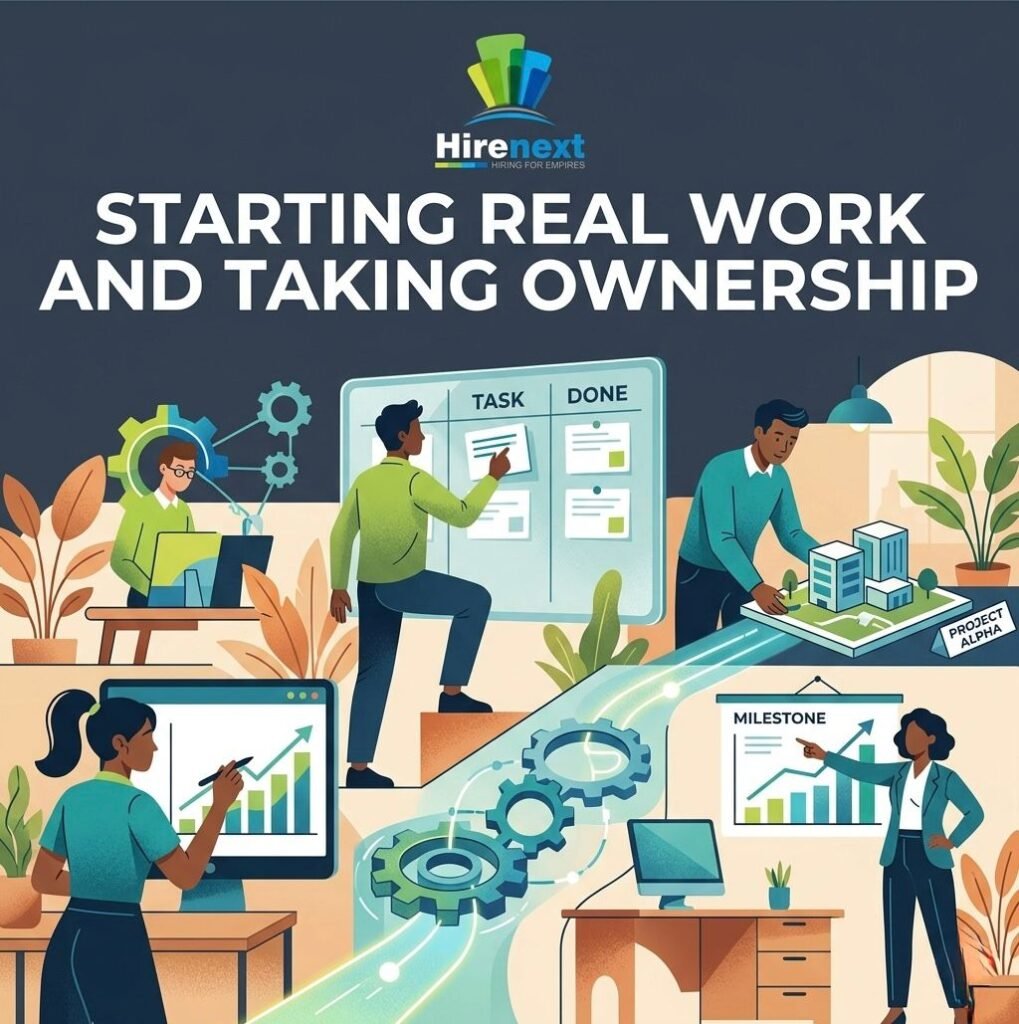
Now you shift from learning to doing.
A major step in what to do in new job is starting small tasks.
What you should do:
- Take assigned tasks seriously
- Complete them on time
- Double-check your work
- Ask for feedback
Do not wait for big projects. Even small tasks help you grow.
Improving Speed, Accuracy, and Confidence
Now that you are working, focus on improvement.
Key areas:
- Reducing mistakes
- Improving task speed
- Understanding patterns
- Becoming more independent
Understanding what to do in new job also means improving yourself daily, not staying static.
Delivering Value and Becoming Reliable
By week four, you should start becoming a dependable team member.
At this stage of what to do in new job, focus on:
- Delivering consistent work
- Meeting deadlines without reminders
- Taking responsibility
- Helping team when possible
Managers value reliability more than talent in the beginning.
Professional Behavior in First 30 Days

Professional behavior builds long-term trust.
Include:
- Discipline in timing
- Respectful communication
- Active listening
- Clean documentation of work
- Positive attitude
If you are serious about what to do in new job, behavior matters as much as skills.
Mistakes to Avoid in a New Job
Avoid these common errors:
- Acting overconfident
- Ignoring feedback
- Not asking questions
- Comparing yourself with others
- Being inconsistent
- Overpromising results
Many people fail not because they don’t know what to do in new job, but because they rush the process.
Onboarding Preparation Checklist

A simple checklist for what to do in new job:
✔ Company research done
✔ Role clarity achieved
✔ Tools learned
✔ Team introduced
✔ Workflows understood
✔ First tasks completed
✔ Feedback received
Follow this checklist to stay on track.
Long-Term Mindset After First Month
After 30 days, your mindset should shift from “learning” to “contributing consistently.”
Even though this guide is about what to do in new job, the real goal is long-term growth:
- Build expertise slowly
- Take ownership of bigger tasks
- Improve communication
- Become a problem solver
Your first month is just the beginning.
Conclusion
The first 30 days in any job define your career direction. If you clearly understand what to do in new job, you reduce confusion and increase confidence.
The secret is simple:
- Observe in Week 1
- Learn in Week 2
- Start doing in Week 3
- Deliver value in Week 4
Instead of overthinking what to do in new job, follow this structured path and focus on steady improvement.
A strong beginning leads to a strong career—and your first 30 days are where it all starts.