
Why Companies Don’t Call Back After Interviews
Table of Content
- Introduction
- Why Waiting After Interviews Feels Stressful
- Why There Is No Response After Interview
- No Callback After Interview: What Does It Mean?
- Common Reasons Companies Don’t Call Back
- Internal Hiring Delays
- Another Candidate Was Selected
- Budget or Role Freeze
- Poor Follow-Up Process by Recruiters
- Interview Rejection Signs to Notice
- How Long Should You Wait After an Interview?
- What You Should Do If There Is No Response After Interview
- Follow-Up Email Template
- Mistakes Candidates Make While Waiting
- How to Improve Chances Next Time
- Freshers vs Experienced Candidates: Different Situations
- FAQs
- Conclusion
Introduction
You prepared well, attended the interview, answered questions confidently, and left feeling hopeful. Then days pass… and nothing happens.
This situation is common. Many candidates face no response after interview and begin overthinking every answer they gave. Did they fail? Did the company forget? Is silence a rejection?
The truth is, no response after interview can happen for many reasons. Sometimes it means rejection, but often it reflects delays, internal processes, or recruiter workload.
This guide explains why companies do not call back after interviews, how to identify likely outcomes, and what to do professionally.
Why Waiting After Interviews Feels Stressful
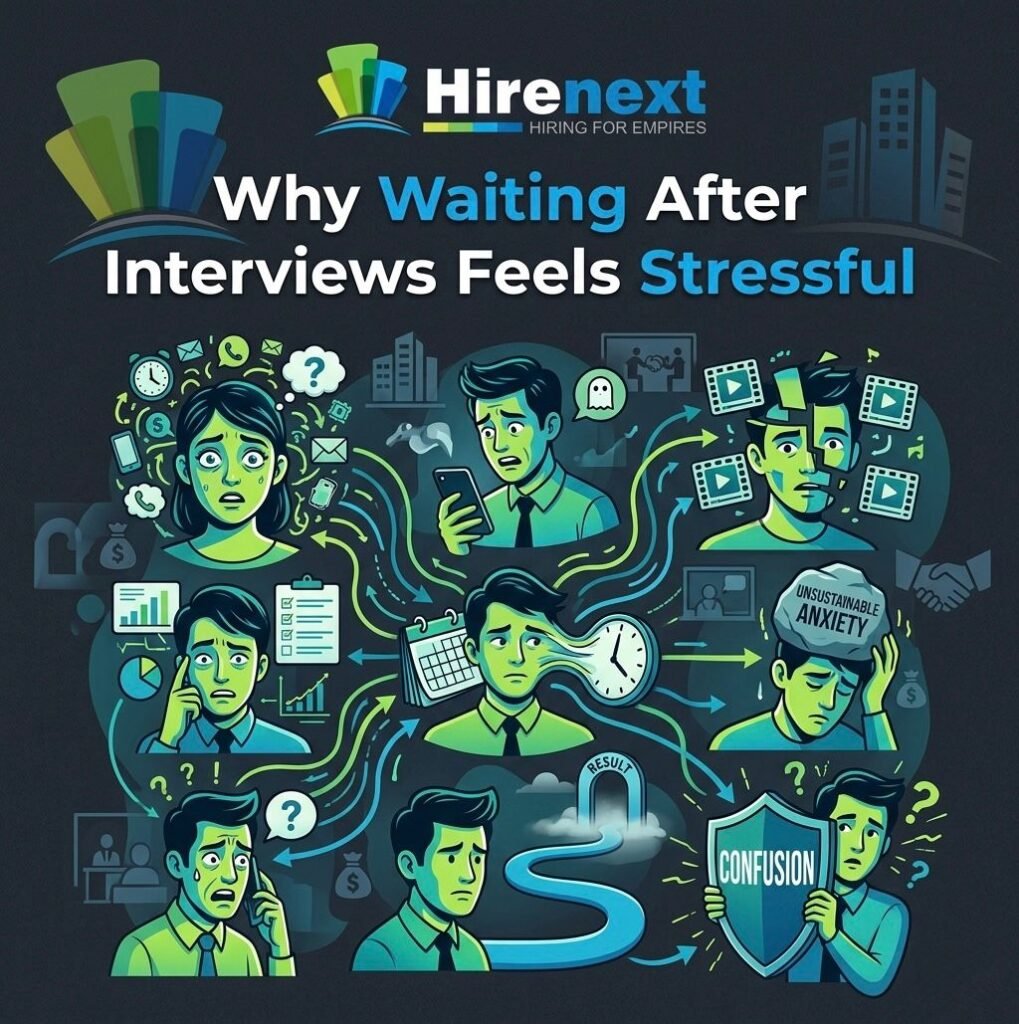
Interviews create emotional investment. Once you finish a round, your mind starts imagining the result.
That is why no response after interview feels frustrating. Candidates often:
- Refresh email repeatedly
- Check phone constantly
- Replay answers mentally
- Pause other applications
- Lose confidence
Understanding hiring timelines can reduce anxiety around no response after interview.
Why There Is No Response After Interview
Silence after interviews is common because hiring processes are often slower than candidates expect.
Reasons for no response after interview include:
- Multiple candidates still being interviewed
- Decision maker unavailable
- Recruiter handling many roles
- Internal approval delays
- Budget review
- Role pause
- Offer under discussion with another candidate
So no response after interview does not always mean rejection immediately.
No Callback After Interview: What Does It Mean?
Many candidates ask: no callback after interview what does it mean?
It can mean different things depending on timeline.
Within 1–3 Days
Usually normal waiting period.
Within 1 Week
Still common, especially in larger companies.
2+ Weeks
Could indicate delays, backup candidacy, or rejection.
After Positive Signals
If interviewer seemed engaged, delay may be internal.
So no callback after interview what does it mean depends heavily on company size, urgency, and communication style.
Common Reasons Companies Don’t Call Back
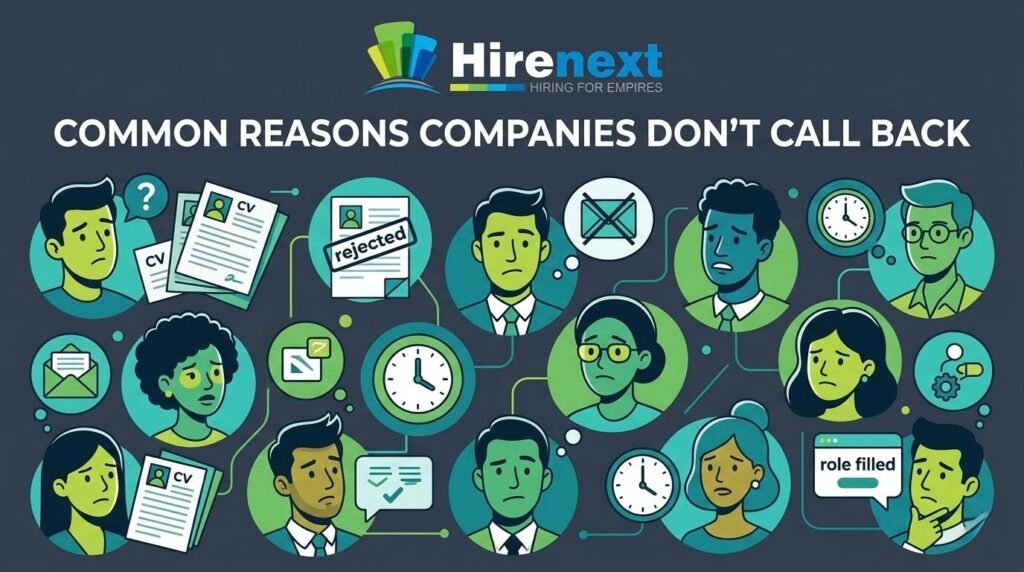
1. Another Candidate Was Selected
Often companies prioritize one candidate first. Others wait silently.
This is a common reason for no response after interview.
2. Internal Hiring Delays
Managers may need approvals from HR, finance, or leadership.
This causes no response after interview even when interest exists.
3. Recruiter Workload
Recruiters handle many candidates and openings simultaneously. Updates may be delayed.
4. Budget Freeze
Sometimes a role is approved, interviews happen, then budget changes.
This creates no response after interview unexpectedly.
5. Team Restructuring
Role scope may change mid-process.
6. Weak Candidate Experience Process
Some companies simply do not communicate professionally.
Unfortunately, this often results in no response after interview.
Internal Hiring Delays
Many candidates assume silence equals rejection. Not always.
Internal delays include:
- Hiring manager on leave
- Team travel
- Priority shift
- Offer approval pending
- Compensation alignment
These operational issues create no response after interview with no reflection on your quality.
Another Candidate Was Selected
Sometimes companies first negotiate with their top choice. If that candidate declines, they return to backups.
This means you may experience no response after interview while they finalize another person.
Budget or Role Freeze
Economic uncertainty can freeze hiring suddenly.
Even after successful interviews, companies may stop recruitment temporarily.
This leads to no response after interview without candidate fault.
Poor Follow-Up Process by Recruiters
Some organizations fail candidate communication badly.
They may:
- Forget updates
- Delay rejections
- Ignore follow-up emails
- Move fast internally but not externally
This causes frequent no response after interview.
Interview Rejection Signs to Notice
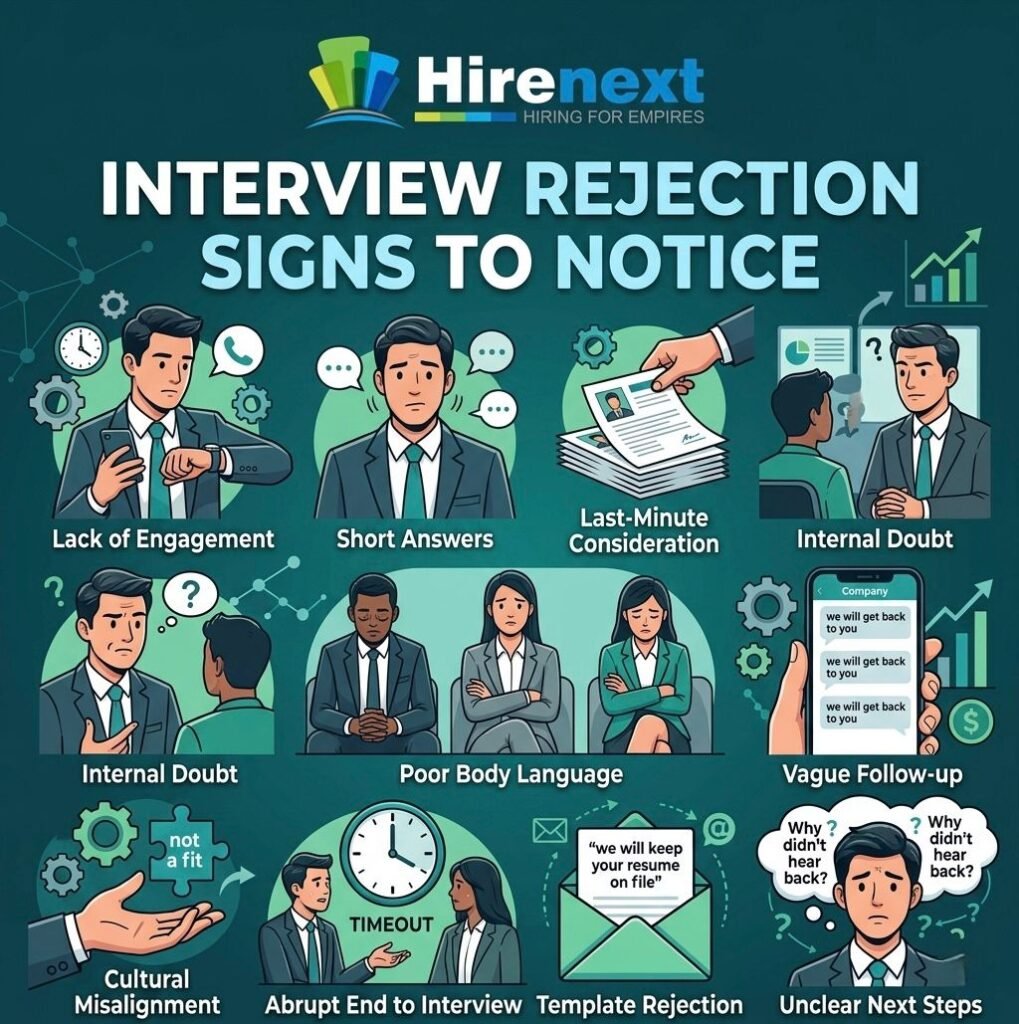
Some silence patterns may indicate rejection.
Common interview rejection signs:
- No timeline shared at all
- Interview ended much earlier than planned
- Very low engagement from panel
- No discussion of next steps
- Generic “we’ll let you know” tone
- Weeks of silence after follow-up
These interview rejection signs are not guarantees, but clues.
Positive Signs Instead
Not all silence is negative.
Good signs despite delay:
- Asked salary expectations
- Discussed joining date
- Introduced to team members
- Mentioned next stage clearly
- Requested documents
Even with no response after interview, these can indicate interest.
How Long Should You Wait After an Interview?
General expectations:
Startups
2–5 business days often faster.
Mid-size Companies
5–10 business days.
Large Corporates
1–3 weeks common.
So avoid panic over no response after interview too early.
What You Should Do If There Is No Response After Interview
1. Wait Reasonably
Respect timeline given.
2. Send Professional Follow-Up
After 5–7 business days:
Hi [Name], thank you again for the interview opportunity. I enjoyed learning about the role. I wanted to kindly check if there are any updates regarding next steps.
3. Keep Applying Elsewhere
Never pause search due to no response after interview.
4. Track Applications
Use spreadsheet for dates and status.
Follow-Up Email Template

Subject: Follow-Up on Interview for [Role]
Hello [Recruiter Name],
Thank you for the opportunity to interview for the position. I appreciated the conversation and learning more about the team. I wanted to kindly follow up regarding any updates on the hiring process.
Thank you for your time.
Best regards,
[Your Name]
Use this when facing no response after interview.
Mistakes Candidates Make While Waiting
Waiting after an interview can be stressful, but many candidates make avoidable mistakes during this phase. These mistakes can hurt confidence, damage professionalism, or cause missed opportunities.
1. Sending Daily Messages
One of the most common mistakes is sending repeated follow-up messages every day. While it is natural to want an update, too many messages can make a candidate appear impatient or desperate. Recruiters often manage multiple openings and may need time to gather feedback. Instead of daily follow-ups, wait a reasonable period and send one polite professional message.
2. Stopping Other Applications
Many candidates pause their job search after one interview because they feel confident about the result. This can be a risky move. Until you receive an official offer letter, nothing is confirmed. Continuing to apply for other roles keeps momentum going and reduces pressure if there is no response after interview.
3. Assuming Rejection Too Soon
Silence for a few days does not always mean rejection. Some companies take longer due to approvals, internal meetings, or multiple candidate evaluations. Candidates who assume failure too early often lose motivation unnecessarily. Give the process time before making conclusions.
4. Overanalyzing the Interview
Many people replay every answer in their mind, worrying about small mistakes or reading too much into the interviewer’s expressions. This usually creates stress without helping future outcomes. Once the interview is done, focus on learning and moving forward instead of overthinking details.
5. Angry Follow-Up
Never send emotional or frustrated messages if there is no response after interview. Even if the company handled communication poorly, an angry response can harm your reputation and close future opportunities. Always remain calm and professional.
How to Improve Chances Next Time
Even if silence eventually becomes rejection, every interview can help you improve for the next opportunity.
Improve Interview Performance
Better Examples
Use real examples from internships, projects, work experience, or college activities. Show achievements, challenges solved, and measurable outcomes.
Better Communication
Practice speaking clearly, confidently, and concisely. Strong communication often makes a major difference in hiring decisions.
Better Company Research
Learn about the company’s products, services, values, and role expectations. Candidates who show genuine preparation often stand out.
Ask About Timeline During Interview
Before the interview ends, politely ask:
“By when can I expect an update regarding the next steps?”
This gives clarity and reduces stress later if there is no response after interview.
Close Strongly
End the interview on a positive note. Thank the interviewer, express genuine interest in the role, and show enthusiasm professionally. A strong closing impression can improve your chances.
These habits help reduce future no response after interview uncertainty and make the waiting period easier to manage.
Freshers vs Experienced Candidates: Different Situations
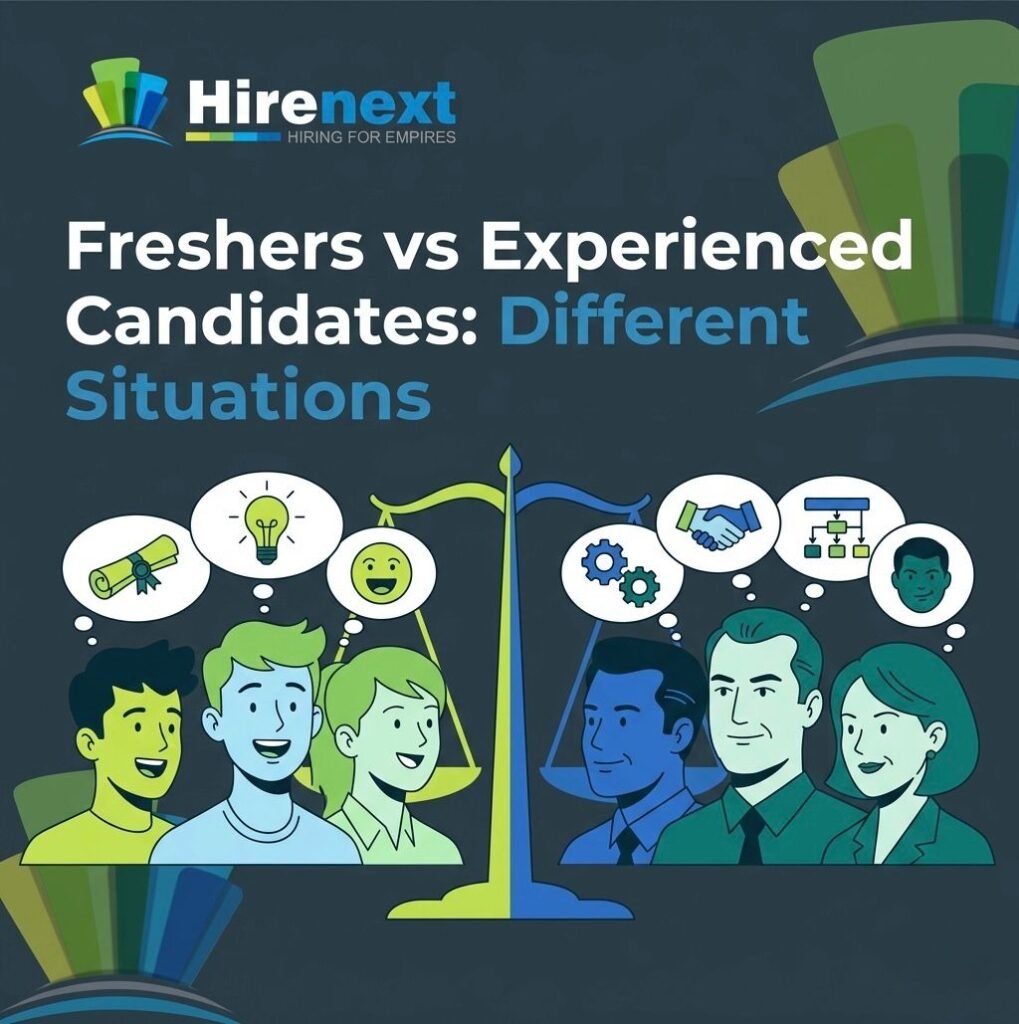
Freshers
Hiring processes for freshers often take longer because companies may be interviewing large numbers of applicants at once. Campus drives, bulk hiring, and entry-level filtering can slow updates.
Experienced Professionals
For experienced candidates, delays often happen because of salary negotiations, internal approvals, leadership sign-off, or notice period planning. Compensation discussions can take time before final confirmation.
What Silence Usually Means by Timeframe
| Time Since Interview | Likely Meaning |
|---|---|
| 1–3 days | Normal |
| 4–7 days | Decision pending |
| 1–2 weeks | Delays / comparing candidates |
| 2+ weeks | Follow up strongly |
| 3+ weeks | Likely low priority or rejection |
FAQs
Is no response after interview always rejection?
No, no response after interview does not always mean rejection. Many candidates assume silence means they were not selected, but that is not always true. Companies often take longer than expected because of internal approvals, manager availability, multiple interview rounds still in progress, or delays in final decision-making. Sometimes recruiters are waiting for feedback from the hiring manager before contacting candidates. In larger organizations, hiring decisions may involve several departments, which can slow communication. While silence can sometimes lead to rejection, it should not be treated as a final answer immediately.
No callback after interview what does it mean?
If there is no callback after interview, it usually means the hiring process is still ongoing. The company may be interviewing other candidates, comparing final options, or waiting for approvals before making an offer. In some cases, they may have selected another candidate but have not yet communicated updates to everyone else. It can also reflect poor communication practices from the recruiter or company. The meaning depends on how much time has passed. A few days is normal. One to two weeks may indicate delays. Longer silence may suggest lower priority or rejection.
Should I call recruiter?
In most cases, it is better to email the recruiter first instead of calling. Email is professional, non-intrusive, and gives them time to respond when available. A short follow-up email after 5–7 business days is usually the best first step. Calling may be acceptable only if the recruiter specifically invited phone follow-ups or if urgent joining details are already under discussion. Random calls can sometimes feel pushy, especially if the recruiter is handling many roles. Start with email, remain polite, and keep the message concise.
How many follow-ups are okay?
Usually 1–2 professional follow-ups are appropriate. The first follow-up can be sent around 5–7 business days after the interview, or after the timeline they mentioned has passed. If there is no reply, one final follow-up after another week is reasonable. More than that may seem excessive unless the recruiter is actively engaging with you. If there is still no response after two professional follow-ups, it is best to move on and continue applying elsewhere. Staying proactive with other opportunities is always smarter than waiting too long for one company.
Conclusion
Experiencing no response after interview is frustrating, but it is extremely common in hiring.
Silence may mean:
- Delays
- Internal approvals
- Another candidate first
- Recruiter overload
- Budget issues
- Rejection
Instead of overthinking no response after interview, act strategically:
- Follow up professionally
- Keep applying
- Improve each interview
- Don’t depend on one company
Use silence as part of the process, not a judgment of your worth. The right opportunity often comes while waiting on the wrong one.