
What HR Really Thinks When You Answer Questions
Table of Contents
- Introduction
- Why HR Interviews Matter More Than You Think
- What HR Really Evaluates During Interviews
- Why HR Interview Questions Are Asked
- How HR Judges Candidates in Interviews
- What HR Thinks About Common Answers
- Tell Me About Yourself – HR Perspective
- Why Do You Want This Job? – HR Perspective
- What Are Your Strengths? – HR Perspective
- What Are Your Weaknesses? – HR Perspective
- Why Should We Hire You? – HR Perspective
- Where Do You See Yourself in 5 Years?
- Salary Expectation Questions – What HR Thinks
- Red Flags HR Notices Immediately
- Body Language Signals HR Observes
- Fresher Interview Preparation Tips
- Best Answers That Impress HR
- Mistakes Candidates Make in HR Rounds
- Final Checklist Before HR Interview
- Conclusion
Introduction
Many job seekers believe the HR round is easy compared to technical interviews. But that assumption often leads to rejection. HR interviews are not random conversations. They are carefully designed to evaluate personality, communication, attitude, reliability, and fit.
When candidates answer HR interview questions, they focus on saying the “right answer.” But HR often focuses on something deeper: how you answer, how you think, and whether you fit the company culture.
Understanding what HR really thinks can give you a huge advantage.
This guide explains the hidden meaning behind HR interview questions, how HR judges candidates in interviews, and how freshers can prepare smartly.
Why HR Interviews Matter More Than You Think
Many final hiring decisions are strongly influenced by HR rounds.
Technical teams may ask:
- Can you do the work?
HR often asks:
- Can we trust you?
- Can you communicate well?
- Will you stay?
- Will you fit the team?
- Can you represent the company professionally?
That is why HR interview questions are often decisive.
What HR Really Evaluates During Interviews
When asking HR interview questions, recruiters often assess:
- Confidence
- Clarity of thought
- Honesty
- Stability
- Motivation
- Professional attitude
- Communication style
- Salary expectations
- Long-term interest
- Emotional maturity
Your exact words matter—but your behavior matters too.
Why HR Interview Questions Are Asked
Most candidates think questions are only about content. But many HR interview questions are designed to reveal patterns.
Examples:
- “Tell me about yourself” → structure and confidence
- “Why do you want this job?” → motivation
- “Weaknesses?” → self-awareness
- “5-year plan?” → ambition + realism
- “Expected salary?” → maturity + market awareness
Understanding this changes how you answer HR interview questions.
How HR Judges Candidates in Interviews
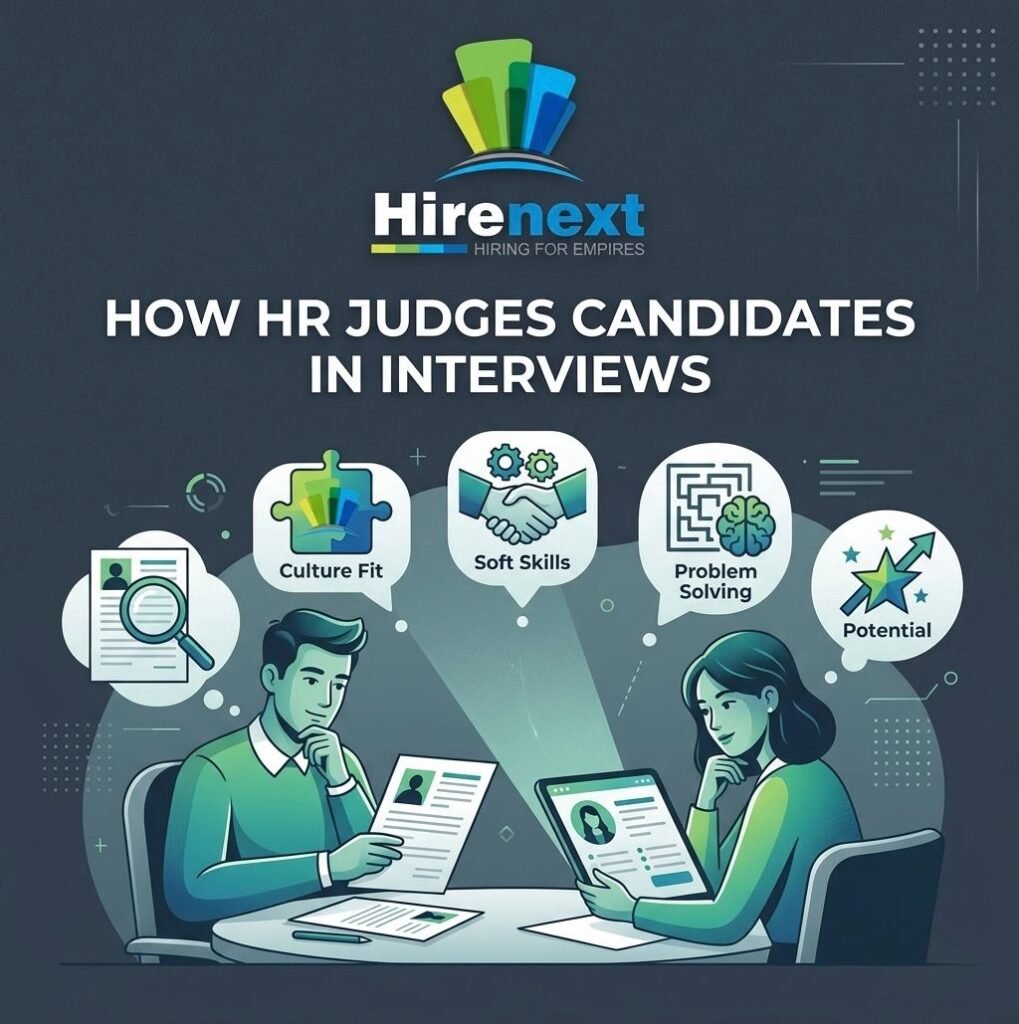
Many candidates ask how HR judges candidates in interviews.
Usually through 5 filters:
1. Can This Person Communicate?
Clear speaking = workplace readiness.
2. Is This Person Genuine?
Over-scripted answers reduce trust.
3. Will They Stay?
Job-hoppers or confused goals create risk.
4. Can They Handle Pressure?
Nervousness is okay. Emotional instability is not.
5. Do We Want Them on Our Team?
Energy, attitude, professionalism matter.
That is how HR judges candidates in interviews beyond resumes.
What HR Thinks About Common Answers
“I am hardworking.”
HR often thinks: Can you prove it?
“I need a job urgently.”
HR thinks: Need is understandable, but why this role specifically?
“My weakness is perfectionism.”
HR has heard it many times.
“I can do anything.”
HR may think lack of direction.
This is why preparation for HR interview questions matters.
Tell Me About Yourself – HR Perspective
This is one of the most common HR interview questions.
HR is checking:
- Confidence
- Structure
- Relevance
- Communication quality
Weak Answer:
Long personal story.
Strong Answer:
Education + relevant skills + experience + why role fits.
Example:
“I recently completed my BBA and developed strong communication and Excel skills through internships. I’m now looking to start my career in recruitment where I can use people skills and grow professionally.”
Why Do You Want This Job? – HR Perspective
HR wants to know if you researched the role.
They think:
- Is candidate serious?
- Is this random applying?
- Will they stay after joining?
Best responses connect your skills with the opportunity.
This is one of the most important HR interview questions.
What Are Your Strengths? – HR Perspective
HR is not just hearing traits. They want evidence.
Say:
- Communication
- Discipline
- Fast learning
- Teamwork
Then support with example.
Strong handling of HR interview questions always includes proof.
What Are Your Weaknesses? – HR Perspective
HR checks honesty and self-improvement.
Good example:
“I used to hesitate speaking in groups, so I started practicing presentations and now feel much more confident.”
Bad example:
“I have no weaknesses.”
That fails many HR interview questions instantly.
Why Should We Hire You? – HR Perspective
HR wants confidence without arrogance.
Good formula:
- Relevant skills
- Learning mindset
- Strong attitude
- Fit for role
This question often decides HR rounds.
Where Do You See Yourself in 5 Years?
HR checks ambition + realism.
Bad answer:
“I want to be CEO.”
Better:
“I’d like to grow into a strong performer, take more responsibility, and develop leadership skills.”
Common in HR interview questions.
Salary Expectation Questions – What HR Thinks
HR evaluates:
- Market awareness
- Flexibility
- Professional maturity
Never say:
“Anything.”
Better:
“Based on role responsibilities and market standards, I’m open to a fair package.”
Red Flags HR Notices Immediately
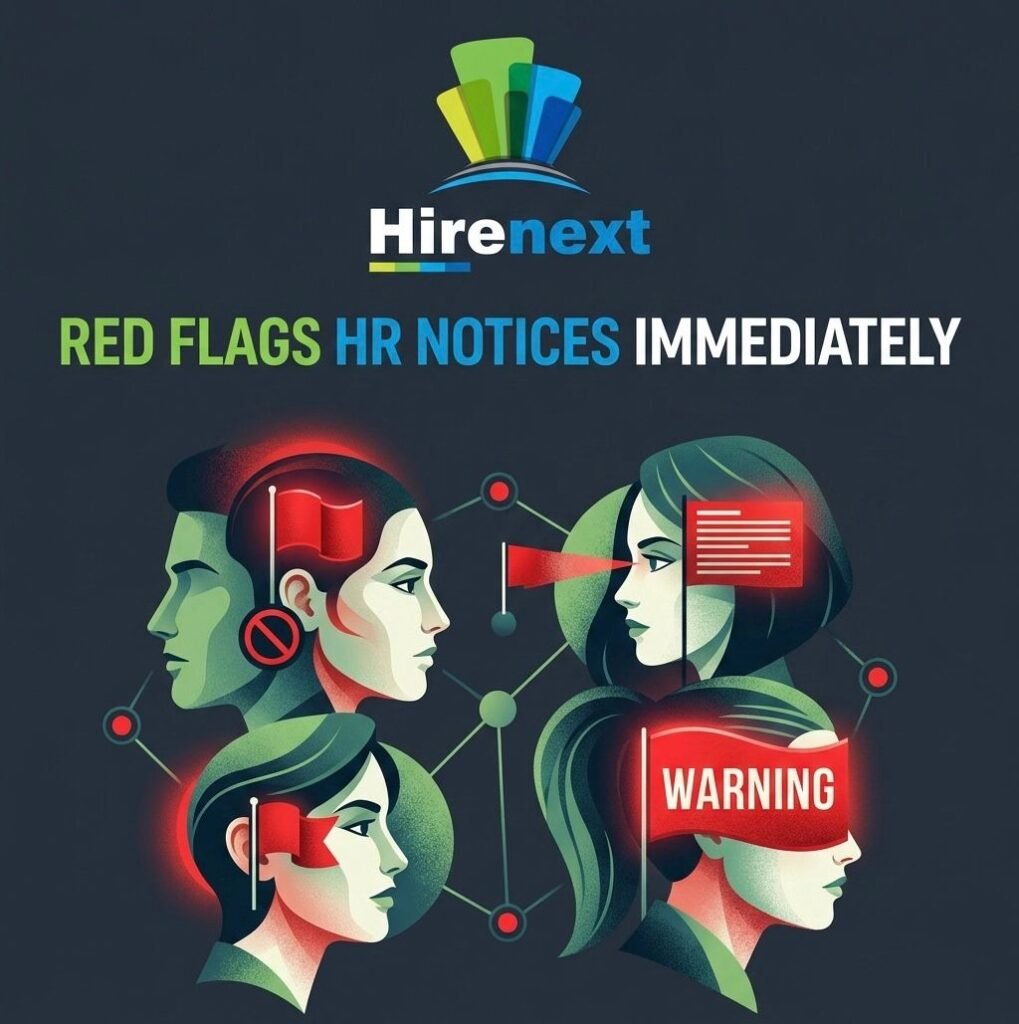
During HR interview questions, recruiters often notice:
- Late arrival
- Rude behavior
- Negative talk about previous company
- Poor listening
- Dishonesty
- No enthusiasm
- Overconfidence
- Desperation
These can reject candidates fast.
Body Language Signals HR Observes
HR silently watches:
- Eye contact
- Posture
- Smile
- Energy level
- Nervous habits
- Handshake (if in-person)
- Professional presence
Strong body language improves HR interview questions performance.
Fresher Interview Preparation Tips
Great fresher interview preparation includes:
Learn Basic Questions
Practice common HR questions.
Improve Communication
Speak clearly and confidently.
Research Company
Know role, products, and culture.
Prepare Examples
Projects, teamwork, achievements.
Dress Professionally
First impressions matter.
Smart fresher interview preparation creates confidence.
Best Answers That Impress HR
Many candidates believe HR only wants “correct” answers, but in reality, recruiters are looking for answers that show maturity, clarity, confidence, and genuine interest. Strong responses do not need to sound overly polished or perfect. They need to feel professional and authentic.
When answering HR interview questions, HR usually appreciates responses that are:
Honest
Honesty creates trust immediately. Recruiters can often tell when candidates exaggerate achievements or give unrealistic answers. If you do not know something, it is better to admit it professionally than to pretend.
For example:
Weak Answer: “I have no weaknesses.”
Better Answer: “I sometimes overthink details, but I’ve been improving by prioritizing tasks better.”
Honest answers make you appear self-aware and dependable.
Specific
Generic answers are common and forgettable. Specific answers help HR remember you.
Instead of saying:
“I am hardworking.”
Say:
“In my internship, I handled customer follow-ups daily and improved response time by organizing calls and emails more efficiently.”
Specific examples make your strengths believable and stronger during HR interview questions.
Concise
Many candidates lose impact by talking too much. Strong answers are clear and to the point. HR interviews often involve multiple candidates, so concise communication is highly valued.
Good answers usually:
- Address the question directly
- Give a short example
- End clearly
This shows confidence and professionalism.
Positive
Even difficult questions should be answered positively.
Example:
If asked why you left a previous company, avoid blaming management or complaining.
Weak Answer: “The company was terrible.”
Better Answer: “I learned valuable things there, but I’m now looking for better growth opportunities aligned with my goals.”
Positive energy matters greatly in HR interview questions.
Structured
A structured answer is easier to understand. When possible, use this flow:
- Situation
- Action
- Result
Example:
“In college, our event team faced low registrations. I suggested social media promotion, coordinated with classmates, and registrations increased by 30%.”
Structured responses show organized thinking.
Relevant
Always connect your answer to the job role. If applying for sales, highlight communication and persuasion. If applying for HR, highlight people skills and organization.
Relevant answers show you understand the opportunity.
That is how to win HR interview questions—not by sounding perfect, but by sounding capable and genuine.
Mistakes Candidates Make in HR Rounds
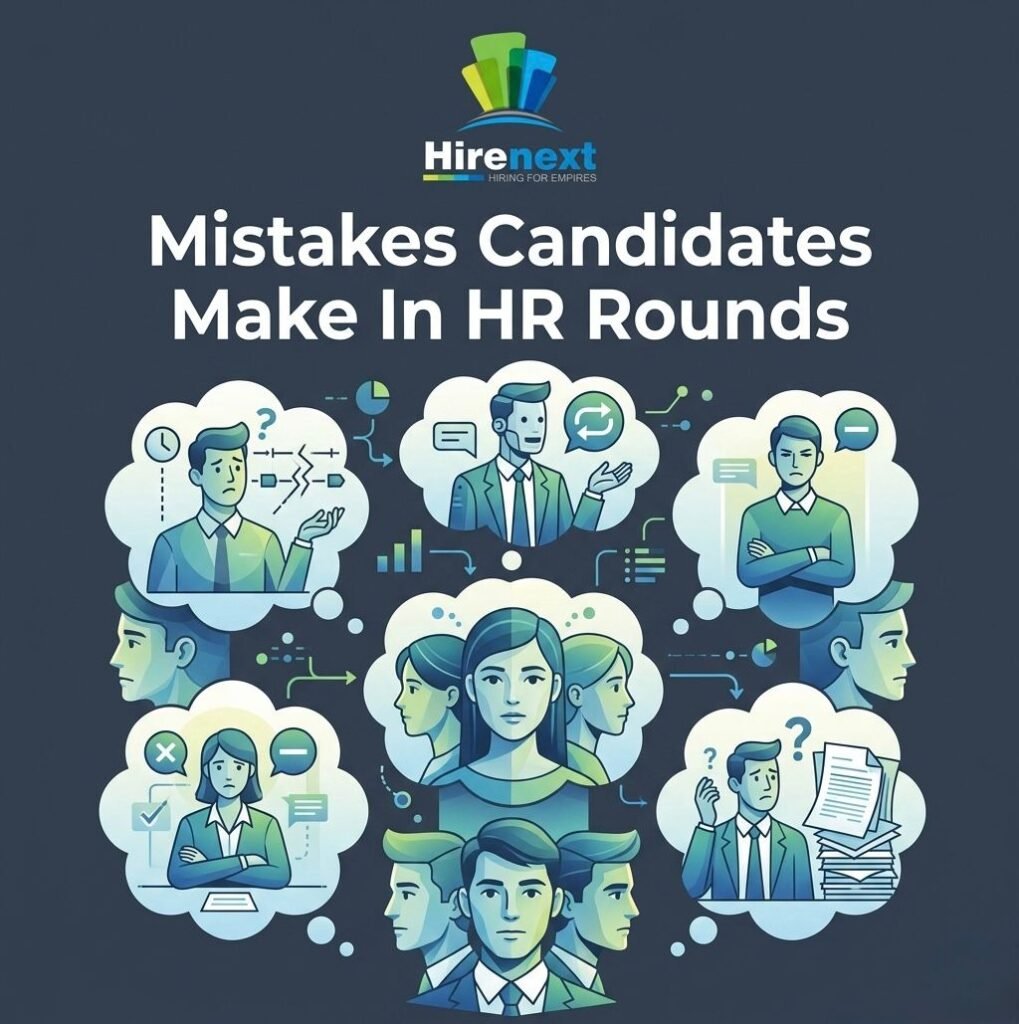
Even talented candidates lose opportunities because of avoidable HR-round mistakes. These errors often create a poor impression quickly.
Over-Memorizing
Many candidates memorize scripted answers word for word. This often sounds robotic and unnatural.
HR can sense when answers are rehearsed too heavily. It may create doubt about authenticity.
Instead of memorizing full scripts, practice key points and speak naturally.
Talking Too Much
Some candidates think longer answers sound smarter. Usually, they lose clarity.
When you talk too much:
- Main point gets lost
- Confidence seems lower
- Interviewer gets disengaged
Keep answers focused.
Generic Answers
Statements like:
- “I’m hardworking.”
- “I’m passionate.”
- “I’m a team player.”
…without examples are weak.
Use proof, not labels.
No Questions for HR
When HR asks, “Do you have any questions for us?” saying “No” can suggest low interest.
Ask thoughtful questions like:
- What does success look like in this role?
- What growth opportunities are available?
- What are the team’s current priorities?
This improves your HR interview questions performance significantly.
Weak Energy
Low enthusiasm, monotone speaking, poor eye contact, or disengaged body language can make even strong answers feel weak.
Energy matters because companies hire people, not only resumes.
Avoid these common mistakes in HR interview questions.
Final Checklist Before HR Interview
Use this checklist before entering any HR round.
Can I Introduce Myself Clearly?
Prepare a short professional self-introduction covering:
- Education
- Experience or internships
- Relevant skills
- Career goal
Do I Know Why I Want This Role?
Be ready to explain why this job interests you and how it fits your goals.
Can I Explain Strengths With Examples?
Do not just name strengths—prove them with real stories.
Do I Know Salary Range?
Research average salary for the role so you can discuss compensation professionally.
Did I Research the Company?
Know:
- What the company does
- Products/services
- Industry
- Basic values
- Role responsibilities
Am I Calm and Professional?
Check your mindset, body language, dress, and tone before the interview starts.
A prepared candidate always performs better in HR interview questions.
Frequently Asked Questions
Are HR rounds easy?
Not always. Many candidates underestimate them. HR rounds often decide final selection because technical skills alone are not enough. Companies also hire for attitude, communication, professionalism, and fit.
How HR judges candidates in interviews?
HR evaluates more than spoken answers. They judge:
- Communication style
- Confidence level
- Motivation
- Emotional maturity
- Professional behavior
- Long-term fit for the company
This is how HR judges candidates in interviews beyond resumes.
Can freshers crack HR rounds?
Absolutely. Freshers often think experience is required, but strong fresher interview preparation can make a huge difference.
Freshers should focus on:
- Clear communication
- Confidence
- Projects/internships
- Positive attitude
- Company research
Should answers be memorized?
No. Memorizing exact lines usually sounds unnatural.
Practice ideas, examples, and structure instead of scripts. Natural delivery wins more often.
Many candidates underestimate HR interviews, but they often carry major decision-making power in the hiring process.
Conclusion
When answering HR interview questions, remember that HR is evaluating more than words. They are judging:
- Confidence
- Clarity
- Honesty
- Motivation
- Team fit
- Professionalism
If you understand how HR judges candidates in interviews, your preparation becomes smarter and more effective.
For success, focus on real fresher interview preparation:
- Practice common questions
- Improve speaking confidence
- Prepare examples from real life
- Research the company thoroughly
- Stay calm and genuine
The best answers are not perfect or overly polished. They are clear, honest, relevant, and confidently delivered. That is what leaves a lasting impression and helps you succeed in HR rounds.