
How to Reduce Hiring Costs Without Losing Quality
- May 14, 2026
- Posted by: Hirenext
- Category: Uncategorized
Introduction
Hiring employees is one of the most important investments for any business, but it can also become one of the most expensive processes if not managed properly. In 2026, companies are facing increasing recruitment expenses due to rising competition, skill shortages, employer branding demands, and high employee turnover. Many startups and small businesses especially struggle to balance quality hiring with limited budgets.
The good news is that businesses do not need massive recruitment budgets to attract skilled employees. With smart planning, modern hiring strategies, and efficient processes, companies can successfully reduce hiring costs while still attracting talented candidates.
Many organizations believe that low recruitment budgets automatically mean lower hiring quality. However, this is not true. The real challenge is understanding how to hire quality employees on low budget without damaging candidate experience or business productivity.
In this detailed guide, we will discuss practical ways to reduce hiring costs, improve recruitment efficiency, strengthen HR budget management, and build high-performing teams without overspending.
Table of Contents
- Why Hiring Costs Are Increasing in 2026
- Understanding Recruitment Expenses
- Importance of Reducing Hiring Costs
- Common Hiring Budget Mistakes
- How to Hire Quality Employees on Low Budget
- Importance of HR Budget Management
- Build a Strong Employer Brand Organically
- Use Employee Referral Programs
- Improve Job Descriptions
- Hire Through Social Media Platforms
- Create a Talent Pipeline
- Reduce Employee Turnover
- Invest in Workforce Planning
- Use Technology to Reduce Hiring Costs
- Improve Recruitment Process Efficiency
- Hire Freshers and Train Them
- Outsource Recruitment Strategically
- Avoid Bad Hiring Decisions
- Importance of Candidate Experience
- Recruitment Metrics to Track
- Future Hiring Trends in 2026
- Conclusion
Why Hiring Costs Are Increasing in 2026
Recruitment has become more expensive because companies now compete aggressively for skilled talent.
Major factors increasing recruitment costs include:
- Paid job advertisements
- Recruitment agency fees
- Long hiring cycles
- Employee turnover
- Employer branding expenses
- Technology investments
- Skill shortages
Businesses that fail to optimize recruitment processes struggle to reduce hiring costs effectively.
Understanding Recruitment Expenses
Hiring costs include much more than salaries.
Direct Recruitment Costs
- Job portal subscriptions
- Recruitment advertising
- Agency commissions
- Interview expenses
- Assessment tools
Indirect Recruitment Costs
- Time spent by HR teams
- Productivity loss during vacancies
- Training expenses
- Onboarding costs
- Employee turnover losses
Understanding these costs is essential for proper HR budget management.
Importance of Reducing Hiring Costs
Every business wants profitable growth. High recruitment spending can reduce profitability significantly.
Companies that successfully reduce hiring costs benefit from:
- Better budget control
- Higher operational efficiency
- Faster hiring processes
- Improved workforce planning
- Better business scalability
Reducing hiring expenses does not mean compromising on talent quality.
Common Hiring Budget Mistakes
Many companies overspend because of poor recruitment strategies.
Common Recruitment Cost Mistakes
- Overdependence on job portals
- Hiring too quickly
- Poor workforce planning
- Weak employer branding
- High employee turnover
- Lack of structured interviews
Fixing these issues helps businesses reduce hiring costs naturally.
How to Hire Quality Employees on Low Budget
One of the most common questions businesses ask is how to hire quality employees on low budget.
The answer lies in smarter hiring, not cheaper hiring.
Focus on Skills Instead of Expensive Experience
Experienced professionals often demand higher salaries.
Many companies now:
- Hire freshers
- Train internal employees
- Use skill-based hiring
- Focus on learning ability
This approach helps businesses reduce hiring costs while building loyal teams.
Importance of HR Budget Management
Strong HR budget management is critical for sustainable recruitment.
HR teams should:
- Track recruitment spending
- Forecast future hiring needs
- Analyze hiring ROI
- Reduce unnecessary recruitment expenses
Without proper HR budget management, hiring expenses can quickly become uncontrollable.
Build a Strong Employer Brand Organically
Employer branding reduces dependency on expensive recruitment advertising.
Organic Employer Branding Strategies
- LinkedIn content
- Employee success stories
- Workplace culture videos
- Founder visibility
- Social media engagement
Strong branding helps companies attract candidates naturally and reduce hiring costs significantly.
Use Employee Referral Programs
Referral hiring is one of the most cost-effective recruitment methods.
Benefits of Referral Hiring
- Faster hiring
- Better cultural fit
- Lower recruitment expenses
- Higher employee retention
Employee referrals help businesses reduce hiring costs while improving hiring quality.
Improve Job Descriptions
Poor job descriptions attract irrelevant applications.
This wastes:
- Recruiter time
- Interview resources
- Hiring budgets
Clear job postings improve candidate quality and help reduce hiring costs by reducing unnecessary screening efforts.
Hire Through Social Media Platforms

Recruitment is no longer limited to job portals.
Platforms like:
allow businesses to attract candidates organically.
Social recruiting is an effective way to reduce hiring costs and improve employer visibility.
Create a Talent Pipeline
Many companies only start recruiting during emergencies.
This reactive hiring increases recruitment costs.
Benefits of Talent Pipelines
- Faster hiring
- Reduced urgency hiring
- Better workforce planning
- Lower recruitment spending
Building talent pipelines helps companies consistently reduce hiring costs.
Reduce Employee Turnover
Employee turnover is one of the biggest hidden recruitment expenses.
Replacing employees repeatedly increases:
- Hiring costs
- Training costs
- Productivity loss
How to Improve Retention
- Better onboarding
- Career growth opportunities
- Positive work culture
- Employee recognition
Retention strategies are essential to reduce hiring costs long-term.
Invest in Workforce Planning
Strategic workforce planning improves recruitment efficiency.
Good workforce planning helps businesses:
- Predict hiring needs
- Avoid overhiring
- Reduce emergency recruitment
- Improve HR budget management
Proper planning is one of the best ways to reduce hiring costs sustainably.
Use Technology to Reduce Hiring Costs
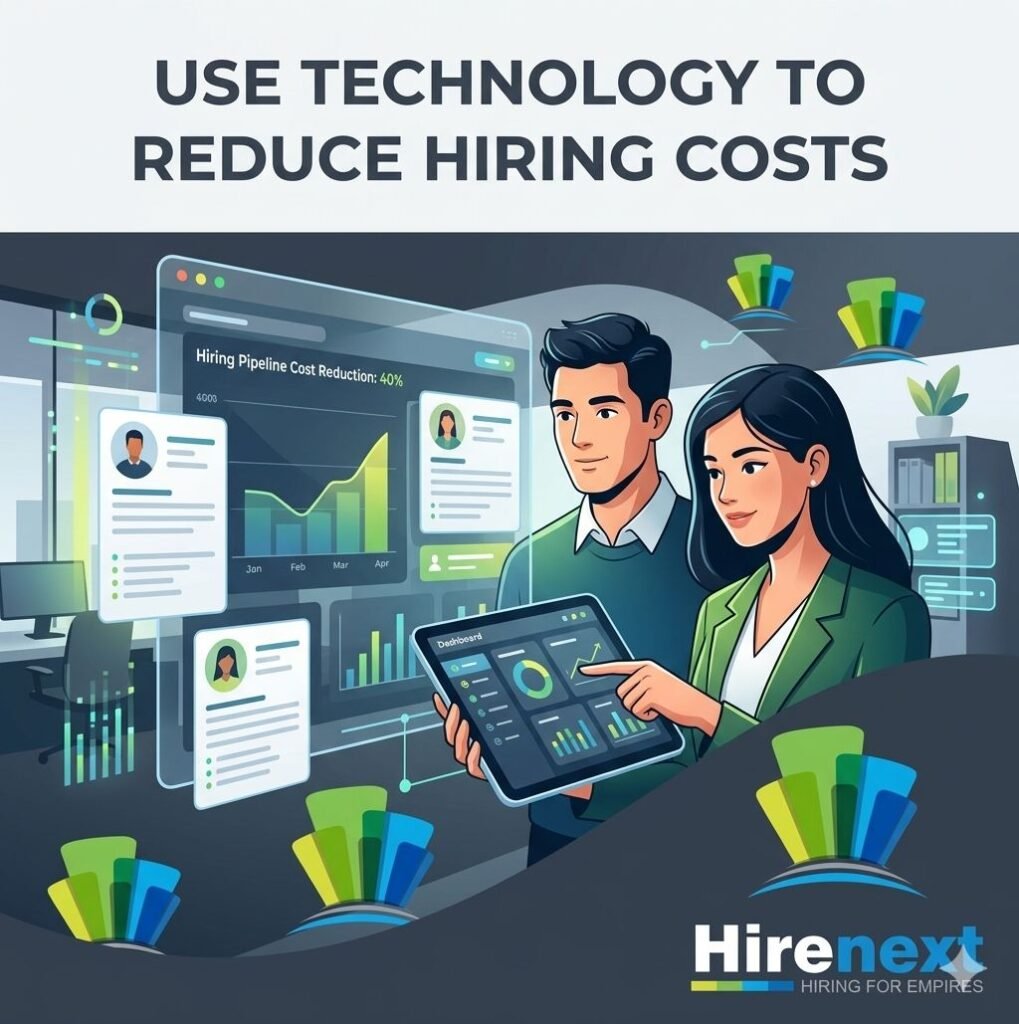
Recruitment technology improves efficiency and lowers manual workload.
Helpful Recruitment Tools
- Applicant tracking systems
- AI resume screening
- Automated scheduling
- Video interviews
- Recruitment analytics
Technology helps companies reduce hiring costs without compromising recruitment quality.
Improve Recruitment Process Efficiency
Inefficient hiring processes increase recruitment expenses significantly.
Common Process Problems
- Too many interview rounds
- Delayed decision-making
- Poor communication
- Unclear evaluation systems
Streamlined recruitment processes help businesses reduce hiring costs and improve candidate experience.
Hire Freshers and Train Them
Freshers often have:
- Lower salary expectations
- High adaptability
- Strong learning ability
Companies that invest in training programs can reduce hiring costs compared to hiring expensive senior professionals repeatedly.
Outsource Recruitment Strategically
Recruitment agencies can sometimes help reduce internal hiring burden.
However, businesses should outsource strategically for:
- Specialized roles
- Bulk hiring
- Urgent recruitment
Proper outsourcing supports better HR budget management.
Avoid Bad Hiring Decisions
Wrong hires are extremely expensive.
Bad hiring leads to:
- Training losses
- Productivity issues
- Team conflicts
- Rehiring expenses
Structured interviews and skill assessments help businesses reduce hiring costs by improving hiring accuracy.
Importance of Candidate Experience

Candidate experience directly affects recruitment success.
Positive experiences improve:
- Employer reputation
- Offer acceptance rates
- Referral hiring
- Employee engagement
Professional communication and smooth hiring processes help companies reduce hiring costs through stronger employer branding.
Recruitment Metrics to Track
Businesses should regularly track hiring performance.
Important Metrics
| Metric | Purpose |
|---|---|
| Cost per hire | Measures recruitment efficiency |
| Time to hire | Tracks hiring speed |
| Employee retention rate | Evaluates hiring quality |
| Offer acceptance rate | Measures employer attractiveness |
| Recruitment ROI | Assesses budget effectiveness |
Tracking metrics improves HR budget management and hiring efficiency.
Future Hiring Trends in 2026
Recruitment strategies are evolving rapidly.
Future Trends
1. AI-Powered Hiring
Automation will reduce manual recruitment workload.
2. Skills-Based Recruitment
Practical abilities will matter more than degrees.
3. Remote Hiring
Businesses will access global talent pools.
4. Employer Branding Growth
Strong company branding will become even more important.
Companies adapting to these trends will successfully reduce hiring costs while improving hiring quality.
Practical Tips to Reduce Hiring Costs
Here are some quick ways businesses can lower recruitment expenses:
- Improve employee retention
- Build referral programs
- Use social recruiting
- Reduce hiring delays
- Create clear job descriptions
- Invest in workforce planning
- Hire trainable freshers
- Automate repetitive recruitment tasks
These methods help companies reduce hiring costs effectively.
Conclusion
Recruitment costs are rising rapidly in 2026, but businesses do not need massive budgets to build strong teams. Companies that focus on smarter recruitment strategies, stronger employer branding, efficient processes, and effective HR budget management can successfully reduce hiring costs without sacrificing hiring quality.
Understanding how to hire quality employees on low budget requires a long-term approach focused on workforce planning, employee retention, referral hiring, and technology optimization.
The future of recruitment belongs to businesses that combine cost efficiency with strong candidate experience. Companies that modernize their hiring systems today will attract better talent, improve productivity, and achieve sustainable growth tomorrow.