
How to Choose Between Two Job Offers
Table of Contents
- Introduction On How To Choose Between Two Job Offers
- Why Choosing the Right Offer Matters
- Common Mistakes Candidates Make
- First Step to Choose Between Two Job Offers
- Compare Salary Beyond CTC
- Evaluate Job Role and Responsibilities
- Check Growth Opportunities
- Understand Company Culture
- Work-Life Balance Comparison
- Location, Commute, and Remote Flexibility
- Benefits and Perks Comparison
- Long-Term Career Planning Tips
- Red Flags to Watch in Any Offer
- Decision Matrix Method
- How to Trust Your Gut + Logic Together
- What If One Offer Pays More but Another Has Growth?
- How to Negotiate Before Final Decision
- How to Decline One Offer Professionally
- Final Decision Checklist
- Conclusion
Introduction
Getting one job offer is exciting. It validates your effort, skills, and interview performance. But getting two job offers can feel even better—until you actually have to decide.
At that point, excitement often turns into confusion. Many candidates struggle on how to choose between two job offers because each one may offer different advantages. One company may offer a higher salary, while another may provide better learning opportunities, stronger leadership, or a healthier culture.
This is a high-impact career decision. The offer you accept can shape your income, skill growth, confidence, and future opportunities.
In this complete guide, you’ll learn how to choose between two job offers using practical comparison methods, tips for choosing the right job offer, and smart career planning tips that help you make a confident decision.
Why Choosing the Right Offer Matters

Your next job is more than just your next paycheck. It can influence many areas of your life and career.
✔ Income Growth
Your salary today often affects future raises and future offers.
✔ Skill Development
The right role can help you build high-value skills that increase your market value.
✔ Network and Mentors
Strong managers and smart colleagues can accelerate your growth.
✔ Work-Life Balance
Healthy boundaries and manageable workload improve long-term performance.
✔ Future Opportunities
The company brand, experience, and projects you gain can open bigger doors later.
That’s why taking time for how to choose between two job offers is essential instead of rushing the decision.
Common Mistakes Candidates Make
Many people regret decisions because they choose emotionally or too quickly. Avoid these common mistakes:
✔ Choosing Only Based on Salary
Higher pay matters, but it is not everything.
✔ Ignoring Culture and Manager Quality
A bad manager can make even a high-paying role stressful.
✔ Rushing Due to Pressure
Deadlines are real, but panic decisions can be costly.
✔ Not Reading Offer Details
Candidates often miss probation terms, variable pay, or expectations.
✔ Comparing Titles Instead of Responsibilities
A better title with weak responsibilities may hurt long-term growth.
Avoiding these mistakes helps you deciding how to choose between two job offers wisely.
First Step to Choose Between Two Job Offers
Before deciding, place both offers side by side in a written comparison. This removes confusion.
Compare these categories:
- Salary
- Role scope
- Growth path
- Benefits
- Location
- Culture
- Flexibility
- Stability
When everything is visible, the decision becomes easier. Clarity is the first step on how to choose between two job offers.
Compare Salary Beyond CTC
Many candidates only compare total CTC. That can be misleading.
Instead, review:
- Fixed pay
- Variable pay
- Joining bonus
- Performance bonus
- ESOPs or stock benefits
- Tax impact
- Hidden costs like relocation or commute
Sometimes a lower CTC can be better in reality if the fixed component is stronger or work-life balance saves major costs.
Evaluate Job Role and Responsibilities

Salary can change yearly. Skills can shape your entire career.
Ask yourself:
- What will I actually do daily?
- Will I learn valuable tools or systems?
- Is this role aligned with my strengths?
- Will I own meaningful work?
- Does this role excite me?
Role quality matters more than title in many cases. When you decide how to choose between two job offers, think beyond the designation.
Check Growth Opportunities
A strong career often comes from growth, not comfort.
Look for:
- Promotion opportunities
- Clear career ladder
- Learning budget or training
- Mentorship access
- Exposure to leadership
- Cross-functional projects
One of the best tips for choosing the right job offer is to prioritize future growth over short-term comfort.
Understand Company Culture
Culture shapes your daily experience. You may spend years there.
Research:
- Employee reviews
- Leadership reputation
- Team environment
- Communication style
- Flexibility and trust
- Retention levels
Culture can determine whether you thrive or burn out, so it matters greatly when you have to decide how to choose between two job offers.
Work-Life Balance Comparison
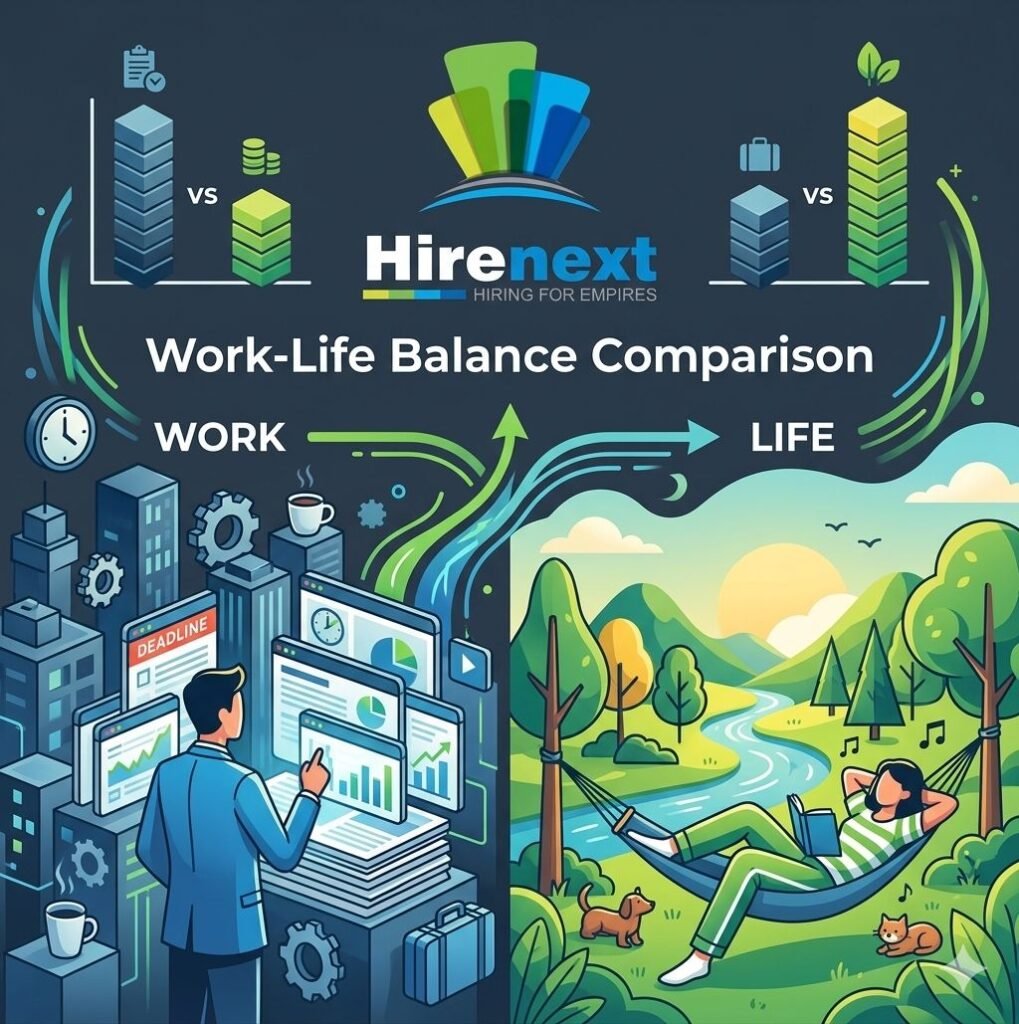
Success is hard to sustain if you are constantly exhausted.
Compare:
- Working hours
- Weekend expectations
- Leave policy
- Meeting load
- Burnout risk
- Mental health support
Balance matters for sustainable success and personal well-being.
Location, Commute, and Remote Flexibility
Even a good job can feel difficult with a poor commute or rigid location model.
Consider:
- Daily travel time
- Relocation cost
- Safety and convenience
- Hybrid options
- Remote flexibility
A shorter commute often improves energy, focus, and quality of life.
Benefits and Perks Comparison
Salary is only one part of compensation.
Check benefits like:
- Health insurance
- PF / retirement benefits
- Paid leave
- Learning reimbursements
- Bonuses
- Wellness programs
These add real long-term value.
Long-Term Career Planning Tips

Ask where each job can take you in the next 2–3 years.
Use career planning tips like:
- Which role builds transferable skills?
- Which brand adds resume value?
- Which industry is growing faster?
- Which network helps future growth?
- Which path aligns with my long-term goals?
Thinking ahead helps you understand how to choose between two job offers strategically.
Red Flags to Watch in Any Offer
Stay alert if you notice:
- Vague responsibilities
- High attrition
- Poor interview experience
- Unrealistic expectations
- Delayed communication
- Very high pressure language
These signs may indicate deeper issues.
Decision Matrix Method

If emotions are creating confusion, use a scoring system.
Rate each offer out of 10 for:
- Salary
- Growth
- Culture
- Balance
- Learning
- Stability
- Flexibility
Then total the scores. This method can help you decide how to choose between two job offers objectively while reducing stress.
How to Trust Your Gut + Logic Together
When you need to choose between two job offers, many people rely only on salary numbers or only on emotions. The smartest approach is to use both logic and intuition together.
✔ Use Data First
Start with measurable factors:
- Salary and total compensation
- Growth opportunities
- Role responsibilities
- Work-life balance
- Company stability
- Learning potential
Create a comparison sheet and rate each offer objectively. This gives you a strong logical base.
✔ Use Instinct Second
Once you review the facts, ask yourself:
- Which team felt more genuine?
- Where did I feel respected during interviews?
- Which manager seemed supportive?
- Which company culture felt healthier?
Sometimes an offer may look perfect on paper but still feel wrong. Don’t ignore that feeling.
✔ Investigate the Feeling
If one company feels uncomfortable despite strong numbers, ask why. It may be due to:
- Poor communication during hiring n- Unclear role expectations
- Aggressive interview behavior
- Hidden pressure or unrealistic workload
Your instincts often notice signals before your mind fully explains them.
On how to choose between two job offers wisely, let logic guide the shortlist and intuition guide the final call.
What If One Offer Pays More but Another Has Growth?
This is one of the most common dilemmas when candidates need to choose between two job offers.
One company may offer higher salary today, while another offers better learning, mentorship, and career growth.
✔ Think Long-Term, Not Just Immediate Cash
A higher salary can feel attractive now, but ask:
- Will I learn valuable skills there?
- Is promotion likely?
- Will this role improve my resume value?
- Will I gain leadership exposure?
✔ Skills Compound More Than Salary
Especially in the early stage of your career, strong skills can increase your future earnings much faster than a small short-term salary jump.
For example:
- Better training today can lead to bigger offers later
- Better mentors can accelerate growth
- Better brand value can open future doors
✔ When to Choose Higher Salary
Choose higher pay if:
- Both roles offer similar learning
- You have urgent financial responsibilities
- The pay difference is significant with stable growth too
✔ When to Choose Growth
Choose growth if:
- You are early in career
- Learning opportunities are clearly better
- The company has stronger future potential
One of the best tips for choosing the right job offer is to think about where each role can take you in 2–3 years.
How to Negotiate Before Final Decision
If you have two offers, you may be able to negotiate better terms before making your final choice.
✔ Use Competing Offers Respectfully
You do not need to pressure anyone. Simply communicate honestly and professionally.
Example: “I’m very interested in this role and currently evaluating another offer. Is there flexibility on compensation or benefits?”
This approach shows interest while opening discussion.
✔ What You Can Negotiate
Besides salary, consider negotiating:
- Joining bonus
- Hybrid work options
- Learning budget
- Title or scope
- Joining timeline
✔ Keep the Tone Positive
Never compare companies rudely or threaten to reject. Stay respectful.
Negotiation can help you how to choose between two job offers with better clarity and stronger final terms.
How to Decline One Offer Professionally
Once you make your choice, decline the other offer quickly and respectfully. This protects your reputation and leaves doors open for the future.
✔ Why Professional Declining Matters
Recruiters remember candidates who communicate well. You may cross paths again later.
✔ Best Practices
- Respond promptly
- Thank them sincerely
- Keep the message short
- Do not overexplain
✔ Example
“Thank you for the opportunity. After careful consideration, I’ve chosen another path more aligned with my goals. I truly appreciate your time and wish the team continued success.”
Professional behavior matters when you decide how to choose between two job offers.
Final Decision Checklist
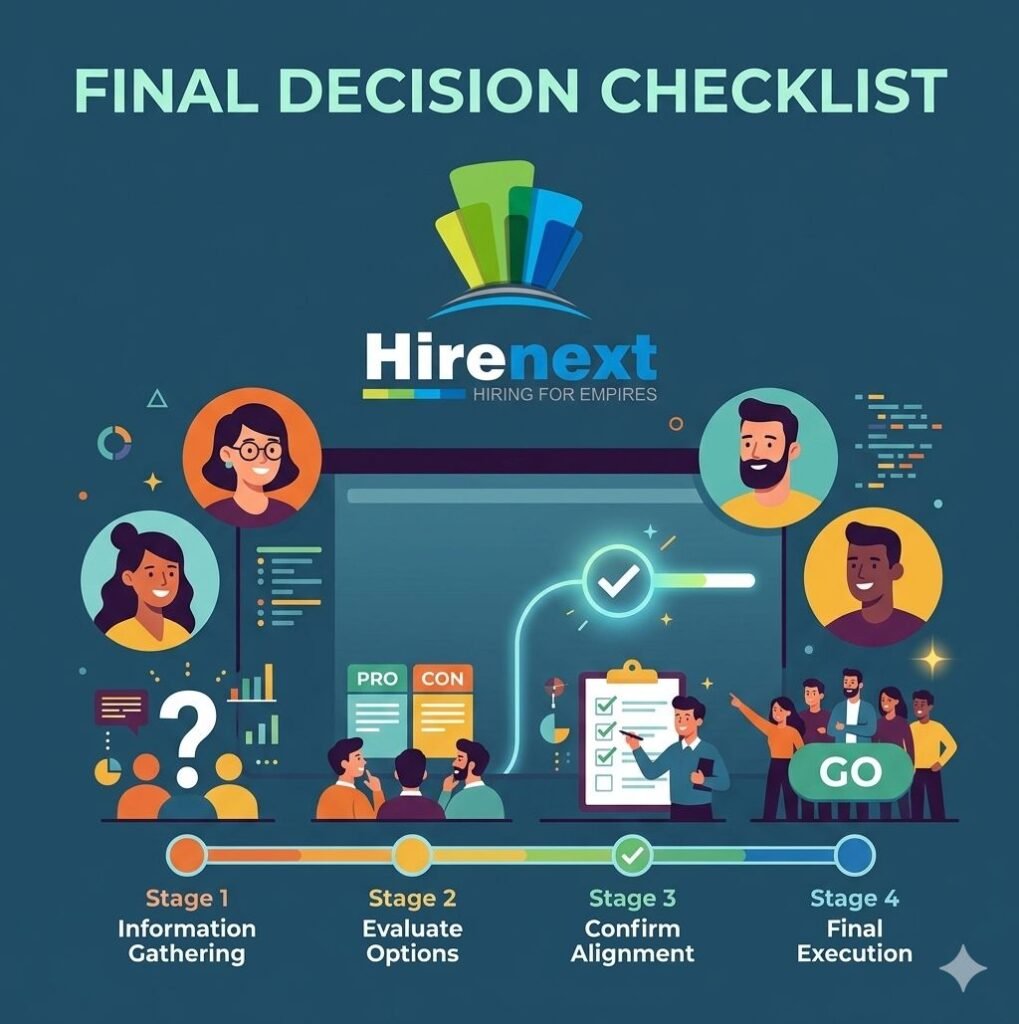
Before you say yes, ask yourself these questions:
✔ Career Fit
- Which role excites me more?
- Which role matches my strengths?
- Which builds better long-term skills?
✔ Lifestyle Fit
- Which fits my personal life better?
- Which offers healthier balance?
- Which location or flexibility works better?
✔ Trust Fit
- Which team do I trust more?
- Which manager seemed stronger?
- Which company communicated better?
✔ Future Fit
- Where can I grow faster?
- Which brand helps my resume more?
These questions make it easier to decide how to choose between two job offers confidently.
Conclusion
How to choose between two job offers is simplified, don’t rush or decide only by salary. Compare compensation, growth opportunities, culture, manager quality, flexibility, and long-term alignment.
The best decision is not always the highest-paying one. It is the offer that supports your future goals, builds valuable skills, and gives you an environment where you can succeed.
Take your time, evaluate smartly, and choose the path that creates the strongest version of your future career.