
How to Explain Career Gaps in Interviews
Table of Contents
- Introduction
- What is a Career Gap?
- Why Employers Ask About Career Gaps
- Types of Career Gaps
- How to Explain Career Gap Effectively
- What to Say About Career Gap in Interview (With Examples)
- Mistakes to Avoid While Explaining Career Gaps
- How to Justify Career Gap on Resume
- Resume Tips for Freshers with Career Gaps
- Turning Career Gaps into Strength
- Confidence & Body Language Tips
- Real-Life Sample Answers
- How Recruiters Evaluate Career Gaps
- Best Scripts for Different Gap Scenarios
- How to Explain Long Career Gaps (1+ Year)
- How to Explain Career Gap as a Fresher
- How to Explain Career Gap Due to Mental Health or Burnout
- How to Show Productivity During Career Gap
- LinkedIn Strategy to Cover Career Gaps
- Portfolio & Project Ideas to Fill Gaps
- Common HR Follow-Up Questions (With Smart Answers)
- 30-60-90 Day Comeback Plan After a Gap
- Final Action Plan
- Conclusion
1. Introduction
In today’s competitive job market, many candidates worry about gaps in their careers. Whether it’s due to studies, health, personal reasons, or job transitions, career gaps are more common than you think.
The real challenge is not the gap itself—it’s how to explain career gap confidently in an interview. Employers are not looking for perfection; they are looking for honesty, clarity, and growth.
In this complete guide, you will learn how to explain career gap effectively, what to say about career gap in interview, and practical resume tips for freshers to present themselves strongly.
2. What is a Career Gap?
A career gap refers to a period when you were not formally employed or actively working in a professional role.
Common reasons include:
- Higher education
- Health issues
- Family responsibilities
- Preparing for exams
- Career transition
Understanding this helps you feel more confident while learning how to explain career gap.
3. Why Employers Ask About Career Gaps

Employers ask about gaps to understand:
- Your consistency and commitment
- How you utilized your time
- Whether your skills are up-to-date
This is why knowing how to explain career gap clearly and positively is crucial.
4. Types of Career Gaps
Short-Term Gaps
Few months due to job switching or breaks.
Long-Term Gaps
1 year or more due to studies, personal reasons, etc.
Planned Gaps
Intentional breaks for learning or growth.
Unplanned Gaps
Due to unforeseen circumstances.
Each type requires a slightly different approach when learning how to explain career gap.
5. How to Explain Career Gap Effectively
Here’s a simple formula:
Reason + What You Did + What You Learned + How You’re Ready Now
Example:
“I took a break for personal reasons, but during that time I worked on improving my skills and now I’m fully ready to contribute professionally.”
This structured approach is the best way to master how to explain career gap.
6. What to Say About Career Gap in Interview (With Examples)
If you’re confused about what to say about career gap in interview, here are some examples:
Example 1: Study Gap
“I was preparing for competitive exams and used that time to build discipline and analytical skills.”
Example 2: Health Gap
“I had a health issue which is now completely resolved, and I’m fully ready to focus on my career.”
Example 3: Family Responsibility
“I had family responsibilities that required my attention, and now I’m in a stable position to restart my career.”
These answers show confidence while addressing how to explain career gap.
7. Mistakes to Avoid While Explaining Career Gaps
- Lying or hiding information
- Giving too many details
- Sounding unsure or nervous
- Blaming others
Avoiding these mistakes is key while learning how to explain career gap.
8. How to Justify Career Gap on Resume
Mention productive activities like:
- Courses
- Freelancing
- Volunteering
- Skill development
This aligns with resume tips for freshers and helps reduce negative impact.
9. Resume Tips for Freshers with Career Gaps
- Focus on skills instead of timelines
- Use functional resume format
- Highlight projects and internships
- Add certifications
These resume tips for freshers help you present your profile strongly.
10. Turning Career Gaps into Strength

Instead of hiding your gap, use it as a story of growth.
Show:
- What you learned
- How you improved
- Why you’re better now
This is the smartest way to approach how to explain career gap.
11. Confidence & Body Language Tips
- Maintain eye contact
- Speak clearly
- Stay calm
- Be honest
Confidence plays a huge role in how to explain career gap effectively.
12. Real-Life Sample Answers
“I took a short career break to focus on personal development and skill-building. During that time, I completed courses and improved my communication skills. Now, I’m confident and ready to contribute.”
13. How Recruiters Evaluate Career Gaps

Recruiters don’t just look at the gap—they evaluate:
- Clarity of explanation
- Confidence while answering
- Evidence of learning or productivity
If your answer shows growth, your gap becomes less important. This is why mastering how to explain career gap with clarity matters.
14. Best Scripts for Different Gap Scenarios
Career Switch Gap
“I took time to transition my career path and focused on building relevant skills through courses and projects. This has prepared me for this role.”
Exam Preparation Gap
“I dedicated time to preparing for competitive exams, which helped me build discipline and problem-solving skills. Now I’m ready to apply those skills professionally.”
Freelancing Gap
“I worked on freelance projects during this period, which helped me gain practical experience and improve client communication.”
These scripts directly answer what to say about career gap in interview in a confident tone.
15. How to Explain Long Career Gaps (1+ Year)
For longer gaps, structure becomes even more important:
- Clearly state the reason
- Highlight productive activities
- Show readiness to rejoin
Example:
“I took a year off due to personal reasons, but during that time I completed certifications and improved my skills. I’m now fully ready to contribute.”
16. How to Explain Career Gap as a Fresher
Freshers often worry about gaps after graduation.
Use this approach:
- Mention preparation, internships, or skill-building
- Focus on what you learned
Combine this with strong resume tips for freshers to strengthen your profile.
17. How to Explain Career Gap Due to Mental Health or Burnout
Be honest but professional:
“I took some time off to focus on my well-being, and I used that period to reset and improve my productivity. I’m now fully ready to take on new challenges.”
Avoid too much personal detail—keep it simple and positive.
18. How to Show Productivity During Career Gap
You can justify your gap by showing:
- Online courses (Coursera, Udemy)
- Certifications
- Personal projects
- Volunteering work
This strengthens your answer when explaining how to explain career gap.
19. LinkedIn Strategy to Cover Career Gaps

Use LinkedIn smartly:
- Add certifications
- Post about your learning journey
- Showcase projects
This creates a positive impression even before the interview.
20. Portfolio & Project Ideas to Fill Gaps
If you don’t have experience, create it:
- Case studies
- Freelance samples
- Personal projects
This is especially useful along with resume tips for freshers.
21. Common HR Follow-Up Questions (With Smart Answers)
Q: Why should we hire you after a gap?
A: “During my gap, I focused on improving my skills and preparing myself better. I’m now more focused and ready to contribute effectively.”
Q: How did you stay updated?
A: “I took courses and stayed updated through industry trends and practice.”
22. 30-60-90 Day Comeback Plan After a Gap
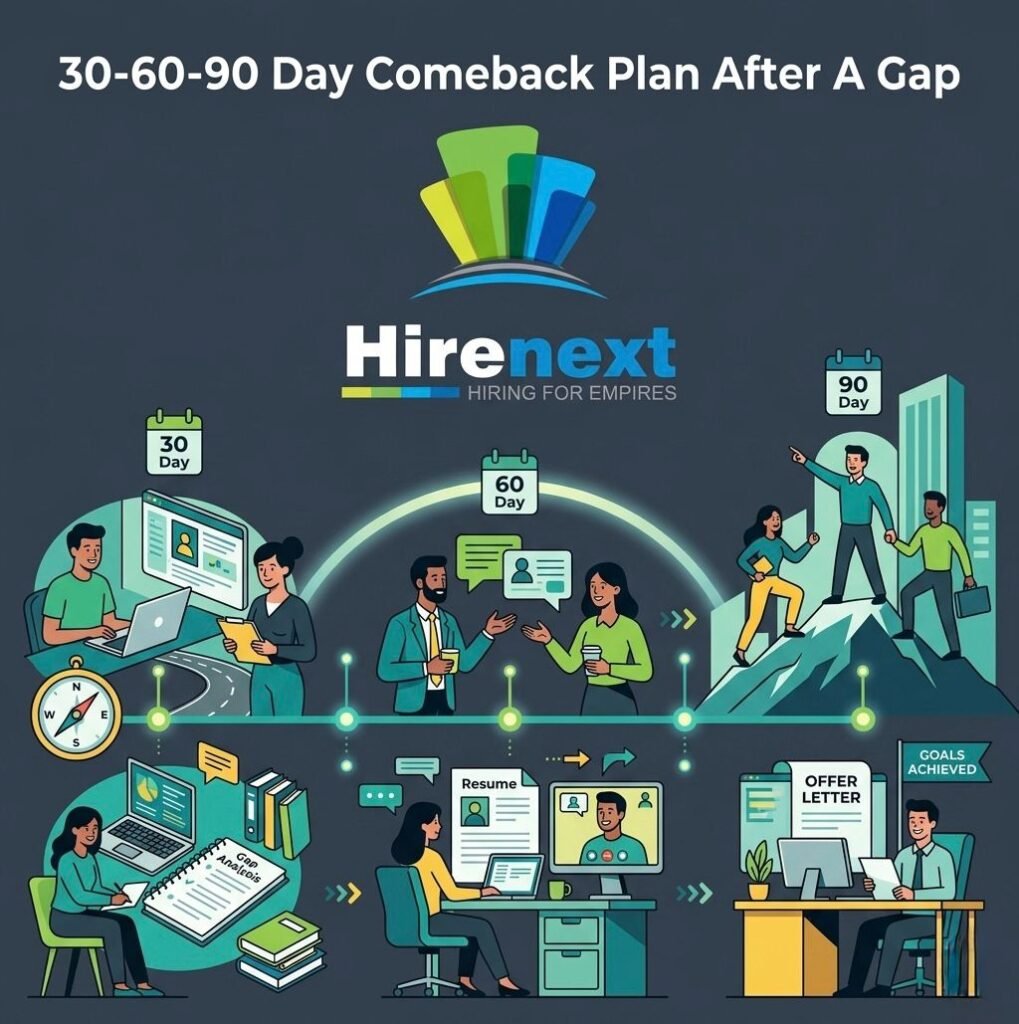
First 30 Days
- Apply to jobs daily
- Practice interviews
Next 60 Days
- Improve weak skills
- Build projects
Next 90 Days
- Focus on targeted roles
- Refine strategy
23. Final Action Plan
- Identify your reason
- Frame it positively
- Practice your answer
- Stay confident
- Apply consistently
14. Conclusion
Career gaps are normal, but your explanation matters.
By learning how to explain career gap properly, understanding what to say about career gap in interview, and applying smart resume tips for freshers, you can turn any gap into a strength.
Remember, confidence and clarity can turn any weakness into an advantage.