
How Recruiters Match Candidates With Company Culture
Introduction
Hiring the right person is about more than matching qualifications with a job description. A candidate may have the right skills, experience, and educational background but still struggle in a workplace if their values, communication style, and approach to work do not align with the organization.
This is where company culture fit becomes important.
Recruiters increasingly look beyond resumes to understand how candidates may perform within a company’s working environment. They evaluate communication styles, collaboration preferences, career goals, adaptability, and personal values to determine whether an individual is likely to succeed within the organization.
The importance of cultural fit in hiring has grown as businesses recognize that employee satisfaction, retention, teamwork, and productivity are closely connected to workplace culture.
However, cultural fit does not mean hiring people who are all alike. Effective recruiters focus on finding candidates who can align with the organization’s core values while also bringing new perspectives and ideas.
This article explains how recruiters evaluate company culture fit, how they assess candidates during the hiring process, and why cultural alignment can contribute to long-term employee and business success.
Table of Contents
Introduction
What Is Company Culture Fit?
Why Company Culture Matters in Hiring
The Importance of Cultural Fit in Hiring
How Recruiters Understand Company Culture
Defining Company Values
Understanding the Workplace Environment
Evaluating Candidate Personality and Work Style
Assessing Communication and Collaboration
Candidate Experience During Cultural Fit Assessment
Behavioral Interview Questions
Situational Assessments
Evaluating Career Goals and Motivation
Avoiding Cultural Fit Bias
Culture Fit vs Culture Add
How Recruiters Make the Final Match
Role of Technology in Culture-Based Hiring
Common Mistakes Companies Make
Benefits of Hiring for Culture Fit
Building a Stronger Workforce
Why Candidate Experience Matters
Conclusion
What Is Company Culture Fit?
Company culture fit refers to how well a candidate’s values, behaviors, work preferences, and communication style align with an organization’s working environment.
Every company has its own culture.
Some organizations may prioritize:
- Innovation
- Collaboration
- Flexibility
- Independence
- Accountability
- Customer service
Others may emphasize:
- Structure
- Discipline
- Stability
- Hierarchy
- Process
Recruiters evaluate whether candidates are comfortable working within these environments.
However, company culture fit should not mean finding candidates who think exactly like existing employees.
Instead, recruiters should identify individuals who respect organizational values while contributing unique skills and perspectives.
Why Company Culture Matters in Hiring
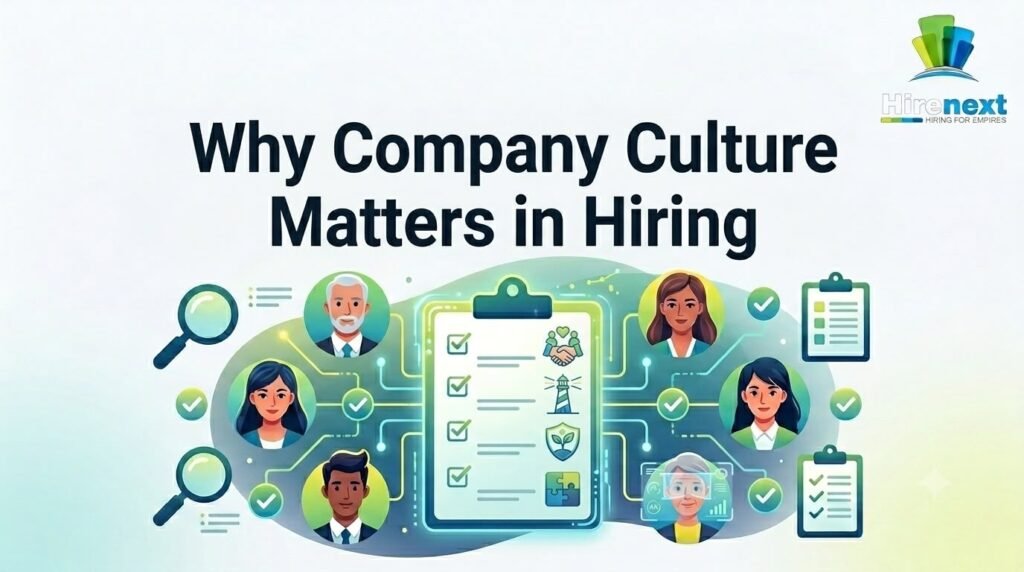
Employees spend a significant portion of their lives at work.
When employees feel connected to their workplace culture, they may experience:
- Greater job satisfaction
- Stronger engagement
- Better teamwork
- Higher motivation
- Improved retention
This explains the importance of cultural fit in hiring.
Hiring someone who struggles with the company’s work environment can lead to:
- Workplace conflicts
- Low engagement
- Poor performance
- Early resignation
Recruiters therefore consider cultural alignment alongside technical qualifications.
The Importance of Cultural Fit in Hiring
The importance of cultural fit in hiring becomes particularly clear when considering employee retention.
A candidate may accept a job because of salary or job title but leave later if the workplace environment does not meet their expectations.
For example, someone who prefers independent work may struggle in a highly collaborative environment.
Similarly, an employee who values flexibility may feel uncomfortable in a highly structured workplace.
Effective company culture fit assessments help recruiters identify these potential mismatches before hiring decisions are finalized.
How Recruiters Understand Company Culture
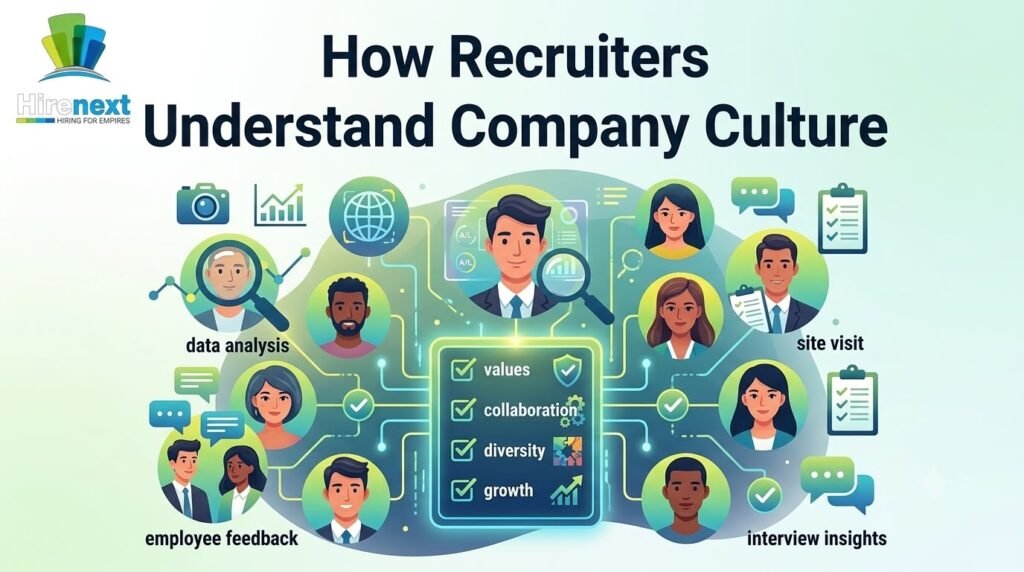
Before recruiters evaluate candidates, they must first understand the organization’s culture.
Recruiters often communicate with:
- Founders
- HR managers
- Team leaders
- Hiring managers
- Existing employees
They ask questions about:
- How teams communicate
- How decisions are made
- How managers lead
- How employees collaborate
- How performance is evaluated
This information helps recruiters define the organization’s ideal cultural environment company culture fit.
Defining Company Values
Values form the foundation of company culture fit.
Recruiters identify the principles that guide the organization.
These may include:
Integrity
Employees are expected to act honestly and responsibly.
Innovation
The company encourages creative thinking and experimentation.
Teamwork
Employees are expected to collaborate and support colleagues.
Accountability
Professionals take responsibility for their work and outcomes.
Customer Focus
Employees prioritize customer satisfaction.
Recruiters use these values to understand which behaviors are likely to succeed within the organization.
Understanding the Workplace Environment
Company culture is not only about written values.
The actual workplace environment matters just as much.
Recruiters may evaluate:
- Office atmosphere
- Management style
- Work schedules
- Remote or hybrid policies
- Communication practices
- Team structure
For example, a fast-growing startup may require employees who are comfortable with uncertainty and changing priorities.
A larger organization may provide more structure and defined responsibilities.
Understanding these differences helps recruiters improve company culture fit.
Evaluating Candidate Personality and Work Style
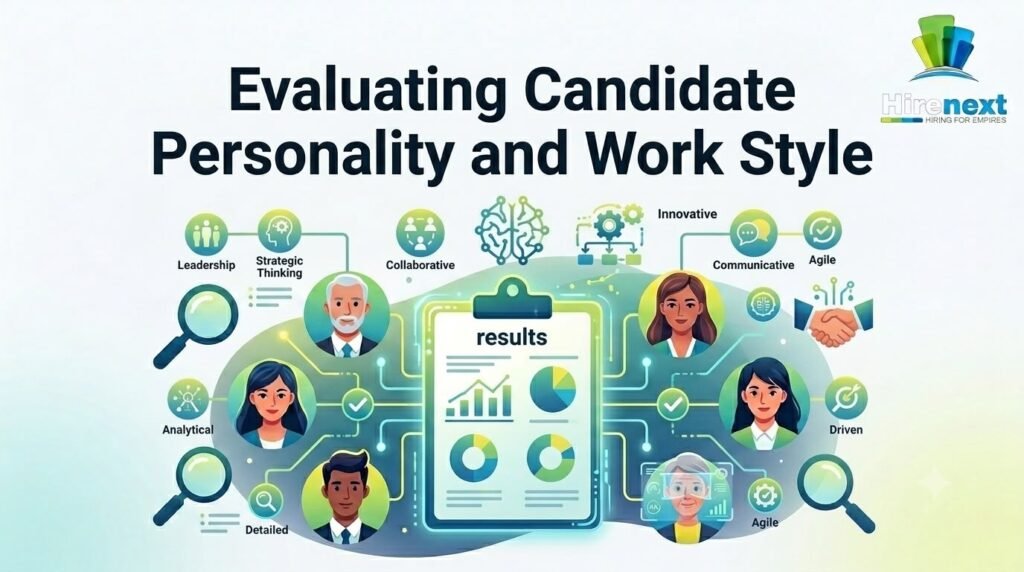
Recruiters do not simply ask candidates whether they are a “good cultural fit.”
Instead, they explore how candidates naturally work.
Questions may focus on:
- How candidates handle pressure
- How they manage deadlines
- How they respond to feedback
- How they solve problems
- How they approach teamwork
The objective is to understand whether the candidate’s working style aligns with the organization company culture fit.
Assessing Communication and Collaboration
Communication is an important component of company culture fit.
Recruiters assess whether candidates can:
- Communicate clearly
- Listen actively
- Give constructive feedback
- Resolve disagreements
- Collaborate effectively
Strong communication skills are particularly important in organizations that rely heavily on teamwork.
Candidate Experience During Cultural Fit Assessment
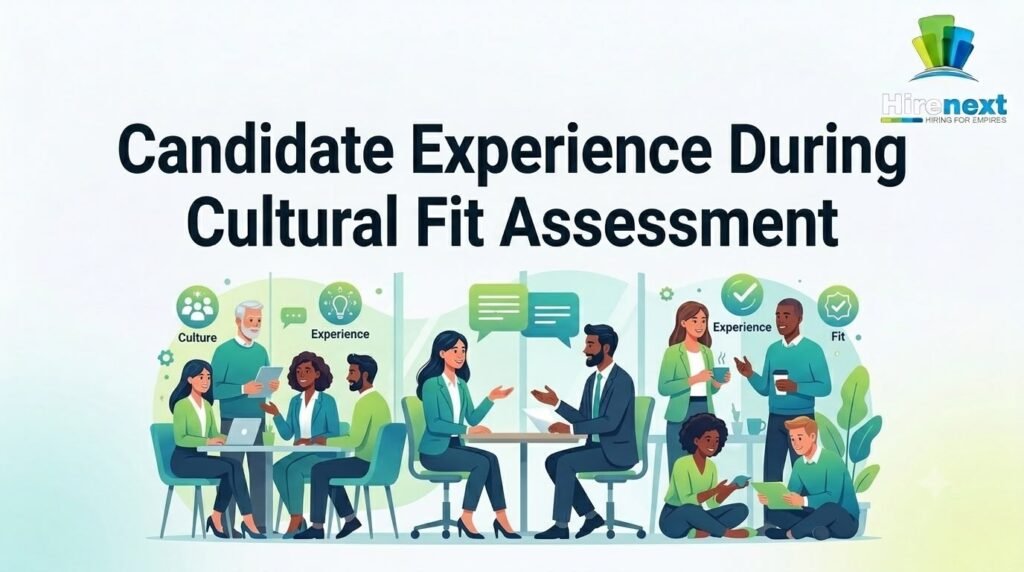
The cultural assessment process should also provide a positive candidate experience.
Candidates should understand:
- What the company values
- How the team works
- What managers expect
- What the workplace environment is like
Transparent communication helps candidates determine whether the organization is right for them.
This creates a two-way evaluation process.
The company evaluates the candidate, but the candidate also evaluates the company.
A positive candidate experience improves employer reputation and can increase offer acceptance.
Behavioral Interview Questions
Behavioral interviews are one of the most effective methods recruiters use to assess company culture fit.
Instead of asking only about technical skills, recruiters ask candidates to describe real experiences from their previous workplaces.
Common questions include:
- Tell me about a time you faced a workplace conflict.
- How did you handle negative feedback?
- Describe a situation where you had to work under pressure.
- Tell us about a time you worked with a difficult team member.
- How do you handle changing priorities?
The answers help recruiters understand how candidates behave in real situations.
For example, if a company values collaboration, recruiters may look for candidates who demonstrate teamwork and open communication company culture fit.
Situational Assessments
Recruiters may also use hypothetical situations to evaluate company culture fit.
Candidates might be asked:
“What would you do if you disagreed with your manager’s decision?”
or:
“How would you handle a deadline when you have multiple priorities?”
These scenarios reveal how candidates think and make decisions.
Situational assessments can help recruiters identify whether candidates’ approaches align with organizational expectations.
Evaluating Career Goals and Motivation
Long-term alignment is another important part of the importance of cultural fit in hiring.
Recruiters explore candidates’ career goals and motivations.
They may ask:
- What motivates you at work?
- Where do you see yourself in five years?
- What type of workplace helps you perform best?
- Why do you want to join our company?
The goal is to determine whether the candidate’s expectations align with the organization’s opportunities.
For example, a candidate seeking rapid career growth may be better suited to a fast-growing company than an organization with limited promotion opportunities.
Avoiding Cultural Fit Bias
While company culture fit is important, recruiters must be careful not to turn it into a source of bias.
Hiring managers should not reject candidates simply because they:
- Have different personalities
- Come from different backgrounds
- Communicate differently
- Have different interests
Cultural fit should focus on professional values and behaviors rather than personal similarities.
For example, hiring managers should not assume that someone is a better cultural fit simply because they attended the same university or share similar hobbies.
Objective evaluation is essential for fair recruitment.
Culture Fit vs Culture Add
Modern recruitment increasingly focuses on the concept of “culture add.”
Culture fit asks:
Can this candidate work successfully within our existing environment?
Culture add asks:
What new perspectives, skills, and ideas can this candidate bring?
A strong hiring strategy considers both.
An organization may want employees who understand its core values while also bringing different experiences and perspectives.
This approach supports innovation and workforce diversity.
How Recruiters Make the Final Match
Recruiters typically combine multiple sources of information before recommending a candidate.
They may consider:
- Resume experience
- Interview performance
- Behavioral responses
- Communication style
- Career goals
- Work preferences
- References
No single factor determines company culture fit.
Instead, recruiters build a complete picture of the candidate.
They then compare this profile with the organization’s requirements and workplace environment.
Role of Technology in Culture-Based Hiring
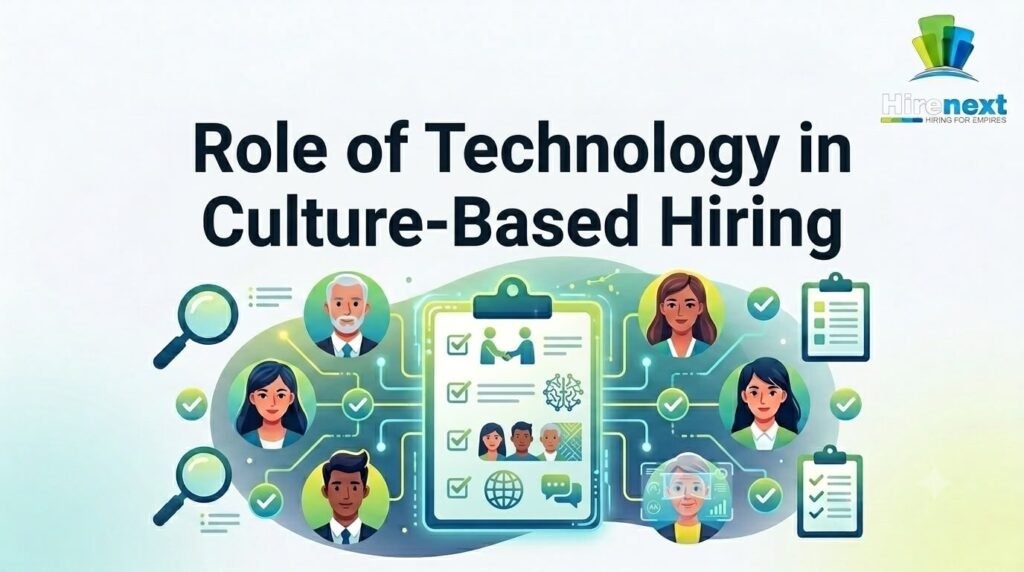
Technology is increasingly supporting culture-based recruitment.
Modern recruitment tools can help with:
- Candidate assessments
- Interview scheduling
- Recruitment analytics
- Applicant tracking
- Skills evaluation
AI-powered tools may also identify patterns in candidate responses.
However, technology should support human decision-making rather than replace it.
Recruiters still need to understand organizational culture and evaluate candidates objectively.
Common Mistakes Companies Make
Companies often make mistakes when assessing company culture fit.
Mistake 1: Hiring People Who Are Too Similar
A team made up of identical personalities may lack creativity and diverse perspectives.
Mistake 2: Using Vague Culture Criteria
Terms like “good attitude” or “team player” can mean different things to different people.
Mistake 3: Ignoring Candidate Expectations
Companies should clearly explain their culture to candidates.
Mistake 4: Confusing Personality With Cultural Fit
A quiet employee can still be an excellent team member.
Mistake 5: Relying Only on Interviews
Recruiters should use multiple evaluation methods.
Avoiding these mistakes improves the importance of cultural fit in hiring without creating unnecessary bias.
Benefits of Hiring for Culture Fit
A strong approach to company culture fit can benefit organizations in several ways.
Improved Employee Retention
Employees who feel comfortable within their workplace are more likely to stay.
Better Teamwork
Shared professional values can improve collaboration.
Higher Engagement
Culturally aligned employees may feel more connected to organizational goals.
Improved Productivity
Employees who understand workplace expectations can adapt more effectively.
Stronger Candidate Experience
Transparent cultural discussions help candidates make informed decisions.
These benefits demonstrate the importance of cultural fit in hiring.
Building a Stronger Workforce
Companies should view culture as an evolving system rather than a fixed checklist.
Recruiters can support stronger teams by:
- Clearly defining company values
- Training hiring managers
- Using structured interviews
- Measuring employee engagement
- Encouraging diverse perspectives
This approach allows organizations to maintain their identity while continuing to evolve.
Why Candidate Experience Matters
The cultural assessment process should never feel like a one-sided test.
Candidates are also evaluating the employer.
They want to know:
- What is the management style?
- How flexible is the workplace?
- What are the growth opportunities?
- How does the company treat employees?
A transparent candidate experience allows applicants to make informed decisions.
When companies accurately communicate their culture, they are more likely to attract candidates who genuinely want to work there.
Conclusion
Recruiters match candidates with organizations by looking beyond resumes and technical qualifications. They evaluate values, communication styles, work preferences, career goals, and behavioral patterns to determine potential company culture fit.
The importance of cultural fit in hiring lies in creating stronger relationships between employees and organizations. When candidates understand workplace expectations and companies hire people who align with their professional values, businesses can improve engagement, teamwork, and retention.
However, cultural fit should never become an excuse for hiring people who are all alike. Modern recruiters should balance cultural alignment with culture add, diversity, and inclusion.
Ultimately, the best hiring decisions happen when recruiters create a transparent, objective, and positive candidate experience. By understanding both the organization’s culture and the candidate’s expectations, recruiters can create meaningful matches that benefit employees and businesses in the long term.