
How HireNext Screens Candidates Better Than Others
Introduction
Hiring the right employee is one of the most important decisions a business can make. A wrong hire can lead to decreased productivity, higher training costs, poor team performance, and increased employee turnover. This is why companies today are paying more attention to the candidate screening process than ever before.
Many recruitment agencies focus only on collecting resumes and forwarding them to employers. However, modern recruitment requires much more than resume matching. Businesses need candidates who not only possess the required skills but also fit the company culture, communication standards, and long-term goals.
This is where HireNext stands out.
HireNext follows a structured and professional candidate screening process designed to identify high-quality candidates before they reach the employer. Instead of simply forwarding applications, HireNext evaluates skills, communication abilities, experience, attitude, and job suitability to improve hiring success rates.
This detailed guide explains the Hirenext candidate screening process explained, how it differs from traditional recruitment methods, and why businesses trust HireNext for quality hiring support.
Table of Contents
- What Is a Candidate Screening Process?
- Why Candidate Screening Is Important
- Common Problems With Traditional Recruitment
- Introduction to HireNext’s Screening Approach
- Hirenext Candidate Screening Process Explained
- Resume Screening and Evaluation
- Initial Candidate Assessment
- Communication Skill Evaluation
- Interview Screening Process
- Skill and Experience Verification
- Cultural Fit Assessment
- Candidate Motivation Analysis
- Background and Reference Checks
- Industry-Specific Screening Methods
- Screening Freshers vs Experienced Candidates
- Technology in Candidate Screening
- Benefits of a Strong Candidate Screening Process
- How HireNext Reduces Hiring Mistakes
- Why Businesses Prefer HireNext
- Future of Candidate Screening
- Conclusion
What Is a Candidate Screening Process?
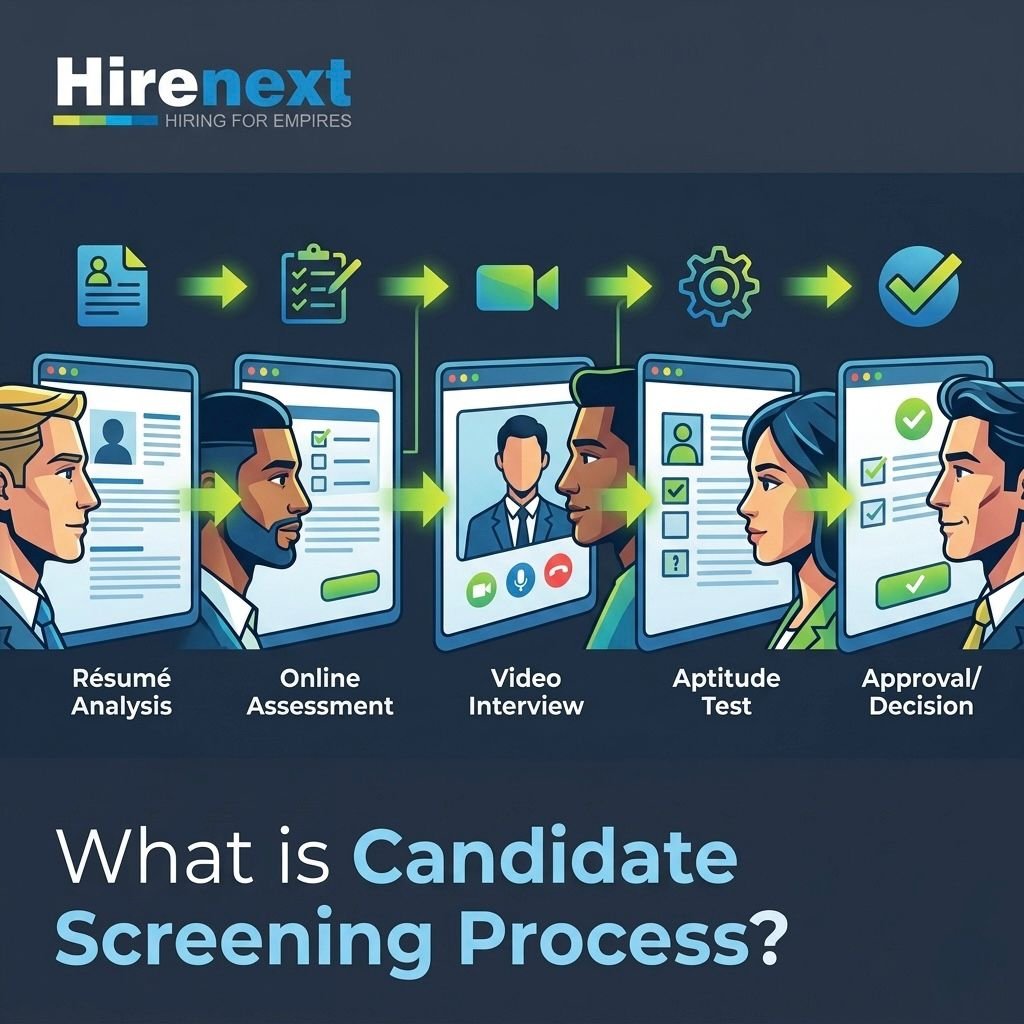
The candidate screening process is the method recruiters use to evaluate job applicants before presenting them to employers.
The purpose is to identify candidates who:
- Meet job requirements
- Possess relevant skills
- Fit company culture
- Have long-term potential
Effective screening saves time for employers and improves hiring quality.
Why Candidate Screening Is Important
Hiring decisions directly affect business performance.
Without a proper candidate screening process, companies may face:
- Poor employee performance
- Increased turnover
- Training costs
- Reduced productivity
- Team disruption
A structured screening system helps organizations hire more confidently.
Common Problems With Traditional Recruitment
Many recruitment agencies rely only on resume matching.
This often creates problems such as:
- Unqualified candidates
- Poor communication skills
- Lack of cultural fit
- High employee turnover
- Wasted interview time
Modern businesses need deeper candidate evaluation methods.
Introduction to HireNext’s Screening Approach
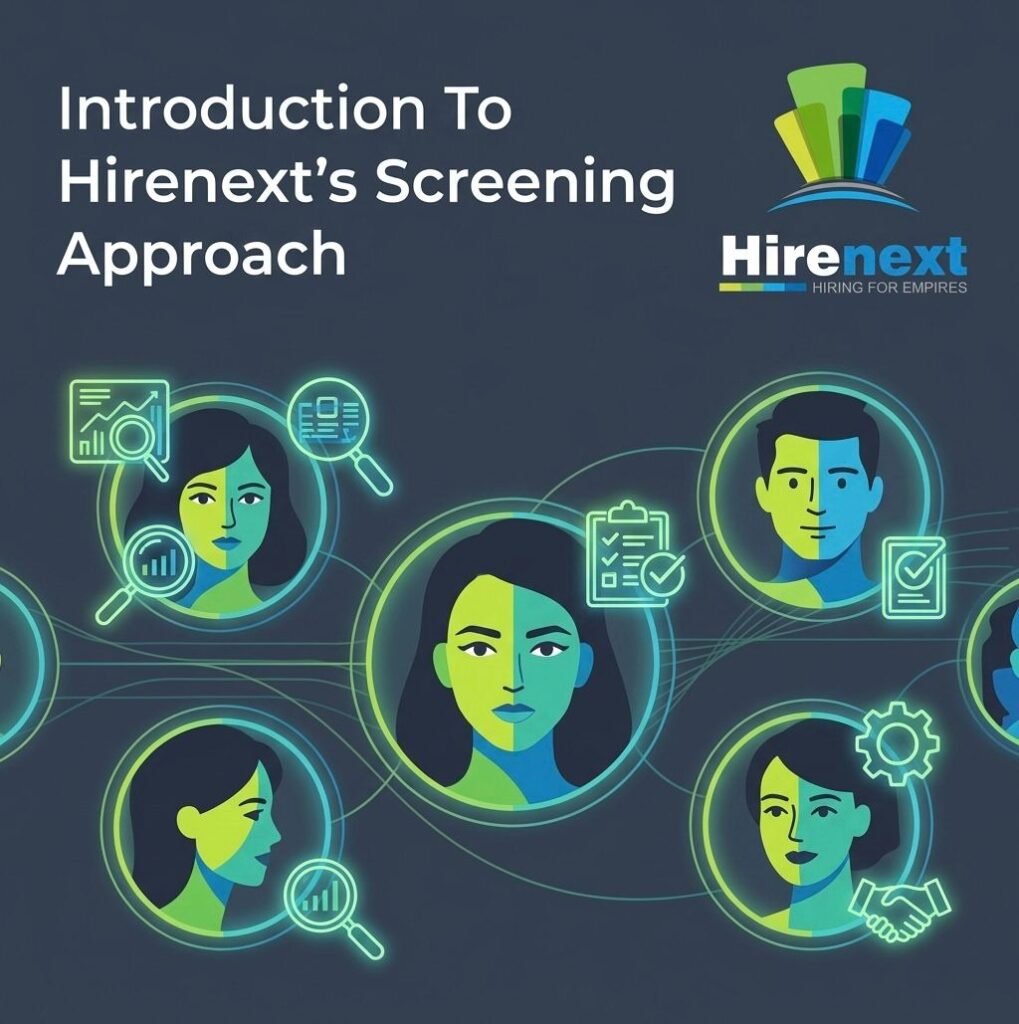
HireNext believes that successful hiring starts before the interview stage.
Instead of forwarding every applicant, HireNext follows a detailed candidate screening process that filters candidates based on multiple factors.
This approach helps employers receive only relevant and qualified profiles.
Hirenext Candidate Screening Process Explained
The Hirenext candidate screening process explained can be divided into several stages.
Each stage focuses on evaluating a different aspect of the candidate.
The goal is simple:
Send quality candidates instead of quantity.
Resume Screening and Evaluation
The first stage involves reviewing resumes carefully.
HireNext evaluates:
- Educational background
- Relevant experience
- Technical skills
- Achievements
- Career progression
Candidates who meet basic job requirements move to the next stage.
This initial candidate screening process eliminates unsuitable applications early.
Initial Candidate Assessment
After resume evaluation, recruiters conduct an initial assessment.
This helps understand:
- Career goals
- Job expectations
- Availability
- Salary expectations
- Professional attitude
This step ensures alignment between candidates and employers.
Communication Skill Evaluation
Communication is one of the most important hiring factors.
Many candidates have technical skills but struggle to communicate effectively.
HireNext evaluates:
- Verbal communication
- Listening skills
- Professional behavior
- Confidence level
- Clarity of expression
Strong communication improves workplace performance significantly.
Interview Screening Process
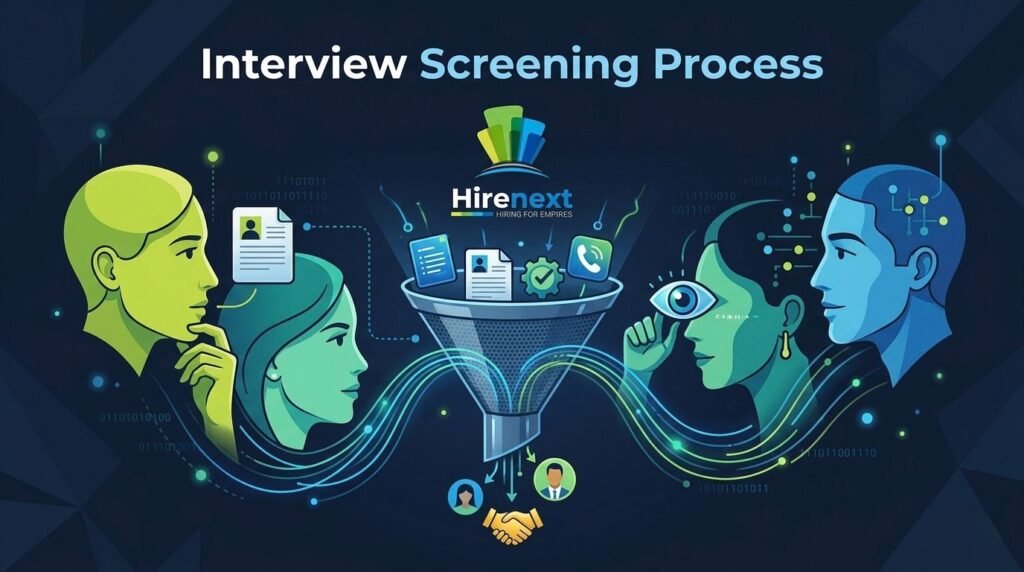
The interview screening process is one of the most critical stages of recruitment.
During screening interviews, recruiters assess:
1. Professional Knowledge
Candidates are asked role-specific questions.
2. Problem-Solving Ability
Recruiters evaluate decision-making and critical thinking.
3. Behavioral Traits
Candidates are assessed on attitude, teamwork, and adaptability.
4. Confidence and Presentation
Professional confidence often predicts workplace success.
This structured interview screening process helps identify stronger candidates before employer interviews.
Skill and Experience Verification
Resumes do not always provide a complete picture.
HireNext verifies:
- Work experience
- Key responsibilities
- Technical capabilities
- Industry knowledge
This step improves hiring accuracy significantly.
Cultural Fit Assessment
Skills alone do not guarantee long-term success.
Employees must also fit the company’s culture.
HireNext evaluates:
- Work style preferences
- Team collaboration ability
- Professional values
- Workplace adaptability
Cultural fit assessment helps improve employee retention.
Candidate Motivation Analysis
Understanding why a candidate wants a job is important.
HireNext examines:
- Career ambitions
- Growth expectations
- Commitment levels
- Job stability factors
Motivated candidates often perform better and stay longer.
Background and Reference Checks
For certain roles, additional verification may be required.
This may include:
- Employment verification
- Reference checks
- Educational verification
These checks increase employer confidence.
Industry-Specific Screening Methods
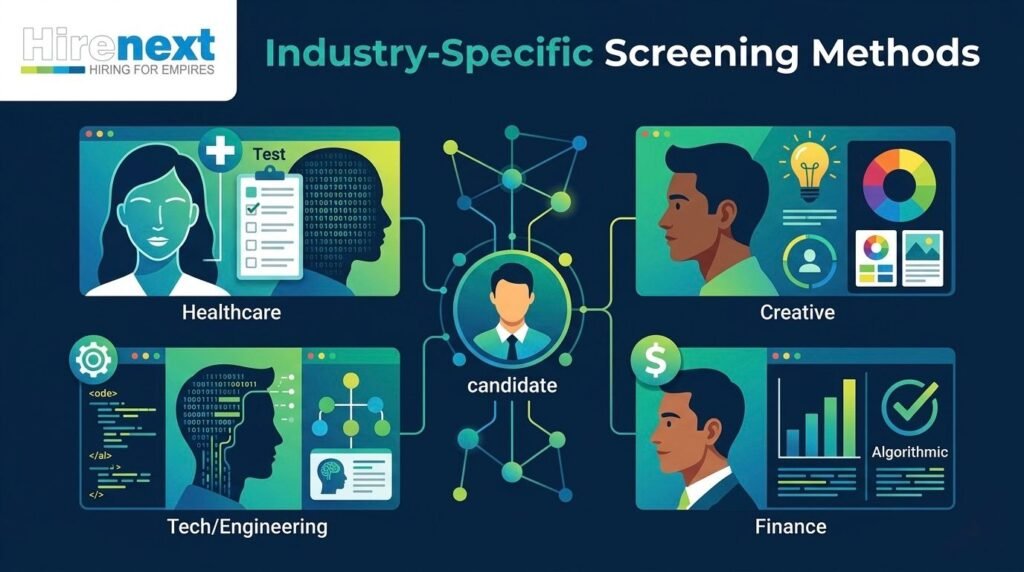
Different industries require different hiring approaches.
HireNext customizes its candidate screening process based on industry needs.
Examples include:
- Sales recruitment
- Telecalling roles
- HR positions
- Academic counselors
- Customer support teams
Industry-specific screening improves candidate quality.
Screening Freshers vs Experienced Candidates
Freshers and experienced professionals require different evaluation methods.
For Freshers
HireNext focuses on:
- Communication skills
- Learning ability
- Attitude
- Adaptability
For Experienced Candidates
Evaluation includes:
- Industry expertise
- Leadership abilities
- Performance history
- Technical knowledge
This personalized approach improves hiring success.
Technology in Candidate Screening
Modern recruitment requires efficient technology.
HireNext uses digital tools to:
- Organize applications
- Track candidate progress
- Improve communication
- Manage recruitment workflows
Technology enhances the overall candidate screening process.
Benefits of a Strong Candidate Screening Process
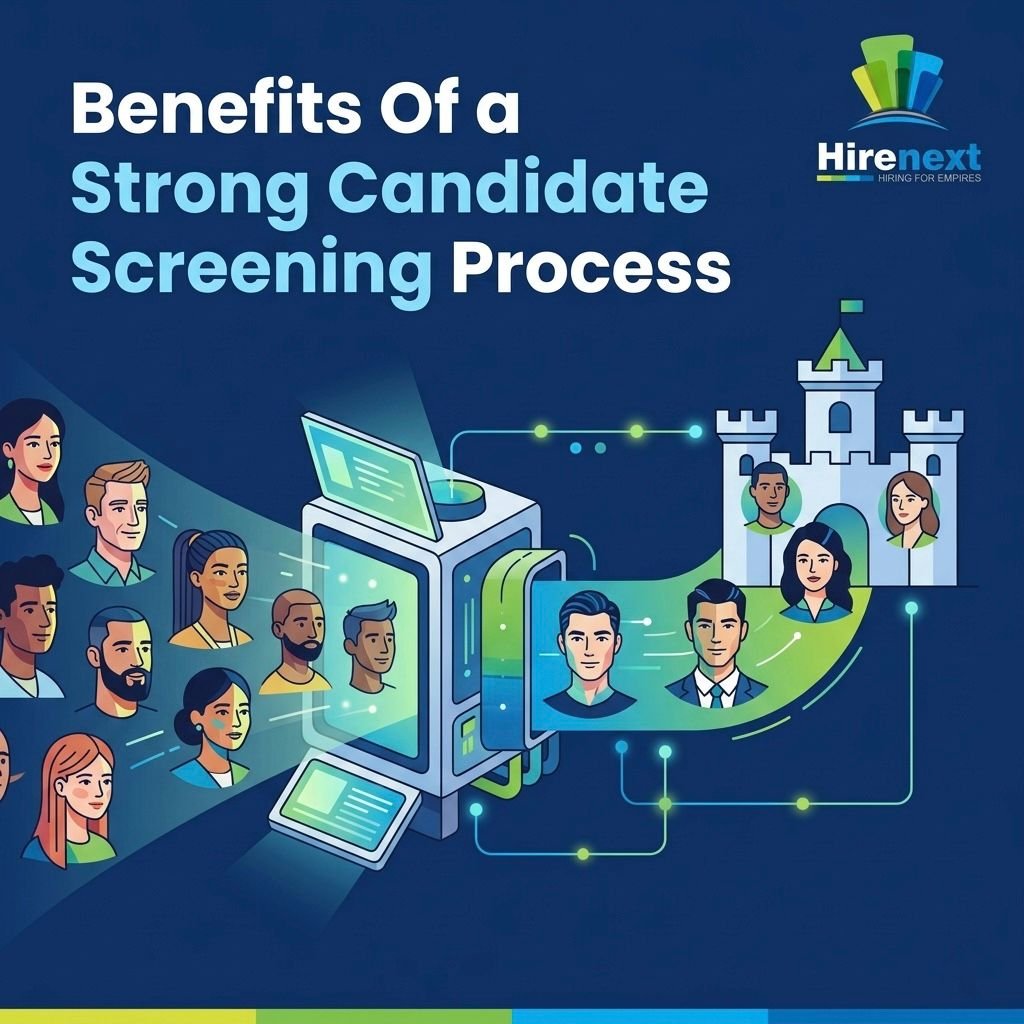
A structured screening system provides several advantages.
1. Better Hiring Quality
Only relevant candidates move forward.
2. Reduced Hiring Time
Employers spend less time reviewing unsuitable profiles.
3. Lower Employee Turnover
Better candidate matching improves retention.
4. Improved Productivity
High-quality hires contribute faster.
These benefits strengthen business growth.
How HireNext Reduces Hiring Mistakes
Hiring mistakes can be expensive.
HireNext minimizes risks through:
- Multiple screening stages
- Communication evaluation
- Cultural fit assessment
- Experience verification
- Structured interviews
This comprehensive candidate screening process improves hiring accuracy.
Why Businesses Prefer HireNext
Many companies choose HireNext because of its focus on quality over quantity.
Businesses benefit from:
- Better candidate quality
- Faster recruitment
- Reduced hiring stress
- Professional communication
- Customized hiring solutions
This approach helps employers build stronger teams.
Future of Candidate Screening
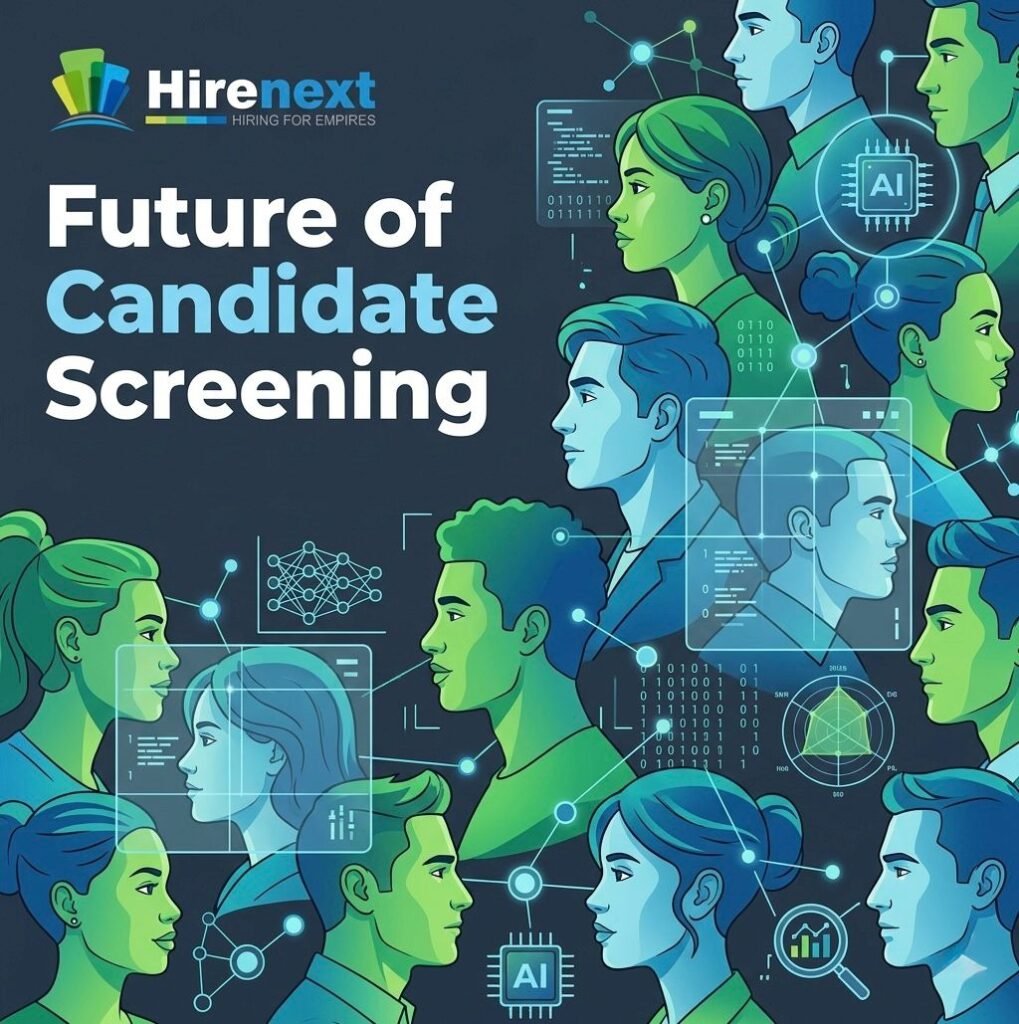
Recruitment is evolving rapidly.
Future screening trends include:
1. AI-Assisted Screening
Automation will speed up application reviews.
2. Skills-Based Evaluation
Practical skills will become more important than degrees.
3. Behavioral Assessments
Employers will focus more on attitude and adaptability.
4. Data-Driven Hiring
Recruitment decisions will become increasingly analytical.
Companies that adopt these methods will improve hiring success.
Conclusion
A strong candidate screening process is the foundation of successful recruitment. Businesses that rely only on resumes often face poor hiring decisions, higher turnover, and wasted recruitment efforts.
HireNext takes a more comprehensive approach by evaluating communication skills, professional behavior, cultural fit, motivation, and technical abilities before recommending candidates to employers.
The Hirenext candidate screening process explained in this guide shows why the company consistently delivers better hiring outcomes. Through a structured interview screening process, detailed assessments, and personalized recruitment methods, HireNext helps businesses hire smarter, faster, and more effectively.
For organizations looking to improve workforce quality and reduce hiring risks, a professional screening approach can make all the difference.