
Bulk Hiring Strategies for Growing Companies
Introduction
As businesses expand, one of the biggest operational challenges they face is hiring large numbers of employees quickly without compromising quality. Whether it is a startup scaling rapidly, a company opening new branches, or an organization launching a new project, recruitment demand increases significantly during growth phases.
This is where effective bulk hiring strategies become essential.
Bulk hiring is not simply about filling multiple vacancies at once. It requires structured planning, efficient sourcing, strong coordination, and scalable recruitment systems. Without proper execution, businesses may face delayed hiring, poor candidate quality, increased turnover, and rising recruitment costs.
Modern organizations are now investing heavily in bulk hiring strategies for growing companies to build strong workforces while maintaining productivity and operational efficiency. Successful companies understand that bulk recruitment is directly connected to business growth, customer satisfaction, and long-term scalability.
In this detailed guide, we will discuss the best bulk hiring strategies, major recruitment challenges during expansion, effective talent acquisition strategies, and practical methods businesses can use to scale hiring successfully in 2026.
Table of Contents
- What Is Bulk Hiring?
- Why Bulk Hiring Is Important for Growing Companies
- Common Challenges in Bulk Recruitment
- Importance of Bulk Hiring Strategies
- Workforce Planning Before Bulk Hiring
- Creating a Scalable Recruitment Process
- Talent Acquisition Strategies for Large-Scale Hiring
- Building a Strong Employer Brand
- Campus Recruitment for Bulk Hiring
- Using Recruitment Agencies for Bulk Hiring
- Social Media Recruitment Strategies
- Technology and Automation in Bulk Hiring
- Resume Screening Techniques
- Conducting Mass Interviews Efficiently
- Skill Assessment Methods for Bulk Hiring
- Improving Candidate Experience During Bulk Recruitment
- Reducing Hiring Time During Expansion
- Employee Retention After Bulk Hiring
- Common Bulk Hiring Mistakes to Avoid
- Future Trends in Bulk Recruitment
- Conclusion
What Is Bulk Hiring?
Bulk hiring refers to recruiting a large number of employees within a short period of time.
Companies usually require bulk hiring during:
- Business expansion
- New branch openings
- Seasonal demand growth
- Project launches
- Startup scaling
- BPO and sales team expansion
Effective bulk hiring strategies help organizations manage high recruitment volumes without reducing hiring quality.
Why Bulk Hiring Is Important for Growing Companies
Business growth often depends on workforce expansion.
Without proper staffing:
- Productivity decreases
- Customer service suffers
- Existing employees experience burnout
- Business opportunities are delayed
Strong bulk hiring strategies for growing companies help businesses scale operations efficiently and maintain growth momentum.
Common Challenges in Bulk Recruitment
Bulk recruitment creates several operational difficulties.
Common Hiring Challenges Include:
- Large application volumes
- Limited screening time
- Poor candidate quality
- High employee turnover
- Communication delays
- Coordination issues
Without structured bulk hiring strategies, recruitment becomes disorganized and inefficient.
Importance of Bulk Hiring Strategies
Recruiting hundreds of employees quickly requires more than traditional hiring methods.
Effective bulk hiring strategies help businesses:
- Reduce hiring delays
- Improve candidate quality
- Streamline interviews
- Lower recruitment costs
- Improve workforce scalability
Organizations that invest in scalable hiring systems grow faster and more efficiently.
Workforce Planning Before Bulk Hiring
One of the most important steps in successful bulk recruitment is workforce planning.
Businesses must analyze:
- Number of employees needed
- Required skills
- Hiring timelines
- Budget allocation
- Department priorities
Proper planning improves recruitment accuracy and reduces unnecessary hiring costs.
Creating a Scalable Recruitment Process

Growing businesses need recruitment systems that can handle high hiring volumes efficiently.
Important Steps Include:
- Standardized interview structures
- Clear job descriptions
- Defined evaluation criteria
- Faster communication systems
- Automated recruitment workflows
These systems strengthen overall bulk hiring strategies.
Talent Acquisition Strategies for Large-Scale Hiring
Modern talent acquisition strategies focus on long-term workforce building rather than short-term hiring.
Effective Talent Acquisition Strategies Include:
- Building talent pipelines
- Employer branding
- Campus hiring
- Referral programs
- Recruitment marketing
These methods improve the success of bulk hiring strategies for growing companies.
Building a Strong Employer Brand
Employer branding is extremely important during large-scale hiring.
Candidates prefer companies with:
- Positive work culture
- Career growth opportunities
- Strong leadership
- Professional online presence
Strong branding improves application quality and supports effective bulk hiring strategies.
Campus Recruitment for Bulk Hiring
Campus hiring is one of the most cost-effective bulk recruitment methods.
Benefits of Campus Hiring:
- Large candidate pools
- Faster hiring process
- Lower salary expectations
- Trainable workforce
Many companies use campus recruitment as part of their bulk hiring strategies for growing companies.
Using Recruitment Agencies for Bulk Hiring
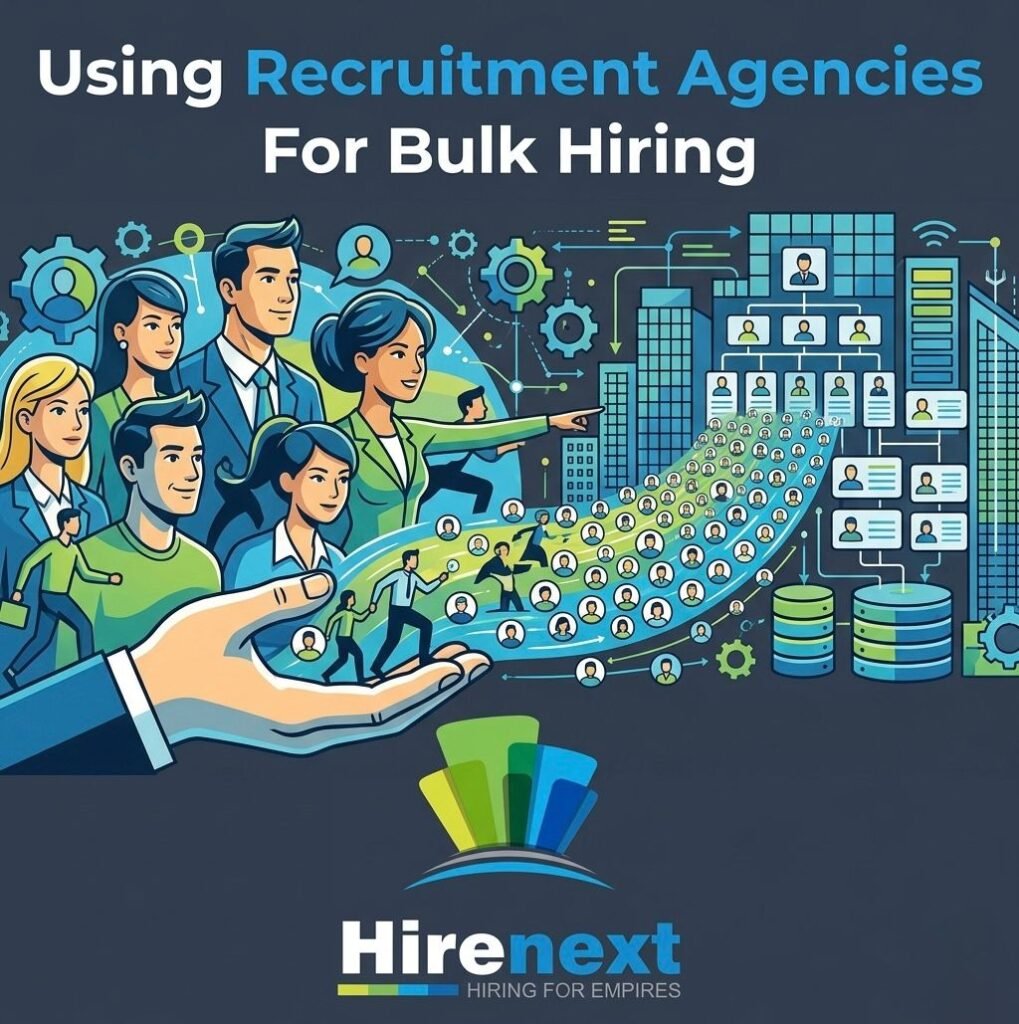
Recruitment agencies help businesses manage large-scale hiring efficiently.
Recruitment Agency Benefits:
- Faster candidate sourcing
- Pre-screened applicants
- Reduced HR workload
- Industry expertise
Agencies provide scalable support for businesses implementing aggressive bulk hiring strategies.
Social Media Recruitment Strategies
Social media has become a powerful recruitment channel.
Platforms like:
help businesses attract large numbers of candidates quickly.
Social recruiting improves employer visibility and supports modern talent acquisition strategies.
Technology and Automation in Bulk Hiring
Technology plays a major role in managing high recruitment volumes.
Useful Recruitment Technologies:
- Applicant tracking systems
- AI resume screening
- Automated scheduling tools
- Online assessments
- Video interviews
Automation helps businesses improve efficiency while executing bulk hiring strategies.
Resume Screening Techniques
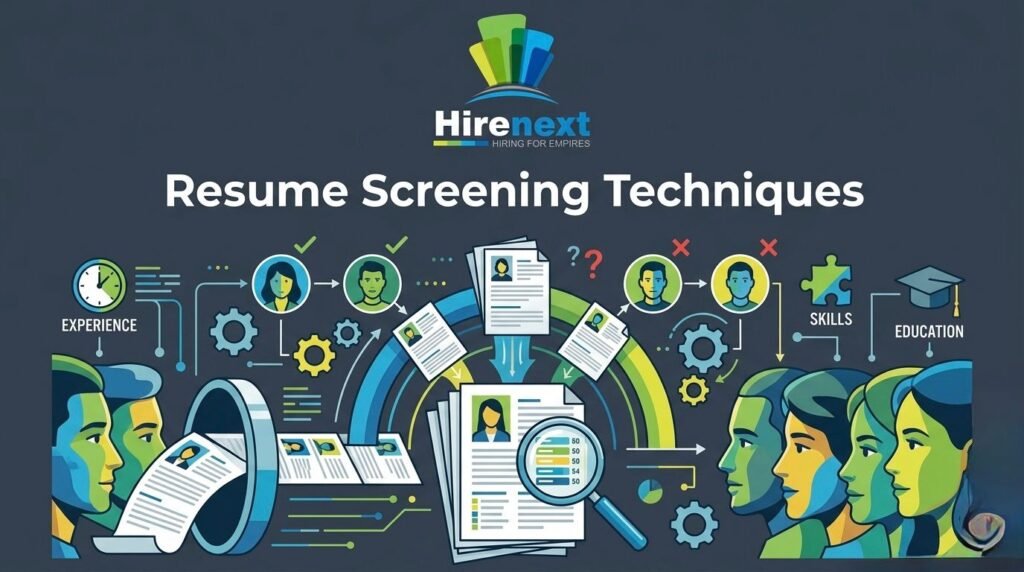
Bulk hiring often generates thousands of applications.
Manual screening becomes difficult and time-consuming.
Effective Screening Methods:
- AI filtering systems
- Skill-based shortlisting
- Keyword screening
- Structured evaluation criteria
Efficient screening improves recruitment speed and quality.
Conducting Mass Interviews Efficiently
Mass interviews help businesses save time during bulk recruitment.
Common Bulk Interview Methods:
- Group discussions
- Walk-in interviews
- Virtual hiring drives
- Panel interviews
Structured interview systems improve hiring consistency during large-scale recruitment.
Skill Assessment Methods for Bulk Hiring
Assessments help companies identify suitable candidates faster.
Effective Assessment Techniques:
- Aptitude tests
- Communication assessments
- Technical evaluations
- Situational judgment tests
Skill testing strengthens bulk hiring strategies for growing companies.
Improving Candidate Experience During Bulk Recruitment
Candidate experience impacts employer branding heavily.
Poor experiences can damage company reputation quickly.
Candidates Expect:
- Timely communication
- Clear job information
- Professional interaction
- Faster updates
Positive experiences improve offer acceptance rates and recruitment success.
Reducing Hiring Time During Expansion

Hiring delays can slow business growth significantly.
Ways to Reduce Hiring Time:
- Automate repetitive tasks
- Use referral hiring
- Standardize interviews
- Create talent pipelines
- Improve communication systems
Faster recruitment processes improve operational scalability.
Employee Retention After Bulk Hiring
Hiring employees is only the first step.
Retention is equally important.
Common Post-Hiring Challenges:
- Poor onboarding
- Lack of training
- Workplace stress
- Weak management support
Retention-focused talent acquisition strategies help businesses reduce turnover after bulk hiring.
Common Bulk Hiring Mistakes to Avoid
Many companies fail during expansion because of poor recruitment planning.
Common Mistakes Include:
- Hiring too quickly
- Ignoring cultural fit
- Weak onboarding systems
- Poor communication
- Lack of workforce planning
Avoiding these mistakes improves overall bulk hiring strategies.
Future Trends in Bulk Recruitment
Future Trends in Bulk Recruitment
Recruitment is evolving rapidly in 2026, especially for companies hiring at scale. Traditional hiring methods are no longer enough for businesses that need to recruit large numbers of employees quickly while maintaining quality. Modern organizations are now focusing on smarter technologies, better candidate experiences, and long-term workforce planning to improve their bulk hiring strategies.
Here are the biggest future trends shaping bulk recruitment:
AI-Powered Recruitment
Artificial Intelligence is transforming the hiring industry rapidly. Companies are increasingly using AI tools to automate repetitive recruitment tasks such as:
- Resume screening
- Candidate shortlisting
- Interview scheduling
- Skill matching
- Candidate engagement
AI-powered systems help recruiters handle thousands of applications efficiently while reducing manual workload and hiring delays. This improves recruitment speed significantly, especially during large-scale hiring drives.
However, businesses still need human involvement for cultural fit assessment, leadership evaluation, and final hiring decisions.
Skills-Based Hiring
One of the biggest changes in recruitment is the shift from degree-focused hiring to skills-based hiring.
Companies are now prioritizing:
- Practical abilities
- Problem-solving skills
- Communication
- Adaptability
- Technical expertise
Many businesses have realized that degrees alone do not guarantee performance. As a result, skill assessments, project evaluations, and practical tests are becoming more important in bulk hiring strategies for growing companies.
This trend also allows organizations to access wider talent pools, including freshers, self-taught professionals, and candidates from non-traditional backgrounds.
Virtual Hiring
Remote and hybrid work models continue to grow globally, and virtual recruitment has become a permanent part of modern hiring.
Companies now conduct:
- Online interviews
- Virtual assessment centers
- Remote onboarding
- Digital hiring drives
Virtual hiring helps businesses recruit candidates from multiple cities and countries without geographical limitations. It also reduces operational costs and speeds up recruitment processes during expansion phases.
For companies planning rapid scaling, virtual recruitment is becoming one of the most important bulk hiring strategies.
Employer Branding Expansion
Employer branding is becoming a major competitive advantage in recruitment.
Candidates today research companies carefully before applying. Businesses with strong online presence, positive employee culture, and visible leadership attract better talent much faster.
Companies are now investing heavily in:
- LinkedIn employer branding
- Employee-generated content
- Workplace culture marketing
- Recruitment campaigns on social media
- Career page optimization
Strong branding increases trust, improves application quality, and supports large-scale recruitment success.
Data-Driven Recruitment Decisions
Another growing trend is recruitment analytics and data-driven hiring.
Companies are tracking:
- Cost-per-hire
- Time-to-hire
- Employee retention rates
- Hiring source performance
- Candidate engagement metrics
These insights help businesses improve hiring efficiency and optimize their bulk hiring strategies over time.
Focus on Candidate Experience
Modern candidates expect professional and transparent hiring experiences, even during mass recruitment drives.
Businesses are improving:
- Communication speed
- Interview processes
- Feedback systems
- Onboarding experiences
Positive candidate experience strengthens employer reputation and improves offer acceptance rates during bulk recruitment.
Practical Tips for Successful Bulk Hiring
Here are some practical recommendations:
| Strategy | Benefit |
|---|---|
| Campus hiring | Faster fresher recruitment |
| Referral programs | Better candidate quality |
| Recruitment automation | Reduced manual workload |
| Employer branding | Higher application rates |
| Workforce planning | Better scalability |
These methods improve recruitment efficiency significantly.
Conclusion
Bulk recruitment is one of the biggest operational challenges for expanding businesses in 2026. Companies that lack structured hiring systems often struggle with delays, poor candidate quality, high turnover, and increased recruitment costs.
Strong bulk hiring strategies help businesses scale efficiently while maintaining hiring quality and operational productivity. Organizations that invest in workforce planning, employer branding, automation, and modern talent acquisition strategies can recruit large teams successfully without compromising candidate experience.
Understanding the importance of bulk hiring strategies for growing companies is essential for businesses aiming to scale faster in competitive industries. Companies that modernize their recruitment approach today will build stronger teams, improve workforce stability, and achieve sustainable long-term growth.