
Signs of a Bad Hire: How to Know You Hired the Wrong Employee
Hiring the right employee can transform a business. The right person can increase productivity, strengthen teamwork, improve customer relationships, and contribute to long-term growth. But what happens when the person you hired turns out to be a poor fit?
Recognizing the signs of a bad hire early can save a company significant time, money, and frustration. Unfortunately, many businesses continue investing in an employee even after clear warning signs appear because they hope the situation will improve.
A bad hire does not always mean the employee lacks talent. Sometimes the problem is a mismatch between the person’s skills and the role. In other cases, unclear expectations, inadequate onboarding, poor management, or an unhealthy work environment may contribute to performance problems.
Understanding how to know you hired the wrong employee requires looking beyond one bad day or an isolated mistake. Employers should identify patterns in performance, behavior, communication, reliability, and ability to work with others.
This guide explores the most important signs of a bad hire, why bad hires happen, how much they can cost businesses, and what employers can do to prevent similar recruitment mistakes in the future.
Table of Contents
- What Is a Bad Hire?
- Why Bad Hires Happen
- 15 Signs of a Bad Hire
- Poor Performance Despite Support
- Repeated Mistakes
- Lack of Accountability
- Poor Communication
- Negative Attitude
- Frequent Missed Deadlines
- Difficulty Working With the Team
- Resistance to Feedback
- Lack of Initiative
- Frequent Absences or Unreliability
- Misrepresentation During Recruitment
- Declining Productivity
- Poor Customer Interactions
- How to Know You Hired the Wrong Employee
- Bad Hire vs Employee Who Needs Training
- The Cost of a Bad Hire
- Common Recruitment Mistakes That Lead to Bad Hires
- How to Prevent Bad Hires
- What to Do After Identifying a Bad Hire
- When Should You Let an Employee Go?
- Final Checklist for Employers
- Conclusion
What Is a Bad Hire?
A bad hire is an employee whose performance, behavior, skills, or overall fit consistently fails to meet the reasonable requirements of the position.
However, employers should be careful before labeling someone a bad hire.
A new employee may initially struggle because they:
- Don’t understand the company’s processes
- Haven’t received enough training
- Are unclear about expectations
- Need more time to adjust
- Have inadequate resources
- Are working under poor management
Therefore, the signs of a bad hire should be evaluated as patterns rather than isolated incidents.
A genuine problem usually becomes clearer when an employee continues to struggle despite receiving appropriate training, feedback, resources, and support signs of a bad hire.
Why Do Bad Hires Happen?
Bad hires can happen even when companies have experienced recruiters.
Some common reasons include:
Hiring Too Quickly
Companies sometimes rush recruitment because a position needs to be filled urgently.
Relying Too Much on Resumes
A resume can show qualifications and experience but doesn’t always demonstrate practical ability.
Poor Interviewing
Unstructured interviews may encourage candidates to give rehearsed answers without providing evidence of how they actually work.
Hiring Based on Personality
A candidate who makes a great first impression isn’t necessarily the best person for the job.
Unclear Job Descriptions
If candidates don’t understand the actual responsibilities, employers may attract people whose expectations don’t match the position.
Weak Reference Checks
Skipping appropriate verification can result in businesses missing important information.
Poor Onboarding
Sometimes an employee appears unsuccessful because the company never provided proper training or direction.
These are among the recruitment mistakes that can increase the probability of a bad hire.
15 Signs of a Bad Hire
Recognizing the signs of a bad hire early can help managers address problems before they become expensive.
Here are some of the most important warning signs.
1. Poor Performance Despite Proper Support
One of the clearest signs of a bad hire is consistently poor performance after the employee has received reasonable training, resources, and guidance.
Everyone needs time to learn a new job.
The concern begins when an employee continues missing reasonable performance expectations despite having the support necessary to succeed.
Before making a conclusion, managers should confirm that:
- Expectations were clearly explained
- Training was provided
- Resources were available
- Feedback was given
- The employee had enough time to improve
If these conditions exist and performance remains consistently poor, it may indicate a deeper mismatch.
2. Repeatedly Making the Same Mistakes
Mistakes are normal, especially for new employees.
However, repeatedly making the same mistakes without learning from feedback can be one of the signs of a bad hire.
A strong employee doesn’t have to be perfect. What matters is whether they learn.
For example, making a reporting mistake once is understandable. Making the same mistake repeatedly after receiving clear guidance may indicate problems with attention to detail, training retention, or role suitability.
3. Lack of Accountability
Another important warning sign is refusing to take responsibility.
An employee may regularly blame:
- Colleagues
- Managers
- Customers
- Processes
- Deadlines
- Technology
for problems without acknowledging their own contribution.
Accountability is important because employees who take responsibility are generally more willing to correct mistakes.
A person who constantly avoids responsibility can create additional pressure on managers and other team members signs of a bad hire.
4. Poor Communication
Communication problems can quickly affect productivity.
Warning signs may include:
- Not responding to important messages
- Failing to provide updates
- Giving unclear information
- Ignoring instructions
- Not communicating problems early
- Misunderstanding responsibilities repeatedly
Poor communication can become particularly damaging in roles involving customers, sales, project management, or teamwork.
However, employers should distinguish between poor communication skills and differences in communication style.
5. Consistently Negative Attitude
Everyone has difficult days.
But a consistently negative attitude can become one of the most visible signs of a bad hire.
Examples include:
- Constantly complaining
- Criticizing colleagues
- Rejecting every suggestion
- Creating unnecessary conflict
- Discouraging teammates
- Showing little interest in improving
A negative employee can affect team morale even when their individual performance appears acceptable.
6. Frequently Missing Deadlines
Occasionally missing a deadline isn’t necessarily a major concern.
Repeatedly missing deadlines without communicating early is different.
If an employee consistently:
- Underestimates tasks
- Delays work
- Misses commitments
- Provides excuses at the last minute
the manager should investigate the reason.
The problem could involve workload, unclear priorities, poor time management, or lack of capability signs of a bad hire.
7. Difficulty Working With the Team
Employees rarely work completely alone.
Even individual contributors usually need to communicate with managers, colleagues, clients, vendors, or other departments.
Problems may appear when an employee:
- Refuses collaboration
- Creates frequent conflicts
- Doesn’t respect colleagues
- Ignores team processes
- Refuses reasonable compromises
This is one of the signs of a bad hire that managers should take seriously because one person’s behavior can affect an entire team’s productivity.
8. Resistance to Feedback
Feedback is essential for professional development.
An employee doesn’t need to agree with every piece of feedback, but they should be able to discuss it professionally.
Warning signs include:
- Becoming defensive every time
- Refusing to acknowledge mistakes
- Ignoring repeated feedback
- Blaming the person providing feedback
- Showing no change after multiple discussions
A pattern of resistance can make coaching extremely difficult.
9. Lack of Initiative
Not every employee needs to behave like an entrepreneur.
However, employees should generally be capable of taking reasonable ownership of their responsibilities.
A concerning pattern may look like:
“I wasn’t told to do that.”
“That’s not my problem.”
“Nobody asked me.”
When employees constantly wait for instructions even for routine responsibilities, productivity can suffer
10. Frequent Absences or Unreliability
Reliability is essential for almost every workplace.
Repeated unexplained absences, frequent lateness, missed meetings, or failure to communicate availability can create operational problems.
However, managers should handle attendance issues according to company policies and applicable employment requirements.
One absence isn’t evidence of a bad hire.
A persistent pattern combined with other issues may require attention signs of a bad hire.
11. Misrepresentation During Recruitment
Sometimes an employee’s actual capabilities differ significantly from what was presented during recruitment.
For example, they may have:
- Exaggerated experience
- Claimed skills they don’t possess
- Misrepresented previous responsibilities
- Provided inaccurate information
This is why appropriate background verification and skills assessments can be valuable for relevant roles.
Employers should verify important information proportionately and with appropriate consent.
12. Declining Productivity
A sudden or persistent drop in productivity may be another warning sign.
However, managers should investigate the cause before assuming the employee is a bad hire.
Productivity can be affected by:
- Unclear expectations
- Excessive workload
- Poor management
- Lack of resources
- Personal circumstances
- Burnout
- Inadequate training
The objective should be to understand the cause rather than immediately blame the employee.
13. Poor Customer Interactions
For customer-facing roles, employee behavior can directly affect revenue and reputation.
Warning signs can include:
- Rude communication
- Poor follow-up
- Repeated customer complaints
- Failure to understand customer needs
- Unprofessional behavior
If these issues continue after coaching and feedback, the employee may not be suitable for the role.
14. They Don’t Seem Interested in the Role
Motivation is difficult to measure from one conversation.
However, a consistent lack of interest may become noticeable after joining.
For example, an employee may:
- Show little curiosity
- Avoid learning
- Resist responsibilities
- Demonstrate no interest in improving
- Frequently express dissatisfaction with the role
Managers should first determine whether the role was accurately represented during recruitment.
Sometimes the problem isn’t the employee—the job simply isn’t what they expected signs of a bad hire.
15. They Don’t Improve Over Time
Perhaps the most important of all the signs of a bad hire is the absence of meaningful improvement.
A new employee may initially struggle.
That’s normal.
What matters is the trajectory.
If performance gradually improves after feedback and support, the employee may simply need more time.
If performance remains unchanged despite clear expectations, training, coaching, and reasonable opportunities to improve, the employer may need to reconsider the hiring decision.
How to Know You Hired the Wrong Employee
If you’re wondering how to know you hired the wrong employee, don’t base the decision on one mistake or one difficult conversation.
Instead, ask:
Is the problem consistent?
A pattern is more meaningful than an isolated event.
Have expectations been clearly communicated?
Employees can’t meet standards they don’t understand.
Did the employee receive proper training?
Poor onboarding can create performance issues.
Has feedback been provided?
Employees should have a reasonable opportunity to improve.
Has the employee been given appropriate resources?
A lack of tools or support can affect performance.
Is the problem related to the employee or the role?
Sometimes the person is capable but poorly matched to the position.
These questions help managers distinguish between a genuine bad hire and an employee who simply needs additional support.
Bad Hire vs Employee Who Needs Training
This distinction is extremely important.
| Bad Hire Indicators | Training/Support Issue |
|---|---|
| Repeatedly ignores feedback | Improves after coaching |
| Avoids responsibility | Takes ownership when guided |
| Persistent behavior problems | Positive attitude but lacks knowledge |
| Doesn’t show improvement | Skills improve over time |
| Misrepresented qualifications | Honest about knowledge gaps |
| Consistently unsuitable for role | Can perform with training |
The goal should never be to label someone too quickly.
A fair employer gives employees reasonable opportunities to succeed.
The Cost of a Bad Hire
The impact of a poor hiring decision extends beyond salary.
Businesses may experience:
Recruitment Costs
The company may need to advertise and recruit again.
Training Costs
Time spent training the employee may be lost.
Productivity Loss
Managers and colleagues may spend additional time correcting mistakes.
Team Morale Problems
Poor behavior can negatively affect other employees.
Customer Impact
Bad service can damage customer trust.
Opportunity Cost
Managers spend time fixing problems instead of focusing on growth.
For small businesses, these costs can be particularly significant.
This is why preventing signs of a bad hire from becoming long-term problems is often more cost-effective than simply replacing employees repeatedly.
Common Recruitment Mistakes That Lead to Bad Hires
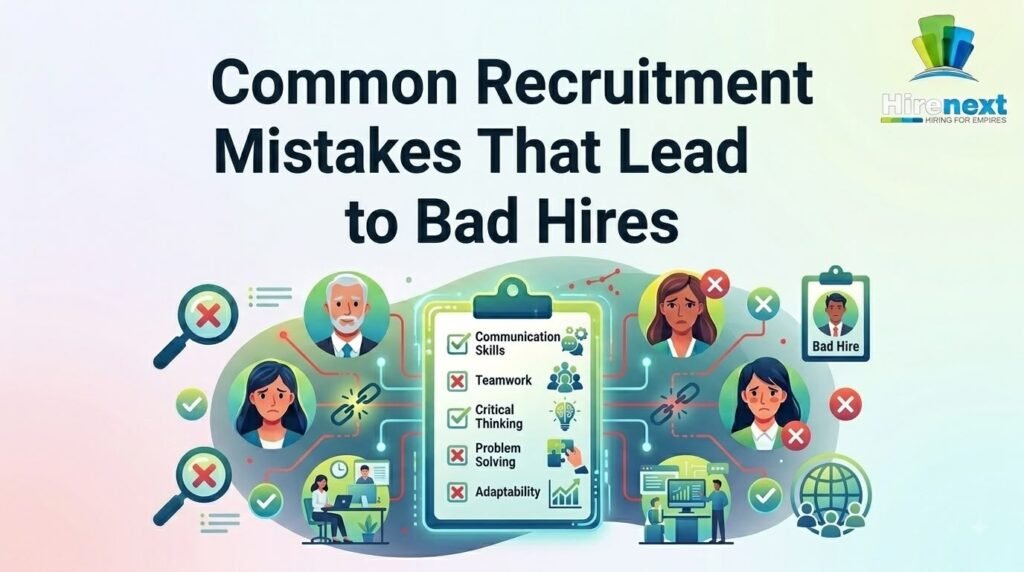
Many bad hires can be prevented before the employee joins.
Some common recruitment mistakes include:
Hiring Under Pressure
Urgent vacancies can encourage rushed decisions.
Not Defining the Role
Unclear responsibilities attract mismatched candidates.
Overvaluing Qualifications
Degrees and certifications don’t automatically demonstrate practical capability.
Ignoring Soft Skills
Technical ability isn’t the only predictor of workplace success.
Unstructured Interviews
Without consistent questions, candidates can be difficult to compare.
Skipping Practical Assessments
Interviews don’t always demonstrate actual ability.
Not Checking Relevant Information
Appropriate background and reference checks can reduce certain hiring risks.
Hiring Based on “Gut Feeling”
First impressions can be influenced by personal biases.
Failing to Explain Expectations
Employees need clear standards from the beginning.
How to Prevent Bad Hires
The best approach is to improve recruitment before problems occur.
Define Success Before Hiring
Decide what successful performance should look like within the first 30, 60, and 90 days.
Use Structured Interviews
Ask candidates consistent, role-relevant questions.
Test Practical Skills
Use realistic assessments where appropriate.
Evaluate Soft Skills
Assess communication, teamwork, adaptability, accountability, and problem-solving.
Conduct Appropriate Verification
Verify relevant candidate information where necessary.
Check References
Use consistent, job-related reference questions.
Improve Onboarding
Provide clear expectations, training, and resources.
Use Probation or Review Periods Appropriately
Where legally and contractually appropriate, early performance reviews can help identify problems quickly.
What to Do After Identifying a Bad Hire
Recognizing the signs of a bad hire is only the beginning.
Managers should avoid immediately reacting emotionally.
Instead:
Document Specific Problems
Record objective examples of missed deadlines, performance issues, or behavior problems.
Discuss the Issue
Have a direct but professional conversation.
Clarify Expectations
Explain exactly what needs to change.
Provide Reasonable Support
Offer appropriate training, coaching, resources, or guidance.
Set Measurable Goals
Define what improvement looks like and by when.
Review Progress
Evaluate whether the employee is improving.
If problems continue despite appropriate support and according to company policies, the business may need to consider reassignment, further performance management, or termination.
Employment decisions should always follow applicable laws, contracts, and company procedures.
When Should You Let an Employee Go?
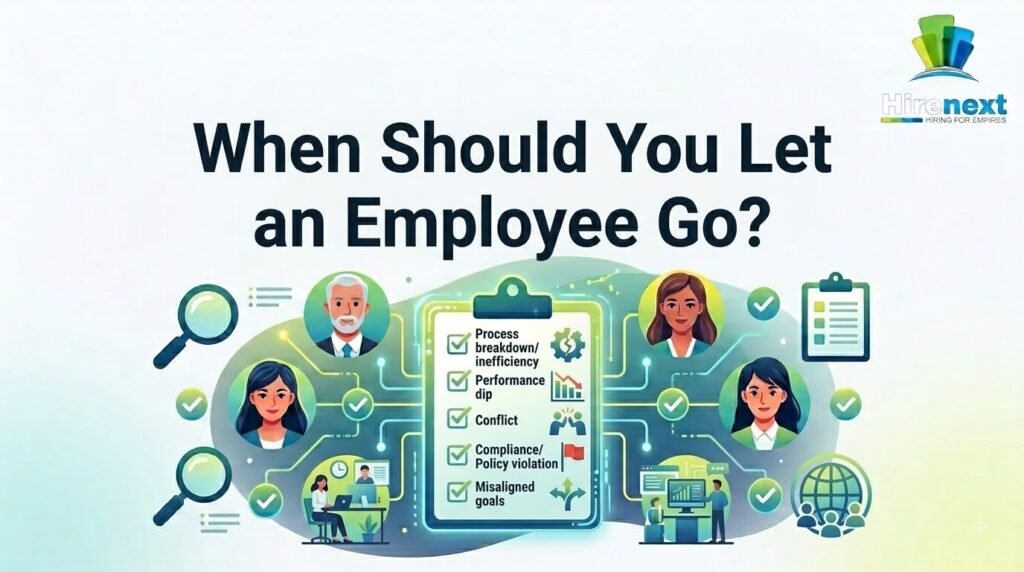
There isn’t one universal timeline.
The answer depends on:
- Severity of the problem
- Employee’s role
- Performance expectations
- Company policies
- Employment terms
- Applicable laws
- Previous feedback
- Improvement opportunities
For serious misconduct or significant policy violations, companies may need to act quickly.
For performance problems, employers may provide a reasonable improvement opportunity when appropriate.
The key is to avoid keeping an employee indefinitely simply because the company is afraid to admit that the original hiring decision was wrong.
Final Checklist for Employers
Use this quick checklist when evaluating potential signs of a bad hire:
- Are performance expectations clearly understood?
- Has the employee received appropriate training?
- Are mistakes being repeated?
- Does the employee accept responsibility?
- Do they respond constructively to feedback?
- Are deadlines regularly being missed?
- Are there repeated communication problems?
- Are there ongoing team conflicts?
- Is the employee reliable?
- Are customers being affected?
- Has productivity remained consistently low?
- Has reasonable support been provided?
- Has the employee had a fair opportunity to improve?
- Is the issue related to the employee or the role?
- Are documented examples available?
This checklist can help managers make decisions based on patterns and evidence rather than emotions.
Conclusion
Identifying the signs of a bad hire early can protect a business from unnecessary costs, productivity problems, team conflict, and customer dissatisfaction.
However, employers should avoid assuming that every struggling employee is automatically a bad hire. New employees need time, training, feedback, resources, and clear expectations.
The most important question isn’t whether an employee made a mistake.
It is whether they learn, take responsibility, respond to feedback, and improve over time.
If you’re trying to understand how to know you hired the wrong employee, look for consistent patterns rather than isolated incidents. Poor performance despite support, repeated mistakes, lack of accountability, resistance to feedback, unreliable behavior, communication problems, and persistent lack of improvement can all indicate that a hiring decision needs to be reconsidered.
At the same time, businesses should focus on preventing problems through better recruitment practices. Structured interviews, practical assessments, clear job descriptions, appropriate background verification, reference checks, and effective onboarding can help reduce recruitment mistakes before they become expensive.
Ultimately, good hiring isn’t just about finding talented people. It’s about finding the right person for the right role, setting them up for success, and recognizing early when something isn’t working.