
5 Types of Employees Every Startup Needs First
Introduction
Building a startup is exciting, but hiring the right people can determine whether that startup grows successfully or struggles to scale.
In the early stages, founders usually have limited budgets, limited resources, and a long list of responsibilities. Every new employee therefore needs to add meaningful value to the business.
This makes startup hiring very different from recruitment at an established company. Large organizations can afford specialized teams, while startups often need employees who can handle multiple responsibilities and adapt quickly.
One of the biggest questions founders face is: what roles should a startup hire first?
The answer depends on the business model, industry, current stage, and immediate priorities. However, most startups eventually need people who can build the product, generate revenue, attract customers, manage operations, and support those customers.
Hiring too early can increase costs, while hiring too late can slow growth. The goal is to create a balanced team that supports the company’s most urgent needs.
This article explores the five types of employees startups should consider hiring first, how to prioritize early recruitment, and how effective team building can create a strong foundation for long-term growth.
Table of Contents
Introduction
Why Early Hiring Decisions Matter
What Roles Should a Startup Hire First?
The Product or Technical Builder
The Sales and Business Development Employee
The Marketing and Growth Employee
The Operations and Administration Employee
The Customer Success and Support Employee
Hiring for Skills and Potential
Common Startup Hiring Mistakes
How to Decide Which Role to Hire First
Hiring Based on Business Stage
Building a Balanced Founding Team
Skills to Look for in Early Employees
Culture Fit and Team Building
When Startups Should Hire Specialists
In-House Employees vs Freelancers
Creating a Scalable Startup Hiring Process
How Recruitment Agencies Can Help Startups
How to Retain Early Employees
Give Employees Ownership
Future-Proofing Your Startup Team
Practical Startup Hiring Checklist
The Five Employee Types at a Glance
Conclusion
Why Early Hiring Decisions Matter
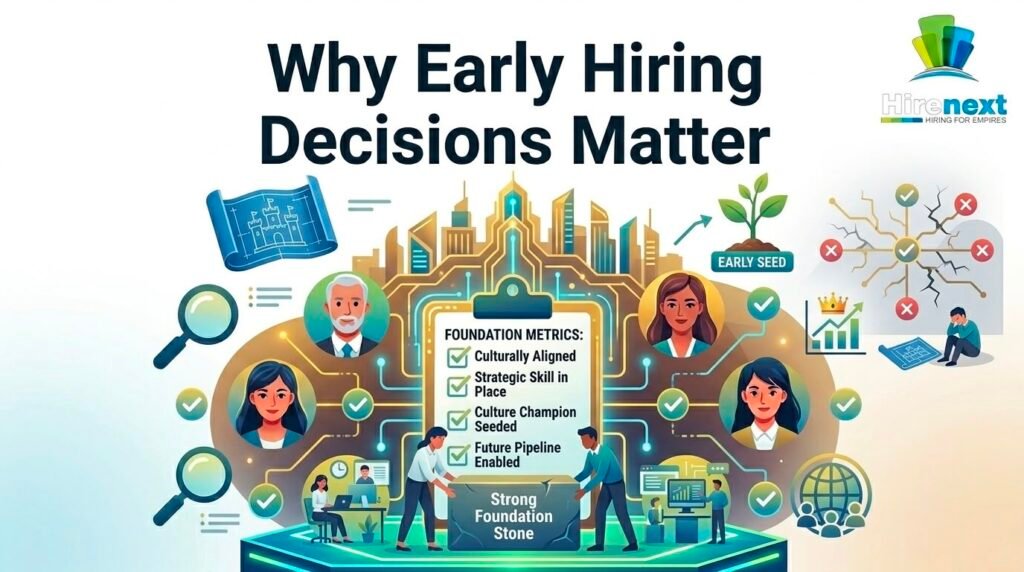
A startup’s first employees have a major influence on its future.
Early employees do more than complete assigned tasks. They often help establish:
- Company culture
- Work standards
- Communication habits
- Customer relationships
- Internal processes
This is why startup hiring should be treated as a strategic decision rather than simply a way to reduce the founder’s workload.
The wrong hire can create several problems.
For example, hiring someone who requires constant supervision can increase the founder’s workload instead of reducing it. A poor cultural match can also create conflicts within a small team.
On the other hand, the right employee can take ownership, solve problems independently, and help the business grow.
Early hiring decisions therefore have an impact far beyond the individual position startup hiring.
What Roles Should a Startup Hire First?
There is no universal hiring sequence that works for every startup.
A SaaS company may need a technical developer first, while a service-based startup may need sales professionals.
An ecommerce startup might prioritize marketing and operations, while a hospitality startup may need customer-facing employees.
Instead of asking only, “Which job title should we hire first?”, founders should ask:
“What is currently stopping the business from growing?”
If product development is slowing down, hire technical talent.
If there are no customers, prioritize sales.
If customers are arriving but operations are becoming chaotic, hire operations support.
If the business has customers but struggles with retention, customer success may become the priority.
This approach makes startup hiring more practical and aligned with business needs.
However, five employee categories are especially valuable for many growing startups.
1. The Product or Technical Builder
For startups developing a technology product, technical talent can be one of the earliest and most important hires.
This employee may be responsible for:
- Product development
- Software development
- Technical problem-solving
- Product improvements
- System maintenance
- Technology implementation
In a technology startup, the product is often the foundation of the business.
Without a strong technical person, founders may struggle to transform an idea into a functional product.
However, startups should avoid hiring purely based on technical qualifications.
Early-stage employees need more than technical expertise.
They should ideally demonstrate:
- Problem-solving
- Adaptability
- Ownership
- Communication
- Curiosity
- Ability to work independently
A startup environment changes quickly.
The person who works on product development today may need to help solve customer problems tomorrow.
Therefore, flexibility is an important consideration in startup hiring.
Why Technical Employees Need a Startup Mindset
Working for a startup can be very different from working for a large technology company.
Startups may not have:
- Large engineering departments
- Extensive documentation
- Dedicated project managers
- Specialized technical teams
Early technical employees often need to work independently.
They may have to make decisions with incomplete information and quickly adapt when priorities change.
Founders should therefore evaluate both technical ability and mindset.
A candidate who is technically excellent but unwilling to take ownership may not be ideal for an early-stage startup.
2. The Sales and Business Development Employee
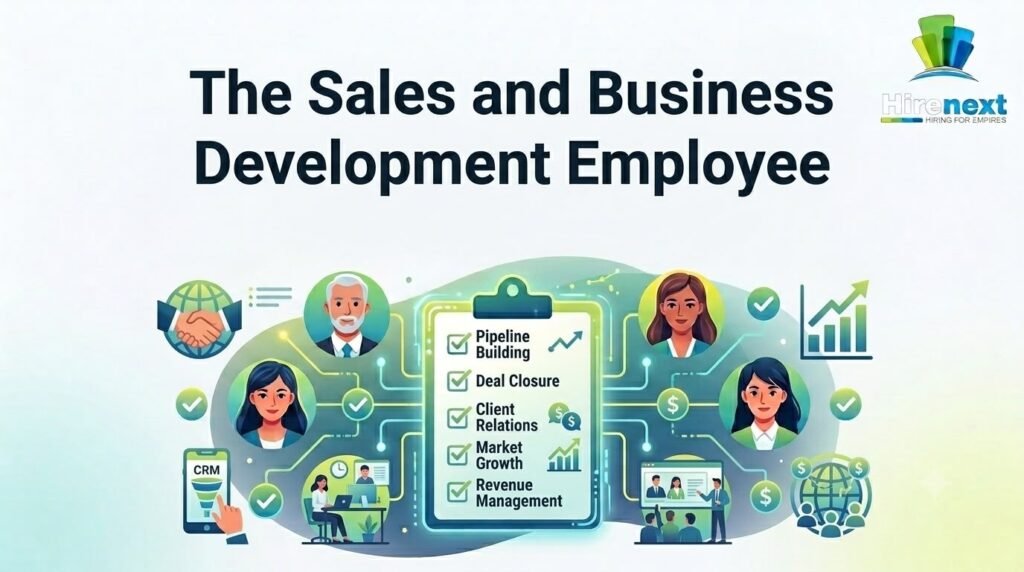
A great product cannot build a successful business without customers.
This makes sales one of the most important areas of startup hiring.
A sales or business development professional can help with:
- Lead generation
- Prospecting
- Client communication
- Product demonstrations
- Negotiation
- Closing deals
- Partnership development
For many startups, revenue is the biggest growth challenge.
Founders may initially handle sales themselves. This is often useful because it helps them understand customers directly.
But as the company grows, founders may need someone who can build a repeatable sales process startup hiring.
What to Look for in an Early Sales Hire
Startups should look beyond resumes when hiring sales professionals.
Important qualities include:
Communication
The employee must communicate value clearly.
Listening
Good salespeople understand customer problems before trying to sell.
Persistence
Rejection is a normal part of sales.
Adaptability
Early sales processes change frequently.
Confidence
Salespeople need to communicate with different types of customers.
Customer Understanding
The best sales professionals focus on solving problems rather than simply pushing products.
A strong sales hire can directly influence startup revenue.
3. The Marketing and Growth Employee
Once a startup has a product and begins developing its sales process, marketing becomes essential for creating awareness and generating demand.
A marketing and growth employee can work on:
- Social media
- Search engine optimization
- Content marketing
- Paid advertising
- Email marketing
- Lead generation
- Brand awareness
- Website optimization
However, startups should be careful about hiring someone who only knows how to post content.
Early-stage marketing often requires a broader skill set.
A strong growth employee should understand how marketing connects to business outcomes.
They should be able to think about:
Awareness → Traffic → Leads → Customers → Retention
This broader perspective makes marketing a valuable part of startup hiring.
Why Growth Employees Need to Be Data-Aware
Marketing decisions should not always be based on personal opinions.
Early marketing employees should ideally understand basic metrics such as:
- Website traffic
- Conversion rates
- Lead generation
- Cost per lead
- Customer acquisition cost
- Engagement
- Return on advertising spend
They don’t necessarily need to be data scientists.
However, they should be comfortable using data to understand what is working and what needs improvement.
This allows startups to make better marketing decisions with limited budgets.
4. The Operations and Administration Employee
Founders often underestimate the importance of operations.
As a startup grows, small administrative responsibilities can quickly become major distractions.
Operations employees may help manage:
- Internal processes
- Scheduling
- Documentation
- Vendor coordination
- Administrative work
- Recruitment support
- Inventory
- Daily workflow
The exact responsibilities depend on the startup’s industry startup hiring.
The main objective is simple:
Keep the business running efficiently.
Why Operations Matter in a Startup
Founders often begin by doing everything themselves.
They may manage:
- Sales
- Hiring
- Customer support
- Finance
- Vendors
- Marketing
- Operations
This may work when there are only a few customers.
But eventually, the founder becomes a bottleneck.
A capable operations employee can take ownership of recurring responsibilities and create systems that make the company more organized.
This allows founders to spend more time on strategic activities startup hiring.
5. The Customer Success and Support Employee
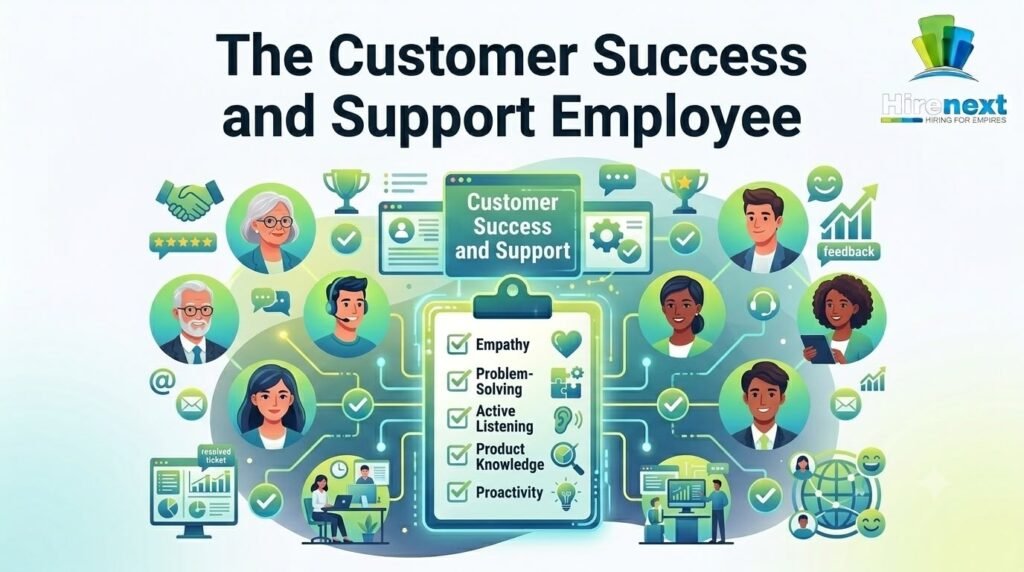
Getting customers is only one part of business growth.
Keeping them is equally important.
Customer success and support employees help organizations:
- Respond to customer questions
- Resolve problems
- Improve customer satisfaction
- Collect feedback
- Reduce churn
- Build customer relationships
For subscription businesses, SaaS companies, service providers, and customer-focused startups, this role can become extremely valuable.
Why Customer Feedback Matters for Startups
Early customers provide valuable information.
They can explain:
- What they like
- What frustrates them
- What features they need
- Why they might leave
- What competitors offer
A customer success employee can organize this feedback and communicate it to product, marketing, and leadership teams.
This creates a feedback loop:
Customer → Support → Feedback → Product Improvement → Better Customer Experience
That loop can become an important competitive advantage.
Hiring for Skills and Potential
One of the most important principles of startup hiring is understanding that resumes do not tell the complete story.
Startups should evaluate candidates based on:
- Skills
- Experience
- Problem-solving
- Learning ability
- Adaptability
- Ownership
- Communication
An employee who has worked only in large organizations may have impressive experience but may struggle in a startup environment.
Similarly, a candidate with less experience may perform exceptionally well if they are adaptable, proactive, and willing to learn.
Founders should therefore evaluate potential alongside experience.
The Importance of Adaptability
Startups change constantly.
A company’s:
- Product
- Target customer
- Pricing
- Marketing strategy
- Business model
can change within months.
Employees who require fixed responsibilities may struggle.
Early employees should be comfortable with uncertainty.
They may need to say:
“That’s not technically my responsibility, but I’ll figure it out.”
This mindset is extremely valuable during early startup hiring.
Common Startup Hiring Mistakes
Founders can make several mistakes when building their first team.
Hiring Too Quickly
Urgency should not replace proper evaluation.
A bad hire can cost more time than leaving a position vacant temporarily.
Hiring Based Only on Credentials
A strong degree or impressive company name does not guarantee startup success.
Hiring Friends Without Evaluation
Personal relationships should not replace professional assessment.
Ignoring Cultural Fit
Technical skills matter, but employees also need to work effectively with the existing team.
Hiring Too Many People Too Early
Startups need to control costs.
Every employee should have a clear business purpose.
Failing to Define Responsibilities
Unclear roles create confusion and overlapping responsibilities.
A strong hiring process should clearly define what success looks like for every position.
Building the First Startup Team
The first employees should complement the founders rather than simply duplicate their skills.
For example, if a founder is excellent at product development but weak in sales, the first major hire may need to strengthen sales.
This creates a more balanced team.
Effective team building means understanding:
- What the founders are good at
- What the founders struggle with
- What the business needs
- What skills are missing
The best early team is not necessarily the largest team.
It is the team with the right combination of capabilities.
How to Decide Which Role to Hire First
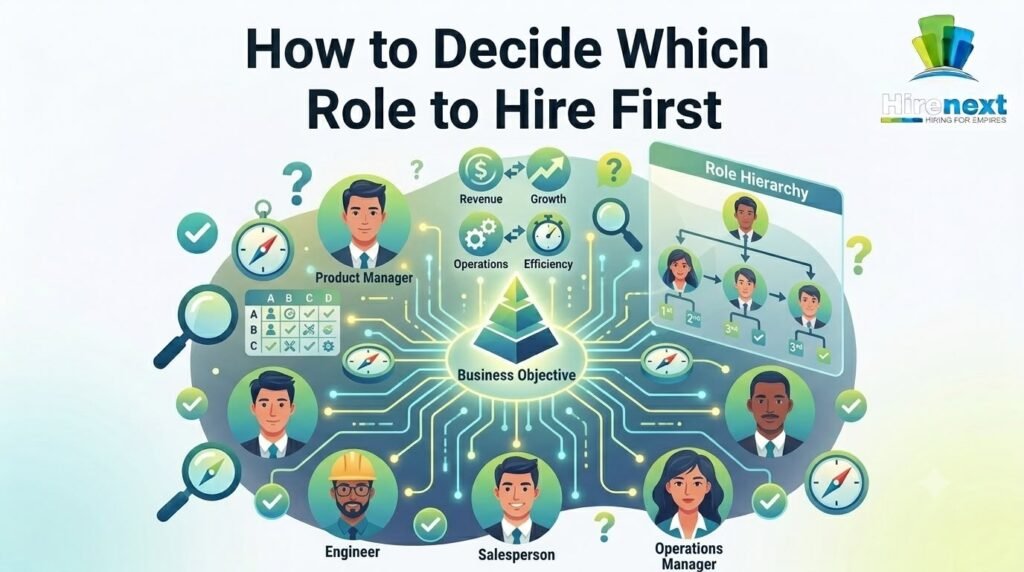
There is no universal formula for deciding which employee a startup should hire first. The right decision depends on the company’s current stage, business model, revenue, workload, and immediate growth challenges.
Before starting startup hiring, founders should identify the biggest bottleneck in the business.
Ask:
- What task is taking most of the founder’s time?
- What activity is directly affecting revenue?
- Which responsibility is currently being neglected?
- What skill is missing from the existing team?
- What role could create the biggest business impact?
For example, a startup struggling to build its product may need technical talent first. A company with a strong product but few customers may need sales or marketing support.
The goal should be to hire based on business priorities rather than simply following a standard list of job titles.
Hiring Based on Business Stage
The right hiring strategy changes as a startup grows.
Idea Stage
At the idea stage, founders should generally avoid building a large team.
They may need only a few people with essential capabilities.
The focus should be on:
- Validating the idea
- Understanding customers
- Developing the initial product
- Testing demand
Early Revenue Stage
Once a startup begins generating revenue, hiring priorities can change.
Sales, marketing, customer support, and operations may become more important.
At this stage, startup hiring should focus on creating repeatable processes.
Growth Stage
As the business expands, startups may need specialized professionals.
Potential hires include:
- HR professionals
- Finance specialists
- Senior marketers
- Sales managers
- Product managers
- Operations managers
Hiring should gradually move from generalists toward specialists as complexity increases.
Building a Balanced Founding Team
A successful startup team needs complementary skills.
If everyone has the same strengths, important areas of the business may be ignored.
For example, a team made up entirely of technical employees may build an excellent product but struggle to sell it.
Likewise, a team focused entirely on sales may generate customers without having the operational capacity to serve them.
Strong team building involves combining different capabilities.
A balanced startup team may include strengths across:
- Product
- Sales
- Marketing
- Operations
- Customer success
- Finance
- Leadership
The exact structure depends on the company.
Skills to Look for in Early Employees
Founders should evaluate more than technical qualifications during startup hiring.
Some skills are especially valuable in early-stage environments.
Adaptability
Employees should be comfortable with changing priorities.
Problem-Solving
Startups frequently encounter problems without obvious solutions.
Communication
Small teams require clear and frequent communication.
Ownership
Employees should take responsibility instead of waiting for instructions.
Time Management
Early employees often manage multiple priorities.
Collaboration
Employees need to work across different functions.
Learning Ability
Startups evolve quickly, making continuous learning essential.
Culture Fit and Team Building
Culture fit is particularly important during early startup hiring because the first employees influence the company’s future workplace environment.
Early employees establish informal standards around:
- Communication
- Accountability
- Work ethic
- Collaboration
- Decision-making
However, culture fit should not mean hiring people who all think alike.
Instead, founders should look for candidates who share the company’s core values while bringing different perspectives and experiences.
This creates stronger team building and reduces the risk of creating a workplace where everyone approaches problems in exactly the same way.
When Startups Should Hire Specialists
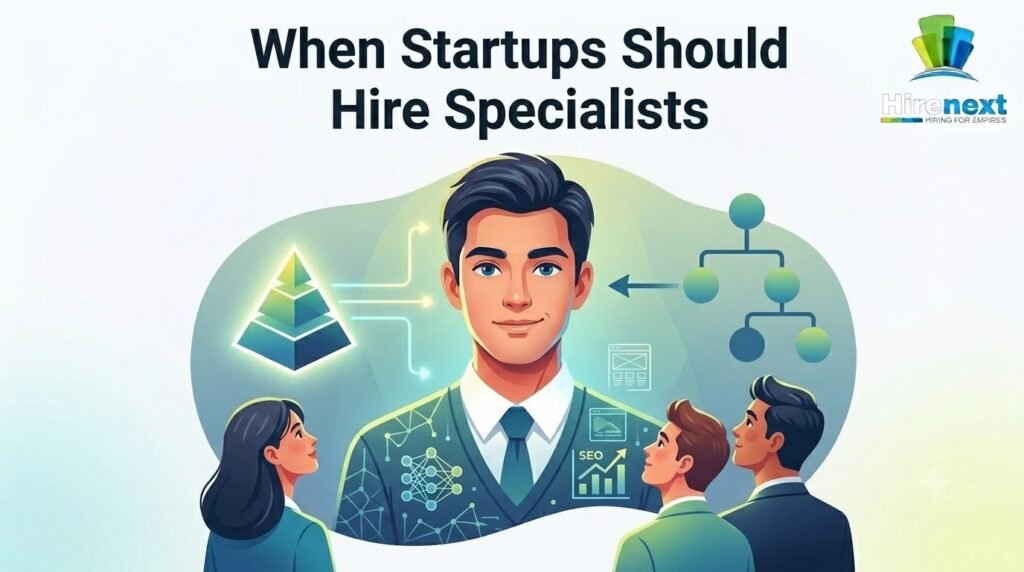
Early startups often benefit from versatile generalists.
But as the business grows, specialized expertise becomes increasingly valuable.
A startup may eventually need specialists in:
- Performance marketing
- SEO
- Finance
- Human resources
- Software engineering
- Sales management
- Customer success
The transition from generalists to specialists should happen when the complexity of the business requires deeper expertise.
Hiring specialists too early can increase costs without providing enough value.
In-House Employees vs Freelancers
Startups don’t always need to hire full-time employees for every function.
Depending on the role, founders may consider:
- Freelancers
- Consultants
- Contractors
- Part-time professionals
- Recruitment agencies
These options can be useful for specialized or project-based work.
For example, a startup may use a freelance designer before hiring a full-time creative employee.
Similarly, a company might work with an external accountant before building an internal finance department.
This approach allows founders to control startup hiring costs while accessing specialized expertise.
Creating a Scalable Startup Hiring Process
Hiring should become more structured as a startup grows.
A basic hiring process should include:
1. Define the Role
Clearly identify responsibilities and expected outcomes.
2. Create a Job Description
Explain the role, required skills, expectations, and benefits.
3. Source Candidates
Use:
- Job platforms
- Employee referrals
- Professional communities
- Recruitment agencies
4. Screen Applications
Evaluate candidates based on relevant skills and experience.
5. Conduct Structured Interviews
Ask candidates consistent questions related to the position.
6. Evaluate Skills
Use practical tasks or assessments when appropriate.
7. Check References
Reference checks can provide additional context.
8. Make the Offer
Clearly communicate salary, benefits, responsibilities, and expectations.
9. Onboard the Employee
A strong onboarding process helps new employees become productive faster.
A structured process makes startup hiring more consistent and scalable.
How Recruitment Agencies Can Help Startups
Finding the right employee can consume significant founder time.
Recruitment agencies can support startups by handling parts of the hiring process.
They may assist with:
- Candidate sourcing
- Resume screening
- Initial interviews
- Talent mapping
- Candidate communication
- Shortlisting
This can allow founders to focus on product development, customers, sales, and strategy.
For startups without dedicated HR teams, external recruitment support can be particularly useful.
How to Retain Early Employees
Hiring the right people is only the beginning.
Startups also need to create an environment where employees want to stay.
Early employees often value:
- Growth opportunities
- Learning
- Recognition
- Meaningful responsibilities
- Flexible working
- Strong leadership
- Positive workplace culture
Founders should communicate regularly with employees and understand their career goals.
Retention is especially important because losing an early employee can have a significant impact on a small team.
Give Employees Ownership
One of the strongest advantages of working at a startup is the opportunity to make an impact.
Employees should be given meaningful responsibilities rather than being treated only as task executors.
Ownership can include:
- Managing projects
- Making decisions
- Developing processes
- Communicating with customers
- Suggesting improvements
When employees see the direct impact of their work, engagement can increase.
Future-Proofing Your Startup Team
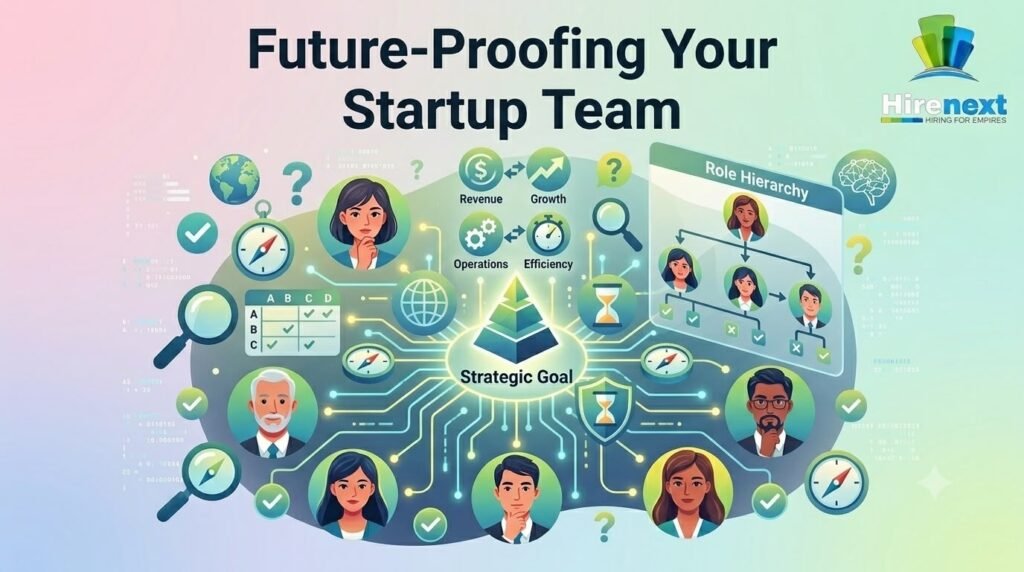
Successful startup hiring should not focus only on current needs.
Founders should also think about where the business is going.
Consider:
- What skills will we need next year?
- Which roles will become more important as we grow?
- Which responsibilities can technology automate?
- Which employees can develop into future leaders?
Hiring people with learning ability and adaptability can help startups prepare for future challenges.
Practical Startup Hiring Checklist
Before hiring your next employee, ask:
☑ Is this role solving a genuine business problem?
☑ Can we financially support the hire?
☑ Have we clearly defined responsibilities?
☑ Do we know what success looks like?
☑ Are we evaluating practical skills?
☑ Does the candidate demonstrate adaptability?
☑ Can they work independently?
☑ Will they contribute positively to team culture?
☑ Have we structured the interview process?
☑ Do we have an onboarding plan?
These questions can help founders make better recruitment decisions.
The Five Employee Types at a Glance
While every startup is different, the five categories discussed in this guide provide a useful starting framework:
- Product or Technical Builder – Builds and improves the core product.
- Sales and Business Development Employee – Generates revenue and develops business opportunities.
- Marketing and Growth Employee – Builds awareness, generates leads, and supports customer acquisition.
- Operations and Administration Employee – Keeps internal processes organized and efficient.
- Customer Success and Support Employee – Builds customer relationships and improves retention.
The priority of these roles can change depending on the startup’s stage and immediate needs.
Conclusion
The question of what roles should a startup hire first does not have one universal answer.
Every startup has different goals, challenges, resources, and growth priorities. The most effective approach is to identify the business’s biggest bottleneck and hire someone who can solve it.
The right early employees can help startups build products, generate revenue, attract customers, manage operations, and create strong customer relationships.
At the same time, successful team building requires more than simply hiring talented individuals. Founders need to create a team with complementary skills, shared values, adaptability, and a willingness to take ownership.
Startups should also avoid common mistakes such as hiring too quickly, prioritizing credentials over capabilities, hiring too many people too early, or failing to define responsibilities.
As the company grows, hiring strategies should evolve. Generalists may be valuable during the early stages, while specialists become increasingly important as business operations become more complex.
Ultimately, effective startup hiring is about building the right team at the right time.
Founders who hire strategically can reduce unnecessary costs, improve productivity, strengthen company culture, and create a foundation for sustainable growth.
The goal isn’t to hire the most people.
It’s to hire the right people who can help the startup move forward.