
Silent Reasons Companies Reject Candidates Without Explaining
Introduction
One of the most frustrating experiences for job seekers is being rejected without receiving any explanation. You submit a well-crafted resume, prepare thoroughly for interviews, and feel confident about your performance—only to receive a rejection email or, in some cases, no response at all.
This leaves many candidates wondering what went wrong.
The truth is that companies often make hiring decisions based on multiple factors, and not all of them are communicated to applicants. Understanding the most common job rejection reasons can help candidates improve their applications, interviews, and overall job search strategy.
In this blog, we will explore the hidden job rejection reasons, discuss why recruiters reject candidates silently, and explain the key hiring decision factors that influence recruitment outcomes.
Table of Contents
- Why Companies Rarely Explain Rejections
- Understanding Job Rejection Reasons
- The Complexity of Hiring Decisions
- Why Recruiters Reject Candidates Silently
- Resume-Related Job Rejection Reasons
- Poor Job Match
- Lack of Relevant Experience
- Communication Skill Concerns
- Interview Performance Issues
- Cultural Fit Challenges
- Salary Expectation Mismatches
- Negative Online Presence
- Inconsistent Information
- Lack of Enthusiasm
- Internal Hiring Decisions
- Competition from Stronger Candidates
- Hiring Decision Factors Employers Consider
- How Candidates Can Reduce Rejection Risks
- What to Do After a Rejection
- Conclusion
Why Companies Rarely Explain Rejections
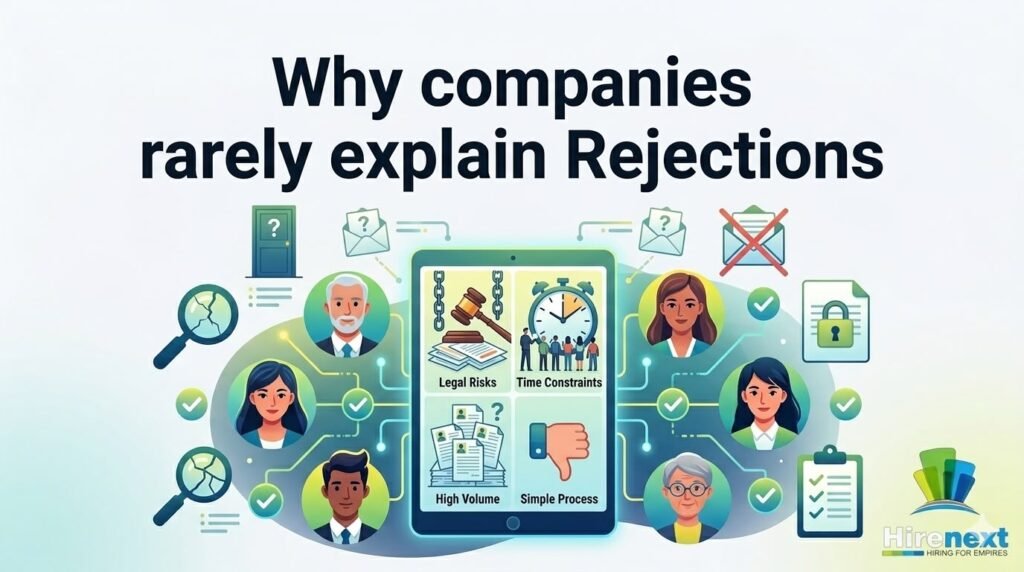
Many job seekers expect detailed feedback after a rejection. However, organizations often avoid providing specific explanations.
Reasons include:
- High application volumes
- Time constraints
- Legal considerations
- Standardized recruitment policies
- Confidential hiring processes
As a result, candidates are left guessing about the true job rejection reasons.
Understanding Job Rejection Reasons
A rejection does not always mean a candidate is unqualified.
Many job rejection reasons are unrelated to competence.
Recruiters evaluate:
- Skills
- Experience
- Cultural fit
- Salary expectations
- Team compatibility
- Long-term potential
Sometimes a candidate may be highly capable but still not be the best fit for a particular role.
The Complexity of Hiring Decisions
Recruitment is rarely based on a single factor.
Employers consider numerous hiring decision factors before making a final choice.
These may include:
- Business needs
- Team dynamics
- Budget limitations
- Organizational goals
- Future workforce planning
This complexity explains why rejection decisions are not always straightforward.
Why Recruiters Reject Candidates Silently
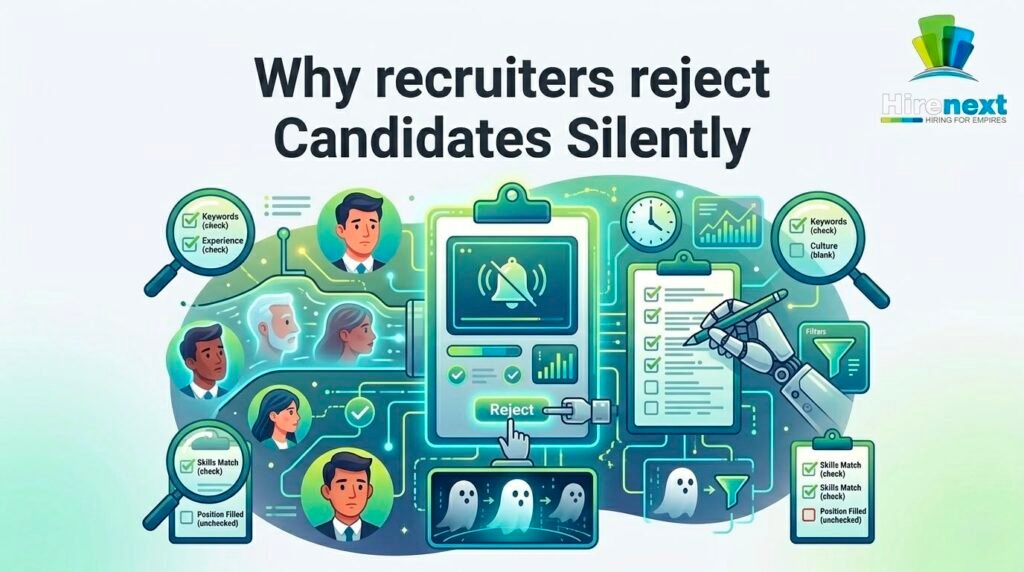
One of the most common questions among job seekers is why recruiters reject candidates silently.
Recruiters often manage hundreds of applications for a single position. Providing detailed feedback to every candidate can be impractical.
Additionally:
- Some organizations have policies against detailed rejection feedback.
- Recruiters may wish to avoid disputes.
- Companies often use automated hiring systems.
While frustrating, silent rejection is usually a result of process limitations rather than personal criticism.
Resume-Related Job Rejection Reasons
The hiring process begins with resume screening.
Common resume-related job rejection reasons include:
Generic Applications
Candidates submit the same resume to multiple jobs without customization.
Missing Keywords
Many companies use Applicant Tracking Systems (ATS) that scan resumes for specific terms.
Poor Formatting
Difficult-to-read resumes may be rejected quickly.
Unclear Achievements
Employers prefer measurable accomplishments rather than vague responsibilities.
Poor Job Match
One of the most common job rejection reasons is simply a mismatch between the candidate and the role.
Employers may determine that:
- Skills do not align with requirements.
- Experience levels differ significantly.
- Career goals conflict with the position.
Even talented candidates can face rejection due to poor role alignment.
Lack of Relevant Experience
Recruiters prioritize relevant experience over general experience.
Candidates may be rejected when:
- Industry knowledge is limited.
- Required skills are missing.
- Previous roles do not align closely with the position.
Experience relevance remains one of the strongest hiring decision factors.
Communication Skill Concerns
Strong communication is critical in most roles.
Employers evaluate:
- Verbal communication
- Written communication
- Listening skills
- Professionalism
Weak communication often becomes one of the hidden job rejection reasons.
Interview Performance Issues

Interview performance significantly impacts hiring decisions.
Common mistakes include:
- Poor preparation
- Weak answers
- Lack of confidence
- Negative body language
- Difficulty explaining achievements
A candidate may have a strong resume but still face rejection due to interview performance.
Cultural Fit Challenges
Modern organizations increasingly focus on cultural fit.
Recruiters assess:
- Team compatibility
- Workplace values
- Communication style
- Collaboration skills
A candidate who appears technically qualified may still be rejected if employers perceive a cultural mismatch.
Salary Expectation Mismatches

Compensation discussions can influence hiring outcomes.
Candidates may face rejection when:
- Salary expectations exceed budget limits.
- Compensation requirements differ significantly from company offerings.
This is one of the less obvious job rejection reasons.
Negative Online Presence
Recruiters often review online profiles before making final decisions.
Potential concerns include:
- Unprofessional social media activity
- Inappropriate public content
- Inconsistent professional information
Maintaining a professional online presence is increasingly important.
Inconsistent Information
Recruiters pay close attention to consistency.
Red flags include:
- Resume discrepancies
- Contradictory interview responses
- Employment date inconsistencies
Trust and credibility are major hiring decision factors.
Lack of Enthusiasm
Employers want candidates who genuinely want the opportunity.
Signs of low enthusiasm include:
- Minimal engagement
- Weak questions
- Lack of research
- Passive interview behavior
Enthusiasm often influences recruiter perceptions more than candidates realize.
Internal Hiring Decisions

Sometimes rejection has nothing to do with candidate performance.
Organizations may:
- Promote internal employees
- Transfer existing staff
- Freeze hiring budgets
- Change role requirements
These situations represent common but invisible job rejection reasons.
Competition from Stronger Candidates
A candidate may perform well and still face rejection.
Recruitment is competitive.
Sometimes another applicant simply offers:
- More relevant experience
- Stronger technical skills
- Better role alignment
- Greater industry expertise
This explains why rejection does not always indicate poor performance.
Hiring Decision Factors Employers Consider
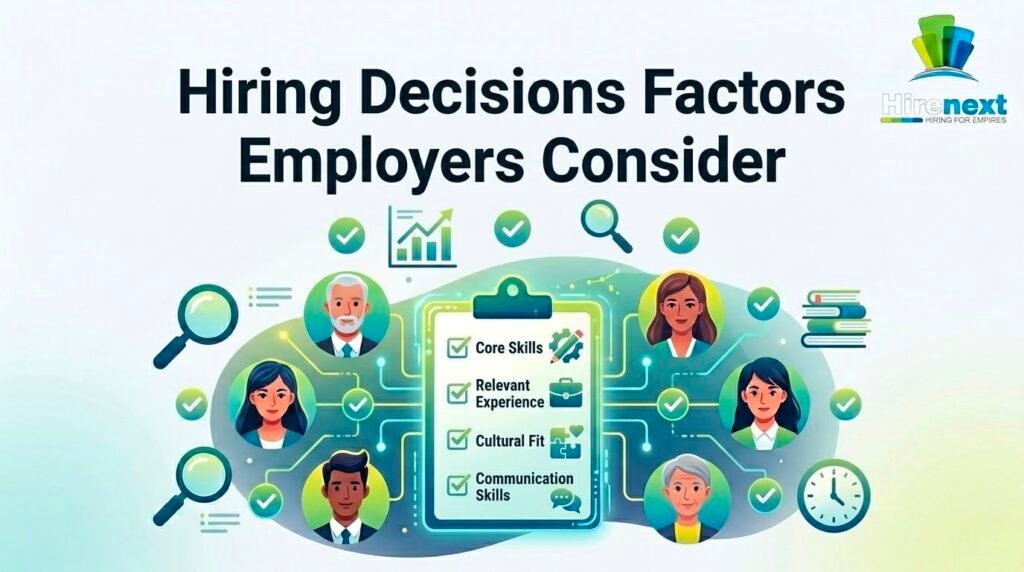
Employers evaluate multiple hiring decision factors, including:
Skills and Qualifications
Technical competence remains essential.
Experience
Relevant experience improves hiring confidence.
Communication
Professional communication influences perceptions.
Adaptability
Employers value learning ability and flexibility.
Team Fit
Collaboration potential matters.
Motivation
Commitment and enthusiasm affect decisions.
Long-Term Potential
Employers often think beyond immediate needs.
How Candidates Can Reduce Rejection Risks
While rejection is unavoidable at times, candidates can improve their chances by:
Customizing Applications
Tailor resumes and cover letters to each role.
Preparing Thoroughly
Research companies and practice interview responses.
Improving Communication
Develop strong speaking and listening skills.
Building Professional Online Profiles
Maintain a consistent professional image.
Following Up Professionally
Express appreciation after interviews.
These actions reduce many common job rejection reasons.
What to Do After a Rejection
Rejection should be viewed as a learning opportunity.
Candidates can:
- Request feedback when possible
- Analyze interview performance
- Improve skills
- Expand professional networks
- Continue applying strategically
Persistence remains essential in any job search.
Conclusion
Understanding the hidden job rejection reasons can help candidates approach recruitment more strategically. Rejections are often influenced by numerous factors beyond qualifications, including communication skills, cultural fit, salary expectations, competition, and organizational priorities.
Knowing why recruiters reject candidates silently allows job seekers to focus on improving areas within their control while recognizing that some hiring outcomes are influenced by external circumstances.
By understanding the key hiring decision factors, preparing thoroughly, and continuously improving their professional presentation, candidates can increase their chances of success and navigate the recruitment process with greater confidence.
A rejection may close one door, but it often provides valuable insights that help open the next one.