
The Science Behind First Impressions in Hiring
Introduction
In recruitment, decisions are rarely based solely on resumes, qualifications, or technical skills. Human psychology plays a significant role in how recruiters evaluate candidates, and one of the most powerful psychological factors is the concept of first impressions in hiring.
Research suggests that people often form opinions about others within seconds of meeting them. In hiring, these initial perceptions can influence how recruiters interpret responses, evaluate qualifications, and assess overall suitability for a role.
While first impressions are not the only factor in recruitment, they can significantly shape the direction of an interview and influence the overall candidate evaluation process.
Understanding the science behind first impressions in hiring can help both employers and job seekers make better recruitment decisions. Candidates can learn how to present themselves more effectively, while recruiters can become more aware of unconscious biases that may affect hiring outcomes.
In this blog, we will explore the psychology behind first impressions, discuss how first impressions affect hiring decisions, examine the role they play in the candidate evaluation process, and provide practical strategies for creating positive and lasting impressions.
Table of Contents
- What Are First Impressions in Hiring?
- Why First Impressions Matter
- The Psychology Behind First Impressions
- How the Brain Forms Rapid Judgments
- How First Impressions Affect Hiring Decisions
- First Impressions vs Qualifications
- Factors That Influence First Impressions
- Appearance and Professional Presentation
- The Role of Body Language
- Communication and Verbal Skills
- Confidence and Professional Presence
- Punctuality and Reliability
- The Halo Effect in Recruitment
- Common First Impression Mistakes Candidates Make
- The Candidate Evaluation Process and First Impressions
- Can First Impressions Be Changed?
- Tips for Creating Positive First Impressions
- How Recruiters Can Reduce Bias
- Future Trends in Hiring and Candidate Evaluation
- Conclusion
What Are First Impressions in Hiring?
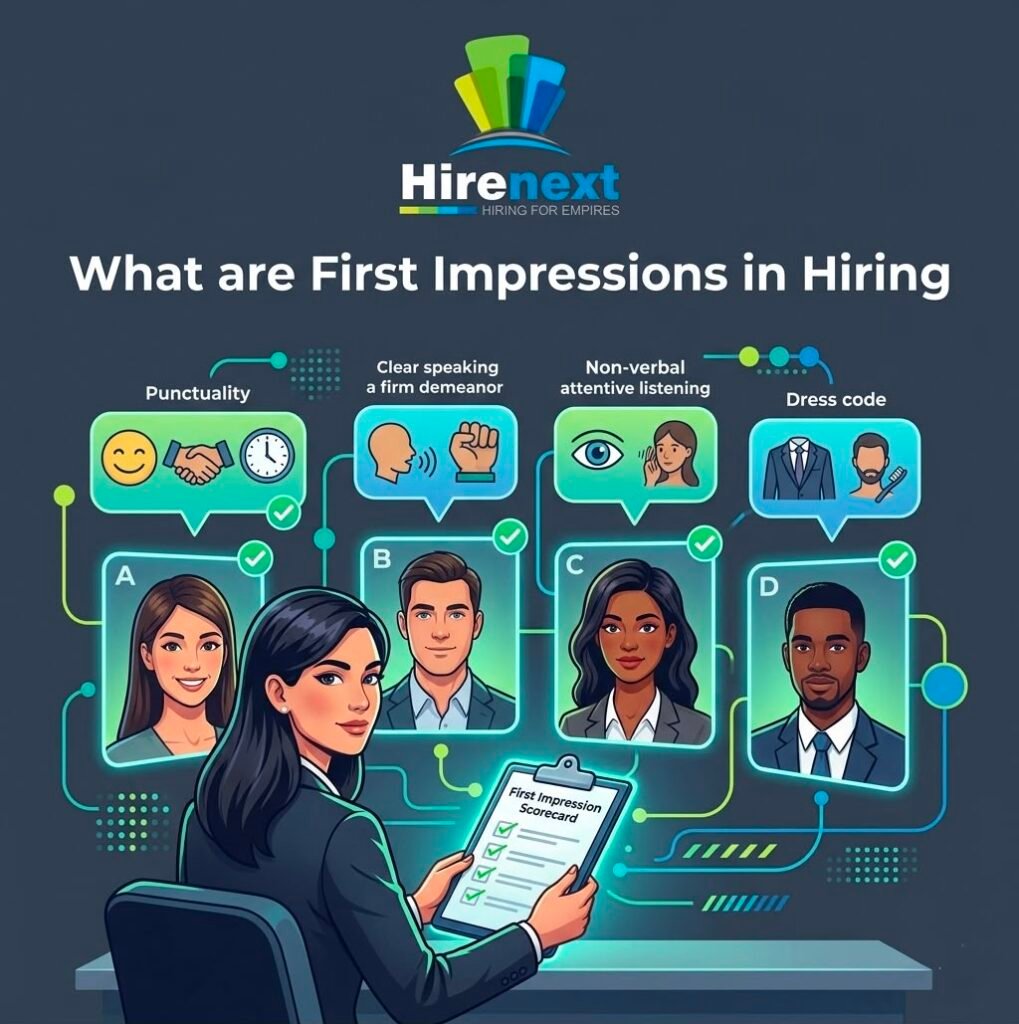
First impressions in hiring refer to the immediate perceptions recruiters form when they first interact with a candidate.
These impressions often develop before the interview fully begins and may be influenced by:
- Appearance
- Body language
- Communication style
- Confidence
- Professional behavior
- Punctuality
Although hiring decisions should be based on multiple factors, first impressions frequently influence how recruiters interpret everything that follows.
Why First Impressions Matter
First impressions matter because human beings naturally rely on quick judgments to process information efficiently.
Recruiters often interview multiple candidates within limited timeframes. As a result, early observations help them create an initial framework for evaluating applicants.
Strong first impressions in hiring can:
- Build credibility
- Create positive momentum
- Improve interviewer engagement
- Increase perceived professionalism
Negative first impressions can create challenges that candidates may spend the rest of the interview trying to overcome.
The Psychology Behind First Impressions
Psychologists have long studied how people form impressions.
Research shows that individuals make assumptions about:
- Competence
- Trustworthiness
- Intelligence
- Confidence
- Reliability
within a very short period.
These judgments occur automatically and are often influenced by both conscious and unconscious thought processes.
Understanding this psychology helps explain why first impressions in hiring play such an important role in recruitment.
How the Brain Forms Rapid Judgments
The human brain constantly processes information to make decisions quickly.
When meeting someone for the first time, the brain evaluates:
- Facial expressions
- Tone of voice
- Appearance
- Posture
- Behavior
This process helps individuals determine whether someone appears trustworthy, capable, and approachable.
In recruitment, these rapid judgments become part of the overall candidate evaluation process.
How First Impressions Affect Hiring Decisions
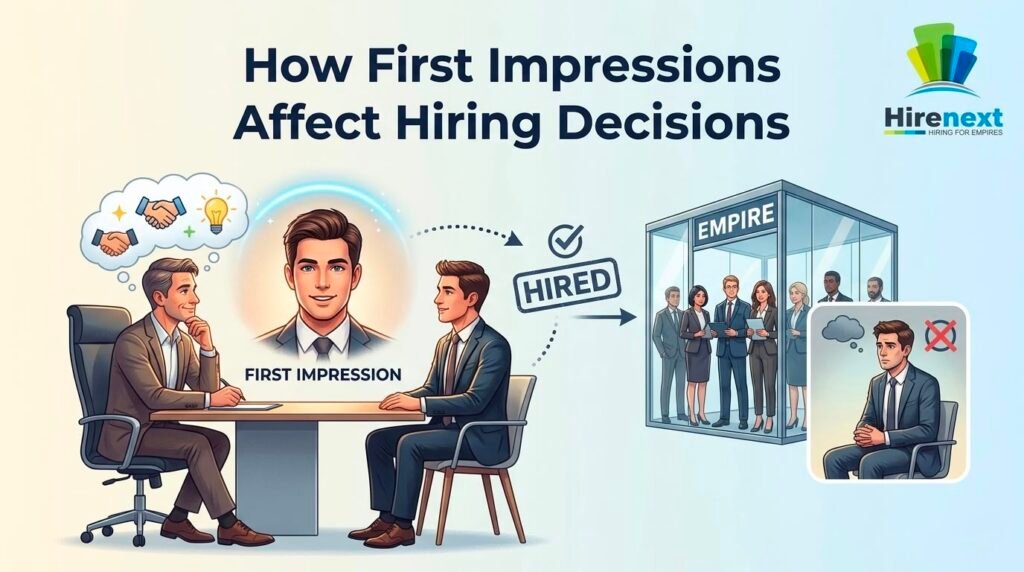
Many hiring managers may not realize how much initial impressions influence decision-making.
Studies suggest that once an interviewer forms an initial opinion, they may unconsciously seek information that supports that perception.
This explains how first impressions affect hiring decisions.
For example:
- A confident candidate may receive more positive interpretations of their responses.
- A nervous candidate may be evaluated more critically despite having strong qualifications.
This demonstrates the powerful impact of first impressions on hiring outcomes.
First Impressions vs Qualifications
Qualifications are essential, but they are not always the deciding factor.
Two candidates may possess similar:
- Education
- Certifications
- Experience
- Technical skills
Yet the candidate who creates a stronger first impression often leaves a more memorable impact.
This is why understanding first impressions in hiring is important for job seekers.
Factors That Influence First Impressions
Several factors contribute to how recruiters perceive candidates.
These include:
Professional Appearance
Body Language
Communication Skills
Confidence
Enthusiasm
Punctuality
Professional Etiquette
Each of these elements contributes to overall perception.
Appearance and Professional Presentation

Appearance is one of the first things recruiters notice.
Professional presentation demonstrates:
- Respect
- Preparation
- Attention to detail
- Workplace readiness
Candidates do not need expensive clothing, but they should ensure they appear neat, organized, and appropriate for the role.
The Role of Body Language
Body language communicates powerful messages before candidates even begin speaking.
Positive body language includes:
- Eye contact
- Good posture
- Smiling naturally
- Active engagement
Negative body language includes:
- Slouching
- Fidgeting
- Avoiding eye contact
- Closed-off posture
Strong body language enhances first impressions in hiring significantly.
Communication and Verbal Skills
Communication is one of the most important aspects of recruitment.
Recruiters evaluate:
- Clarity
- Confidence
- Listening skills
- Professional language
- Response quality
Strong communication often creates positive impressions regardless of technical expertise.
Confidence and Professional Presence
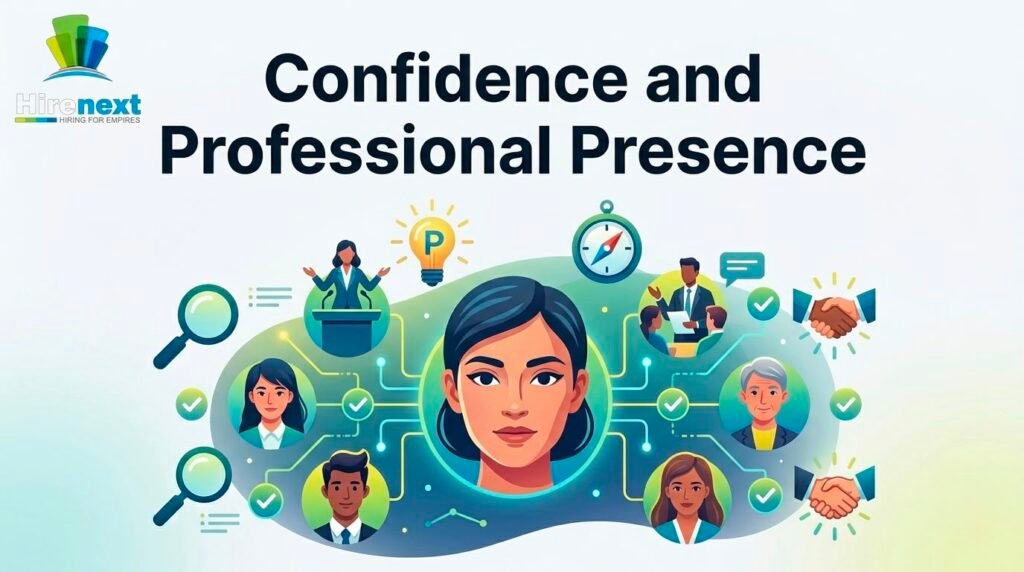
Confidence helps candidates project competence and credibility.
Confident candidates typically:
- Speak clearly
- Remain calm
- Maintain eye contact
- Answer questions thoughtfully
Confidence is often interpreted as a sign of capability and workplace readiness.
Punctuality and Reliability
Arriving on time sends a strong message about professionalism.
Recruiters often associate punctuality with:
- Responsibility
- Reliability
- Respect for others’ time
Being late can negatively impact first impressions in hiring before the interview even begins.
The Halo Effect in Recruitment
One important psychological concept affecting recruitment is the Halo Effect.
The Halo Effect occurs when one positive characteristic influences overall perception.
For example:
- A confident candidate may be viewed as more capable.
- A well-dressed candidate may be perceived as more professional.
Understanding this bias helps explain how first impressions affect hiring decisions.
Common First Impression Mistakes Candidates Make
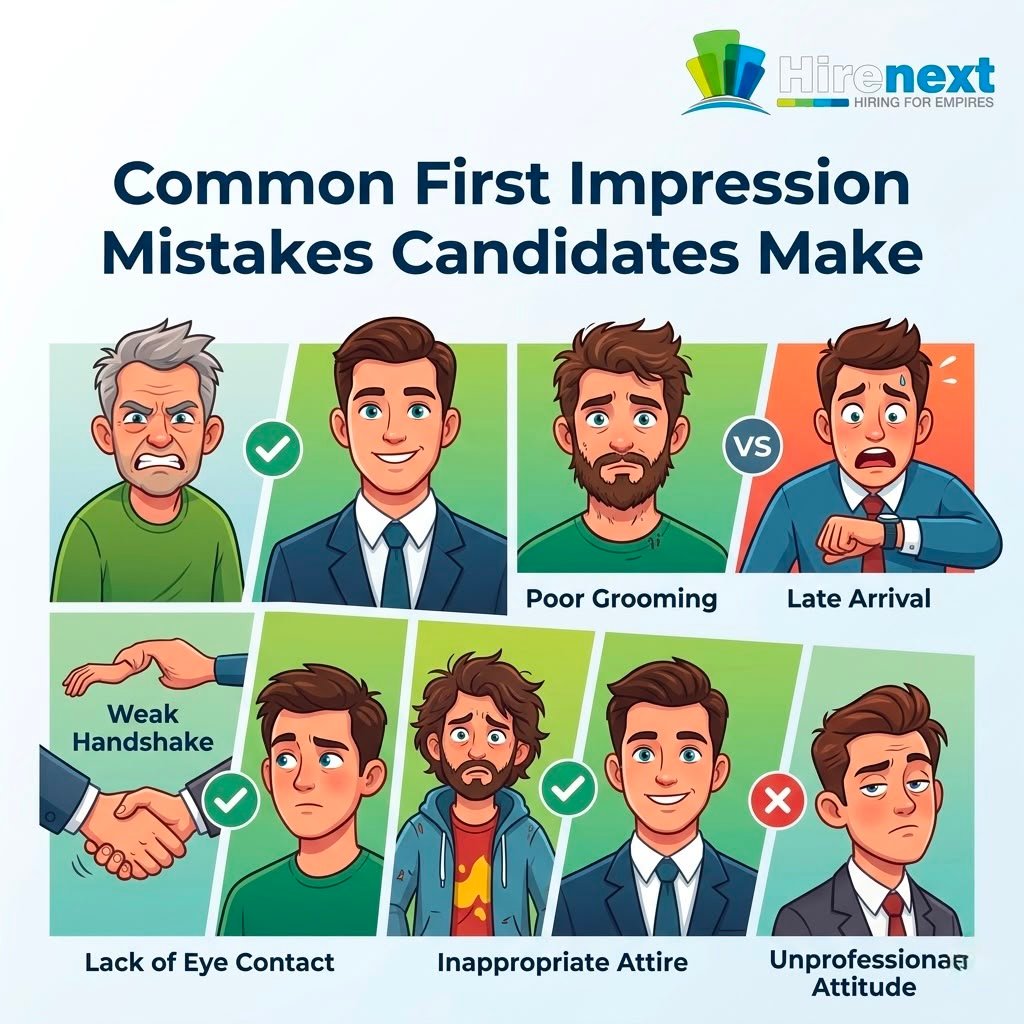
Candidates often weaken their interview performance through avoidable mistakes.
Common mistakes include:
- Arriving late
- Poor preparation
- Weak communication
- Negative body language
- Lack of enthusiasm
- Speaking negatively about previous employers
Avoiding these issues can significantly improve interview outcomes.
The Candidate Evaluation Process and First Impressions
A successful recruitment strategy should never rely solely on first impressions. While first impressions in hiring play an important role, organizations must evaluate candidates through a structured and comprehensive candidate evaluation process to make informed hiring decisions.
The purpose of the candidate evaluation process is to assess a candidate’s qualifications, skills, experience, personality, and overall suitability for a role. By combining multiple evaluation methods, recruiters can reduce bias and improve hiring accuracy.
Resume Review
The recruitment journey usually begins with a resume review.
Recruiters examine:
- Educational qualifications
- Professional experience
- Relevant skills
- Certifications
- Career progression
- Industry exposure
The resume provides the first formal introduction to a candidate. However, recruiters should avoid making final judgments based solely on a resume because documents cannot fully reflect communication skills, attitude, or cultural fit.
Skills Evaluation
After reviewing resumes, recruiters often assess a candidate’s practical abilities.
Skills evaluations may include:
- Job-specific assignments
- Problem-solving exercises
- Case studies
- Technical tests
- Software assessments
These evaluations help employers determine whether candidates possess the capabilities required to perform successfully in the role.
Behavioral Interviews
Behavioral interviews help recruiters understand how candidates have handled situations in the past.
Interviewers often ask questions related to:
- Teamwork
- Leadership
- Conflict resolution
- Time management
- Problem-solving
- Decision-making
The responses provide insights into workplace behavior and future performance potential.
Technical Assessments
For specialized roles, technical assessments play a crucial role in the candidate evaluation process.
These assessments help verify:
- Industry knowledge
- Technical expertise
- Practical competency
- Analytical skills
Technical assessments reduce the risk of hiring candidates whose qualifications may not accurately reflect their abilities.
Reference Checks
Reference checks provide additional validation of a candidate’s background and performance.
Recruiters may contact previous managers or employers to gather information about:
- Work ethic
- Professional conduct
- Reliability
- Communication skills
- Job performance
Reference checks add another layer of confidence to hiring decisions.
How First Impressions Influence the Candidate Evaluation Process
Although organizations use multiple evaluation methods, first impressions in hiring often influence how recruiters interpret later information.
For example:
- A candidate who creates a strong first impression may receive more positive interpretations of their responses.
- A candidate who appears nervous initially may be judged more critically despite having strong qualifications.
This psychological tendency is often linked to cognitive biases such as the Halo Effect, where one positive characteristic influences overall perception.
This explains how first impressions affect hiring decisions even when structured evaluation methods are in place.
Why Objective Evaluation Matters
Recognizing the influence of first impressions helps organizations improve hiring quality.
Employers can strengthen their candidate evaluation process by:
- Using standardized interview questions
- Applying consistent scoring systems
- Conducting skills-based assessments
- Involving multiple interviewers
- Evaluating evidence rather than assumptions
These practices help ensure candidates are assessed fairly and objectively.
Can First Impressions Be Changed?
Many people assume that once a first impression is formed, it cannot be changed. While first impressions are powerful, they are not permanent.
In reality, candidates have multiple opportunities throughout the hiring process to reshape perceptions and strengthen their overall evaluation.
A weak first impression may create an initial challenge, but a strong interview performance can often overcome it.
Demonstrating Expertise
One of the most effective ways to improve perceptions is by showcasing relevant knowledge and expertise.
Candidates who:
- Provide thoughtful answers
- Demonstrate industry knowledge
- Share relevant achievements
- Solve problems effectively
can quickly build credibility with interviewers.
Strong expertise often helps shift attention away from an initially weak impression.
Communicating Effectively
Communication plays a major role in changing recruiter perceptions.
Candidates who:
- Speak clearly
- Organize their thoughts
- Explain experiences effectively
- Listen actively
often create stronger connections with interviewers as the conversation progresses.
Improved communication can significantly influence how first impressions affect hiring decisions over time.
Showing Enthusiasm
Genuine enthusiasm can positively impact recruiter perceptions.
Employers appreciate candidates who:
- Show interest in the role
- Ask thoughtful questions
- Display energy and motivation
- Demonstrate a willingness to learn
Enthusiasm signals commitment and often helps candidates build rapport with interviewers.
Building Rapport
Recruitment is ultimately a human process.
Candidates who establish positive relationships with interviewers often improve their overall evaluation.
Building rapport involves:
- Active listening
- Professional friendliness
- Respectful communication
- Genuine engagement
Strong rapport helps create trust and encourages more positive interactions.
Consistency Throughout the Interview
Changing a first impression requires consistency.
Candidates who maintain professionalism, confidence, and engagement throughout the interview are more likely to improve recruiter perceptions.
One strong answer may not be enough, but consistent performance often reshapes overall evaluations.
When Strong Performance Changes Perceptions
There are many situations where candidates successfully overcome weak first impressions.
Examples include:
- Initial nervousness followed by confident responses
- Technical expertise demonstrated through assessments
- Strong problem-solving abilities during discussions
- Excellent communication later in the interview
These examples show that first impressions influence recruitment but do not determine the final outcome.
The Importance of Looking Beyond First Impressions
For employers, understanding that first impressions can change is equally important.
Organizations that rely too heavily on initial perceptions may overlook talented candidates who simply needed more time to become comfortable.
A balanced candidate evaluation process allows recruiters to consider the complete picture rather than relying solely on early impressions.
Ultimately, while first impressions in hiring can shape recruiter perceptions, they should never replace comprehensive candidate assessment. A strong overall performance, combined with effective communication, expertise, and professionalism, can often transform an average first impression into a successful hiring outcome.
Tips for Creating Positive First Impressions
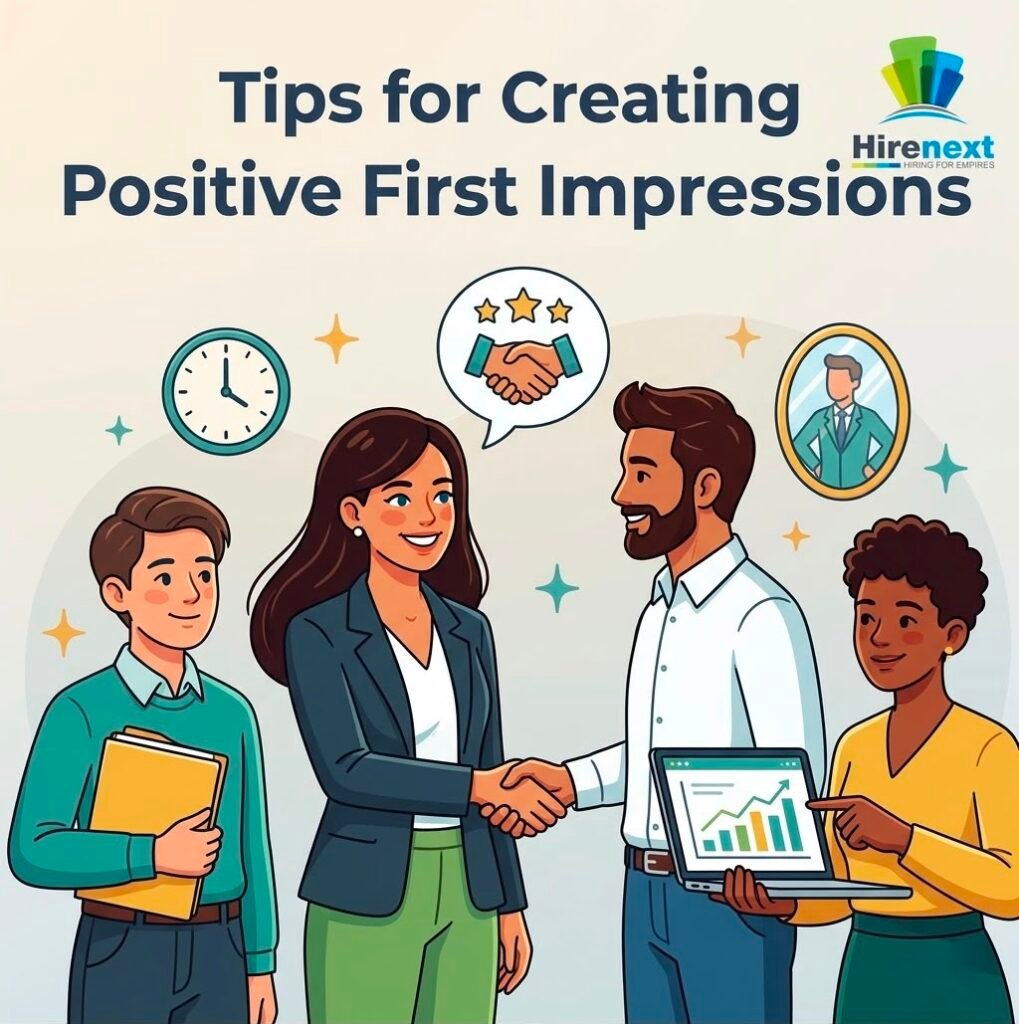
Candidates can strengthen first impressions in hiring by:
1. Researching the Company
Preparation demonstrates genuine interest.
2. Arriving Early
Punctuality reflects professionalism.
3. Dressing Appropriately
Professional appearance creates credibility.
4. Practicing Communication
Clear responses improve confidence.
5. Maintaining Positive Body Language
Nonverbal communication influences perception.
6. Showing Enthusiasm
Employers appreciate motivated candidates.
How Recruiters Can Reduce Bias
Recruiters should recognize that first impressions can sometimes create unconscious bias.
Organizations can improve fairness by:
- Using structured interviews
- Applying standardized evaluation criteria
- Conducting skills assessments
- Training hiring teams on bias awareness
These practices strengthen the overall candidate evaluation process.
Future Trends in Hiring and Candidate Evaluation

Recruitment continues evolving through technology and data-driven decision-making.
Future trends include:
1. AI-Assisted Screening
Technology will support objective evaluations.
2. Skills-Based Hiring
Employers will increasingly focus on demonstrated abilities.
3. Structured Interviews
Organizations will reduce reliance on subjective judgments.
4. Data-Driven Recruitment
Analytics will improve hiring accuracy.
Despite these changes, first impressions in hiring will continue influencing human interactions during recruitment.
Conclusion
The science behind first impressions in hiring demonstrates how quickly recruiters form perceptions about candidates. These impressions are influenced by appearance, communication, body language, confidence, and professionalism.
Understanding how first impressions affect hiring decisions helps candidates prepare more effectively while encouraging employers to create fairer hiring systems.
Although qualifications and skills remain essential, the way candidates present themselves often shapes how those qualifications are perceived. By improving communication, preparation, and professional presence, candidates can create stronger first impressions and improve their chances of success.
In modern recruitment, first impressions may last only a few seconds to form—but their impact can influence the entire hiring decision.