
How to Build Professional Communication Skill
Communication is one of the most powerful skills you can develop in your career. Whether you are a fresher or an experienced professional, your ability to express ideas clearly, confidently, and professionally can define your growth. Many people struggle not because they lack knowledge, but because they don’t know how to improve communication skills effectively.
The truth is, communication is not just about speaking—it is about listening, understanding, responding, and presenting yourself in a professional manner. If you truly learn how to improve communication skills, you can build confidence, create better relationships, and unlock faster career opportunities.
This detailed guide will help you understand how to improve communication skills step by step, especially in a professional environment.
Table of Contents
- Why Communication Skills Matter
- What Is Professional Communication
- Common Communication Problems People Face
- Build the Right Mindset First
- How to Speak Professionally at Work
- Improve Verbal Communication
- Improve Listening Skills
- Improve Written Communication
- Body Language and Non-Verbal Communication
- Confidence Building Tips for Better Communication
- How to Communicate with Managers
- How to Communicate with Team Members
- Communication Mistakes to Avoid
- Daily Habits to Improve Communication Skills
- Tools and Techniques to Practice
- Long-Term Strategy for Growth
- Conclusion
Why Communication Skills Matter
Your communication defines how people perceive you. If you know how to improve communication skills, you can:
- Express ideas clearly
- Build strong relationships
- Gain trust from managers
- Reduce misunderstandings
- Perform better in interviews and meetings
Many talented people fail to grow because they don’t know how to improve communication skills.
What Is Professional Communication?
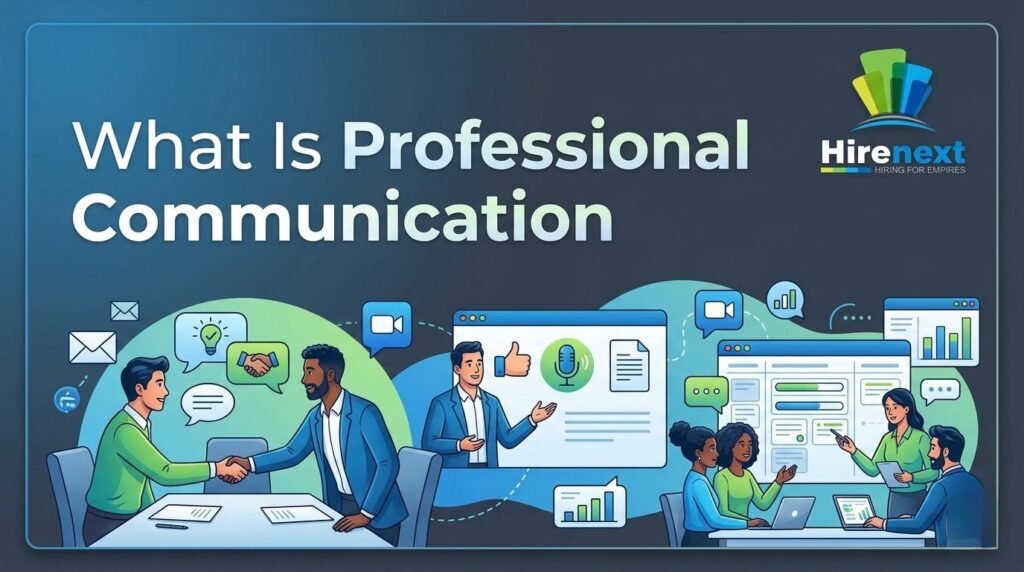
Professional communication means expressing your thoughts clearly, respectfully, and appropriately in a work environment.
It includes:
- Verbal communication (speaking)
- Written communication (emails, chats)
- Non-verbal communication (body language)
- Listening skills
Understanding this is the first step in learning how to improve communication skills.
Common Communication Problems People Face
Before improving, you must identify problems.
Common issues include:
- Lack of confidence
- Fear of speaking
- Poor vocabulary
- Unclear sentences
- Overthinking
- Weak listening skills
Recognizing these problems helps you focus on how to improve communication skills effectively.
Build the Right Mindset First
Communication improvement starts from mindset.
If you want to learn how to improve communication skills, remember:
- You don’t need perfect English
- Mistakes are part of learning
- Confidence grows with practice
- Consistency matters more than talent
A strong mindset is the base of communication growth.
How to Speak Professionally at Work
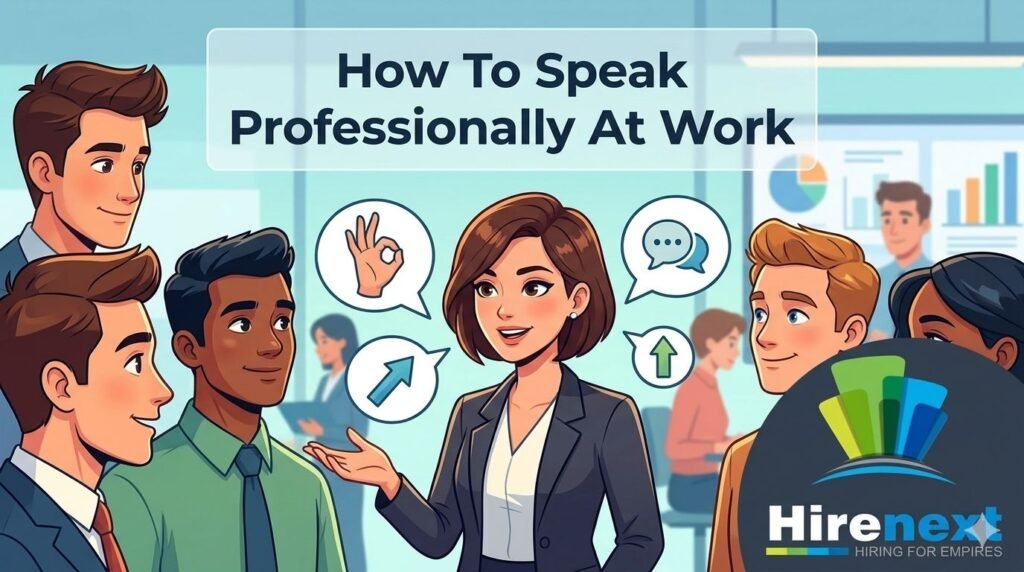
Many people ask how to speak professionally at work. The answer is simple: clarity + respect + confidence.
Tips:
- Speak slowly and clearly
- Use simple words
- Avoid slang in formal situations
- Be respectful in tone
- Stay to the point
Professional speaking is a key part of how to improve communication skills.
Improve Verbal Communication
To improve speaking:
- Practice daily conversations
- Record your voice
- Work on pronunciation
- Read aloud
- Speak in front of a mirror
Verbal practice is essential when learning how to improve communication skills.
Improve Listening Skills
Good communication is incomplete without listening.
To improve listening:
- Focus fully on the speaker
- Avoid interrupting
- Take notes if needed
- Ask questions to confirm understanding
Listening helps you respond better, which is crucial for how to improve communication skills.
Improve Written Communication
Written communication is important in emails and chats.
Tips:
- Keep messages clear and short
- Avoid grammar mistakes
- Use proper formatting
- Proofread before sending
- Maintain professional tone
Strong writing is a major part of how to improve communication skills.
Body Language and Non-Verbal Communication

Your body speaks before you do.
Important points:
- Maintain eye contact
- Keep posture straight
- Use natural hand gestures
- Smile when appropriate
Non-verbal signals improve overall communication impact.
Confidence Building Tips for Better Communication
Confidence is the backbone of communication.
Confidence building tips:
- Practice speaking daily
- Start with small conversations
- Stop overthinking
- Accept mistakes
- Prepare before speaking
- Focus on clarity, not perfection
Confidence plays a huge role in how to improve communication skills.
How to Communicate with Managers
Talking to managers requires professionalism.
Tips:
- Be clear and concise
- Respect time
- Give updates regularly
- Ask relevant questions
- Avoid unnecessary details
Professional interaction improves career growth.
How to Communicate with Team Members
Team communication should be clear and cooperative.
- Be polite
- Share information openly
- Avoid misunderstandings
- Support team discussions
- Respect opinions
Team communication is a practical way to apply how to improve communication skills.
Communication Mistakes to Avoid
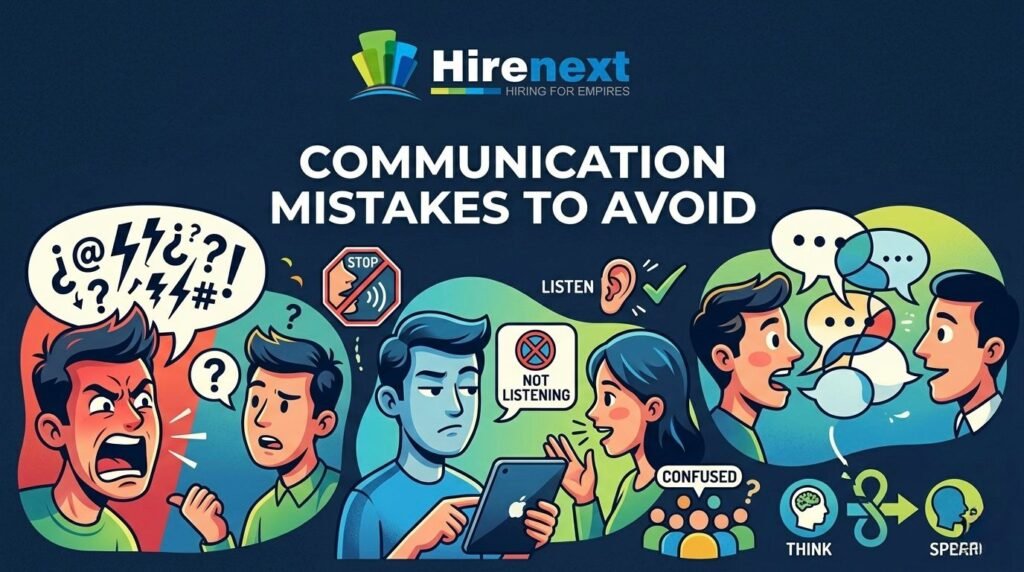
When learning how to improve communication skills, avoiding common mistakes is just as important as practicing the right habits. Many people unknowingly repeat these errors, which slows down their growth.
1. Speaking Too Fast
Speaking too quickly is one of the most common mistakes. When you rush your words:
- People struggle to understand you
- You sound nervous or unprepared
- Your message loses clarity
What to do instead:
Slow down your pace. Pause between sentences. Give your listener time to process what you’re saying. Clear communication is always more powerful than fast communication.
2. Using Complex Words Unnecessarily
Many people think using difficult vocabulary makes them sound smart. In reality:
- It confuses listeners
- Breaks flow of conversation
- Makes communication less natural
What to do instead:
Use simple, clear language. Professional communication is about being understood, not showing off vocabulary.
3. Interrupting Others
Interrupting someone while they are speaking shows poor listening skills and lack of respect.
It can:
- Break the flow of conversation
- Frustrate the speaker
- Create a negative impression
What to do instead:
Let the other person finish speaking. Listen fully, then respond thoughtfully. Good communication is always two-sided.
4. Poor Grammar in Emails
Written communication reflects your professionalism. Poor grammar or careless mistakes can:
- Create confusion
- Reduce credibility
- Make you appear careless
What to do instead:
Always proofread your emails and messages. Keep sentences simple and structured. Even basic grammar improvement can make a big difference in how to improve communication skills.
5. Lack of Clarity
Sometimes people speak a lot but fail to deliver a clear message.
This leads to:
- Misunderstandings
- Repeated explanations
- Wasted time
What to do instead:
Think before you speak. Structure your thoughts:
- What is the main point?
- What does the listener need to know?
Clarity is one of the most important elements in how to improve communication skills.
6. Negative Tone
Your tone matters as much as your words. A negative tone can:
- Hurt relationships
- Create misunderstandings
- Make you seem rude or unprofessional
What to do instead:
Use a calm, respectful, and positive tone. Even when discussing problems, focus on solutions rather than blame.
Avoiding these mistakes will significantly improve your communication and help you move closer to mastering how to improve communication skills.
Daily Habits to Improve Communication Skills (Detailed)
Consistency is the secret to improvement. If you practice daily, even for a short time, you will see noticeable growth.
1. Read for 15–20 Minutes
Reading improves:
- Vocabulary
- Sentence structure
- Understanding of language
You can read books, articles, or blogs. This is one of the simplest ways to practice how to improve communication skills.
2. Speak for 10–15 Minutes Daily
Practice speaking out loud:
- Talk about your day
- Explain a topic
- Practice introductions
This builds fluency and reduces hesitation.
3. Learn New Words
Learning new words helps you express ideas better.
But remember:
- Focus on practical words
- Understand usage, not just meaning
This strengthens your journey in how to improve communication skills.
4. Practice Writing
Writing improves clarity of thought.
You can:
- Write short paragraphs
- Practice emails
- Maintain a daily journal
Writing forces you to organize thoughts clearly.
5. Listen to Podcasts or Conversations
Listening helps you learn:
- Pronunciation
- Tone
- Flow of conversation
Choose content that is easy to understand and relevant.
6. Observe Good Speakers
Watch how confident speakers communicate:
- How they pause
- How they structure sentences
- How they use tone
Observation is a powerful but underrated method in how to improve communication skills.
These small daily habits, when done consistently, can create long-term improvement.
Tools and Techniques to Practice (Detailed)
Using the right tools can speed up your progress.
1. Mirror Practice
Stand in front of a mirror and speak.
Benefits:
- Improves confidence
- Helps you observe body language
- Reduces nervousness
2. Voice Recording
Record yourself while speaking.
Benefits:
- Identify mistakes
- Improve pronunciation
- Track progress over time
Listening to yourself is one of the most effective ways to learn how to improve communication skills.
3. Language Apps
Apps can help you practice:
- Vocabulary
- Grammar
- Sentence formation
They are useful for structured learning.
4. Watching Professional Speakers
Watch interviews, speeches, or presentations.
Focus on:
- Clarity
- Confidence
- Delivery style
This helps you learn real-world communication.
5. Writing Journals
Daily journaling helps you:
- Express thoughts clearly
- Improve sentence structure
- Build consistency
It also improves your thinking process.
Using these tools regularly can accelerate your journey toward mastering how to improve communication skills.
Long-Term Strategy for Growth

Improving communication is not a one-day process. It requires patience and consistency.
1. Regular Practice
Practice daily, even if for a short time. Consistency matters more than intensity.
2. Continuous Learning
Keep improving:
- Learn new words
- Improve grammar
- Understand different communication styles
3. Feedback from Others
Ask friends, mentors, or colleagues:
- How is my communication?
- Where can I improve?
Feedback helps identify blind spots.
4. Real-Life Conversations
Practice in real situations:
- Talk to colleagues
- Participate in discussions
- Ask questions
Real conversations are the best training ground for how to improve communication skills.
5. Professional Exposure
Attend:
- Meetings
- Presentations
- Group discussions
Exposure builds confidence and practical experience.
Conclusion
Communication is not a talent—it is a skill that can be developed with practice and consistency. If you truly want to grow in your career, learning how to improve communication skills should be a top priority.
Focus on:
- Speaking clearly
- Listening actively
- Writing professionally
- Building confidence
- Practicing daily
Remember, you don’t need to be perfect—you just need to be better than yesterday.
When you understand how to improve communication skills, you don’t just improve your speaking—you improve your confidence, your opportunities, and your future.
Start today, stay consistent, and your communication will transform over time. 🚀