
Why Skills Matter More Than Degree Now
Table of Contents
- Introduction
- Why Skills Matter More Than Degree Today
- How Hiring Has Changed Over Time
- Why Companies Hire Skills Over Degrees
- Job Market Trends 2026 You Must Know
- Real Examples Where Skills Beat Degrees
- Industries Where Skills Matter Most
- What Degrees Still Offer Value In
- Risks of Depending Only on Degrees
- Top Skills Employers Want Now
- How Freshers Can Compete Without Experience
- How to Build Skills While Studying
- Certificates vs Real Skills
- How Recruiters Test Skills Today
- Mistakes Students Make About Careers
- 30-Day Skill Building Plan
- Future of Hiring in India
- Final Checklist for Career Growth
- Conclusion
Introduction
For years, students were told one thing: get a degree and success will follow. While education still matters, the hiring world has changed rapidly. Today, skills matter more than degree in many industries because employers need people who can perform from day one.
A degree can open doors, but practical skills often decide who gets hired, promoted, and paid more. Companies increasingly care less about where you studied and more about what you can actually do.
This guide explains why skills matter more than degree, how hiring trends are changing, and what students, freshers, and professionals must do to stay relevant.
Why Skills Matter More Than Degree Today
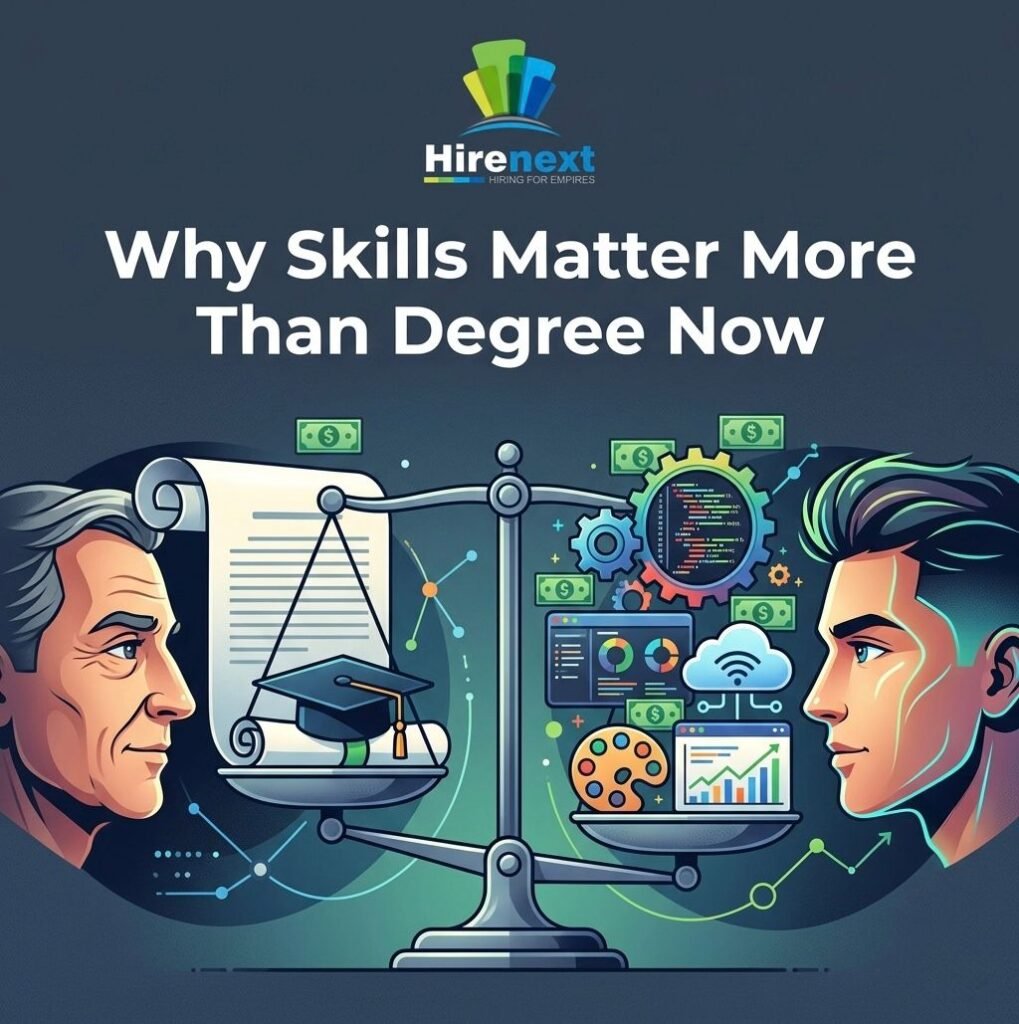
The workplace now moves faster than traditional education systems. Many college syllabi update slowly, while industries change quickly.
That is why skills matter more than degree in modern hiring. Employers need candidates who can solve real problems immediately.
Examples:
- A marketer who can run ad campaigns
- A designer who can use tools well
- A sales executive who can close deals
- A data analyst who can interpret numbers
- A content writer who can generate leads
These practical outcomes explain why skills matter more than degree for many roles.
How Hiring Has Changed Over Time
Earlier hiring models focused heavily on:
- University brand name
- Academic marks
- Formal qualifications
- Years of experience
Now companies increasingly focus on:
- Portfolio
- Practical tests
- Communication ability
- Tool knowledge
- Problem-solving
- Adaptability
This shift proves skills matter more than degree than ever before.
Why Companies Hire Skills Over Degrees
Many employers have learned that degrees do not always guarantee job readiness.
This is exactly why companies hire skills over degrees in many cases.
Reasons Include:
1. Faster Productivity
A skilled candidate contributes sooner.
2. Lower Training Cost
Companies spend less time teaching basics.
3. Better Problem Solving
Hands-on learners often adapt quickly.
4. Real Proof of Ability
Projects, portfolios, internships, and results show competence.
This is a major reason skills matter more than degree in current recruitment.
Job Market Trends 2026 You Must Know
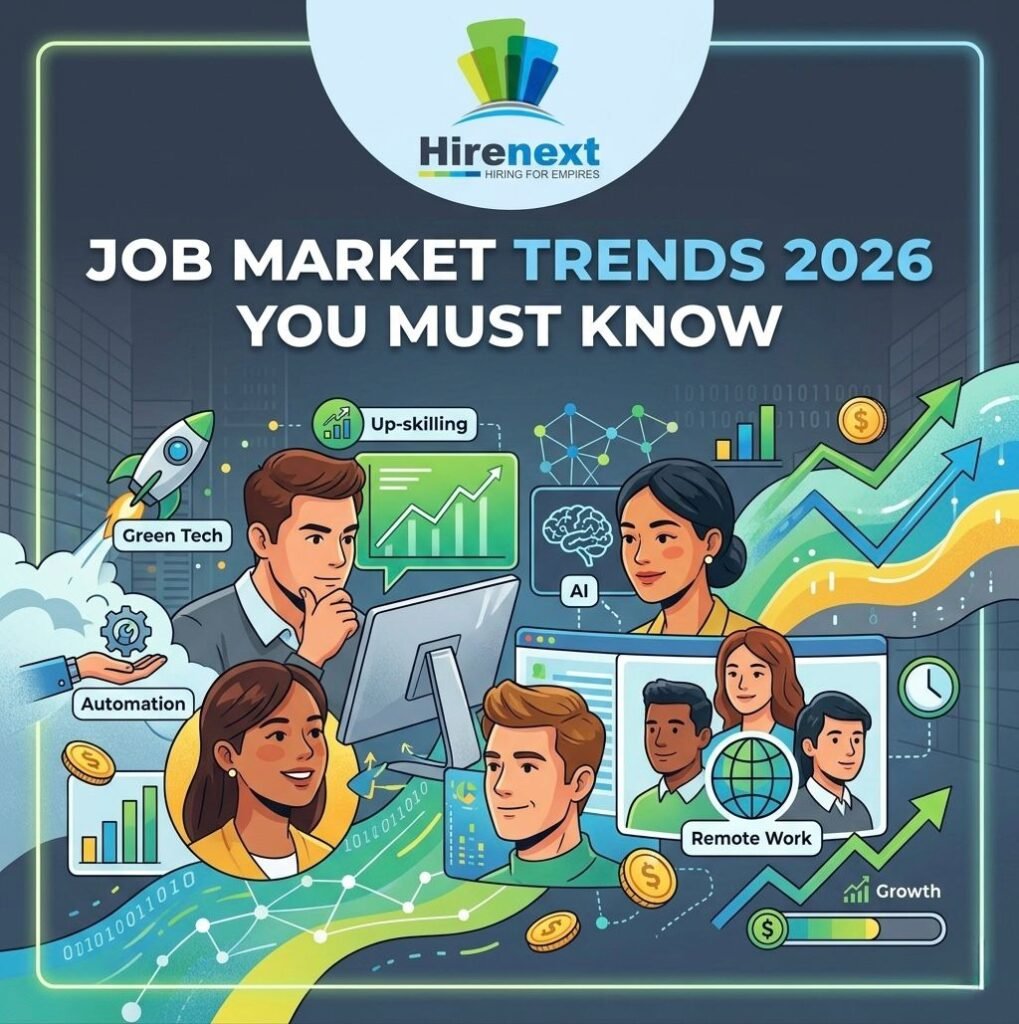
Several job market trends 2026 are shaping hiring:
1. AI and Automation
Routine tasks are being automated. Human skills like creativity and analysis are rising.
2. Remote Hiring
Companies hire globally based on ability, not location or college.
3. Freelance Economy Growth
Clients care about output, not degrees.
4. Skills-Based Hiring Platforms
Assessments and task-based hiring are increasing.
These job market trends 2026 strongly support why skills matter more than degree.
Real Examples Where Skills Beat Degrees
Example 1: Digital Marketing
A person who can run Meta ads and generate leads may beat someone with only MBA theory.
Example 2: Graphic Design
Strong portfolio often matters more than formal degree.
Example 3: Coding
Many developers succeed through bootcamps and projects.
Example 4: Sales
Revenue generation matters more than academic marks.
These examples show skills matter more than degree in practical hiring.
Industries Where Skills Matter Most
Some sectors strongly reward capability.
Tech
Coding, cloud, data.
Marketing
SEO, ads, analytics, content.
Sales
Negotiation, communication, closing.
Design
UI/UX, branding, software skills.
Media
Editing, storytelling, audience growth.
In these areas, skills matter more than degree consistently.
What Degrees Still Offer Value In
Degrees still matter in fields requiring formal credentials:
- Medicine
- Law
- Engineering licensing roles
- Chartered professions
- Academia
- Government jobs
So the message is not “degrees are useless.” It is that in many private sectors, skills matter more than degree for hiring speed and growth.
Risks of Depending Only on Degrees
Many students believe degree alone guarantees success.
That mindset creates risks:
- Outdated knowledge
- Weak interview performance
- No portfolio
- No tool experience
- Low confidence
This is why many graduates struggle while others succeed because skills matter more than degree in practice.
Top Skills Employers Want Now
Technical Skills
- Excel
- Power BI
- SQL
- Coding
- Canva
- CRM tools
Business Skills
- Sales
- Negotiation
- Client handling
Marketing Skills
- SEO
- Social media ads
- Copywriting
Human Skills
- Communication
- Leadership
- Adaptability
- Problem solving
Building these proves skills matter more than degree.
How Freshers Can Compete Without Experience
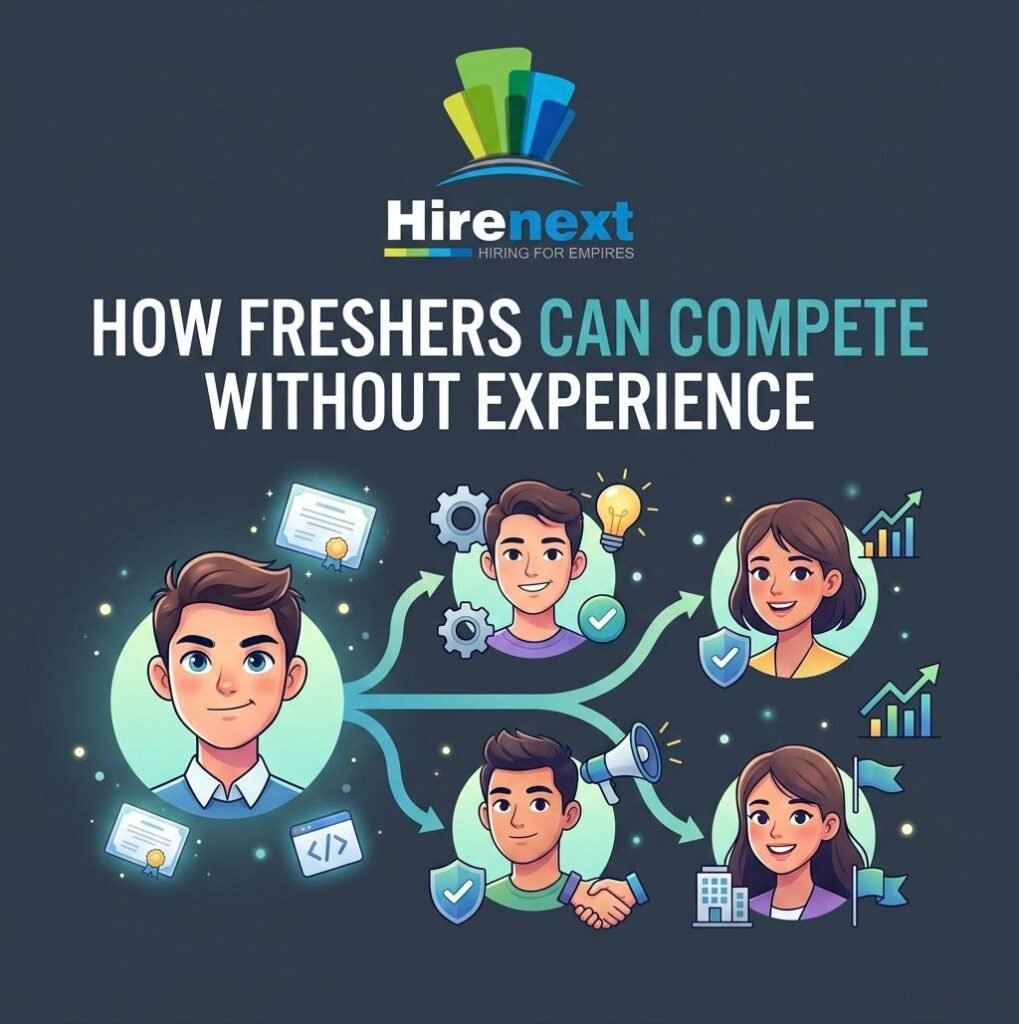
Freshers often worry they lack experience.
But if skills matter more than degree, then freshers can win by showing ability.
Build:
- Internships
- Freelance projects
- College projects
- Certifications
- Portfolio
- Personal brand on LinkedIn
This makes you more employable quickly.
How to Build Skills While Studying
During College:
- Learn tools online
- Join internships
- Build projects
- Start freelancing
- Improve English speaking
- Network online
Students who do this understand early that skills matter more than degree.
Certificates vs Real Skills
Certificates help credibility.
But only certificates without ability are weak.
Example:
10 marketing certificates but cannot run campaign.
Real execution proves skills matter more than degree and often more than certificates too.
How Recruiters Test Skills Today
Modern hiring often includes:
- Assignment tasks
- Case studies
- Mock sales calls
- Portfolio reviews
- Coding tests
- Roleplay interviews
This testing model exists because skills matter more than degree in decision-making.
Mistakes Students Make About Careers
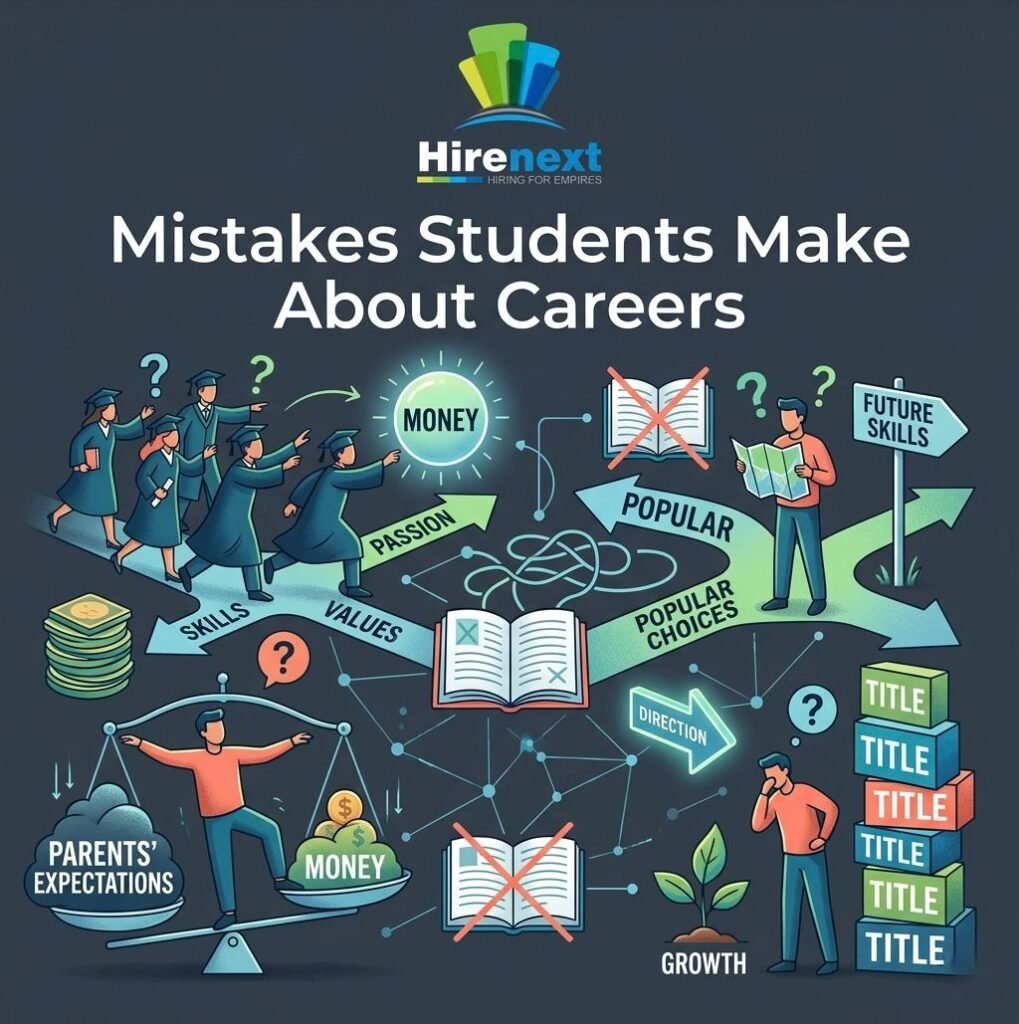
1. Waiting Until Final Year
Too late to start building.
2. Chasing Marks Only
Marks help, but not enough.
3. Ignoring Communication
Even skilled people lose jobs here.
4. No LinkedIn Presence
Missed visibility.
5. No Projects
No proof of ability.
30-Day Skill Building Plan
Week 1
Choose one career path.
Week 2
Learn one core tool.
Week 3
Build one project.
Week 4
Update resume + LinkedIn + apply.
Following this supports the reality that skills matter more than degree.
Future of Hiring in India
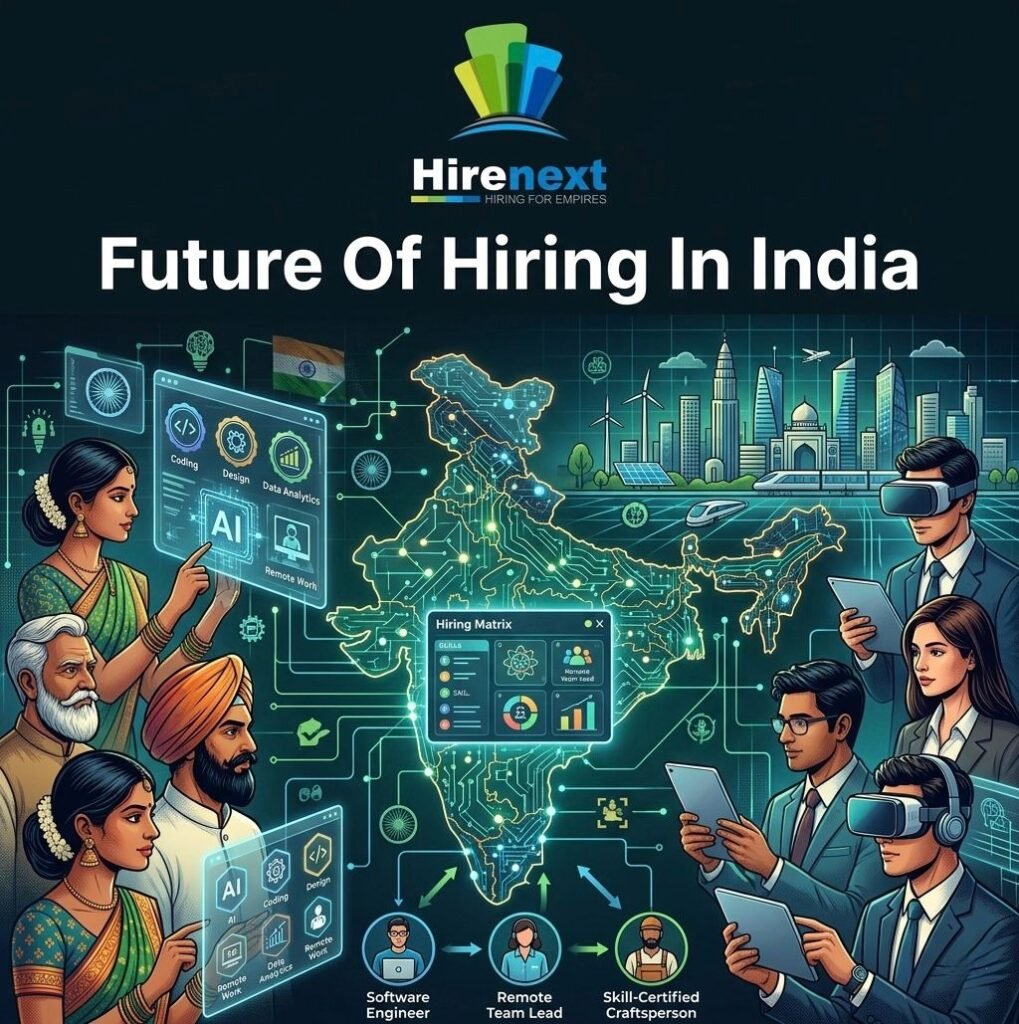
India’s talent market is becoming more merit-based in many sectors.
Employers increasingly ask:
- Can you do the work?
- Can you learn fast?
- Can you create results?
Not only:
- Which college?
- What percentage?
This means skills matter more than degree going forward.
Final Checklist for Career Growth
Ask yourself:
- What can I do practically?
- What results can I show?
- Which tools do I know?
- Can I communicate well?
- Do I keep learning?
If yes, you are aligned with the future where skills matter more than degree.
Frequently Asked Questions
Are degrees useless now?
No. Degrees still matter in many fields. But in many private sectors, skills increasingly decide success.
Why companies hire skills over degrees?
Because skills create faster results and lower training burden.
Can freshers succeed without top college?
Yes, with strong skills, projects, and communication.
What are job market trends 2026?
AI, remote work, freelance growth, skills-based hiring.
Conclusion
The world of work has changed. Education still has value, but capability now drives opportunity faster than credentials alone.
That is why skills matter more than degree in many industries today.
To stay ahead:
- Build practical abilities
- Learn tools employers use
- Create proof through projects
- Improve communication
- Keep adapting to job market trends 2026
Degrees may open doors—but skills help you walk through them, grow inside them, and earn more over time.