
Signs a Job Offer Is Fake (Important for Freshers): Complete Guide to Stay Safe
Table of Contents
- Introduction
- Why Freshers Are Easy Targets for Job Scams
- Top Fake Job Signs You Must Never Ignore
- How to Know If a Job Offer Is Fake
- Common Types of Job Scams in India
- Red Flags in Job Offer Emails
- Fake Interview Process Warning Signs
- How Real Companies Hire Candidates
- What to Do If You Receive a Fake Job Offer
- How Freshers Can Stay Safe While Job Hunting
- Trusted Platforms to Apply for Jobs
- Final Checklist Before Accepting Any Offer
- Conclusion
Introduction
Getting your first job offer is exciting. For freshers, it feels like a reward after many applications, interviews, and waiting. But today, many scammers use fake job offers to cheat job seekers. They know freshers are eager to start their careers, so they create false opportunities.
That is why understanding fake job signs is extremely important. If you ignore the warning signs, you may lose money, personal documents, or even become a victim of identity theft.
This guide explains all major fake job signs, helps you understand how to know if a job offer is fake, and builds strong job fraud awareness so you can safely begin your career.
Why Freshers Are Easy Targets for Job Scams
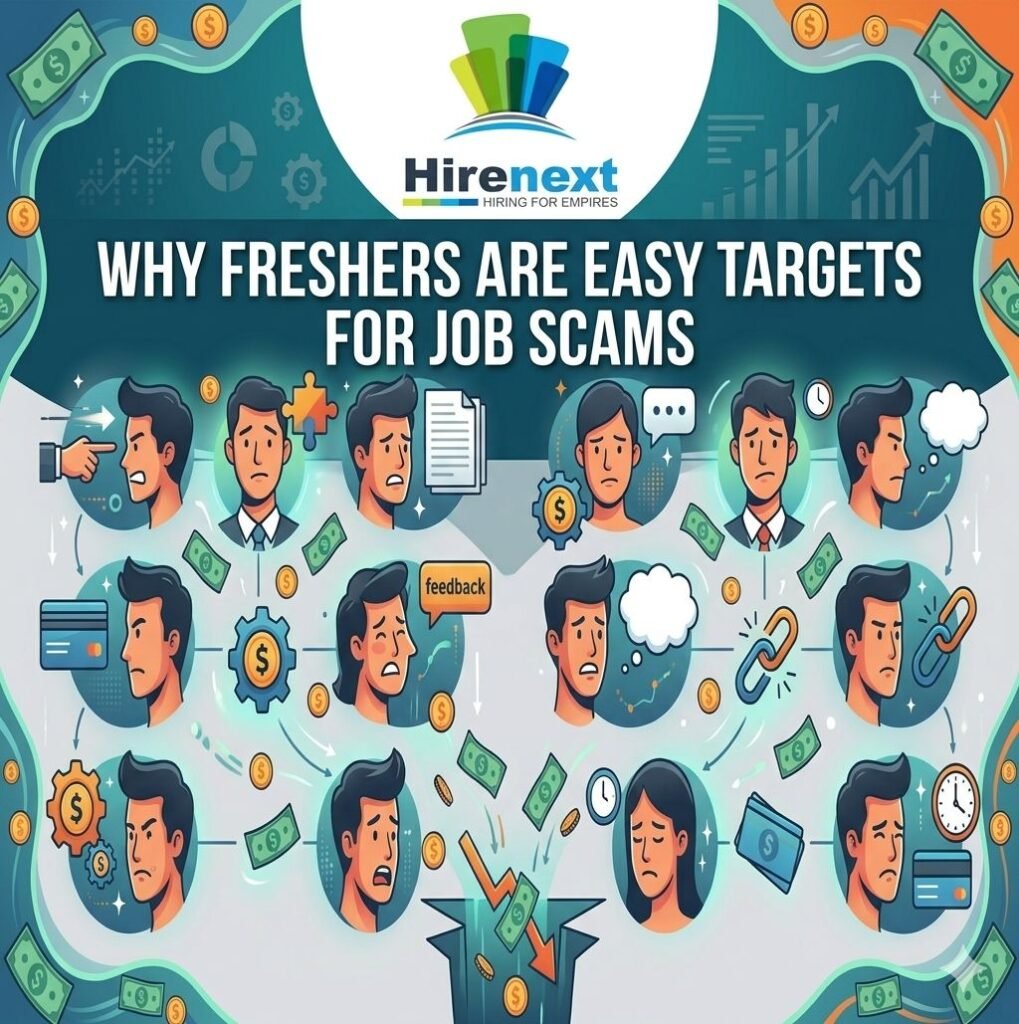
Freshers are often targeted because:
- They have less hiring experience
- They may not know real recruitment processes
- They feel pressure to get a job quickly
- They trust professional-looking emails
- They may accept offers without verifying details
Scammers know this. They design fake offers that look real. That is why learning fake job signs can save you from serious problems.
Top Fake Job Signs You Must Never Ignore
Here are the most common fake job signs every fresher should know:
1. Asking for Money Before Joining
If a company asks for:
- Registration fees
- Security deposit
- Training fees
- Laptop charges
- Interview slot booking fees
It is one of the biggest fake job signs.
Real companies pay employees. They do not charge candidates to hire them.
2. Offer Letter Without Interview
If you receive a selection email without interview, test, or discussion, this is one of the strongest fake job signs.
Most companies evaluate candidates first.
3. Unrealistic Salary for Freshers
If the job promises:
- ₹50,000+ for basic data entry
- ₹80,000 for no experience roles
- Huge incentives with no skills required
These are common fake job signs used to attract desperate candidates.
4. Gmail or Yahoo Email IDs
If the recruiter contacts you through:
Instead of official domain emails, it may be among clear fake job signs.
Real companies mostly use company domain emails.
5. Urgent Pressure Tactics
Scammers often say:
- Pay today
- Accept within 1 hour
- Immediate joining or lose chance
- Hurry now
This pressure is one of the classic fake job signs.
6. Poor Grammar in Emails
Many scam emails contain:
- Wrong spelling
- Bad formatting
- Broken sentences
- Random capitalization
Poor communication can reveal fake job signs.
7. No Company Website or Presence
Search the company online. If there is:
- No website
- No LinkedIn page
- No reviews
- No office details
These are serious fake job signs.
How to Know If a Job Offer Is Fake
Many freshers ask how to know if a job offer is fake. Follow these steps:
Check Company Website
Visit official website and verify:
- Careers page
- HR contact details
- Office address
- Active business presence
Search Recruiter Name
Look recruiter up on LinkedIn. Genuine HR professionals usually have profiles.
Verify Offer Letter Format
Check if the letter has:
- Official logo
- Company address
- Role details
- Salary structure
- Joining terms
Call Official Office Number
Use website number, not email signature number.
Compare With Real Hiring Process
If no interview happened, ask questions immediately.
Doing these checks helps you understand how to know if a job offer is fake quickly.
Common Types of Job Scams in India
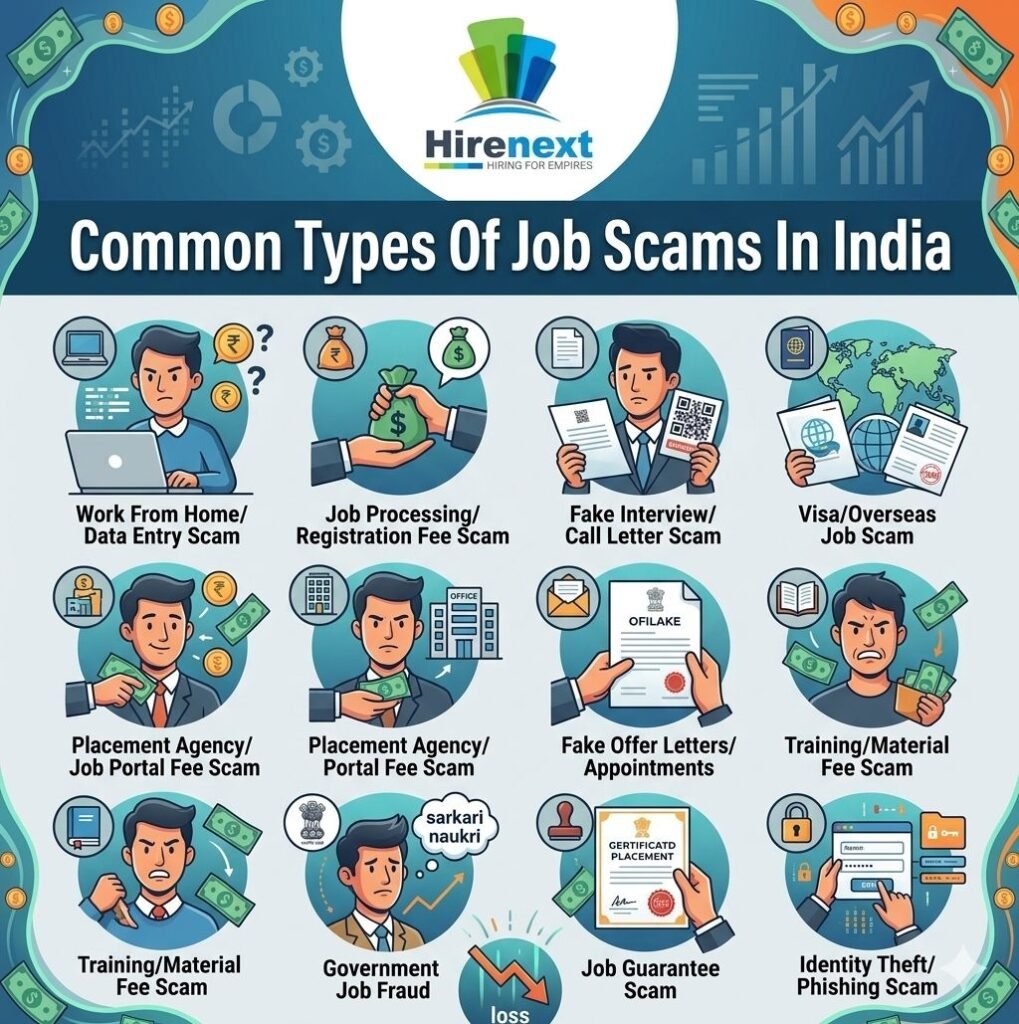
To improve job fraud awareness, know common scam types:
1. Registration Fee Scam
They ask ₹500–₹5000 for processing.
2. Training Scam
They say mandatory paid training before joining.
3. Documentation Scam
They collect Aadhaar, PAN, bank details and misuse them.
4. Work From Home Scam
They ask deposit for form filling, typing jobs, captcha work.
5. Fake MNC Offer Scam
They use famous company names like TCS, Infosys, Wipro, HCL.
Knowing these scam models helps identify fake job signs early.
Red Flags in Job Offer Emails

Email scams are common. Watch these fake job signs:
- “Congratulations Dear Candidate You Selected”
- No job role mentioned
- No interview details
- Generic greeting instead of your name
- Attachment asking payment
- Suspicious links
- Poor formatting
These signs should trigger instant job fraud awareness.
Fake Interview Process Warning Signs
Sometimes scammers conduct fake interviews.
Signs Include:
- Interview on WhatsApp chat only
- No technical questions
- Selection in 5 minutes
- Asked to pay after interview
- Fake HR avoids video call
- No company introduction
These are dangerous fake job signs.
How Real Companies Hire Candidates
Understanding genuine hiring helps identify scams.
Most real companies follow:
- Application submission
- Resume screening
- HR call
- Interview rounds
- Assessment (if needed)
- Offer letter
- Background verification
- Joining process
If the process skips everything, those may be fake job signs.
What to Do If You Receive a Fake Job Offer
If you suspect fraud:
Do Not Pay Anything
Never transfer money.
Do Not Share Sensitive Documents
Avoid sending:
- Aadhaar
- PAN
- Bank details
- OTPs
Report the Email
Use spam/report options.
Inform Job Portal
If found on Naukri, Indeed, LinkedIn, report listing.
File Cyber Complaint
Use India cyber crime portal if money loss occurs.
Strong job fraud awareness can prevent future scams.
How Freshers Can Stay Safe While Job Hunting
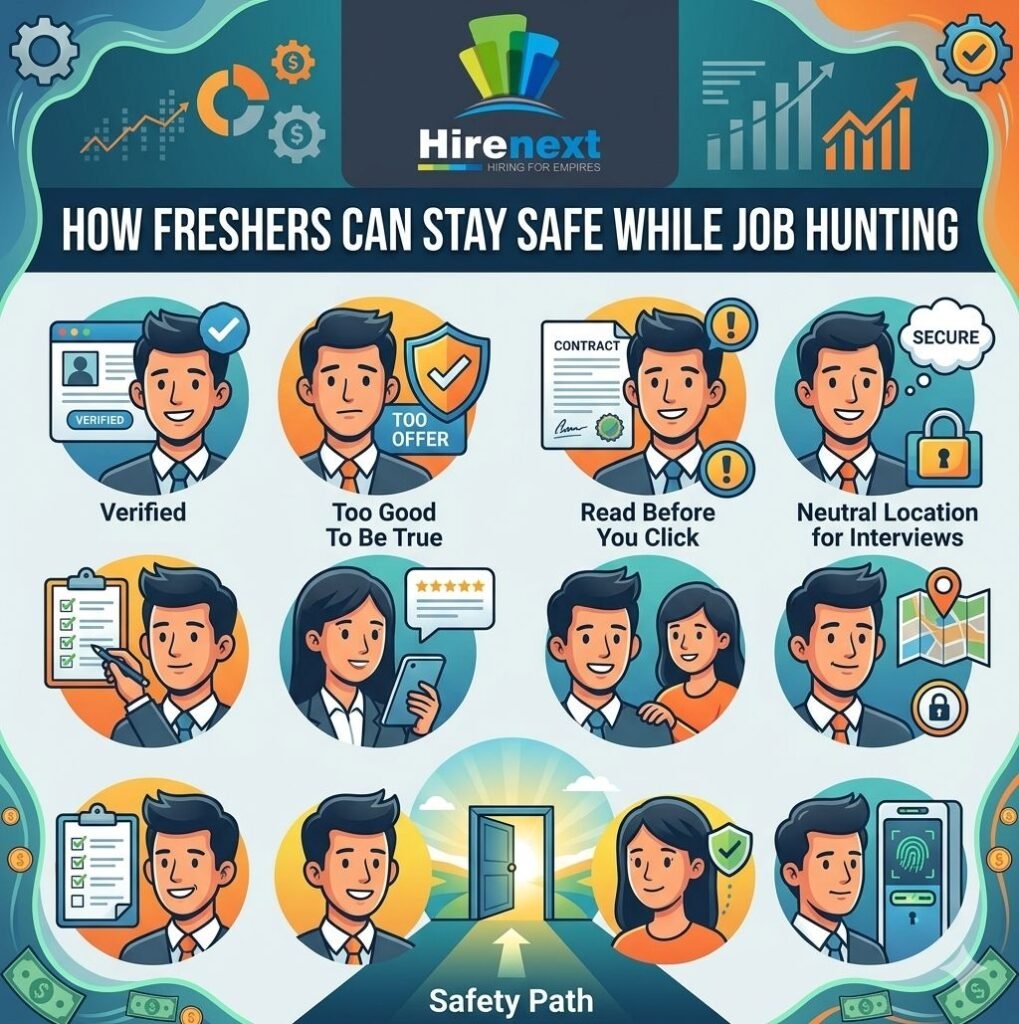
Use these smart habits:
Apply Through Trusted Platforms
Use verified portals only.
Research Every Company
Spend 5 minutes checking online presence.
Use LinkedIn Networking
Reach employees directly.
Trust Logic, Not Emotion
Excitement makes people ignore fake job signs.
Keep Documents Private
Share only after verification.
Trusted Platforms to Apply for Jobs
Better sources reduce scams:
- LinkedIn Jobs
- Naukri.com
- Indeed
- Internshala
- Company career pages
- Referral hiring through employees
Still stay alert for fake job signs everywhere.
Final Checklist Before Accepting Any Offer

Before saying yes, ask:
- Did I attend proper interview?
- Is company genuine online?
- Is email official domain?
- Is salary realistic?
- Am I being asked for money?
- Is offer letter professional?
- Can I verify HR identity?
If multiple answers look suspicious, these are likely fake job signs.
Freshers Must Build Job Fraud Awareness
Career starting years are sensitive. One scam can cause:
- Financial loss
- Mental stress
- Identity misuse
- Delayed career growth
- Loss of confidence
That is why job fraud awareness is as important as resume building.
Real Example Situations
Example 1:
“You are selected in Amazon. Pay ₹2,999 for ID card.”
Clear fake job signs.
Example 2:
“Immediate joining in Dubai. No interview. Salary ₹1 lakh.”
Again strong fake job signs.
Example 3:
Recruiter emails from official company domain, schedules interview, shares JD, conducts process.
Likely genuine.
Frequently Asked Questions
Is asking money always a scam?
Mostly yes. It is one of the biggest fake job signs.
How to know if a job offer is fake quickly?
Check domain email, website, interview process, and money demand.
Can scammers copy company logos?
Yes. Logo alone does not prove authenticity.
Are work from home offers fake?
Not all, but many scams exist. Verify carefully.
Conclusion
Your first job should be the start of success, not the start of fraud. Freshers often get trapped because scammers use excitement, urgency, and attractive salaries. But once you know the common fake job signs, you can protect yourself confidently.
Always remember: real companies hire professionally, communicate clearly, and never ask candidates for money. If you ever wonder how to know if a job offer is fake, simply verify the company, recruiter, and hiring process before accepting anything.
Build strong job fraud awareness, stay alert, and move toward genuine opportunities that truly grow your career.