
How Long Should Hiring Take? A Realistic Timeline
Introduction
Hiring the right candidate is a critical process for any business, but one of the most common questions companies face is: how long should hiring actually take? While some organizations take weeks or even months, others aim for faster recruitment cycles. The key lies in balancing speed with quality, and understanding how to speed up hiring processwithout compromising results.
In today’s competitive job market, delays in hiring can lead to missed opportunities, loss of top talent, and increased costs. Companies that fail to optimize their hiring timeline often struggle to stay ahead. This is why learning how to speed up hiring process has become essential for modern businesses.
However, speeding up hiring does not mean rushing decisions. Instead, it involves creating a structured, efficient, and strategic approach. By understanding each stage of recruitment and improving it, companies can reduce delays while maintaining quality.
In this blog, we will break down a realistic hiring timeline, identify bottlenecks, and share practical strategies on how to speed up hiring process effectively.
Table of Contents
- Introduction
- What Is a Typical Hiring Timeline?
- Why Hiring Takes Longer Than Expected
- Ideal Hiring Timeline Breakdown
- Factors That Affect Hiring Speed
- How to Speed Up Hiring Process Without Compromising Quality
- Common Hiring Delays and How to Fix Them
- Role of Technology in Hiring Speed
- Benefits of Faster Hiring
- When Hiring Too Fast Can Be Risky
- Best Practices for Efficient Hiring
- Build a Talent Pipeline in Advance
- Use Pre-Screened Candidates
- Improve Internal Communication
- Offer Competitive Packages Quickly
- Measuring Hiring Speed Effectively
- Industry-Wise Hiring Timelines
- Role of Employer Branding in Faster Hiring
- Common Mistakes That Slow Down Hiring
- Real-Life Hiring Scenarios
- Future of Hiring Speed in 2026 and Beyond
- Quick Action Plan to Speed Up Hiring
What Is a Typical Hiring Timeline?
A standard hiring process can take anywhere between 2 to 6 weeks, depending on the role, industry, and company size. However, many organizations exceed this timeline due to inefficiencies.
Understanding the typical timeline helps businesses identify areas where they can improve and learn how to speed up hiring process effectively.
Why Hiring Takes Longer Than Expected
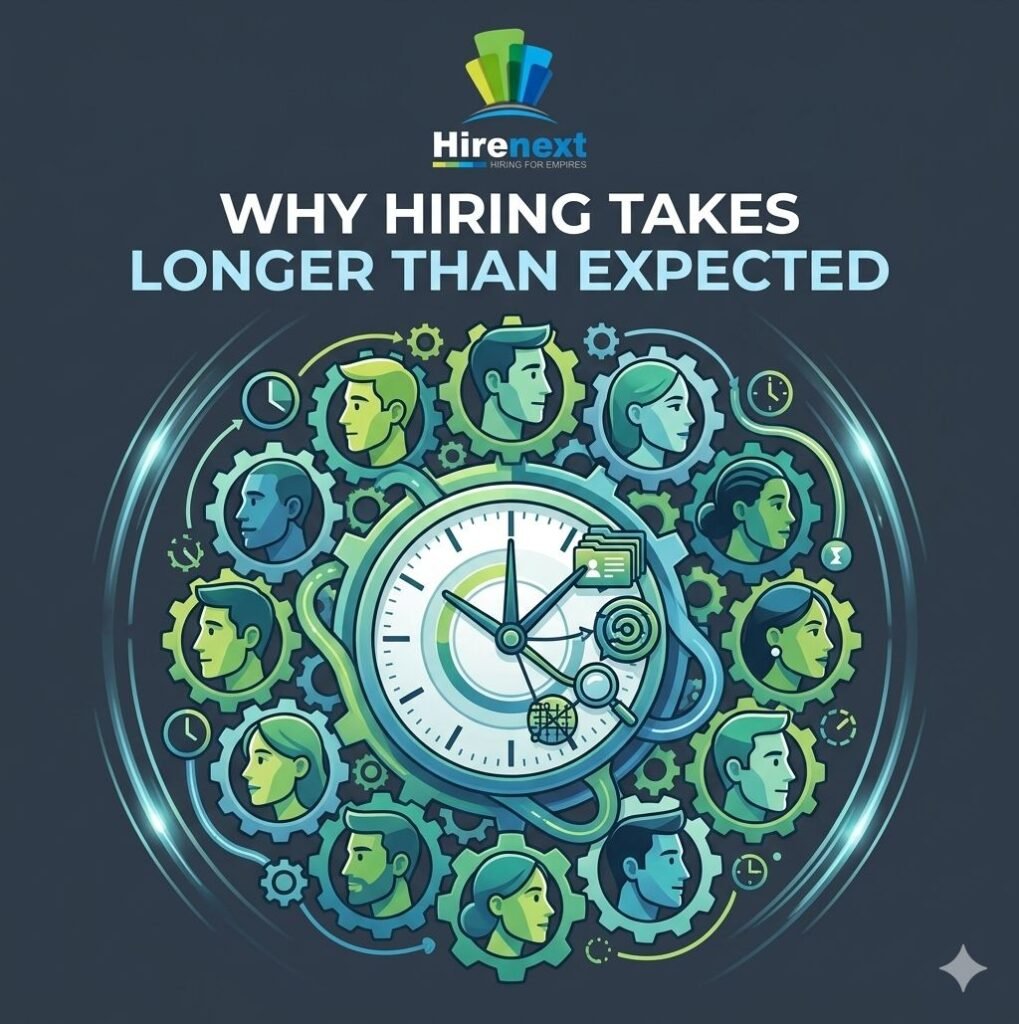
Hiring delays are common due to multiple factors such as unclear job roles, slow decision-making, and inefficient communication.
Some common reasons include:
- Too many approval layers
- Poor candidate screening
- Delayed interview scheduling
- Lack of coordination between teams
These issues highlight the importance of understanding how to speed up hiring process.
Ideal Hiring Timeline Breakdown
A well-structured hiring process can be completed within 2–4 weeks if managed efficiently.
Here’s a realistic timeline:
- Job Planning: 2–3 days
- Sourcing Candidates: 5–7 days
- Screening: 3–5 days
- Interviews: 5–7 days
- Offer & Onboarding: 3–5 days
Optimizing each stage is key to mastering how to speed up hiring process.
Stage 1: Job Planning and Approval
This stage involves defining job roles, responsibilities, and requirements.
Delays often occur due to unclear expectations. Streamlining this step is essential for improving how to speed up hiring process.
Stage 2: Candidate Sourcing
Finding the right candidates can take time if done inefficiently.
To improve sourcing:
- Use multiple platforms
- Leverage referrals
- Partner with agencies
Efficient sourcing is a crucial part of how to speed up hiring process.
Stage 3: Screening and Shortlisting
Screening involves reviewing resumes and selecting suitable candidates.
Manual screening can be time-consuming, which is why companies focus on improving this stage to enhance how to speed up hiring process.
Stage 4: Interview Process
Interviews are often the longest stage in hiring.
Delays occur due to scheduling conflicts and multiple rounds. Optimizing interviews is essential for better how to speed up hiring process.
Stage 5: Final Selection and Offer
Once a candidate is selected, companies must act quickly.
Delays in offer rollout can result in losing top talent. Quick decisions are key to improving how to speed up hiring process.
Stage 6: Onboarding
Even after hiring, onboarding should be efficient.
A smooth onboarding process ensures better employee experience and supports overall how to speed up hiring process.
Factors That Affect Hiring Speed
Several factors influence hiring timelines:
- Company size
- Role complexity
- Industry demand
- Availability of candidates
Understanding these factors helps businesses improve how to speed up hiring process.
How to Speed Up Hiring Process Without Compromising Quality
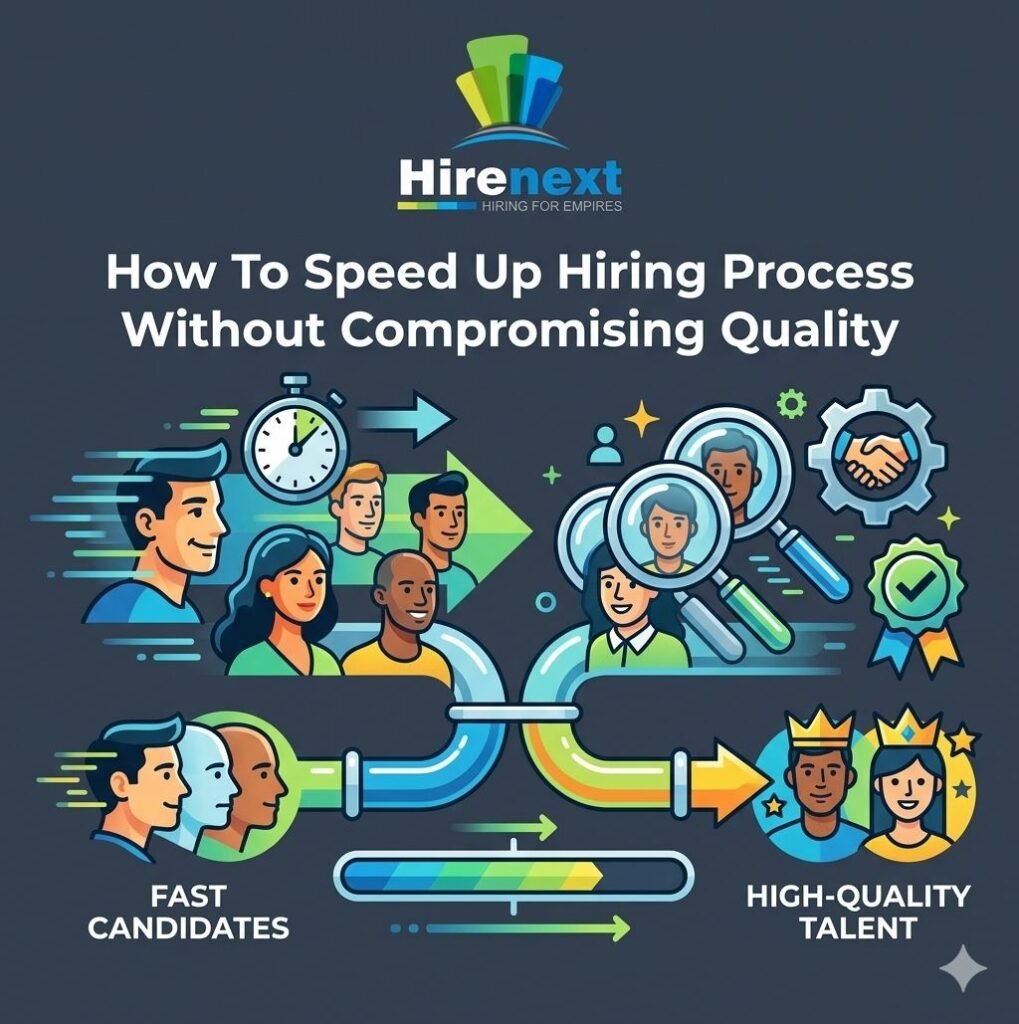
Speed should not come at the cost of quality. Companies need a balanced approach.
Key Strategies:
1. Define Clear Job Roles
Avoid confusion and attract the right candidates.
2. Use Technology
Automation tools can streamline hiring.
3. Reduce Interview Rounds
Focus on quality over quantity.
4. Improve Communication
Keep candidates informed and engaged.
These strategies are essential for mastering how to speed up hiring process.
Common Hiring Delays and How to Fix Them
Delay 1: Too Many Approvals
Solution: Simplify decision-making.
Delay 2: Poor Coordination
Solution: Align HR and hiring managers.
Delay 3: Slow Feedback
Solution: Set clear timelines.
Fixing these issues improves how to speed up hiring process.
Role of Technology in Hiring Speed
Technology plays a major role in modern recruitment.
Tools like ATS, AI screening, and scheduling software help companies optimize how to speed up hiring process.
Benefits of Faster Hiring
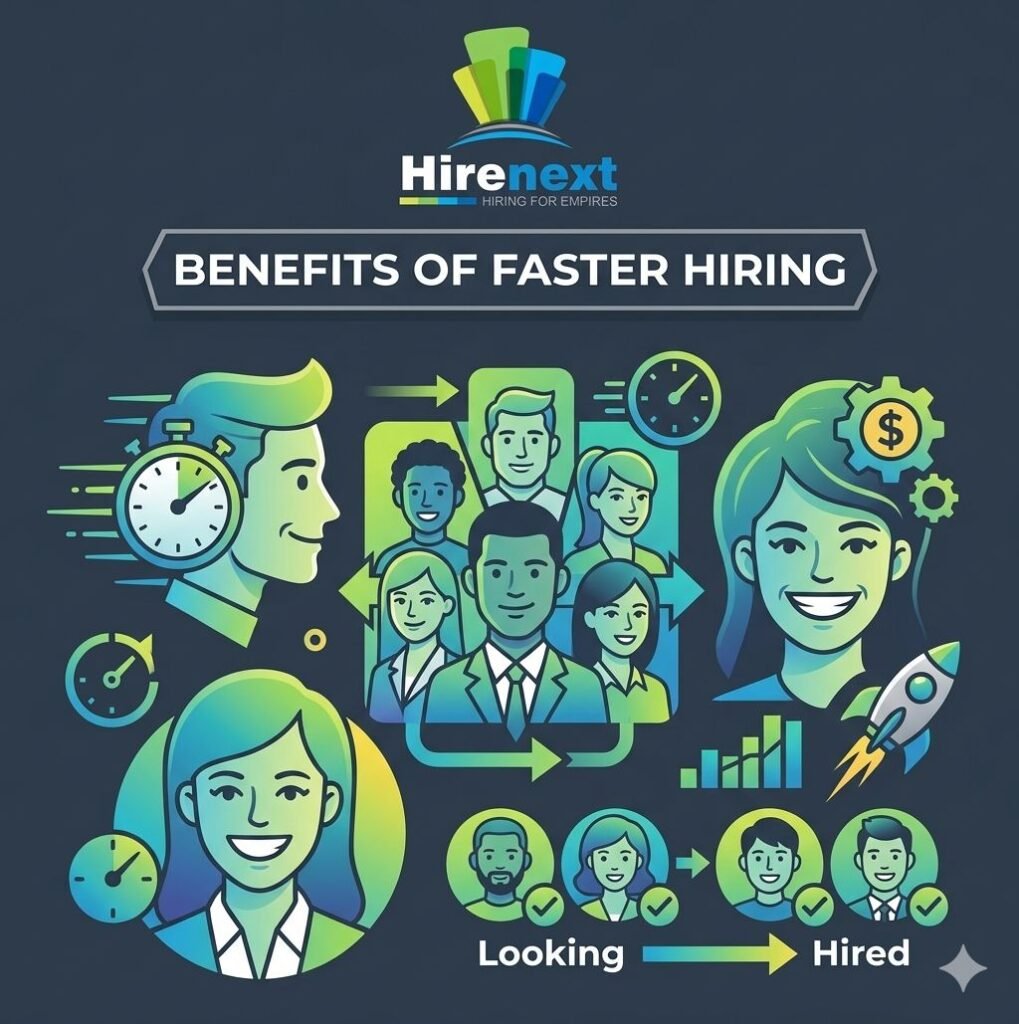
Faster hiring offers several advantages:
- Secures top talent
- Reduces hiring costs
- Improves productivity
These benefits highlight why companies focus on how to speed up hiring process.
When Hiring Too Fast Can Be Risky
While speed is important, rushing can lead to mistakes.
Risks include:
- Poor candidate selection
- Cultural mismatch
- Increased turnover
Balancing speed and quality is key to effective how to speed up hiring process.
Best Practices for Efficient Hiring
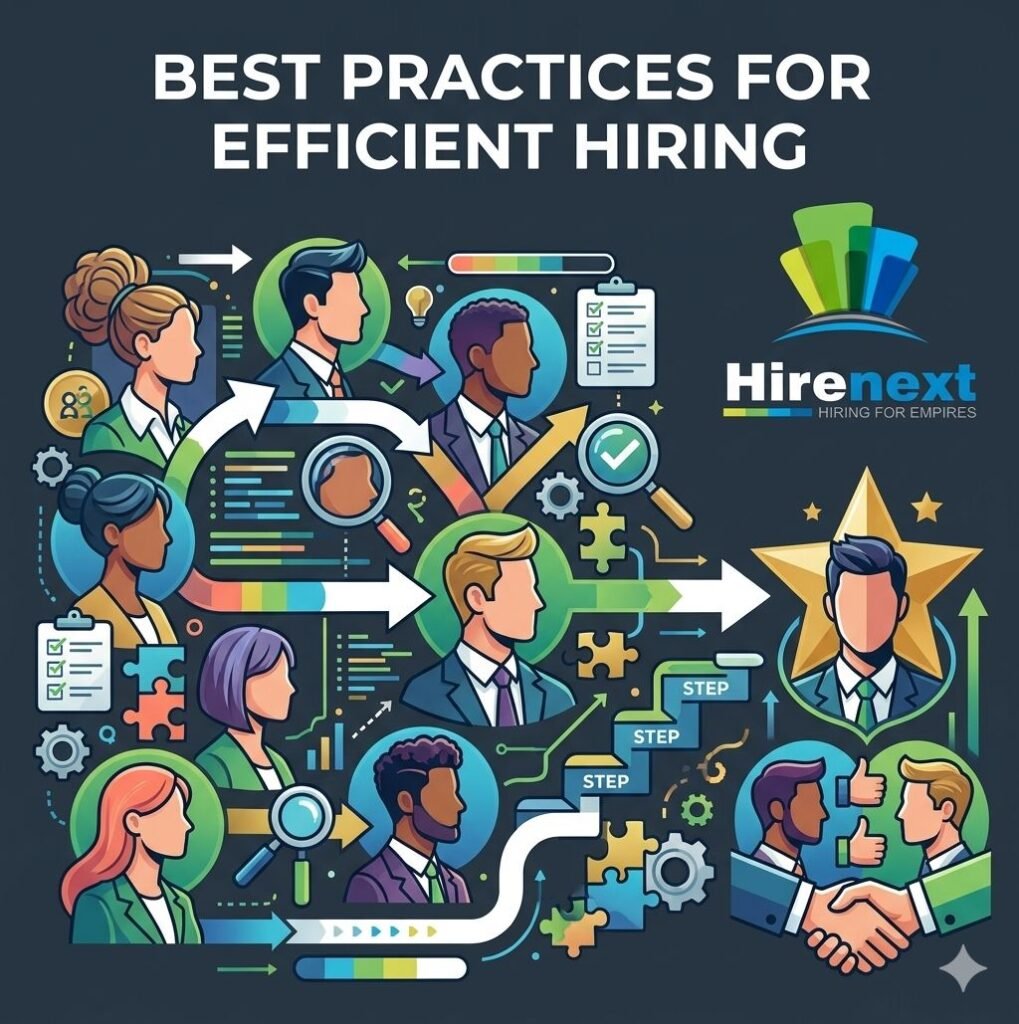
- Plan hiring in advance
- Use structured interviews
- Maintain clear communication
- Track hiring metrics
Following these practices ensures better results in how to speed up hiring process.
Advanced Strategies on How to Speed Up Hiring Process
1. Build a Talent Pipeline in Advance
One of the smartest ways to improve how to speed up hiring process is to stop hiring reactively. Companies that wait until a position opens often face delays.
What You Can Do
- Maintain a database of potential candidates
- Stay connected with past applicants
- Build relationships through LinkedIn and networking
Having a ready pipeline ensures faster hiring and strengthens how to speed up hiring process.
2. Use Pre-Screened Candidates
Pre-screened candidates can significantly reduce hiring time.
Instead of starting from scratch, companies can directly interview qualified candidates. This approach is one of the most effective ways to improve how to speed up hiring process.
Benefits
- Reduced screening time
- Higher candidate quality
- Faster decision-making
3. Set Clear Hiring Deadlines
Many hiring delays happen because there is no fixed timeline.
Setting deadlines for each stage is a simple yet powerful way to improve how to speed up hiring process.
Example Timeline
- Resume screening: 2 days
- Interviews: 5 days
- Final decision: 2 days
Deadlines create accountability and improve how to speed up hiring process.
4. Improve Internal Communication
Poor communication between HR and hiring managers is a major cause of delays.
Improving communication ensures smoother workflows and enhances speed.
How to Improve
- Use shared dashboards
- Conduct regular updates
- Align expectations early
5. Offer Competitive Packages Quickly
Top candidates often have multiple offers. Delays in offer rollout can result in losing them.
Quick and attractive offers are essential for mastering how to speed up hiring process.
Measuring Hiring Speed Effectively
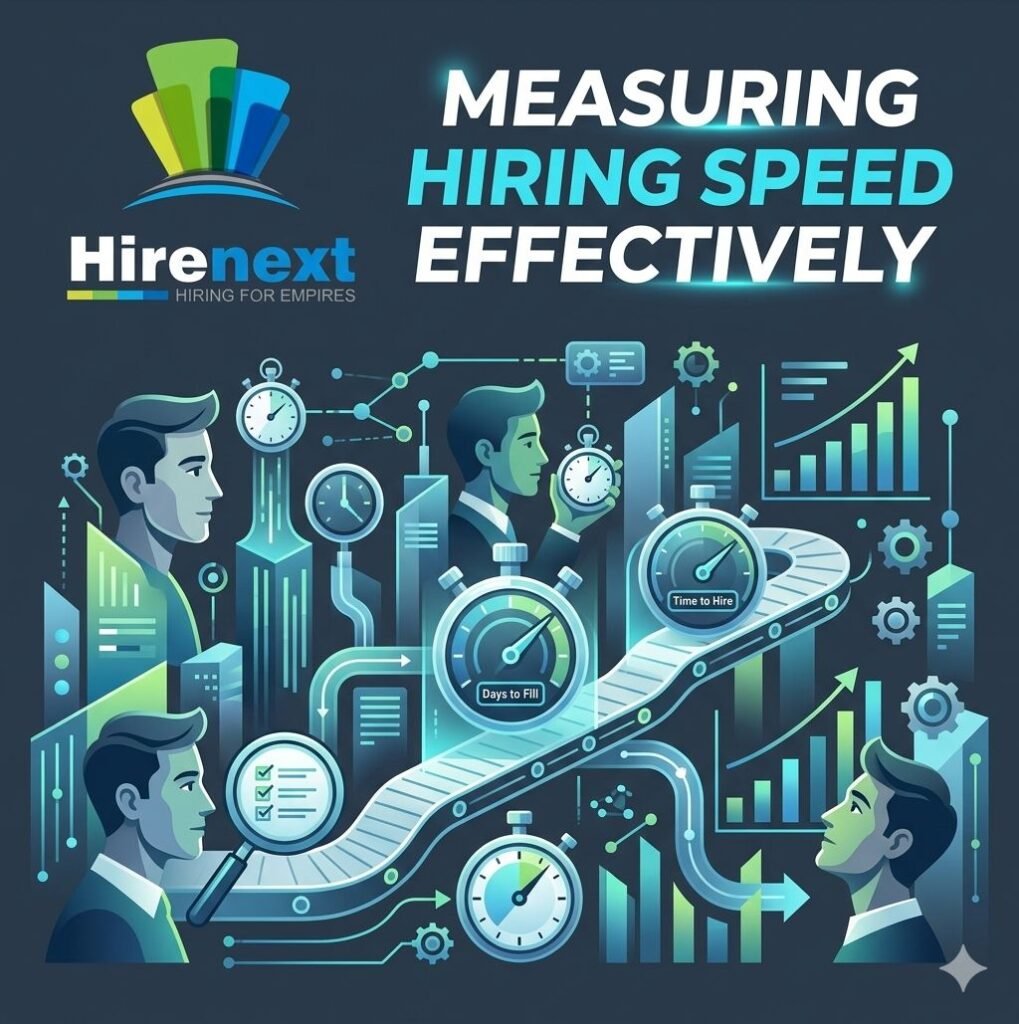
To improve, you need to measure performance.
Tracking metrics helps companies refine how to speed up hiring process.
Key Metrics
- Time-to-hire
- Time-to-fill
- Offer acceptance rate
- Candidate drop-off rate
Analyzing these metrics improves overall how to speed up hiring process.
Industry-Wise Hiring Timelines
Different industries have different hiring speeds.
Understanding this helps businesses set realistic expectations for how to speed up hiring process.
IT & Tech
Usually takes longer due to skill-based evaluation.
Sales & Marketing
Faster hiring due to higher candidate availability.
Startups
Quick hiring due to urgency and flexibility.
Adapting strategies based on industry improves how to speed up hiring process.
Role of Employer Branding in Faster Hiring
Strong employer branding attracts better candidates faster.
Companies with a good reputation receive more applications, which improves how to speed up hiring process.
How to Build Branding
- Showcase company culture
- Share employee stories
- Maintain active social presence
Common Mistakes That Slow Down Hiring
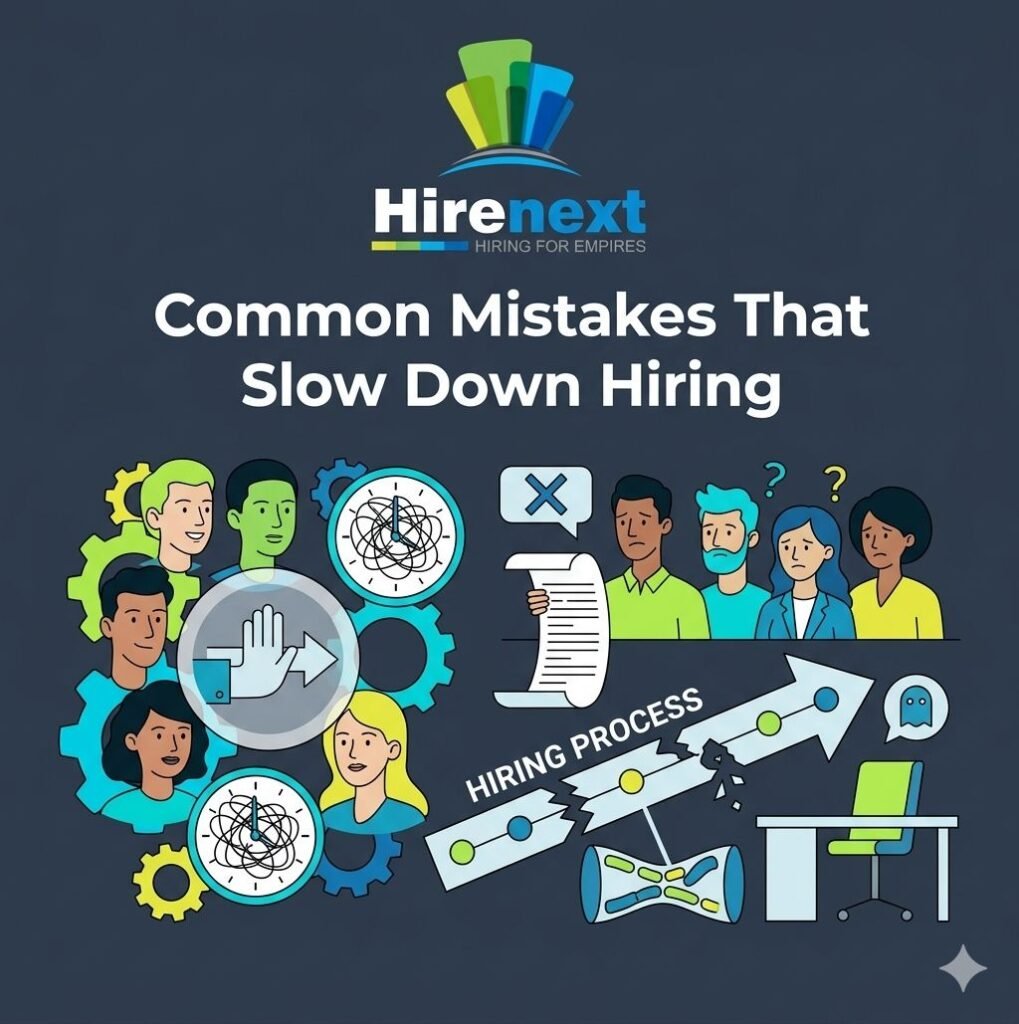
Even with the right strategies, companies make mistakes that delay hiring.
Mistakes to Avoid
- Overcomplicating the process
- Too many interview rounds
- Delayed feedback
- Lack of clarity in job roles
Avoiding these mistakes is essential for improving how to speed up hiring process.
Real-Life Hiring Scenarios
Scenario 1: Delayed Decision
A company lost a top candidate due to slow response. This highlights the importance of improving how to speed up hiring process.
Scenario 2: Efficient Hiring Strategy
A company reduced hiring time by 40% using pre-screened candidates, showcasing effective how to speed up hiring process.
Scenario 3: Poor Communication
Misalignment between HR and managers caused delays, emphasizing the need for better how to speed up hiring process.
Future of Hiring Speed in 2026 and Beyond

The hiring process is evolving rapidly.
Future trends include:
- AI-driven candidate screening
- Automated interview scheduling
- Data-driven hiring decisions
These innovations will redefine how to speed up hiring process.
Quick Action Plan to Speed Up Hiring
Here’s a simple checklist:
- Define job roles clearly
- Build a candidate pipeline
- Use technology
- Reduce interview rounds
- Communicate quickly
Following these steps can instantly improve how to speed up hiring process.
Conclusion
Hiring is a critical process that directly impacts business success. While there is no fixed timeline, companies must aim for efficiency without compromising quality.
Understanding each stage of recruitment and optimizing it helps businesses learn how to speed up hiring processeffectively. From job planning to onboarding, every step plays a role in reducing delays.
In today’s competitive market, faster hiring is not just an advantage—it is a necessity. Companies that master how to speed up hiring process can secure top talent, reduce costs, and build stronger teams.
By adopting the right strategies and tools, businesses can create a hiring process that is both fast and effective.
Start optimizing your hiring today and stay ahead in the talent game. 🚀